You can control coffee flavor by understanding three main bean processing methods: washed, natural, and honey. Washed processing removes the fruit before drying, producing bright, clean, acidic cups. Natural processing dries whole cherries, resulting in fruity, heavy-bodied coffee with complex sweetness.
Honey processing partially removes fruit, balancing acidity and sweetness for layered flavors. Each method changes the chemical composition and appearance of the beans in different ways. Mastering these methods helps you predict flavor profiles and pick coffees that suit your palate’s preferences.
There’s even more to discover as you dive deeper into these processes. Exploring them can really open up your coffee experience.
Coffee Bean Processing Explained: Why It Matters for Flavor

Although you might focus primarily on the roast level or origin when selecting coffee, the processing method plays a critical role in shaping the final flavor profile. Processing removes the coffee cherry’s outer layers, influencing acidity, sweetness, body, and aromatic complexity.
Different methods such as natural, honey, or washed alter the bean’s biochemical composition by affecting fermentation duration and exposure to sugars and mucilage. This impacts enzymatic reactions and microbial activity, which modulate key flavor precursors.
Understanding these mechanisms helps you predict and control flavor outcomes more precisely. Mastering processing techniques allows producers to emphasize desired sensory attributes, from fruity brightness to clean clarity. Additionally, controlling water temperature during extraction is essential to highlight these nuanced flavors effectively.
How Washed Coffee Processing Works and Tastes
You start by removing the coffee cherry’s outer skin, then ferment the beans to break down the mucilage layer.
This washed process really brings out acidity and clarity in the cup.
It often results in bright, clean, and crisp flavor notes.
Knowing these steps helps you see how processing directly shapes the coffee’s taste profile.
Controlling variables like extraction pressure during brewing can further highlight the distinct flavors developed through washed processing.
Washed Process Steps
When you examine the washed coffee processing method, you’ll find it involves removing the coffee cherry’s outer fruit layers before drying the beans. This method prioritizes cleanliness and uniformity by separating the mucilage and parchment from the seed early on.
You start by pulping the cherries, then fermenting the beans in water to dissolve residual mucilage. After fermentation, thorough rinsing removes any remaining fruit residue. Finally, you dry the beans to the desired moisture content, guaranteeing stability.
Maintaining consistent water temperature during the washing stage can influence the effectiveness of mucilage removal and impact overall bean quality by preventing under-extraction of undesirable compounds.
| Step | Description |
|---|---|
| Pulping | Mechanical removal of fruit skin |
| Fermentation | Soaking to break down mucilage |
| Washing | Rinsing beans to remove loose residues |
| Drying | Controlled drying to appropriate moisture |
This sequence ensures consistency and helps reduce defects during drying. It’s a reliable way to get clean, quality beans every time.
Flavor Profile Characteristics
The washed coffee processing method directly influences the flavor profile by emphasizing clarity and brightness in the cup. When you taste washed coffee, you’ll notice that the removal of mucilage reduces fermentation off-flavors, allowing inherent bean qualities to shine.
This method highlights acidity and clean, crisp notes, making flavors more distinguishable and defined.
Here’s what you can expect from washed coffee flavor profiles:
- Bright acidity, often citric or malic, that enhances vibrancy
- Pronounced clarity, revealing subtle floral or fruity notes
- Balanced body, typically lighter compared to natural processed beans
- Clean finish with minimal aftertaste or fermentation-derived complexity
For those brewing washed coffee at home, using a machine with consistent temperature and pressure control, such as one with a PID controller, can help highlight these delicate flavor characteristics.
How Natural Coffee Processing Works and Tastes
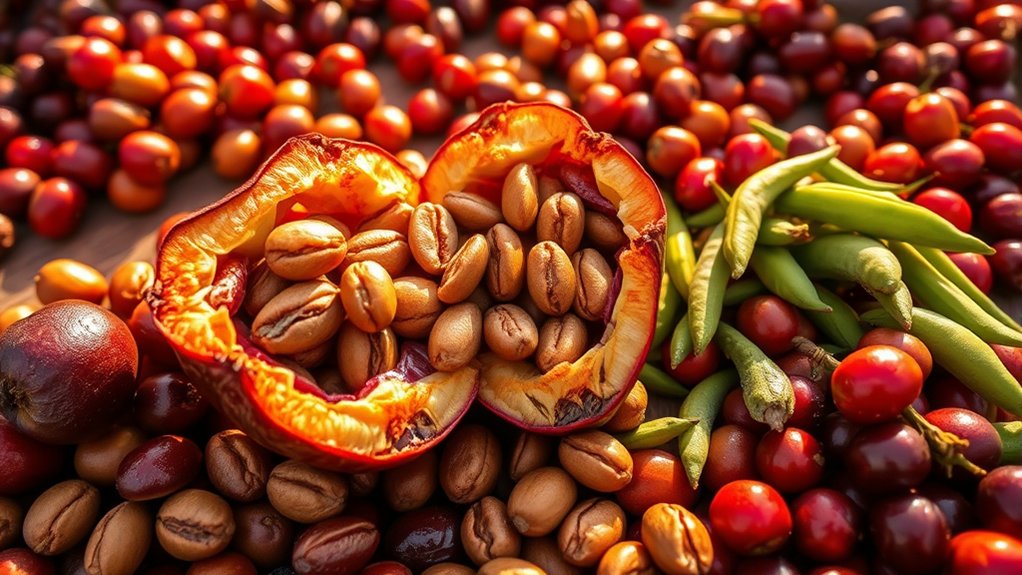
Although natural coffee processing involves drying whole coffee cherries under the sun, it requires careful control of environmental conditions to prevent fermentation defects. You must monitor humidity, temperature, and airflow to avoid mold growth and uneven fermentation.
The drying phase can last from two to four weeks. During this time, the cherry’s sugars permeate the bean, which intensifies sweetness and body.
This method yields coffee with pronounced fruity and wine-like notes, often showing berry, tropical fruit, and fermented flavors. You’ll notice a heavier mouthfeel and lower acidity compared to washed coffees.
However, inconsistent processing can introduce off-flavors or excessive fermentation. Mastering natural processing demands precision in drying times and environmental management.
That way, you can consistently produce complex, flavorful beans with balanced sweetness and nuanced aromatic profiles. Additionally, environmental factors such as humidity can cause beans to absorb moisture, leading to uneven processing and affecting the final flavor quality.
How Honey Coffee Processing Bridges Washed and Natural Methods
Because honey coffee processing selectively removes the coffee cherry’s skin while leaving varying amounts of mucilage on the bean, it creates a controlled fermentation environment that combines characteristics of both washed and natural methods. You get a hybrid process that balances control and complexity by managing mucilage levels during drying.
Consider these key technical aspects:
- Partial mucilage retention moderates fermentation speed compared to fully washed beans.
- Controlled drying reduces microbial variability seen in natural processing.
- The method allows precise modulation of sugar and acid interactions on the bean surface.
- It requires careful monitoring of drying conditions to prevent spoilage while preserving desired biochemical reactions.
Additionally, understanding the impact of brewing ratios can help optimize flavor profiles when preparing coffee processed through this hybrid method.
How Processing Methods Affect Coffee Flavor Profiles

When you select a coffee processing method, you directly influence the bean’s chemical composition and, consequently, its flavor profile.
Washed processing removes the fruit pulp early, reducing fermentation time and resulting in a cleaner, brighter cup with pronounced acidity and floral or citrus notes.
Natural processing, which dries the whole cherry, promotes extended fermentation, increasing sugar absorption into the bean. This intensifies body and imparts fruity, wine-like characteristics.
Honey processing offers an intermediate approach, leaving varying amounts of mucilage during drying. It balances acidity and sweetness, often producing complex flavor layers.
Each method alters enzymatic activity and microbial interactions, shifting metabolites like organic acids, sugars, and phenolic compounds.
Understanding these biochemical changes helps you predict and control flavor outcomes. This way, you can optimize your coffee’s sensory profile for targeted taste preferences.
Brewing these processed beans at the appropriate extraction temperature is crucial to highlight their unique flavor profiles.
Which Coffee Processing Method Suits Your Taste
Selecting the right coffee processing method depends on your flavor preferences and brewing goals. Each method influences acidity, body, and aroma distinctly. So, matching these attributes with your taste is essential.
Choose washed processing if you prefer clarity, bright acidity, and a clean cup profile. It’s great when you want your coffee to taste crisp and refreshing.
Opt for natural processing to enjoy fruity, bold flavors with a heavier body and complex sweetness. This method brings out those rich, juicy notes that some people love.
Consider honey processing for a balance. You’ll get moderate acidity combined with nuanced sweetness and medium body.
Also, think about your brewing method. For example, espresso often benefits from washed or honey processed beans because they offer clarity and balance.
Common Challenges in Coffee Processing That Affect Quality
You’re going to run into some real challenges when it comes to controlling fermentation. The tricky part is that inconsistent microbial activity can change the flavor profiles and even cause defects.
On top of that, managing moisture content is just as important. If the drying process isn’t done right, it can mess with the beans’ stability and shorten their shelf life.
Fermentation Control Difficulties
Why does controlling fermentation present such a persistent challenge in coffee processing? Fermentation is a complex biochemical process influenced by multiple variables that you must manage precisely to guarantee quality. Variability in microbial populations, temperature fluctuations, and inconsistent fermentation times can drastically alter flavor profiles.
Here are four key difficulties you’ll face:
- Microbial Diversity: Different microbes produce varying metabolites, affecting taste unpredictably.
- Temperature Sensitivity: Small temperature changes accelerate or stall fermentation, complicating control.
- Inconsistent Processing Conditions: Variability in bean load and oxygen exposure causes uneven fermentation.
- Timing Precision: Over or under fermentation leads to off-flavors or incomplete mucilage removal.
Mastering these factors requires careful monitoring and adaptive control strategies to maintain consistent coffee quality. It’s not easy, but with attention and the right approach, you can get there.
Moisture Content Issues
Fermentation control challenges often intersect with managing moisture content, since water levels directly impact microbial activity and chemical reactions during processing. You must carefully monitor moisture to prevent under- or over-drying, both of which degrade bean quality.
Excess moisture fosters mold growth and uneven fermentation, while insufficient moisture halts enzymatic processes essential for flavor development.
Precise moisture thresholds vary by processing method. For instance, natural processing demands slower drying to avoid case hardening, whereas washed coffees require rapid moisture reduction post-fermentation to prevent spoilage.
Using moisture meters and standardized drying protocols helps you maintain ideal water content, typically between 10-12%, ensuring shelf stability and consistent cup profiles.
Inadequate moisture management compromises bean integrity, reduces shelf life, and diminishes the nuanced flavors that distinguish premium coffees.
How to Identify Coffee Processing Methods When Buying
Although coffee labels don’t always specify processing methods, you can identify them by analyzing key indicators such as flavor profiles, bean appearance, and origin information. When buying coffee, focus on these precise factors to infer the processing method.
- Flavor Profile – Washed coffees tend to be bright and acidic. Natural processed beans exhibit fruity, wine-like notes. Honey processed coffees offer balanced sweetness and body.
- Bean Appearance – Washed beans usually have a clean, uniform look. Natural beans appear darker and sometimes mottled. Honey beans retain partial mucilage, appearing sticky or glossy.
- Origin Details – Certain regions mainly use specific methods, so origin can hint at processing style.
- Roaster Information – Specialty roasters often disclose processing methods or provide detailed tasting notes to guide your choice.
Use these indicators to make informed decisions and better understand your coffee’s processing background. It’s a great way to connect more with your coffee and enjoy every cup even more.
Frequently Asked Questions
What Equipment Is Essential for Home Coffee Processing?
You’ll need a pulping machine to remove the coffee cherry’s outer skin efficiently.
A fermentation tank or container is vital for controlled fermentation.
After that, a washing station or clean water source helps remove mucilage.
For drying, use a raised drying bed or mechanical dryer to guarantee even moisture loss.
Finally, a hulling machine removes the parchment layer.
These tools ensure precise control over each processing stage, improving bean quality at home.
How Does Altitude Impact Coffee Bean Processing?
Altitude acts like a sculptor, shaping the coffee bean’s development. When you process beans grown at higher elevations, cooler temperatures slow their maturation, enhancing density and acidity.
This means you’ll need to adjust drying times and fermentation precisely to avoid under- or over-processing.
Lower altitudes produce faster ripening, so you have to handle the beans quicker to prevent defects.
Understanding altitude’s influence lets you control chemical reactions during processing.
This way, you ensure ideal flavor clarity and balance in your final cup.
Can Coffee Processing Methods Affect Caffeine Levels?
Yes, coffee processing methods can influence caffeine levels, but the effect is generally minimal compared to other factors like bean variety or roasting.
You’ll find that washed, natural, and honey processes primarily impact flavor profiles and acidity rather than caffeine content.
However, since processing affects bean moisture and density, slight variations in caffeine extraction during brewing may occur.
What Are the Environmental Impacts of Each Processing Method?
You’ll find the washed method uses significant water, risking contamination if untreated.
You’ll see the natural method demands minimal water but can increase waste buildup, affecting soil quality.
You’ll notice the honey method balances water use and waste but requires careful management to prevent microbial issues.
How Long Does Each Coffee Processing Method Typically Take?
You’ll find the washed method typically takes 24 to 48 hours for fermentation, plus drying time of 7 to 14 days.
The natural method requires drying cherries whole for about 2 to 4 weeks, depending on climate.
Honey processing falls between these, with drying times of roughly 10 to 20 days.
Your exact duration varies with weather, humidity, and drying technique, so precise monitoring guarantees ideal bean quality and consistency.
Conclusion
Understanding coffee processing methods is like decoding a flavor blueprint, revealing how washed, natural, and honey techniques sculpt taste with precision. Each method acts as a distinct lens, amplifying acidity, sweetness, or body, shaping your cup’s character.
When you get these nuances, you gain control over your coffee journey. You can pick beans that really match your palate’s style. Mastering this technical artistry ensures every sip delivers the intended sensory experience, free from common processing pitfalls.