When you hear “espresso,” know it literally means “pressed out” in Italian. It describes how hot water is forced through finely-ground coffee under pressure. This quick, intense brewing method creates a rich, flavorful shot topped with crema.
Espresso is a cornerstone of Italian culture and daily rituals. Grasping its true meaning helps you appreciate the precision and social connection behind every cup. Keep exploring to discover how to make authentic espresso like an Italian pro.
What “Espresso” Means in Italian: And Why It Matters

What does “espresso” really mean in Italian, and why should you care? The word “espresso” literally means “pressed out” or “forced,” referring to how hot water is pushed through finely-ground coffee.
When you order a caffè espresso in Italy, you’re asking for a shot made quickly under high pressure, resulting in a rich, concentrated brew.
This term emerged in the early 20th century, capturing the essence of speed and efficiency that fits the fast-paced Italian lifestyle.
Knowing this, you’ll appreciate that espresso isn’t just a coffee style, it’s a cultural symbol of precision and tradition.
Understanding the meaning behind the word helps you truly value what makes Italian espresso distinct and authentic.
The entire process, including the crucial extraction time, is carefully controlled to ensure the perfect balance of flavor and crema.
How Italian Espresso Is Made: The Pressed Coffee Method
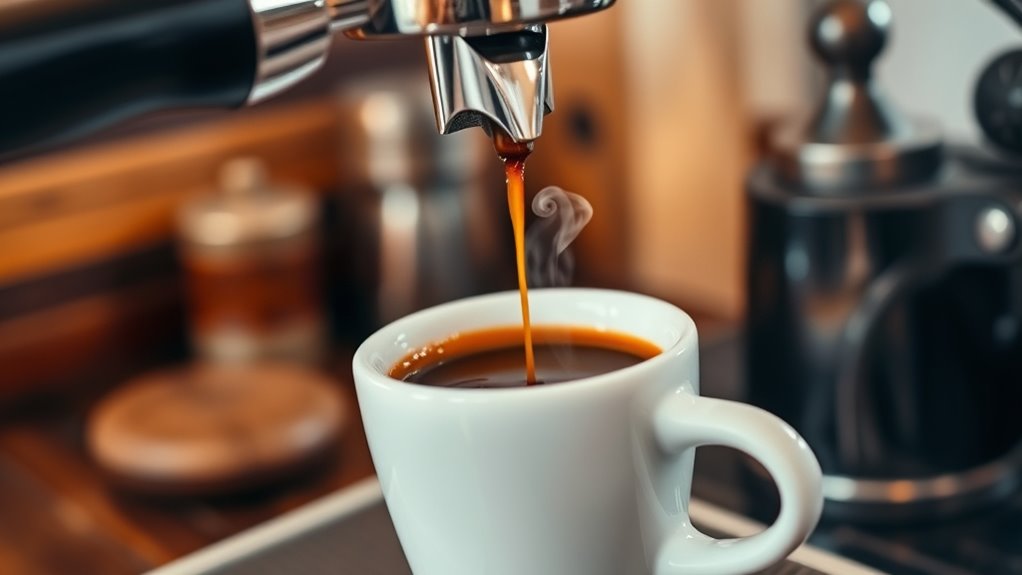
You start by packing finely ground coffee tightly into the portafilter.
Then, you force nearly boiling water through it using about 9 bars of pressure.
This intense extraction not only pulls out rich, bold flavors but also creates that signature creamy layer of crema on top.
It’s really the perfect balance of pressure and temperature that makes Italian espresso truly exceptional.
Maintaining the ideal brew temperature between 195°F and 205°F ensures optimal flavor extraction and clarity.
High-Pressure Extraction
Because Italian espresso relies on a precise balance of pressure and time, high-pressure extraction plays a vital role in crafting its rich flavor. When you brew espresso, a pump forces hot water through finely-ground coffee at around 9 bars of pressure. This intense force extracts oils and flavors quickly, typically within 25 to 30 seconds, producing a concentrated, aromatic shot.
Unlike drip or moka pot methods, this high-pressure approach emulsifies coffee oils and creates tiny microbubbles, which are essential for the espresso’s signature texture. By applying this pressure, you release the intense taste and creamy mouthfeel that define authentic Italian espresso. Maintaining precise temperature control ensures balanced flavor and prevents over- or under-extraction during this process.
Crema Formation Process
Although it might seem like just a simple layer, crema plays a crucial role in defining the quality and character of Italian espresso. This golden-brown foam forms during the pressed coffee method, where nearly boiling water is forced through finely-ground, tightly packed coffee under about 9 bars of pressure.
This intense pressure emulsifies coffee oils and traps microbubbles, creating crema’s distinctive texture and aroma.
When you brew espresso correctly, crema signals freshness and quality. Pay attention to these key aspects:
- High-pressure extraction emulsifies oils and gases
- Fine grind and tight packing ensure proper resistance
- Fresh coffee and a well-maintained machine produce stable crema
- Crema’s color and consistency hint at roast level and origin
Additionally, proper extraction time (25-30 seconds) is essential for achieving the ideal crema stability and balanced flavor.
Understanding crema enriches your appreciation of authentic Italian espresso.
How Italian Espresso Differs From Other Coffee Types

When you savor an Italian espresso, you’re experiencing a brewing technique that sets it apart from other coffee styles. Italian espresso is crafted by forcing nearly boiling water through finely-ground beans under high pressure, producing a concentrated shot topped with a creamy layer of crema.
Unlike drip or pour-over coffee, which brew at lower pressure and yield lighter, larger servings, espresso boasts a thicker, more intense flavor in a small, powerful dose. This high-pressure extraction reveals rich, roasted notes and a velvety texture you won’t find in French press or filter methods. The high-pressure brewing process also concentrates bold flavors and preserves essential oils, contributing to espresso’s distinctive taste and aroma.
Why Espresso Is at the Heart of Italian Culture
When you grab an espresso at an Italian bar, you’re stepping into a lively social ritual that connects people in moments of shared pause. It’s not just about having a quick coffee—it’s about being part of a community.
This small, strong coffee is like a little key that opens up conversations and helps friendships grow. When you really think about how espresso fits into daily life, it’s easy to see why it’s truly at the heart of Italian culture. The tradition highlights Italy’s technological and cultural advancements, cementing espresso as an Italian icon.
Social Rituals Around Espresso
Why does espresso hold such a special place in Italian daily life? Because it’s more than just coffee. It’s a quick, meaningful ritual that connects people and celebrates tradition.
When you step into an Italian café, you join a culture that values these moments deeply. Consider these social rituals: starting the day with a fresh espresso, marking a purposeful routine. Standing at the bar, sharing brief but warm exchanges with friends or strangers.
Espresso breaks are also used to strengthen bonds among colleagues and friends. And by embracing the “bella vita” philosophy, people savor simple pleasures through each sip.
Espresso isn’t just a drink. It’s an invitation to pause, connect, and appreciate life’s small joys.
Espresso’s Role In Community
Espresso does more than punctuate your day. It brings communities together. In Italy, it’s the heartbeat of social life, served at bustling local bars where you’ll often find people standing shoulder to shoulder, sharing a quick coffee and conversation.
This simple ritual isn’t just about caffeine. It’s a moment to connect, reflecting the Italian love for savoring life’s small joys.
As you sip your espresso standing at the bar, you join a tradition that celebrates quality over quantity. It’s really the essence of “bella vita.”
With cafés on nearly every corner, espresso isn’t just a drink. It’s a daily social thread weaving people together, creating a vibrant sense of community that’s uniquely Italian.
Many enjoy their espresso with a touch of brown sugar syrup or alternative milk to enhance the flavor and texture.
How to Pronounce and Use “Espresso” in Italian
Although many people recognize the word worldwide, you mightn’t realize that in Italian, espresso is pronounced ess-PRESS-oh, with the emphasis firmly on the second syllable. This pronunciation reflects its true Italian roots and helps you connect more authentically with the culture.
When you use “espresso” correctly, you’re acknowledging its meaning: “pressed out” or “forced,” describing the high-pressure brewing method.
Remember these key points:
- In Italy, ordering “un caffè” almost always means a shot of espresso.
- The term “espresso” specifically refers to a small, concentrated coffee.
- Pronouncing it ess-PRESS-oh shows respect for Italian coffee tradition.
- Using the word properly enhances your communication and appreciation of Italian culture.
Mastering this helps you enjoy espresso like a local, not just a tourist. The preparation involves forcing hot water through finely ground coffee under approximately 9 bars pressure, which defines its unique taste and texture.
Brewing Authentic Italian Espresso at Home: Tools and Tips
Now that you know how to say and appreciate espresso like a local, it’s time to bring that authentic experience into your own kitchen. Start with a high-quality espresso machine or a classic Moka pot to replicate the traditional pressure and extraction process.
When using a Moka pot, fill the bottom chamber with fresh, cold water up to the safety valve. Add finely-ground coffee but don’t pack it too tightly.
Heat it on medium-low to ensure a slow, even extraction that releases the rich flavors defining true Italian espresso.
Let the brewing finish naturally. Avoid rushing it with high heat.
And don’t forget to clean your equipment regularly because keeping your tools pure guarantees that every cup delivers consistent, genuine Italian espresso flavor.
For optimal results, consider using a machine with precise pressure control to maintain consistent extraction and enhance flavor.
Frequently Asked Questions
What’s the History Behind the Invention of Espresso Machines?
You’ll discover that espresso machines started in early 1900s Venice when Luigi Bezzera created a steam-powered device to brew coffee faster. Later, innovators like Pavoni and Gaggia enhanced its pressure and flavor, shaping espresso’s rich legacy.
It’s pretty cool how a simple idea turned into a global coffee culture. These inventors really changed the way we enjoy coffee every day. Their improvements made espresso not just quick but delicious too.
How Does Espresso Affect Caffeine Content Compared to Other Coffees?
Espresso packs more caffeine per ounce than regular coffee, giving you a quick, intense boost. Because it’s concentrated, even small shots deliver double the caffeine, so you’ll feel energized faster and stronger.
It’s kind of like a power shot for your day. Regular coffee has more volume, but espresso’s punch comes in a tiny cup. So if you’re after a fast pick-me-up, espresso’s the way to go.
Can Espresso Be Used as a Base for Italian Desserts?
You can use espresso as a rich base for Italian desserts like tiramisu, soaking ladyfingers in its bold, aromatic depth. Its intense flavor adds a delicious, velvety touch to gelato, affogato, and chocolate treats.
It really brings out the best in those desserts, giving them a strong coffee kick without overpowering the other flavors. So, next time you’re making an Italian dessert, don’t hesitate to reach for that espresso!
What Are Common Espresso Variations in Italy Beyond the Classic Shot?
You’ll find popular espresso variations like cappuccino, macchiato, caffè lungo, and caffè corretto in Italy.
Don’t miss trying a shakerato, which is espresso shaken with ice and sugar. It’s a refreshing twist that’s really invigorating.
These options go beyond the classic shot and offer a little something for every taste. Give them a try next time you’re in Italy!
How Has Espresso Influenced Global Coffee Culture and Trends?
You’ve seen how espresso shapes global coffee culture by inspiring countless drinks, fueling barista artistry, and driving innovative machines. Its rich Italian roots make your daily cup a worldwide celebration of flavor, precision, and tradition.
Espresso isn’t just a coffee style—it’s a global influence that keeps evolving. From the streets of Rome to cafes in New York, it brings people together over a shared love of bold taste and craftsmanship. It’s pretty amazing how one simple shot can spark so much creativity and connection.
Conclusion
Now that you know “espresso” means “pressed out” in Italian, imagine this: Italians savor over 1.4 billion espresso cups each year! That’s a powerful daily ritual, brewed with precision and passion.
When you pull your own shot at home, you’re joining a centuries-old tradition that’s more than coffee. It’s culture, craft, and connection all in a single cup.
So, get your tools ready and enjoy espresso the true Italian way!