Espresso powder and instant espresso both come from brewed espresso but aren’t the same. You’ll find espresso powder is finely dehydrated, offering a richer, more intense flavor. It’s ideal for baking and enhancing chocolate.
Instant espresso, on the other hand, has coarser granules that dissolve quickly. It has a milder taste, making it great for fast coffee preparations.
If you need a strong, roasted espresso essence, espresso powder is your choice. Keep exploring to understand their uses, substitutions, and selection tips for the best results.
What Are Espresso Powder and Instant Espresso?
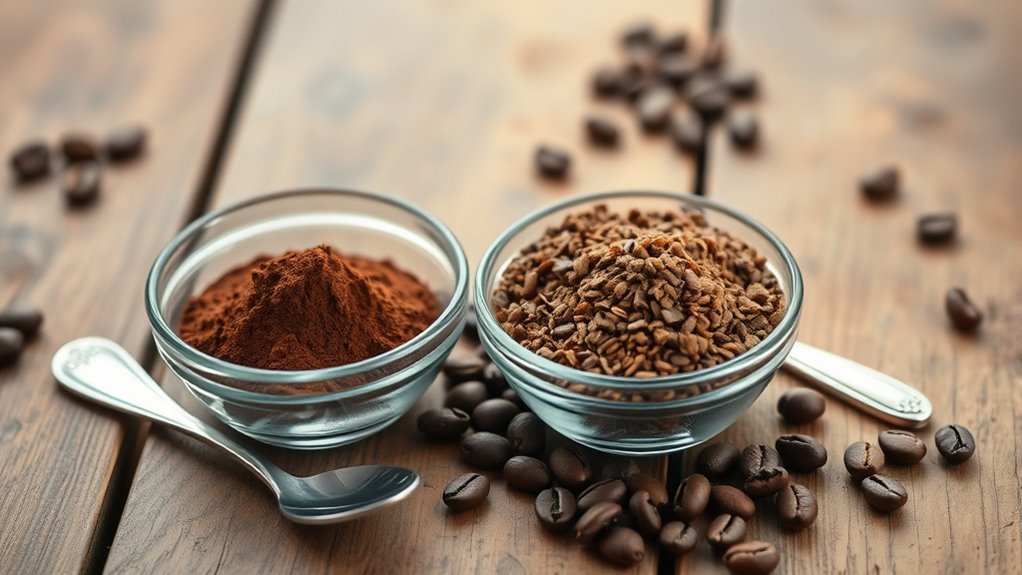
Although espresso powder and instant espresso share a similar origin in brewed espresso, they differ markedly in form and purpose. Espresso powder results from dehydrating brewed espresso into a fine, dark powder mainly used to enhance flavor in baking.
In contrast, instant espresso is a soluble coffee product derived from brewed espresso designed to dissolve quickly in liquids. This makes it suitable for quick coffee drinks or recipe flavoring.
Both products offer a robust, roasted coffee flavor, but espresso powder is typically finer and more intense.
Their production processes also differ: espresso powder is a concentrated espresso extract, while instant espresso is formulated for solubility. Understanding these distinctions helps you select the right product based on your cooking or beverage needs.
Proper extraction timing and techniques, including extraction time, are key to developing the rich flavors that both espresso powder and instant espresso aim to capture.
Espresso Powder vs. Instant Espresso: What’s the Difference?
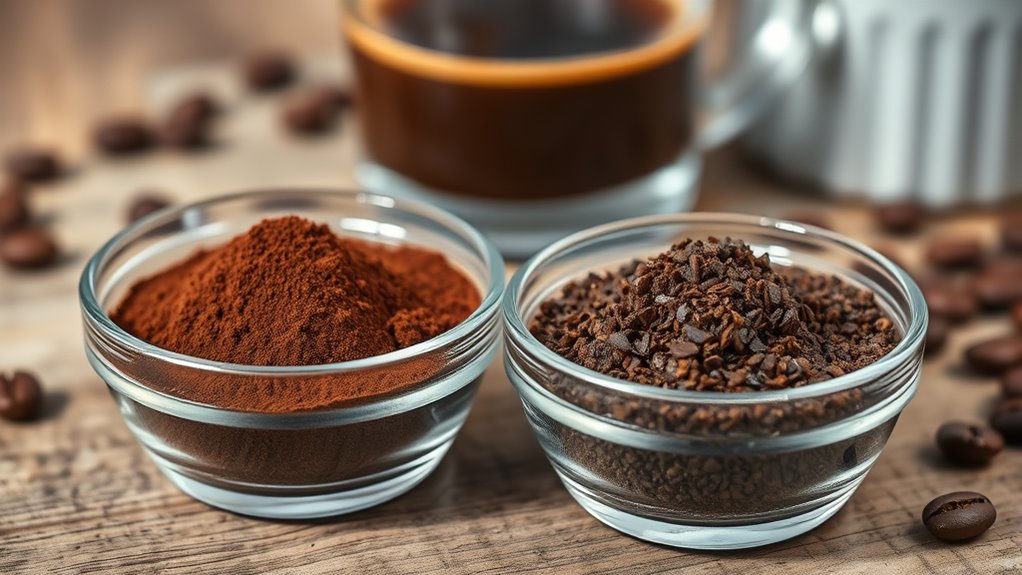
You’ll find that espresso powder is made by dehydrating brewed espresso into a fine, concentrated form.
On the other hand, instant espresso is produced to dissolve quickly, often coming in granules or powder.
These different production methods actually influence their flavor profiles.
Espresso powder tends to have a more intense roasted taste, while instant espresso usually tastes milder or sometimes a bit bitter.
Knowing these differences can really help you pick the right one for your recipe, depending on the flavor impact you’re aiming for.
Espresso powder is typically made from finely ground dark-roasted Arabica beans, which contributes to its intense, roasted flavor.
Production Methods Compared
When comparing espresso powder and instant espresso, you’ll find that their production methods differ mainly in concentration and texture. Espresso powder is made by brewing high-pressure espresso shots, then dehydrating the liquid into a fine, highly concentrated powder. This intensive dehydration process results in a very fine grind, perfect for baking and concentrated flavor use.
On the other hand, instant espresso is produced by either freeze-drying or spray-drying brewed espresso or concentrated coffee. This creates quick-dissolving granules or crystals that are larger and less concentrated than espresso powder.
Both come from brewed espresso, but their textures and concentration levels vary quite a bit. Espresso powder’s finer texture and higher concentration come from its specific dehydration method. That really sets it apart from the coarser, less concentrated instant espresso granules. The aeration and emulsification of natural oils during brewing can significantly influence the flavor profile of both products, enhancing their smoothness and robustness when reconstituted. This process is key to preserving espresso flavor in powdered forms.
Flavor Profiles Explained
Understanding how espresso powder and instant espresso are produced sheds light on why their flavor profiles differ. You’ll notice espresso powder offers a more robust, bitter, and complex flavor due to its dehydration process, which preserves roasted espresso notes.
Instant espresso, made from freeze-dried or spray-dried brewed espresso, delivers a milder, less intense taste.
Here’s a breakdown of their flavor distinctions:
- Espresso powder has a finer, darker texture with a deeper, richer flavor.
- Instant espresso provides a slightly softer coffee taste.
- The dehydration method in espresso powder retains stronger roasted characteristics.
- Instant espresso suits applications needing subtle coffee notes, like quick drinks or baking.
These differences reflect their concentration levels and processing techniques. So, keep these in mind to guide your choice based on the flavor intensity you want.
Additionally, the extraction process used in espresso influences the oils and acids that contribute to the flavor complexity preserved in espresso powder.
How Flavor Sets Espresso Powder Apart
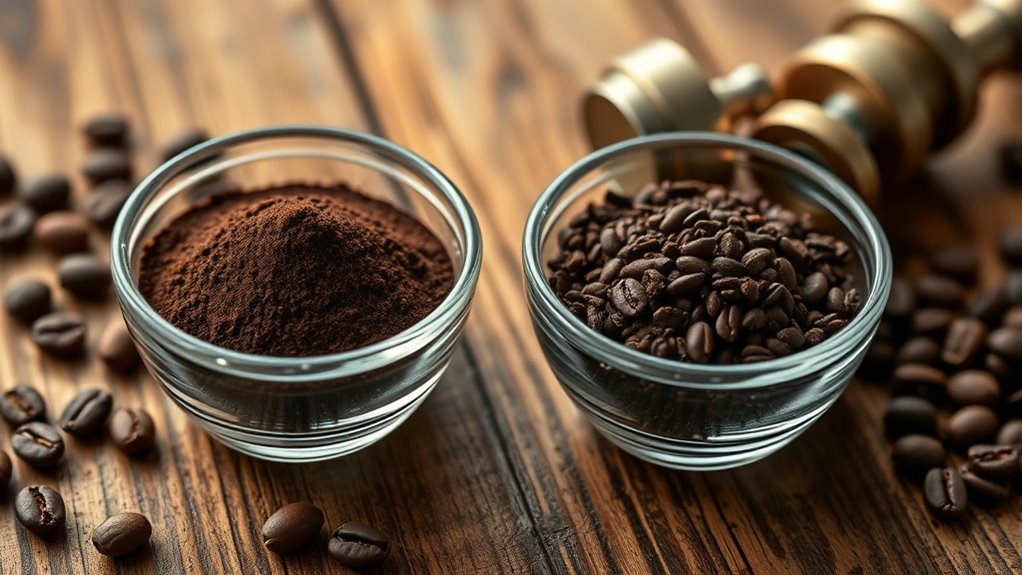
Although both espresso powder and instant espresso serve as convenient coffee flavor enhancers, espresso powder distinguishes itself through a more intense and authentic taste. Its concentrated brewing process yields a deeper, richer flavor profile, often with subtle smoky or bitter notes that instant espresso lacks. Made from dehydrated brewed espresso, espresso powder retains the robust complexity of freshly brewed espresso.
On the other hand, instant espresso’s processing prioritizes quick dissolution, sacrificing depth. Because of this, espresso powder delivers a pronounced coffee taste, providing a more genuine espresso experience.
When you use espresso powder, you engage with a flavor that’s both complex and true to traditional espresso. This really sets it apart from the milder, sometimes artificial notes found in instant espresso products. The difference in flavor intensity is largely due to espresso powder’s extraction under high pressure, which concentrates bold, complex flavors not captured by instant espresso.
Common Uses for Espresso Powder in Baking and Cooking
You’ll find espresso powder really brings out the chocolate flavor by making it richer without giving it a strong coffee taste. It’s pretty versatile, too. You can use it in baking and cooking, like in frostings, sauces, and desserts, to add a deeper, more complex flavor.
Knowing how to use espresso powder can help you get the most out of your recipes and create better flavor profiles overall. It’s a simple trick that can make a big difference! For best results, use only about a teaspoon per recipe since it is a highly concentrated flavor enhancer.
Enhancing Chocolate Flavor
When you add espresso powder to chocolate recipes, it intensifies the chocolate’s richness without imparting a strong coffee taste. This happens because espresso powder is a concentrated, dehydrated form of brewed espresso, designed specifically to enhance chocolate flavor. You’ll notice a deeper, more complex profile in your baked goods and desserts.
Here’s how espresso powder enhances chocolate flavor:
- Amplifies richness and depth in brownies, cakes, and frostings.
- Adds complexity, making chocolate taste bold yet balanced.
- Dissolves easily into batters or mixes seamlessly into frostings and ganaches.
- Elevates overall flavor, creating a luxurious, well-rounded chocolate experience.
Using espresso powder strategically gives your chocolate recipes a refined taste without overwhelming coffee notes. It’s a simple trick that really makes your chocolate stand out. Additionally, combining chocolate with coffee ingredients like espresso powder can enhance the antioxidant benefits of your desserts.
Give it a try and see the difference for yourself!
Versatile Culinary Applications
Because espresso powder enhances flavor without overwhelming other ingredients, it serves multiple roles in both sweet and savory cooking.
You can use about one teaspoon in chocolate desserts like brownies, cakes, and ganache to intensify their depth and richness without imparting a strong coffee taste. Adding it to frostings, sauces, and fillings further refines the chocolate profile, making the flavor more complex and decadent.
Beyond sweets, espresso powder adds a roasted, smoky depth to savory dishes such as meat rubs and chili, enhancing their overall taste. Proper maintenance of espresso machines, including regular descaling frequency, ensures the best flavor extraction when brewing espresso-based ingredients.
Typical Uses of Instant Espresso Powder for Quick Coffee
Although brewing espresso can take some time, instant espresso powder lets you add a rich coffee flavor to recipes and drinks quickly. It dissolves instantly, making it perfect for fast coffee infusions without any extra brewing steps.
Instant espresso powder offers a quick, rich coffee flavor without the wait of traditional brewing.
You can easily boost the flavor in all kinds of culinary and beverage applications with this powder. Typical uses include:
- Adding a strong coffee taste to baked goods like brownies and cakes.
- Quickly dissolving in hot water to make an espresso-like drink on the spot.
- Enhancing chocolate richness in recipes with about 1 teaspoon, without overpowering the coffee flavor.
- Giving a concentrated caffeine kick similar to a shot of brewed espresso.
For the best coffee flavor, using freshly ground coffee with proper tamping and extraction is recommended when brewing espresso.
Why Choose Espresso Powder Over Instant Espresso?
Instant espresso powder offers convenience and speed, but choosing espresso powder can markedly elevate your recipes with its concentrated and intensely roasted flavor. When you want a richer, more authentic espresso taste in baked goods, espresso powder’s finer texture and stronger concentration make it the superior choice.
While both powders add coffee flavor, espresso powder delivers depth and robustness that instant espresso just doesn’t have. It’s really about getting that extra punch of flavor.
| Feature | Espresso Powder |
|---|---|
| Origin | Dehydrated brewed espresso |
| Texture | Finer, more concentrated |
| Flavor Intensity | Intense, robust |
| Best Use | Enhancing baked goods |
Choosing espresso powder enhances flavor precision and culinary quality in your recipes. It’s a simple swap that makes a big difference. Using finely ground coffee with proper grind size can further improve flavor extraction and intensity in espresso-based ingredients.
Substituting Instant Espresso for Espresso Powder
How closely can you substitute instant espresso for espresso powder in your recipes? Instant espresso is a concentrated form of instant coffee with a bold, roasted flavor.
To mimic espresso powder’s strength, you need about 50% more instant espresso. However, because of its intensity, careful measurement is vital to avoid bitterness or excess acidity.
To match espresso powder’s strength, use 50% more instant espresso and measure carefully to avoid bitterness.
Keep these points in mind when substituting:
- Use 1.5 times the amount of instant espresso compared to espresso powder.
- Dissolve granules fully to ensure even flavor distribution.
- Monitor the recipe’s taste to prevent overpowering bitterness.
- Consider the texture impact since instant espresso dissolves quickly but may alter moisture slightly.
Substitution demands precision to maintain balance and desired flavor outcomes. So, take your time measuring and tasting to get it just right!
Adjusting Recipes for Instant Espresso Substitutes
When you replace espresso powder with instant espresso in your recipes, you’ll need to adjust quantities and possibly other ingredients to keep the intended flavor and texture.
Since instant espresso has a milder flavor, use 1.5 to 2 times the amount called for to get a similar intensity. But be careful—using more can add extra bitterness and caffeine, so take it slow.
Also, instant espresso might add a bit of moisture. Because of that, you should think about reducing other liquids to keep your batter or dough the right consistency.
It’s a good idea to measure the instant espresso carefully, especially in dry recipes.
Taste tests are your friend here. They help you fine-tune the balance so your final product still has that perfect flavor and texture, even with the substitution.
How to Choose Between Espresso Powder and Instant Espresso
When you’re deciding between espresso powder and instant espresso, it’s good to think about their different flavor profiles and how you plan to use them.
Espresso powder has a concentrated, bold taste that works really well in baking.
On the other hand, instant espresso tends to have a lighter flavor, making it perfect for quick drinks.
So, knowing these differences can help you pick the right one depending on what your recipe needs and how you want to use it.
It’s all about matching the flavor and purpose to get the best results.
Flavor Profiles Comparison
Although both espresso powder and instant espresso serve to infuse coffee flavor into recipes, they differ markedly in intensity and taste profile. You’ll want to weigh these distinctions carefully:
Espresso powder delivers a concentrated, roasted flavor due to its high-pressure brewing process, resulting in a richer taste.
Instant espresso is milder, often presenting a slightly bitter or more acidic note.
The deeper, robust profile of espresso powder enhances chocolate and baked goods without overpowering them.
Instant espresso provides a subtler coffee essence, suitable when you want a quick, less intense coffee flavor.
Usage And Applications
Choosing between espresso powder and instant espresso depends largely on the specific application and desired flavor intensity.
If you want a deep, roasted espresso flavor, espresso powder is your best bet. It’s more concentrated and works well in dry baking ingredients, especially for enhancing chocolate-based recipes.
Conversely, instant espresso, made to mimic brewed espresso flavor, dissolves quickly in liquids, making it ideal for beverages or quick flavor boosts.
When substituting one for the other, adjust quantities carefully due to differences in concentration and flavor strength.
Use espresso powder when you need a rich, intense coffee note in baked goods.
Choose instant espresso for milder coffee flavor in drinks or recipes requiring fast dissolution.
Your choice really hinges on whether intensity or convenience matters most.
Where to Buy Quality Espresso Powder and Instant Espresso
Since quality espresso powder considerably impacts your recipe’s flavor, sourcing it from reputable vendors is vital. You can find high-quality espresso powder at specialty baking stores, or order it online from trusted retailers like Amazon.
Instant espresso is more widely available in supermarkets, typically in the coffee aisle or near baking ingredients.
When selecting your espresso powder or instant espresso, consider these factors:
- Choose brands like Medaglia d’Oro or King Arthur Flour for consistent quality.
- Look for powders labeled “100% Arabica” or “freeze-dried” to ensure purity and strong flavor.
- Decide between small sachets or jars based on your usage needs.
- Verify product freshness and packaging integrity to maintain flavor potency.
Following these guidelines ensures you buy espresso products that enhance your recipes precisely.
Frequently Asked Questions
Can Espresso Powder Be Used to Make Regular Coffee?
Yes, you can use espresso powder to make regular coffee by dissolving it in hot water. Keep in mind, it’s very concentrated, so use less.
Also, expect a stronger, more bitter flavor than typical brewed coffee. It’s not quite the same, but it can work in a pinch!
Does Espresso Powder Contain Caffeine?
You might wonder if espresso powder contains caffeine. Yes, it does. Since it’s made from brewed espresso, it carries a similar caffeine level.
This means it gives you a concentrated boost even in small amounts. So, if you’re looking for that extra kick, a little espresso powder can go a long way!
How Should Espresso Powder Be Stored for Freshness?
You should store espresso powder in an airtight container. Keep it in a cool, dark place away from heat and strong odors. This helps maintain its flavor and aroma.
For longer freshness, you can refrigerate or freeze it. Just make sure it’s in a well-sealed container to prevent moisture absorption. That way, your espresso powder stays fresh for much longer.
Is Instant Espresso Gluten-Free?
Yes, instant espresso is generally gluten-free since it’s made from pure coffee beans. However, you should check labels and confirm with manufacturers to avoid cross-contamination risks, especially if you have celiac disease or gluten sensitivity.
It’s always better to be safe than sorry, right? So double-checking can give you peace of mind when enjoying your coffee.
Can Espresso Powder Affect the Texture of Baked Goods?
Yes, espresso powder can affect baked goods’ texture if overused. It dissolves fully without grittiness but adds dryness and density when added in large amounts. This can potentially make your cakes or cookies more brittle and crumbly.
Conclusion
Choosing between espresso powder and instant espresso isn’t rocket science, but understanding their differences can really elevate your recipes. Espresso powder delivers a deeper, richer flavor that’s perfect for baking. Instant espresso, on the other hand, works well for quick coffee fixes.
By recognizing their unique qualities and adjusting your recipes accordingly, you can guarantee consistent results. So, next time you reach for a coffee boost in the kitchen, make an informed choice. That way, you get the flavor and effect you truly want.

Pingback: How Much Caffeine In Cafe Bustelo Instant Espresso – Facts