Espresso powder is finely ground, dried brewed espresso used to boost chocolate and baked goods with subtle coffee richness without overpowering. You’ll find it adds depth to desserts like brownies, mousses, and frostings, and even enhances savory rubs and sauces.
Store it airtight in a cool, dry place to maintain potency. Use sparingly to avoid bitterness.
If you want to explore making it at home or find smart substitutes, there’s plenty more to uncover.
What Is Espresso Powder?
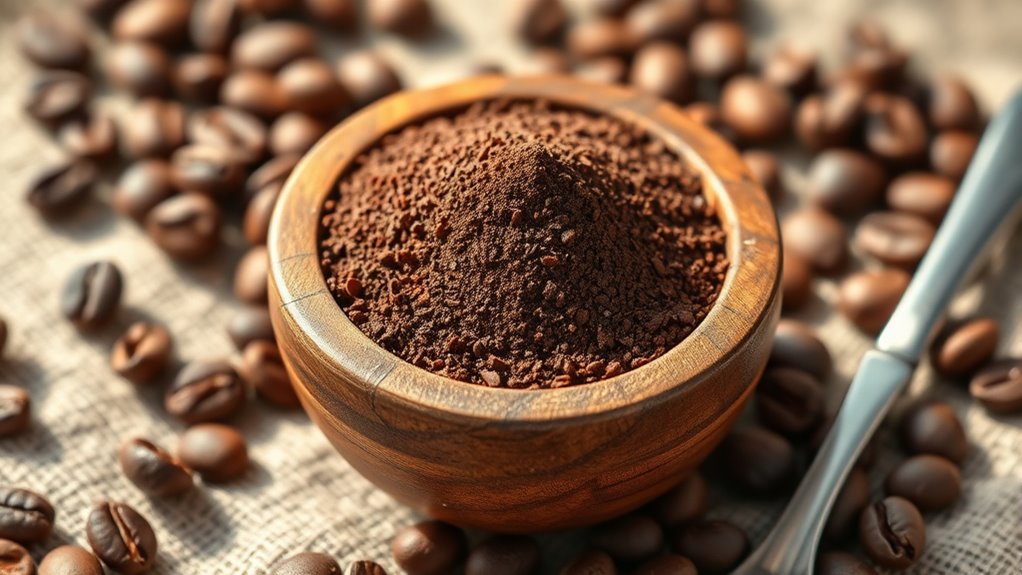
What exactly is espresso powder, and how does it differ from regular coffee? Espresso powder is a finely ground, dehydrated form of brewed espresso made from used coffee grounds.
Unlike regular coffee or instant coffee, it’s far more concentrated. You only need about a teaspoon per recipe to enhance flavor effectively.
Unlike brewed espresso, which you drink, espresso powder primarily serves as a dry ingredient to intensify chocolate and baked goods. It adds a subtle coffee flavor and richness without overpowering other ingredients.
Espresso powder enhances chocolate and baked goods with subtle coffee richness without overwhelming other flavors.
This makes it ideal for baked desserts and even savory dishes.
When you use espresso powder, you deepen the taste complexity and boost flavor profiles subtly. It provides a rich, nuanced coffee essence that regular coffee or instant coffee can’t match in cooking and baking applications.
Espresso powder retains much of the caffeine concentration found in brewed espresso, contributing to its ability to enhance flavor intensity.
How Is Espresso Powder Made?
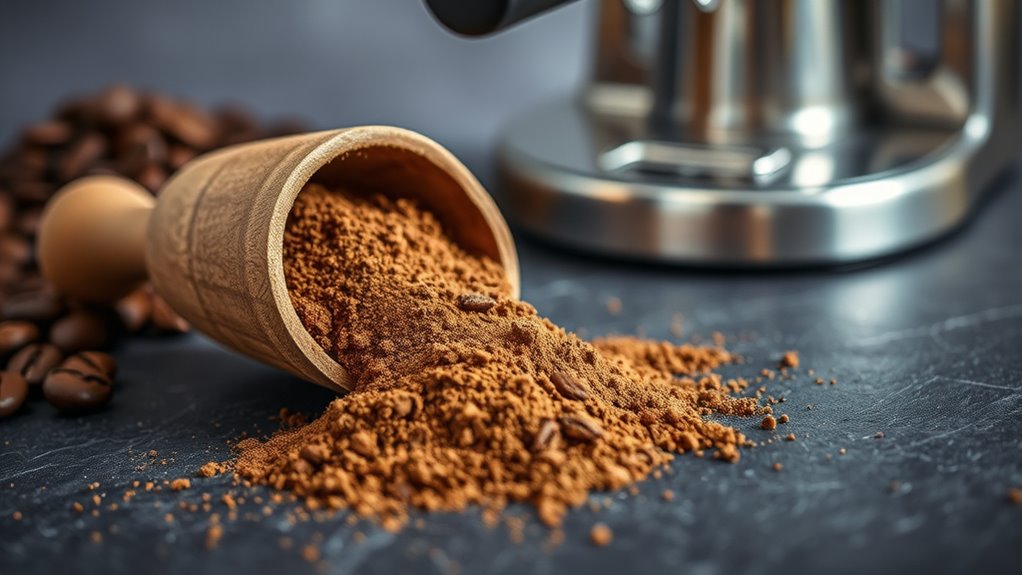
Although espresso powder might seem like a simple ingredient, its production involves a careful drying and grinding process that preserves its concentrated flavor. You start by brewing espresso from finely ground coffee beans, then spread the used grounds on a baking sheet.
Next, bake them at around 175°F for several hours until they become completely dry and crunchy. After cooling, grind the dried grounds into a fine powder using a coffee grinder, food processor, or mortar and pestle.
This drying step guarantees moisture is removed, creating a shelf-stable powder that intensifies flavor in recipes. To keep your homemade espresso powder fresh for up to a year, store it in an airtight container in a cool, dark place.
This method ensures you retain its robust, concentrated essence efficiently. It’s a simple process that makes a big difference in your cooking and baking! Understanding the impact of water temperature during espresso extraction can further enhance the flavor profile of your powder.
Espresso Powder vs. Instant Coffee: What’s the Difference?
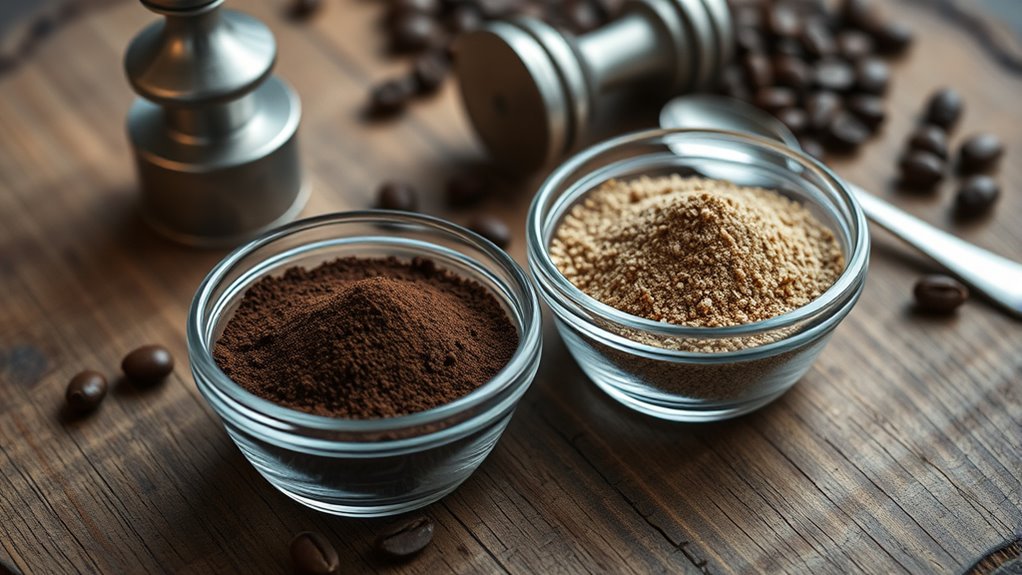
When you compare espresso powder to instant coffee, you’ll notice some key differences in both how they’re made and what they’re made from.
Espresso powder comes from dried brewed espresso grounds, while instant coffee is made from dehydrated coffee extract.
Because of this, their flavors and strength aren’t quite the same. Espresso powder tends to have a smoother, more nuanced taste.
On the other hand, instant coffee often comes across as sharper and more bitter.
Understanding the espresso extraction ratio can also provide insight into why espresso powder delivers a richer flavor profile suitable for various recipes.
Composition And Processing
Since you’re comparing espresso powder and instant coffee, understanding their composition and processing is essential. Espresso powder comes from brewed espresso grounds that are carefully dried and ground into a fine, concentrated powder.
In contrast, instant coffee is made by roasting coffee beans, brewing them, and then dehydrating the brewed coffee into crystalline granules designed for quick dissolution.
This fundamental difference means espresso powder retains a richer, more nuanced profile due to its concentrated form, while instant coffee often has a sharper, more bitter taste.
The brewing step in espresso powder production preserves more aroma and smoothness, making it particularly suited for baking applications.
Meanwhile, instant coffee prioritizes convenience and fast solubility over depth of flavor and aroma.
Understanding how variables like extraction time influence flavor can help appreciate why espresso powder maintains its rich profile compared to instant coffee.
Flavor And Concentration
How does espresso powder differ from instant coffee in flavor and concentration? Espresso powder is made from dehydrated brewed espresso, making it much more concentrated than instant coffee. You only need about a teaspoon per recipe to get its effect. Its flavor is rich, deep, and smooth, which helps enhance chocolate and baked goods without overpowering them with a strong coffee taste when used sparingly.
On the other hand, instant coffee is less concentrated and often used for quick brewing. It tends to have a sharper, more bitter flavor that can feel harsh in recipes. Both add coffee notes, but espresso powder has a more nuanced, mellow profile. That’s why it’s usually the preferred choice in baking, especially when you want to boost chocolate flavor without adding bitterness or strong coffee undertones. Using the correct extraction temperature during brewing helps preserve the smoothness and depth typical of espresso powder’s flavor.
Using Espresso Powder to Enhance Chocolate
Although espresso powder might seem like an unexpected ingredient, it can dramatically elevate the flavor of your chocolate baked goods. When you add just a teaspoon to brownies, cakes, or cookies, it intensifies the natural chocolate notes without leaving a coffee taste.
Think of espresso powder as a flavor enhancer, much like salt, that deepens and enriches the chocolate profile. Because it’s highly concentrated, only a small amount, about one teaspoon per cup of batter, is needed to achieve this effect.
Espresso powder acts like salt, intensifying and enriching chocolate with just a small, potent amount.
Incorporating espresso powder into chocolate mousse or ganache also adds complexity, creating layered flavors that make your desserts more decadent and satisfying.
Using espresso powder is a precise way to boost chocolate intensity and enrich your recipes with minimal effort. For best results, use freshly ground beans or freshly prepared espresso powder to maximize aroma and flavor enhancement.
Sweet Recipes Enhanced by Espresso Powder
When you add espresso powder to sweet recipes, you enhance their richness and deepen the chocolate flavor without introducing a strong coffee taste. Just about a teaspoon can intensify the chocolate aroma in cakes, brownies, and cookies, making them more flavorful.
In creamy desserts like tiramisu or mousse, espresso powder adds a subtle coffee note that complements the texture and elevates taste complexity.
You’ll also find it effective in frostings, ganache, and sauces, where it enriches the flavor profile and adds decadence.
For no-bake treats such as chocolate pudding pies or dips, espresso powder introduces a balanced coffee undertone that cuts through sweetness, creating a well-rounded flavor.
Using espresso powder thoughtfully can really transform your sweet recipes with minimal effort. For best results, use freshly ground coffee with a fine, consistent texture to preserve the full flavor profile.
Savory Recipes Boosted by Espresso Powder
Because espresso powder enhances both flavor and aroma, it serves as a powerful ingredient in savory cooking. You can add it to dry rubs and spice blends to impart a smoky, roasted depth to meats like ribs and chicken.
Espresso powder adds smoky, roasted depth to dry rubs and spice blends for meats like ribs and chicken.
Incorporating a small amount into marinades amplifies umami flavors while introducing a subtle coffee undertone. When you stir espresso powder into chili or stews, it boosts richness and complexity by intensifying the savory profile.
Mixing it into barbecue sauce contributes a deep, roasted flavor that balances sweet and tangy elements effectively.
Additionally, using espresso powder in coffee-infused gravies and sauces adds nuanced smoky notes, elevating the overall taste experience of your savory dishes.
For precise flavor balance, it’s helpful to understand the espresso yield principles that affect extraction strength and flavor concentration in coffee-based ingredients.
Easy Espresso Powder Substitutes
If you don’t have espresso powder on hand, you can still achieve a similar flavor by using instant coffee or finely ground brewed espresso as substitutes.
Since instant coffee is less concentrated, use about 50% more than the espresso powder quantity your recipe calls for. For the closest flavor match, dissolve the instant coffee in a small amount of hot water before adding it.
Ground coffee beans can work too, but they may introduce extra bitterness and texture, altering your dish’s profile. Finely ground brewed espresso offers a closer taste but may affect moisture levels.
Adjusting the grind size of your substitute can help balance extraction and flavor when replicating espresso powder’s intensity.
How to Store Espresso Powder Properly
Although espresso powder is a durable ingredient, you’ll preserve its flavor and potency best by storing it correctly. Use an airtight container to prevent moisture absorption and keep it in a cool, dry, dark place away from sunlight. Avoid refrigeration since condensation can cause clumping and degrade quality.
Seal the container tightly after each use to maintain aroma and effectiveness. Proper storage can keep espresso powder fresh for up to one year, though it’s best used within six months for optimal flavor. Since espresso powder contains caffeine, proper storage also helps maintain its caffeine content and potency over time.
| Storage Tip | Reason |
|---|---|
| Airtight container | Prevents moisture absorption |
| Cool, dry, dark place | Maintains flavor and shelf life |
| Avoid refrigeration | Prevents condensation and clumps |
| Seal tightly after use | Preserves aroma and potency |
DIY Espresso Powder: How to Make It at Home
To make espresso powder at home, start by drying your used espresso grounds evenly on a baking sheet at a low temperature for several hours. This helps to remove all the moisture.
Once the grounds are completely dry and crisp, you’ll want to grind them finely using a coffee grinder or food processor. This will give you a consistent texture.
Doing it this way means you get a fresh, customizable powder that really enhances your recipes without any added bitterness. It’s a simple process, but the results are definitely worth it!
Drying Espresso Grounds
How do you turn damp espresso grounds into fine, flavorful powder? Start by spreading the used or brewed espresso grounds evenly on a parchment-lined baking sheet. Preheat your oven to 175°F (80°C) and place the sheet inside.
Dry the grounds for 1 to 3 hours, stirring every 30 minutes to guarantee even dehydration and prevent clumping. Proper drying is essential. The grounds should become crunchy and completely moisture-free to stop mold growth and lock in flavor.
Once dried, allow them to cool fully before grinding. This step assures a uniform, fine powder. Finally, store your homemade espresso powder in an airtight container, keeping it in a cool, dark spot.
With proper drying, your espresso powder will stay fresh and potent for up to six months. Easy, right? Just a little patience and you’ve got great espresso powder ready to go whenever you need it.
Grinding Techniques
Once your espresso grounds are thoroughly dried and cooled, grinding them to a fine, uniform powder becomes essential for maximizing flavor extraction.
To achieve the ideal texture, follow these steps:
- Spread the dried espresso grounds evenly on a parchment-lined baking sheet before grinding. This guarantees consistent texture and prevents clumping.
- Use a burr grinder set to the lowest setting or a high-powered blender. Both tools help you reach a fine, powdery consistency necessary for espresso powder.
- Allow the grounds to cool completely before grinding. This step prevents moisture buildup and maintains the powder’s dry, crunchy state.
After grinding, store your espresso powder in an airtight container. Keep it in a cool, dark place for up to six months to preserve its potency.
This way, you’ll get the best flavor and freshness every time.
Common Espresso Powder Mistakes
Although espresso powder can elevate your recipes, using it incorrectly often leads to disappointing results. One common mistake is adding too much, which creates a bitter taste and overwhelms other flavors.
If you grind your own espresso, make sure it’s finely ground. Coarse particles cause a gritty texture.
Substituting instant coffee for espresso powder without adjusting quantities weakens the flavor depth you want. Avoid adding espresso powder directly into hot liquids without dissolving it first. This causes clumps and uneven flavor distribution.
Finally, improper storage, especially in humid conditions, leads to clumping and potency loss.
To use espresso powder effectively, measure carefully, grind finely if homemade, dissolve properly, and store it in a cool, dry place.
This way, you’ll maintain its rich flavor and texture.
Frequently Asked Questions
Can Espresso Powder Be Used in Hot Beverages?
You absolutely can use espresso powder in hot beverages. It transforms any drink into a bold coffee masterpiece instantly. Just dissolve half a teaspoon in hot water or milk, and you’ll reveal rich, intense flavor effortlessly.
It’s super easy and quick to do, and it really wakes up your drink. Whether it’s a latte, hot chocolate, or even just plain hot water, espresso powder adds that perfect coffee kick. Give it a try—you won’t be disappointed!
Does Espresso Powder Contain Caffeine?
Yes, espresso powder contains caffeine, typically 30-80 mg per teaspoon. You’ll get a concentrated caffeine boost, but since you use small amounts, your overall intake remains minimal unless you consume it excessively.
Is Espresso Powder Gluten-Free?
Yes, espresso powder is naturally gluten-free since it’s made from coffee beans. However, you should check for cross-contamination risks in commercial products unless labeled gluten-free. This is especially important if you have celiac disease or gluten sensitivity.
It’s always a good idea to read labels carefully or contact the manufacturer if you’re unsure. That way, you can enjoy your espresso powder without any worries!
How Long Does Espresso Powder Last Unopened?
Unopened espresso powder lasts up to one year when stored properly. You’ll want to keep it in a cool, dry place away from light and heat. This helps maintain its flavor intensity and aroma throughout that time.
Keeping it fresh is key if you want that rich, bold espresso flavor in your recipes. So, just a little care goes a long way!
Can Espresso Powder Replace Coffee Grounds in Brewing?
No, you can’t replace coffee grounds with espresso powder for brewing. It’s highly concentrated and dehydrated, which leads to a bitter, overpowering taste.
Instead, try using freshly ground beans or instant coffee. They work much better for a proper brew. Trust me, your cup will taste way better that way!
Conclusion
Now that you understand espresso powder’s unique role in boosting flavor, you can confidently use it to elevate your recipes. Like a telegram cutting through static, it delivers a clear, rich punch that intensifies chocolate and balances sweetness.
Remember to store it correctly and avoid common pitfalls to keep its potency intact. Whether you buy it or make it yourself, espresso powder is a small ingredient with a big impact on your culinary creations.

Pingback: Is 3 Shots Of Espresso Too Much – Safe Limit
Pingback: How Much Is A Double Shot Of Espresso – Price Guide
Pingback: How Much Caffeine In Espresso Martini – Answered