An espresso machine around $500 can make decent shots, but your grinder quality and temperature control matter more for flavor and consistency. Focus on stable temperature systems like PID controllers and a quality burr grinder for uniform grinds. These control extraction better than flashy machine features.
Proper maintenance and filtered water also impact taste and longevity. While entry-level machines have limits, understanding these details helps you get the best from your setup. Plus, it lets you know when upgrading makes a real difference.
What Can You Really Get for $500?
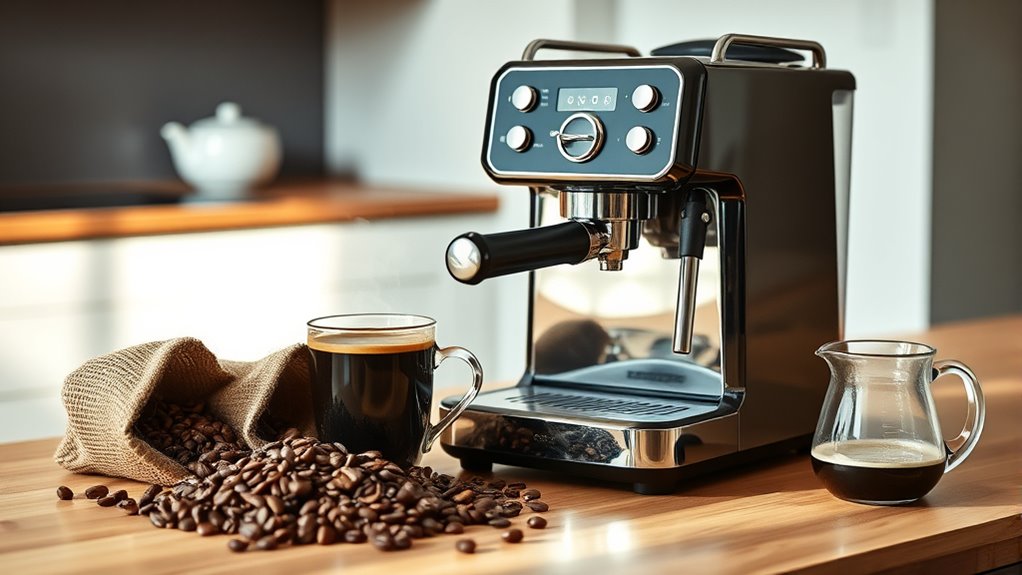
While $500 won’t get you a professional-grade espresso machine, it can secure a solid entry-level setup capable of producing decent espresso. At this price, you’ll find semi-automatic machines often paired with entry-level burr grinders or all-in-one models that include basic grinders.
For $500, you can get a reliable entry-level espresso setup with semi-automatic machines and basic grinders.
Expect 58mm portafilters, a standard size that supports good pressure and extraction consistency.
However, no machine here delivers cafe-quality espresso out of the box. You’ll need fresh beans and careful dialing-in of grind size, dose, and tamp pressure.
Prioritize a quality grinder and temperature stability over extra features or aesthetics, as these factors considerably impact the espresso’s flavor profile.
This setup gets you into espresso making but requires skill and refinement for ideal results. It’s a great starting point if you’re willing to learn and experiment.
For a smoother, more balanced flavor, consider techniques like aeration through shaking to enhance your espresso experience beyond just brewing.
What to Expect From a $500 Espresso Setup
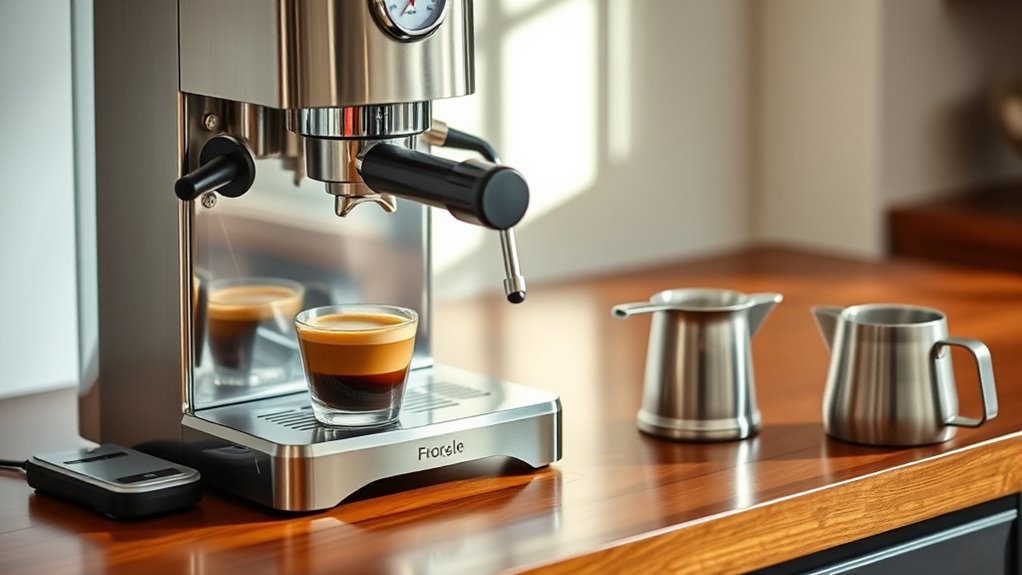
Spending around $500 on an espresso setup gets you a functional entry-level machine, but expect the grinder to be a separate purchase if you want quality shots. You’ll likely choose between semi-automatic machines with standard portafilters or all-in-one units with basic grinders, each offering different control levels. Achieving café-quality espresso requires fresh beans and precise dialing-in; no machine delivers perfect shots immediately.
Prioritize stable temperature control and a good burr grinder for noticeable quality improvements. Additional costs for accessories, maintenance, and potential upgrades should be anticipated.
Semi-automatic or all-in-one entry-level machines are common choices. The grinder is often sold separately, but it is essential for extraction quality.
The necessity of fresh beans and dialing-in for ideal shots is crucial.
Importance of temperature stability in espresso consistency cannot be overstated.
Extra expenses for maintenance and performance upgrades should also be considered.
Regular recalibration of espresso shot timing is key to maintaining consistent flavor and extraction quality.
Why the Grinder Matters More Than the Espresso Machine
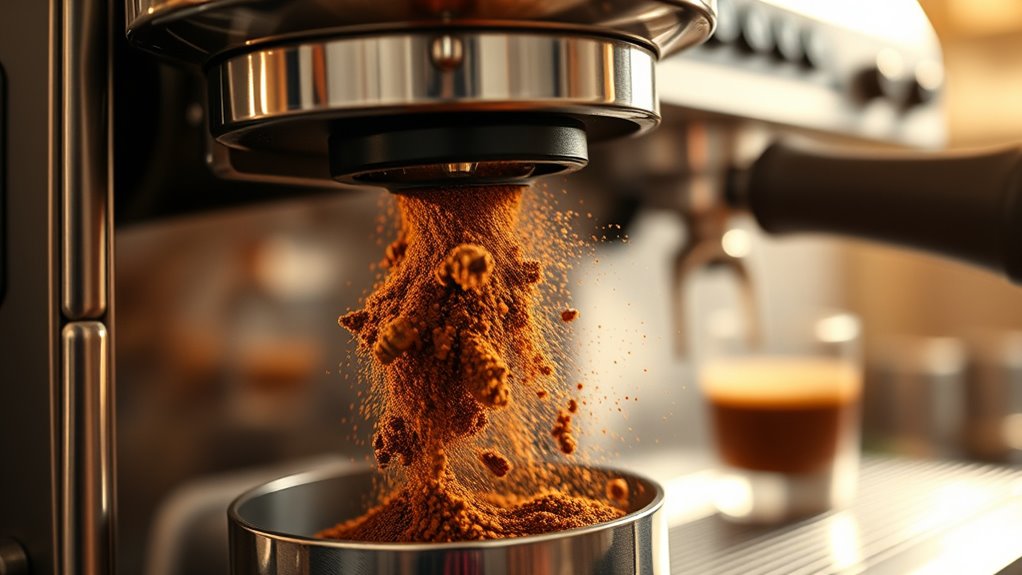
Because grind consistency directly controls extraction quality, the grinder plays a more critical role than the espresso machine itself. Even the best machine can’t fix uneven particle size or stale grounds from a subpar grinder.
A high-quality burr grinder delivers consistent, uniform particles that are essential for stable pressure and ideal extraction. This precision influences flavor clarity, crema density, and shot timing. It gives you greater control over strength and balance.
Freshly ground coffee reveals nuanced flavors that pre-ground or poorly ground beans just can’t match. Upgrading your grinder usually improves espresso quality more noticeably than investing in a pricier machine. Additionally, maintaining the correct grind size and pressure is key to achieving the perfect shot.
How Temperature Stability Makes Your Espresso Taste Better
You want a machine with a PID controller because it keeps the brew temperature steady. That consistency is key to pulling out balanced flavors in your espresso.
Even small temperature changes can throw off the acidity or sweetness, messing with the overall taste.
Machines without PID controllers can fluctuate by about ±5°F, causing noticeable shifts in flavor due to changes in extraction temperature stability.
Importance Of PID Controllers
Although many espresso machines heat water rapidly, only those equipped with PID controllers maintain temperature within a tight ±1°F range. This precision is essential for ideal extraction. It prevents the thermal fluctuations common in boilers without PID that can cause inconsistent shot quality and undesirable flavor shifts.
With PID technology, you can fine-tune the water temperature to match your coffee’s profile. This ensures reproducible results and helps you avoid over- or under-extraction, which leads to bitterness or sourness. Investing in a PID-equipped machine really elevates your espresso’s taste and consistency over time.
- Maintains water temperature within ±1°F for best extraction
- Enables precise temperature adjustments tailored to coffee beans
- Prevents flavor defects caused by thermal instability
- Reduces shot variability shot to shot
- Enhances overall espresso quality and repeatability
Additionally, pairing a PID controller with a machine that delivers consistent pressure between 15-20 bars optimizes flavor extraction and crema quality.
Consistent Brew Temperature
How does maintaining a consistent brew temperature enhance your espresso’s flavor profile? It guarantees ideal extraction, bringing out nuanced flavors and a rich crema. When temperature fluctuates, your shot risks sourness or bitterness, which ruins the taste.
Machines with PID controllers hold water temperature steady within ±1°F, delivering superior shot quality. This stability means you won’t have to constantly tweak settings, making it easier to dial in great espresso, especially if you’re new.
| Temperature Stability | Impact on Espresso |
|---|---|
| ±1°F (PID-controlled) | Balanced extraction, rich crema |
| Larger fluctuations | Sour or bitter taste |
| Consistent heat | Repeatable, reliable shots |
Consistent brew temperature directly influences extraction precision. This ensures your espresso tastes exactly how it should every time.
Impact On Flavor Balance
When an espresso machine maintains stable brewing temperatures, it releases the full potential of your coffee beans by ensuring ideal extraction. This precise control prevents over-extraction, which causes bitterness, and under-extraction, which results in sourness.
With a PID controller, the water temperature remains constant, allowing you to dial in your shot with accuracy and achieve a balanced flavor profile.
Fluctuations in temperature disrupt extraction, weakening crema quality and overall taste. By stabilizing temperature, you extract a richer, more refined range of flavors, elevating every shot you pull.
- Maximum extraction enhances flavor balance and crema
- PID controllers maintain precise temperature control
- Prevents sourness from under-extraction and bitterness from over-extraction
- Enables consistent, nuanced flavor profiles
- Stabilizes brewing to discover full coffee complexity
Additionally, true espresso requires high-pressure extraction, a process that is best supported by machines with stable temperature control to develop authentic crema and flavor layers.
Which Features Are Worth It on a Budget
When you’re picking out a budget espresso machine, it’s a good idea to focus on stable temperature control. Ideally, look for one with a PID controller because that helps keep your extraction consistent and brings out the best flavor.
Before you get caught up in fancy machine features, put your money into a high-quality burr grinder first. A uniform grind size makes a bigger difference in your shot quality than any extra bells and whistles on the machine.
Also, try to choose machines that come with standard 58mm portafilters. This way, you’ll have an easier time finding accessories that fit.
And don’t forget to pick something that’s simple to maintain — keeping your machine in good shape will pay off in the long run.
If you want to enjoy a richer coffee experience with added caffeine, consider adding espresso shots to your drinks to boost both flavor and energy.
Essential Features To Prioritize
Although espresso machines come with a variety of features, you should prioritize stable temperature control, such as a PID system, to maintain consistent shot quality and flavor. Temperature stability directly influences extraction, guaranteeing every shot is balanced and rich.
Also, a robust heat source like a reliable boiler or heat exchanger prevents unwanted fluctuations during brewing.
Opt for a machine with a standard 58 mm portafilter; this size offers better control and broad compatibility with aftermarket accessories.
Try to resist splurging on flashy extras. Focus instead on core performance features that really impact espresso quality.
- PID temperature control for precision
- Reliable boiler or heat exchanger
- Standard 58 mm portafilter
- Durable build materials to ensure longevity
- Simple interface prioritizing essential functions
Additionally, mastering the extraction process, including using the correct coffee dose and volume, is essential for achieving the best espresso flavor.
Grinder Importance Over Extras
Since grind quality directly dictates espresso flavor and extraction consistency, investing in a high-quality burr grinder outperforms allocating budget toward advanced machine features. A precise burr grinder guarantees uniform particle size critical for ideal extraction, enhancing crema and flavor clarity. Remember that espresso requires a very fine grind size to generate pressure and produce crema effectively.
On a budget, skip programmable volumes or oversized steam wands. These don’t influence shot quality as much. Prioritize grinder upgrades first to control grind consistency and freshness, which directly impact your espresso’s taste.
| Feature Focus | Impact on Espresso Quality |
|---|---|
| Burr Grinder | High (uniform grind size) |
| Programmable Shots | Low (convenience only) |
| Steam Wand Size | Low (milk texture minor gain) |
| Multiple Brew Modes | Low (limited effect on shots) |
| Grind Freshness | High (flavor preservation) |
Upgrade your grinder first for cost-effective, consistent results.
Temperature Stability Benefits
Mastering grind quality sets a solid foundation, but controlling extraction temperature directly influences how those grounds release flavor compounds. Temperature stability, often maintained by PID controllers, ensures water remains consistent throughout extraction, preventing under- or over-extraction.
On budget machines, lacking this control means flavor inconsistency shot after shot. Investing in models with dual sensors or thermoblocks enhances thermal regulation, allowing precise dial-in and reliable repeatability.
When selecting on a budget, prioritize temperature regulation over flashy extras to elevate shot quality sustainably.
PID controllers maintain exact water temperature. Dual sensors improve real-time thermal feedback. Thermoblocks provide rapid, stable heating.
Stable temperature prevents extraction errors. Consistent heat yields balanced, flavorful espresso.
Choosing machines with stainless steel boilers can also improve thermal stability and durability without significant cost increases.
Maintenance and Water Quality Tips for Your Espresso Machine
When you want your espresso machine to deliver consistent, high-quality shots, regular maintenance and careful attention to water quality are non-negotiable. Descale your machine regularly using vinegar or commercial solutions to prevent mineral buildup that impedes water flow.
Always use filtered or bottled water to reduce minerals, which extends your machine’s lifespan and enhances performance.
Clean the water reservoir frequently to avoid mold, bacteria, and stale flavors. After each use, flush the system with clean water to remove residual coffee oils, preventing clogging and flavor contamination.
If your machine includes water filters, replace them periodically to maintain consistent water quality and ideal extraction.
These precise steps ensure your espresso machine operates efficiently, preserving both flavor integrity and mechanical reliability over time. Taking a little time for maintenance now means more delicious coffee later. It’s worth it!
How Build Quality Affects Durability in Budget Espresso Machines
Beyond regular maintenance and water quality, the durability of your espresso machine heavily depends on its build quality, especially when working within a budget. Machines constructed with robust materials like stainless steel or aluminum resist wear better than plastic-only models.
Inferior build quality speeds up the breakdown of important parts such as heating elements and pumps. This can lead to leaks, overheating, and electrical faults. A well-built budget machine keeps performing consistently over time.
This means fewer repairs and longer use.
Key factors affecting durability include:
- Use of metal components versus plastic
- Quality of internal heating elements and pumps
- Resistance to leaks and overheating
- Electrical system robustness
- Overall structural integrity and assembly precision
Picking a budget machine with solid build materials really pays off. It ensures a reliable, long-lasting espresso experience.
When to Upgrade Beyond Entry-Level Espresso Machines
Although entry-level espresso machines serve well for beginners, you’ll notice significant performance gains once you upgrade past the $1,000 price point. Higher-end models typically include PID controllers for precise temperature control and dual boilers, allowing you to brew espresso and steam milk simultaneously. These are features entry-level machines lack.
This upgrade enhances shot consistency, workflow efficiency, and enables greater customization of brew parameters. Pairing a superior grinder with your advanced machine further refines flavor extraction. This delivers more noticeable improvements than upgrading the machine alone.
Additionally, these machines are built with durable materials, often lasting over a decade with proper care. You’ll also achieve richer crema and superior milk frothing quality. This elevates your espresso experience beyond basic functionality to professional-grade performance.
Can a Budget Espresso Machine Deliver Café-Level Flavor?
Even if you invest in a budget espresso machine under $200, you’ll quickly find it often lacks the precise temperature stability and pressure control that are essential for replicating café-level flavor profiles.
Budget espresso machines under $200 often miss the precise temperature and pressure control needed for café-quality flavor.
These machines can produce decent espresso, but inconsistent extraction often leads to flat or overly bitter shots.
You’ll need a high-quality burr grinder and fresh beans to push flavor quality closer to café standards.
Upgrading to a machine with PID temperature control and stable 9-bar pressure vastly improves shot consistency and flavor complexity.
So, keep in mind that budget machines often don’t have precise temperature control.
Pressure inconsistencies can really affect extraction quality.
And honestly, the burr grinder quality impacts flavor more than the machine itself.
Using a PID controller helps keep temperature steady, which makes a big difference.
If you want that café-level crema and flavor, it usually requires higher-end equipment.
Frequently Asked Questions
How Much Space Does an Espresso Machine Typically Require in a Kitchen?
You’ll typically need 8 to 12 inches wide, 10 to 15 inches deep, and about 12 inches high for an espresso machine. Compact models fit smaller spaces, but remember to allocate extra room for accessories and maintenance.
It’s always a good idea to leave a bit of breathing room around your machine. That way, you can easily access it for cleaning and repairs without any hassle. Plus, having some extra space means you can keep all your espresso tools close by.
Are Espresso Machines Compatible With Non-Dairy Milk Alternatives?
Yes, you can froth non-dairy milk alternatives like oat or almond milk effectively, but it depends on your espresso machine’s steam wand power and design.
Pre-warming the milk and using barista-style versions can really improve the texture and foam quality. It’s all about finding the right technique that works with your machine.
Can I Use an Espresso Machine Without Prior Barista Experience?
You can dive right in, pressing buttons as steam hisses and rich espresso flows. With automatic settings and guided dosing, you’ll master grind size, tamping pressure, and extraction timing.
This means you can craft shots like a pro even without prior barista experience. It’s easier than you might think! Just follow the machine’s prompts and enjoy the process.
What Is the Average Energy Consumption of a Home Espresso Machine?
You’ll find home espresso machines use between 800 to 1500 watts while brewing, consuming roughly 0.2 to 0.75 kWh per shot. Most of the energy is drawn during preheating and temperature maintenance phases.
How Noisy Are Espresso Machines During Operation?
You’ll find espresso machines produce noise around 70-80 decibels, mainly from vibratory pumps and boiling water. Steaming milk adds brief loudness.
Rotary pumps run quieter but cost more, so expect noticeable but not overwhelming noise. It’s all part of the espresso experience!
Conclusion
So, you’re wondering if a $500 espresso machine is worth it? Ironically, it’s often not the machine but the grinder and temperature stability that make or break your shot. You might invest in sleek features, but without precise grind and consistent heat, flavor suffers.
Still, with proper maintenance and decent water quality, a budget setup can surprise you. Just don’t expect it to replace your favorite café anytime soon.