Espresso ground coffee is finely milled to a texture like powdered sugar. It’s designed for high-pressure espresso machines that extract rich, concentrated flavor quickly. This grind maximizes surface area for ideal extraction, balancing strength, aroma, and crema quality.
You’ll want fresh, dark-roasted beans for boldness. But adjusting grind size precisely is key to avoid bitterness or sourness. If you keep exploring, you’ll discover how grind consistency, bean choice, and maintenance shape every perfect shot.
What Is Espresso Ground Coffee and How Is It Different From Other Grinds?
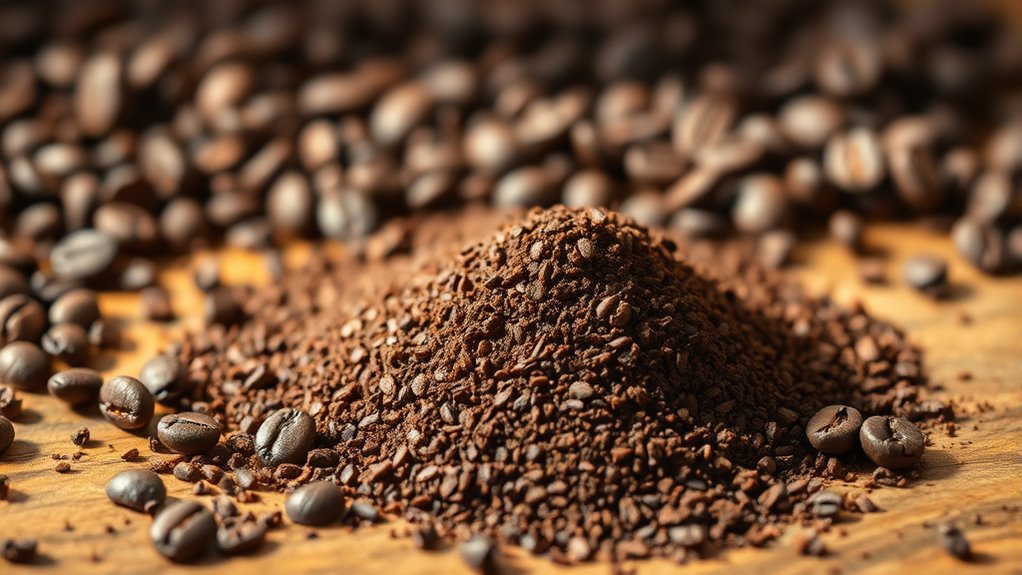
Although you might be familiar with various coffee grinds, espresso ground coffee stands out due to its exceptionally fine texture, resembling powdered sugar. This fine milling is vital because it guarantees quick, even extraction under the high pressure of an espresso machine, which typically takes 25-30 seconds.
The fine grind maximizes the surface area, allowing ideal flavor extraction during this rapid brewing process.
If the grind is too coarse, your espresso will taste weak and sour due to under-extraction. Conversely, a grind that’s too fine can cause over-extraction, resulting in bitterness.
Designed specifically for high-pressure machines, espresso grounds aren’t suitable for brewing methods like French press or drip coffee, which require coarser grinds.
Understanding these nuances helps you achieve the perfect espresso shot every time. So, getting the grind just right makes all the difference!
Espresso also typically uses dark or Italian roasts to enhance its rich, smoky flavor profile.
Comparing Espresso Grind Size to Other Coffee Grinds
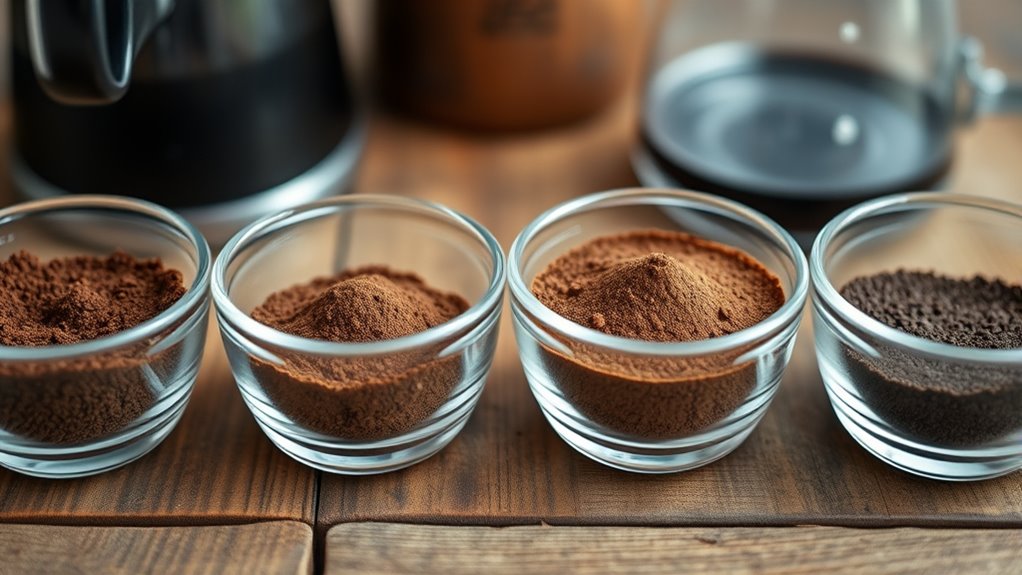
When you compare espresso grind size to other coffee grinds, you’ll notice its distinct fineness, resembling powdered sugar. This contrasts sharply with the coarser textures used in methods like French press or drip brewing.
Espresso grind demands uniformity and density to prevent channeling during high-pressure extraction. This fine grind drastically increases surface area, allowing hot water to swiftly pull rich flavors and oils within 25-30 seconds.
In contrast, coarser grinds produce slower extraction, which isn’t suitable for espresso machines. If the grind’s too coarse, your espresso will taste weak and sour due to under-extraction.
On the other hand, grinding too fine risks over-extraction, yielding bitter flavors and excessive pressure. Understanding these differences helps you appreciate how grind size directly influences espresso quality compared to other brewing methods.
For specialized varieties like white espresso, a finer grind than standard espresso is essential due to the denser, harder bean structure.
Why Espresso Ground Coffee Grind Size Matters
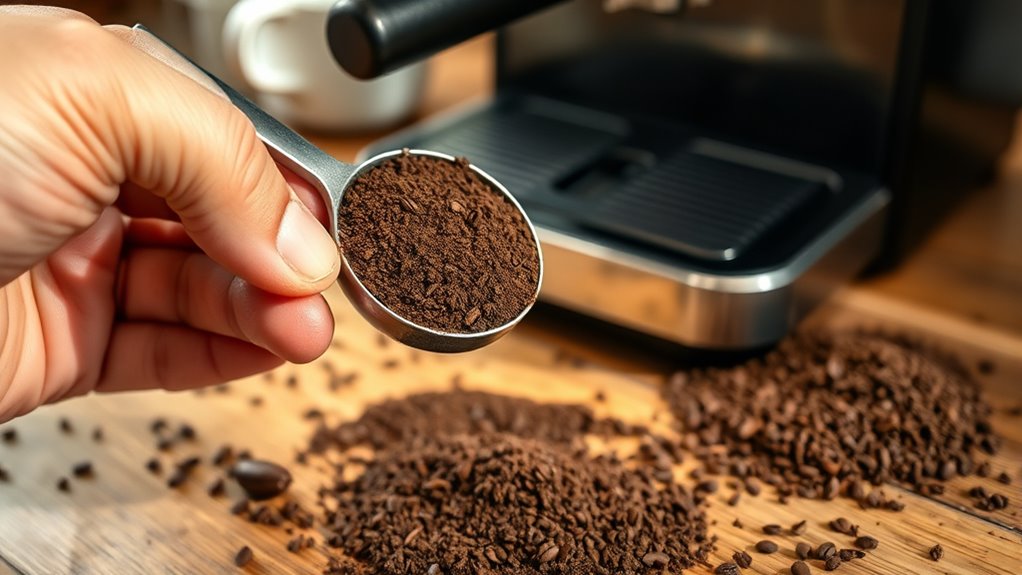
Because espresso relies on high-pressure extraction, the grind size directly controls how water interacts with the coffee grounds, impacting flavor and texture. You need a finely ground coffee, similar to powdered sugar, to guarantee proper extraction within the ideal 25-30 second timeframe. Getting the grind size right is essential for balancing extraction and achieving a rich crema and full body.
Here’s why grind size matters:
- Too coarse a grind causes under-extraction, leading to weak, sour, or thin espresso shots.
- Too fine a grind results in over-extraction, producing bitter and overly intense flavors.
- Consistent, precise grinding ensures even water flow, ideal extraction, and a concentrated, satisfying espresso.
Mastering grind size helps you pull shots with ideal texture and balanced extraction every time. It’s all about finding that sweet spot so your espresso tastes just right. Regular calibration of your grinder is crucial to maintain consistent extraction quality over time.
How Espresso Grind Size Affects Flavor and Extraction
Since espresso extraction happens quickly under high pressure, the grind size plays a crucial role in determining how flavors develop during brewing. A finer grind increases the coffee’s surface area, promoting efficient flavor extraction within the brief 25-30 second shot window.
If your grind is too coarse, you risk under-extraction, producing weak, sour, or watery espresso.
On the other hand, an overly fine grind can cause over-extraction, drawing out bitter, harsh, or burnt notes from too much contact with water.
The ideal grind resembles powdered sugar, balancing extraction time and flavor clarity.
Slight adjustments in grind size, typically between 200-400 microns, can dramatically impact extraction time and overall espresso quality.
Choosing the Right Beans for Espresso Ground Coffee
You’ll want to start by picking the right bean varieties. Arabica beans give you balanced acidity and complex flavors, while Robusta adds more body and a caffeine kick.
When it comes to roast levels, darker roasts are usually best for espresso because they bring out those bold, intense flavors that make a rich shot so satisfying.
Plus, knowing how your bean choice affects the grind and extraction can really take your espresso game to the next level.
Maintaining proper grind size and pressure is essential for achieving the perfect espresso extraction and crema quality.
Bean Varieties for Espresso
When selecting beans for espresso, understanding the distinct qualities of Arabica and Robusta varieties is essential. Arabica beans offer a sweeter, fruity flavor, making them ideal for a nuanced espresso.
Robusta beans provide a stronger, more bitter taste and pack about twice the caffeine, contributing to a bold shot with thick crema.
High-quality espresso blends often combine both to balance flavor, crema, and caffeine. It’s a smart way to get the best of both worlds.
Consider these key points:
- Arabica delivers sweeter, complex flavors preferred in traditional espresso.
- Robusta adds strength, bitterness, and caffeine punch, enhancing crema.
- Freshness matters. Choose beans roasted within one to two weeks for ideal flavor and aroma.
Additionally, espresso beans are typically roasted darker to increase oil content and bring out bolder flavors essential for a rich espresso experience.
Roast Levels Impact
Although roast level might seem like a straightforward choice, it profoundly shapes the flavor, aroma, and texture of your espresso ground coffee.
Dark roasts, with their developed oils, deliver a richer, bolder taste and create a thicker crema, making them the traditional favorite for espresso.
Light roasts preserve the bean’s original characteristics, offering brighter acidity and nuanced flavors. These suit specialty or single-origin espresso but can feel less intense.
Medium roasts strike a balance, providing both brightness and depth, ideal for more complex shots.
The roast also affects oil content on the bean surface, influencing mouthfeel and crema quality.
When selecting your roast, consider the flavor intensity you want and the brewing method, as these factors determine how well the roast level complements your espresso experience.
It’s all about finding what works best for your taste and style.
Extended roasting also reduces acidity and enhances natural sweetness through caramelization of sugars, contributing to a smoother espresso profile.
Why Freshness Matters for Espresso Ground Coffee
Since espresso relies heavily on the delicate balance of aromatic oils and volatile compounds, keeping your coffee grounds fresh is essential for achieving a rich, vibrant shot. Freshly ground coffee preserves maximum flavor and aroma, which start fading within minutes after grinding.
Using stale grounds compromises both taste and extraction quality, leading to dull espresso.
Here’s why freshness matters:
- Flavor retention: Fresh grounds maintain volatile compounds for bright, complex flavors.
- Crema and body: Freshness improves crema formation and gives your espresso a richer body.
- Consistent extraction: Fresh grounds avoid uneven extraction caused by stale, degraded particles.
To get the most from your espresso, always prioritize freshness. It’s key to unlocking the coffee’s full sensory potential. Additionally, maintaining the ideal grind size with fresh grounds is crucial for controlling extraction time and ensuring balanced flavor.
Tips for Grinding Beans Perfectly for Espresso Ground Coffee
To grind beans perfectly for espresso, you want a fine, consistent grind size—kind of like powdered sugar with no clumps. It’s best to use a burr grinder set to its finest setting.
Oh, and don’t forget to clean it regularly; that helps keep the grind uniform and preserves the flavor.
Also, try to grind your beans just before brewing. This way, you get maximum freshness and the best extraction every time. Trust me, it makes a big difference!
For optimal extraction, aim for a grind resembling gritty table salt in texture and adjust in small increments based on shot timing.
Ideal Grind Size
How fine should you grind your coffee beans to pull the perfect espresso shot? The ideal grind size is very fine, similar to powdered sugar. This allows full extraction within the short brew time. Achieving this requires precision and careful adjustment.
Keep these guidelines in mind:
- Use a burr grinder for a consistent, uniform fine grind. It helps prevent channeling and uneven extraction.
- Avoid grinding too fine to prevent over-extraction and bitterness. Also, don’t go too coarse, or you’ll get a weak, under-extracted flavor.
- Adjust grind size depending on your espresso machine and bean variety. This helps optimize flavor and crema production.
For the best results, always use high-quality espresso beans to enhance flavor and crema richness.
Consistent Grind Distribution
Although achieving the perfect grind size is vital, ensuring consistent grind distribution is just as important for pulling an exceptional espresso shot. You should use a high-quality burr grinder, which produces uniform, fine grounds that look like powdered sugar.
Calibrate your grinder carefully to keep the particle size consistent and avoid over- or under-extraction.
Always grind immediately before brewing to keep the coffee fresh and limit moisture absorption, which can cause clumping.
Regularly clean the grinder to prevent oil build-up that messes with even grinding.
After grinding, make sure to distribute the coffee evenly in the portafilter before tamping. This helps promote uniform water flow and stops channeling from happening.
Consistent distribution guarantees balanced extraction, so you get to enjoy the full flavor profile of your espresso.
Equipment Maintenance Tips
Since maintaining your grinder directly impacts the quality of your espresso, regular upkeep is essential for grinding beans perfectly. A well-maintained grinder ensures consistent grind size and ideal extraction. This helps prevent flavor degradation caused by clogged burrs or stale beans.
To keep your grinder in peak condition:
- Clean your grinder regularly to remove oily residue buildup that can clog burrs and cause uneven grinding.
- Grind beans immediately before brewing to preserve freshness and prevent oxidation, which dulls flavor.
- Adjust grind settings gradually and test small shots to fine-tune the balance between under-extraction and over-extraction.
Keeping up with these simple steps makes a noticeable difference in your espresso’s taste. It’s worth the little extra effort!
Common Mistakes to Avoid When Using Espresso Ground Coffee
When you use espresso ground coffee, paying close attention to grind size is essential because even slight deviations can ruin your shot. Using grounds that are too coarse leads to under-extraction, producing weak, watery espresso.
Conversely, grinding too fine risks over-extraction, resulting in bitter flavors and hindered espresso flow.
You need to adjust grind size to match your machine and the roast level. A one-size-fits-all approach just compromises quality.
Also, avoid using pre-ground coffee meant for other brewing methods since its grind consistency won’t suit espresso extraction.
Proper storage is equally important. Exposure to air, moisture, or heat quickly degrades freshness and flavor.
Frequently Asked Questions
Can I Use Pre-Ground Espresso Coffee for Other Brewing Methods?
You can use pre-ground espresso coffee for other methods, but it’s usually too fine. This can cause bitterness or clogging in your equipment.
How Should I Store Espresso Ground Coffee to Maintain Freshness?
Treat your espresso grounds like treasure. Seal them airtight and tuck them in a cool, dark hideaway. Avoid storing them in the fridge.
Try to use them within two weeks. Or better yet, grind fresh to keep every bold note vibrant and alive.
Does Water Temperature Affect Espresso Extraction With Ground Coffee?
Yes, water temperature greatly affects espresso extraction. You need it between 195°F and 205°F to avoid sour or bitter flavors.
Keeping it consistent guarantees balanced, rich espresso with ideal aroma and taste every time. So, paying attention to temperature really makes a difference in your shot.
What Equipment Is Best for Grinding Espresso Coffee at Home?
You should choose a conical burr grinder for home espresso grinding because it maintains consistent, fine grounds while minimizing heat buildup. This helps preserve the flavor of your coffee.
Stepped grinders are great too. They help you dial in the perfect grind size precisely and reliably. So, you can get your espresso just how you like it.
How Long Does Espresso Ground Coffee Stay Fresh After Grinding?
You’ve got about 15 to 30 minutes of peak freshness before your espresso grounds start aging like bad milk. Use them within 24 hours, or seal airtight to stretch flavor up to two weeks.
Keep in mind, the clock really starts ticking once the beans are ground. So, for the best taste, try to use them as soon as possible. If not, airtight storage is your best friend.
Conclusion
Think of espresso ground coffee as the finely tuned gears of a precision watch. Each particle size works in harmony to release rich, bold flavors. By mastering the grind, you control time itself, extracting the perfect shot with balanced taste and aroma.
Remember, freshness and the right beans are your guiding stars. Avoid common pitfalls, and you’ll craft espresso that’s not just coffee, but a vibrant ritual of flavor and finesse.