White espresso uses beans roasted below 325°F, before the first crack. This helps preserve natural compounds and caffeine, often up to 50% more than dark roasts. These dense, pale beans produce a lighter, golden shot with subtle nutty flavors and less bitterness.
That’s because there’s minimal Maillard reaction and caramelization happening. Grinding finely and brewing with higher pressure are essential for getting the ideal extraction.
If you want to master brewing techniques and find the best beans and equipment, there’s a lot more to explore ahead. Ready to dive in?
What Is White Espresso and How Is It Roasted
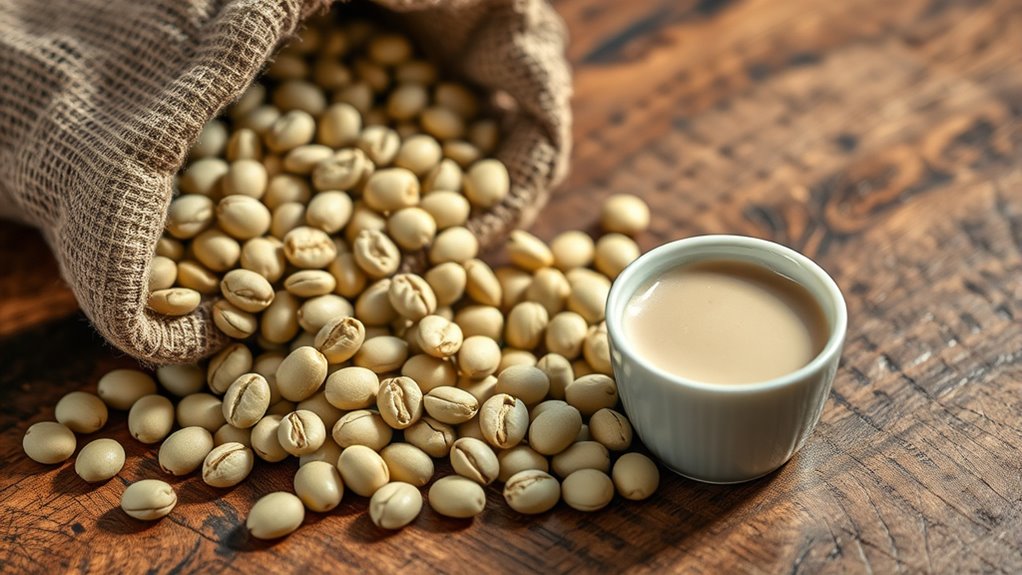
Although it might surprise you, white espresso is crafted from beans roasted at a temperature below the first crack, typically around 325°F. This light roasting stops before caramelization begins, which helps preserve the bean’s natural flavors and keeps the caffeine content high by avoiding heat damage.
White espresso is made from lightly roasted beans below 325°F, preserving natural flavors and caffeine.
The beans come out pale beige or tan, with a dense, hard texture that can be tough on standard grinders. You might need some specialized equipment to get a fine, consistent grind for the best results.
When brewed, white espresso produces a pale, golden shot with a unique flavor profile. It tastes nutty, earthy, and grain-like, without the bitterness or smoky roasted notes you usually find in darker roasts.
This careful roasting process ensures the espresso keeps its natural complexity and higher caffeine levels. That’s what really sets it apart in both look and chemical makeup from traditional espresso beans. Like blonde espresso, white espresso retains more caffeine due to lighter roast preservation, contributing to a brighter and more vibrant cup.
How White Espresso Differs From Regular Espresso
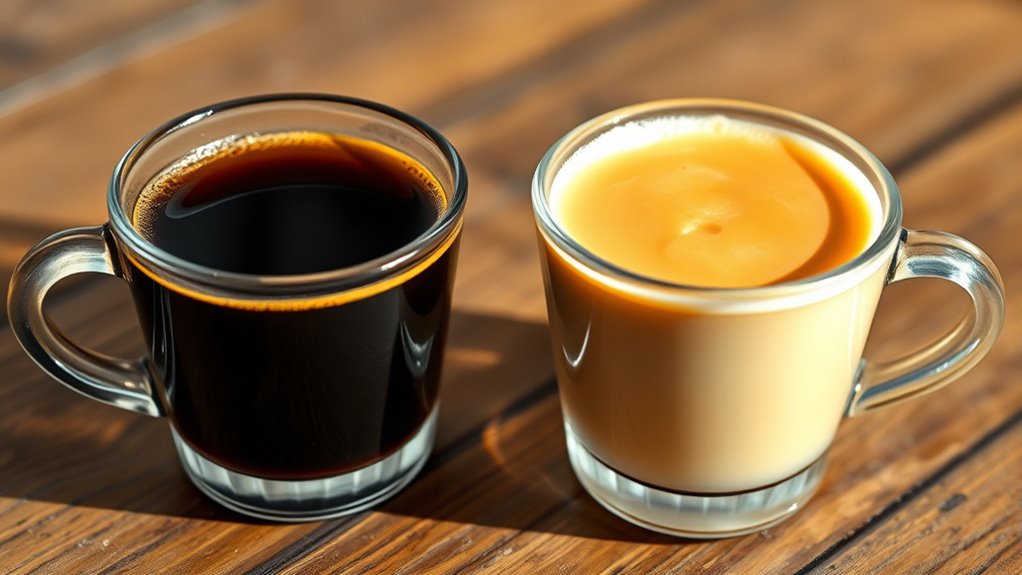
When you compare white espresso to regular espresso, you’ll notice the most striking differences come from the roasting process and how it affects the bean’s physical and chemical properties. White espresso beans are roasted below the first crack, around 325°F. This results in pale, cream-colored beans that retain more caffeine and natural compounds.
Because of this minimal roasting, there’s less Maillard reaction and caramelization happening. That means white espresso keeps more nutty, earthy, and grain-like flavors. It’s quite different from the bold, roasted, and bitter notes you get with traditional dark espresso.
As a result, white espresso produces a lighter, golden shot with less crema thickness and intensity. On the other hand, regular espresso uses dark beans roasted at higher temperatures. These develop a robust, caramelized profile and a thick, rich crema, which really contrasts with the subtler, less roasted character of white espresso.
It all boils down to their fundamental differences in chemical makeup and how they extract. Due to the lighter roast and retained compounds, white espresso may contain a higher caffeine content compared to regular espresso.
What Does White Espresso Taste Like?
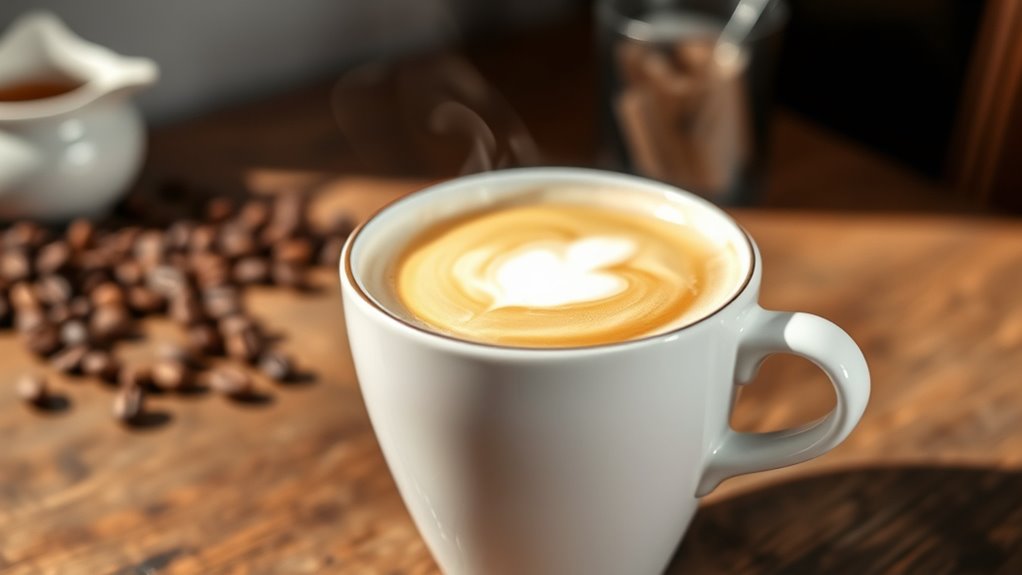
You’ll notice white espresso has a mild, nutty flavor with hints of raw almonds and toasted grains. It’s also got these subtle earthy and grassy undertones that make it really interesting.
Unlike traditional espresso, it doesn’t have that roasted bitterness. Instead, it finishes smooth and clean because it’s roasted very lightly.
This unique flavor profile kind of reminds you of a light, herbal tea. That’s why it’s perfect for pairing with milk or different flavorings—they really bring out its natural sweetness.
Additionally, the light roast level used in white espresso helps retain more caffeine compared to darker roasts, contributing to its mild yet stimulating effect.
Flavor Profile Breakdown
Because white espresso undergoes a lighter roasting process, it presents a mild, nutty flavor profile that resembles raw almonds and toasted grains, accompanied by a natural sweetness. You’ll notice earthy and slightly grassy undertones, which contribute to its distinct lightness and minimal bitterness compared to traditional espresso.
The taste leans toward herbal and tea-like, with subtle grainy nuances that enhance its complexity without overwhelming intensity. Prominent toasted wheat and hazelnut notes further differentiate white espresso from darker roasts.
When you add milk or flavorings, the smooth, earthy characteristics become more pronounced, allowing the delicate flavors to shine through. This precise balance creates a refined, approachable cup ideal for those seeking a nuanced yet gentle espresso experience. Because it is lightly roasted, white espresso preserves more of the fruity and acidic notes often lost in darker espresso roasts.
Unique Taste Notes
How does white espresso distinguish itself in flavor from traditional espresso? You’ll notice its raw almond and toasted grain notes immediately, accompanied by a mild nutty sweetness rarely found in regular espresso. Thanks to minimal roasting, white espresso reveals earthy, grassy undertones that impart a subtle herbal complexity.
Unlike traditional espresso’s pronounced bitterness, this brew offers a smooth, light body with almost no bitterness, making it exceptionally approachable. You’ll also detect delicate hints of hazelnut and macadamia, enhancing its toasted, nutty character.
This unique combination creates a mild, earthy flavor profile that balances well with milk or flavorings. It lets you enjoy nuanced taste layers without overwhelming intensity. White espresso’s distinct taste invites you to explore coffee from a different sensory perspective.
It’s really something special if you’re looking to try something new and refreshing. The gentle extraction process and lower roast level contribute to a flavor that highlights roast profile adjustments enhancing subtle aromatic notes.
Why White Espresso Has More Caffeine
Although roasting transforms coffee beans in many ways, white espresso’s lower roasting temperature, around 325°F, helps preserve considerably more caffeine than darker roasts. The reduced heat exposure limits caffeine degradation, allowing white espresso to retain up to 50% more caffeine than standard dark roasts.
While bean type and extraction methods also influence caffeine content, the minimal roasting heat is the primary factor behind white espresso’s higher caffeine concentration. The use of fresh espresso is crucial for preserving essential oils and flavors, which contributes to the overall quality of the coffee extraction.
| Roast Level | Roasting Temp (°F) | Approximate Caffeine Retention (%) |
|---|---|---|
| White Espresso | 325 | 95 |
| Light Roast | 350-400 | 85 |
| Medium Roast | 410-440 | 75 |
| Dark Roast | 450-480 | 60 |
| French Roast | 480+ | 50 |
This table clearly shows how caffeine retention decreases as roasting temperature rises.
How to Brew White Espresso at Home
To brew white espresso at home, start by using a high-quality grinder or pre-ground white espresso to protect your equipment from the dense beans.
You’ll want to grind the beans a bit finer than usual to slow down the water flow. This helps you aim for a 25-30 second extraction using about 18-20 grams of grounds, which should give you around 36-42 ml of espresso.
Make sure your espresso machine is fully heated before you begin—that way, you’ll get the best extraction possible.
After your first shot, take a moment to taste it and check the lighter crema and flavor profile. If needed, you can tweak the grind size or shot time to perfect your brew.
Consistent timing ensures reproducible extraction and flavor balance, so always start timing from pump activation to include pre-infusion.
Grinding White Espresso
Why does grinding white espresso require special attention? White espresso beans are exceptionally hard and dense, so you’ll need a specialized grinder or pre-ground options to avoid damaging your equipment.
Grinding them finer than regular espresso helps slow the water flow during extraction and brings out a balanced flavor.
Use about 18–20 grams per shot and aim for a 25–30 second extraction time. Because these beans are denser, you’ll want to set your espresso machine to a higher pressure to get the right extraction.
Expect a lighter-colored crema and a faster shot pull, usually yielding 36–42ml per shot.
Getting the grind size and dose just right is key—you don’t want to under- or over-extract. So, paying close attention during grinding is crucial for brewing great white espresso at home.
Adjusting grind size incrementally and recalibrating your grinder ensures you maintain consistent extraction and optimal flavor for these dense beans.
Brewing Techniques
When you brew white espresso at home, controlling each variable precisely guarantees you extract its unique flavors without bitterness or underdevelopment. Start with dedicated or pre-ground white espresso beans to avoid damaging your grinder, as these beans are denser and harder than regular espresso.
Grind them to a fine consistency, slightly finer than standard espresso, to slow water flow and maximize extraction.
Dose 18–20 grams into your portafilter, then tamp with consistent pressure to make certain of even resistance.
Use a high-pressure espresso machine, aiming for a 25–30 second extraction time.
You can expect a lighter-colored shot with a thinner crema and a yield of about 36–42 ml.
Sticking to these parameters ensures you capture the delicate, lightly roasted profile that’s characteristic of white espresso. It really brings out the subtle flavors you want without any harshness.
Regular maintenance of your espresso machine, including cleaning and descaling, is essential to ensure consistent optimal performance and flavor quality.
Give it a try and see how smooth and unique your shot can be!
Why Avoid Grinding White Espresso Beans at Home
Although grinding your own coffee beans often enhances freshness, white espresso beans present unique challenges that make home grinding problematic. These beans are exceptionally dense and hard, exceeding the tolerance of standard home grinders built for softer beans.
Using typical grinders risks uneven particle size, which disrupts extraction uniformity and degrades flavor balance.
Plus, their hardness can cause excessive wear, overheating, and clogging, which shortens your grinder’s lifespan. Commercial-grade grinders with reinforced burrs and cooling mechanisms are usually needed to handle this density effectively.
To keep quality consistent and protect your equipment, it’s best to buy pre-ground white espresso. This way, you get the precise grind size and avoid damaging your home grinder.
That means you can enjoy the unique profile of white espresso without any hassle. Maintaining a consistent grind size is crucial for achieving balanced flavor and proper extraction in espresso brewing.
Best Machines and Methods for Brewing White Espresso
To brew white espresso successfully, you’ll need a high-torque, commercial-grade espresso machine designed to manage the beans’ exceptional density and hardness. Make sure your machine delivers at least 9 bars of pressure to get the best shot development.
It’s important to pre-warm both the machine and the portafilter. This helps stabilize the temperature and preserves the nuanced flavors found in white espresso.
Use a dedicated grinder that can produce an ultra-fine, uniform grind made specifically for white espresso. Standard grinders usually don’t have the precision or power, which can lead to inconsistent extraction or even damage.
Aim for an extraction time between 25 to 30 seconds. You can adjust the grind size and tamp pressure to control the water flow just right.
This technical approach ensures you get optimal solubility and crema, bringing out white espresso’s unique taste consistently.
Where to Buy Quality White Espresso Beans
Where can you find high-quality white espresso beans that meet the demanding standards of this unique brew? Specialty roasters online are your best bet, offering beans specifically ground for espresso to optimize extraction. Look for providers who emphasize freshness and transparency, sharing detailed roast profiles and bean origins.
Typically, premium beans come in larger quantities like 2 or 5-pound bags, with subscription options to maintain consistency. It’s a smart way to keep your supply steady without the hassle of reordering all the time.
Consider these sources and factors:
- Specialty roasters such as Dutch Bros, Poverty Bay, and Wired Willey’s
- Detailed sourcing information and roast profiles ensuring quality
- Pre-ground espresso grind sizes recommended due to bean density
- Subscription services for regular, fresh deliveries and cost savings
Avoid supermarkets. Instead, focus on expert coffee retailers for authentic white espresso beans. You’ll get a better product and a more satisfying espresso experience that way.
Should You Add White Espresso to Your Coffee Routine?
Once you’ve secured high-quality white espresso beans, the next step is deciding if incorporating white espresso into your coffee routine makes sense for your taste and energy needs.
White espresso boosts caffeine intake by up to 50% compared to traditional roasts, offering prolonged energy without intense bitterness. Its mild, nutty flavor complements milk and flavorings, enhancing versatility in various coffee preparations.
Because white espresso has lower acidity and bitterness, it’s gentler on sensitive stomachs and suitable for those prone to acid reflux. Adding it regularly diversifies your flavor profile with lighter, earthy, grain-like notes, providing an alternative to strong roasted flavors.
If you’re looking for sustained energy and a unique taste experience, integrating white espresso can elevate your coffee routine technically and sensorially.
Frequently Asked Questions
Can White Espresso Be Used in Coffee-Based Cocktails?
Yes, you can use white espresso in coffee-based cocktails. It enhances the flavor with a mild nuttiness and boosts the caffeine content. Plus, it adds a nice visual appeal to your drinks.
This creates smoother, less bitter cocktails that go really well with spirits like vodka, rum, or liqueurs. It’s a great way to mix things up and impress your guests!
How Long Does White Espresso Stay Fresh After Opening?
You should consume white espresso within 2 to 4 weeks after opening for peak freshness. Ground espresso lasts about 1 to 2 weeks, so store it airtight, away from light, heat, and humidity to maintain quality.
Keeping it fresh is all about the storage. Just make sure you keep it sealed tight and in a cool, dark place. That way, you can enjoy the best flavor for longer!
Is White Espresso Suitable for Cold Brew Preparation?
You might find white espresso’s delicate character less adventurous for cold brew, as its dense beans and fine grind resist slow extraction.
Try adjusting the grind size and steeping time carefully. Otherwise, expect a subtler, less robust cold brew experience.
It’s all about finding the right balance to bring out the best flavors. Just keep experimenting until you get it right!
What Milk Pairs Best With White Espresso for Lattes?
You’ll find whole milk ideal for white espresso lattes, enhancing nutty sweetness and texture. Oat milk’s natural sweetness complements earthy notes, while almond and coconut milks add subtle nuttiness or tropical creaminess without overpowering the delicate flavors.
Each type brings something a little different to the table, so it really depends on what you’re in the mood for. Whether you want something creamy, sweet, or a bit lighter, there’s a milk that fits perfectly with white espresso. Give them a try and see which one you like best!
Are There Any Health Benefits Specific to White Espresso?
You won’t find definitive proof yet, but white espresso’s minimal roasting preserves chlorogenic acid and antioxidants. These compounds might reduce inflammation and support heart health.
Conclusion
Now that you know white espresso is roasted at lower temperatures, it preserves more caffeine, up to 20% more than regular espresso. You can really appreciate its bold punch. Its unique roasting process creates a brighter, more acidic flavor profile.
This makes it perfect if you want a sharper caffeine kick. Brewing it at home requires specific machines and methods to bring out its full potential. With quality beans and proper technique, white espresso can elevate your coffee routine markedly.

Pingback: How Much Caffeine Is In Nescafe Gold Espresso – Answer
Pingback: How To Make Espresso With Keurig – Easy Hack