Espresso is a rich, concentrated coffee shot you brew by forcing hot water through finely ground coffee under high pressure, around 9 bars. This quick, intense method captures bold flavors and creates a creamy layer called crema.
To master espresso, you need precise grinding, tamping with steady pressure, and clean water for balanced extraction. With the right equipment and technique, you’ll craft complex, thick espresso shots that reveal coffee’s true essence.
And there’s still more to discover about perfecting your brew. Keep experimenting, and you’ll get better with each shot!
Espresso vs. Regular Coffee: What’s the Difference?
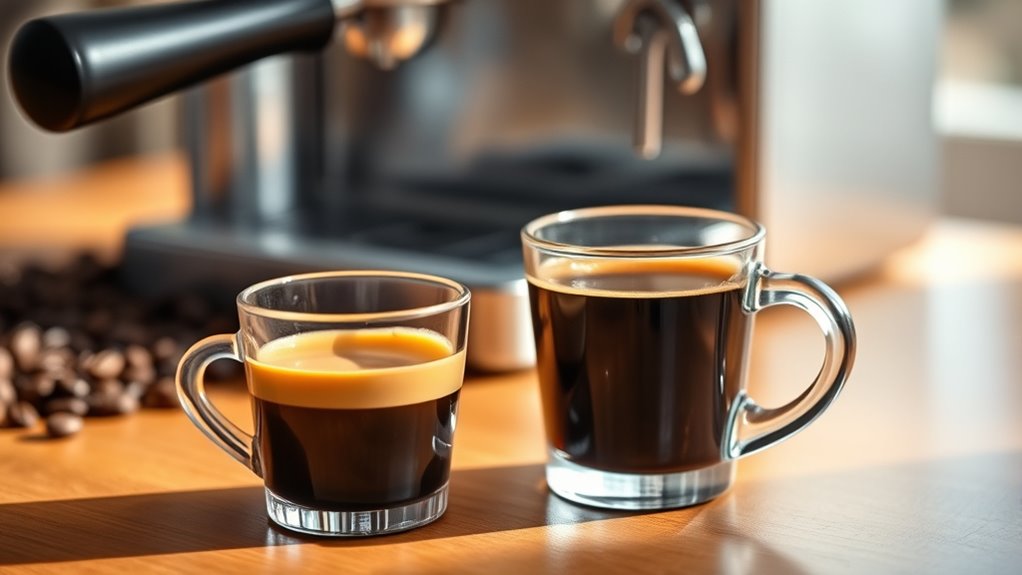
How exactly does espresso differ from your regular cup of coffee? Espresso is brewed by forcing hot water through finely ground coffee at about 9 bars of pressure. This intense process extracts a concentrated shot with a rich layer of crema on top.
Espresso is made by forcing hot water through finely ground coffee at high pressure, creating a concentrated shot with crema.
Unlike espresso, regular coffee like drip or pour-over relies on gravity to slowly pull flavors over several minutes. This produces a lighter, less concentrated drink.
The coffee-to-water ratio in espresso is much higher, usually 1:2, compared to 1:15 or more in regular coffee.
That’s why espresso delivers a thicker texture and a bolder, more intense flavor. In just 25-30 seconds, espresso captures the essence of coffee’s complexity in a powerful, small shot.
The total shot time including pre-infusion timing is crucial to achieving the perfect balance of flavor and crema in espresso.
Essential Equipment for Brewing Espresso at Home
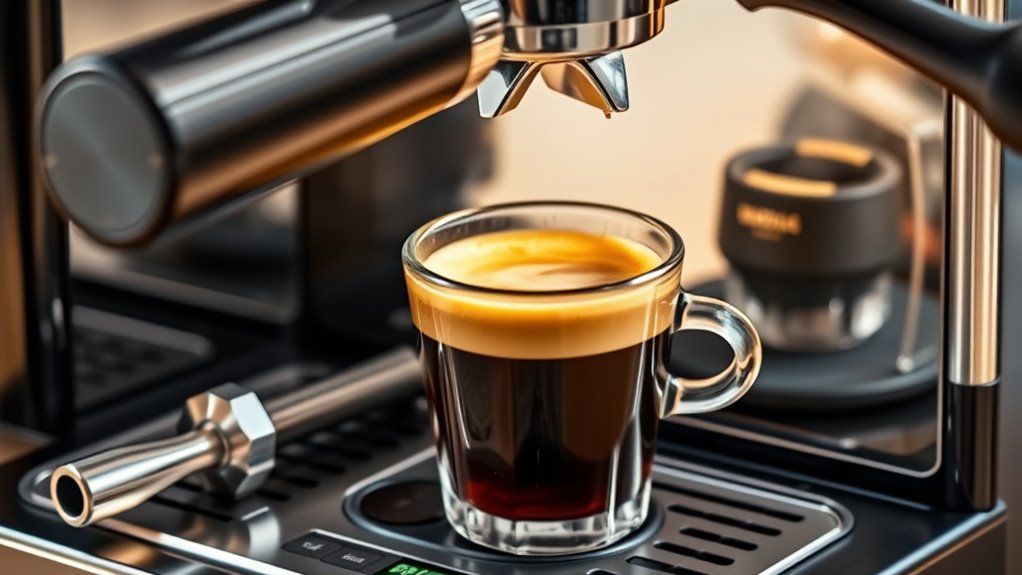
Although mastering espresso at home demands practice, having the right equipment sets a solid foundation for success. Start with a high-quality espresso machine that offers stable pressure and precise temperature control. These are vital for consistent extraction.
Next, invest in a burr grinder capable of producing a fine, uniform grind. This guarantees optimal flavor and beautiful crema.
A flat-base tamper lets you evenly compress the coffee grounds in the portafilter, applying about 30 pounds of pressure for balanced extraction.
Don’t overlook a reliable scale to measure both coffee dose and extraction time precisely. This sharpens consistency and shot quality.
Understanding how variables like grind size and tamping influence extraction can help you make better adjustments and improve your espresso shots over time.
With this essential gear, you’ll access the full potential of espresso and elevate your home brewing experience to professional levels.
Choosing Clean Water and Maintaining Your Espresso Machine
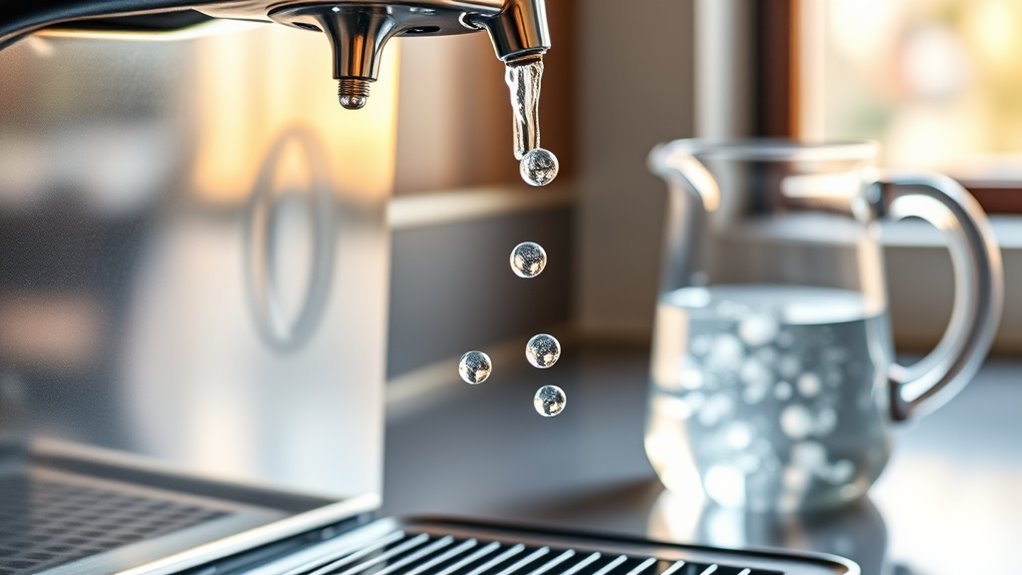
Why does the quality of water and regular maintenance matter so much for your espresso machine? Using filtered or low-mineral content water prevents mineral buildup, protecting your machine and ensuring ideal extraction and flavor.
Always fill the reservoir with fresh, cold water before each use to maintain consistent pressure and temperature.
Regularly clean and backflush your machine to remove coffee oils and residue that can taint flavor and hinder performance.
Replace water filters as recommended to keep water quality high. Don’t skip descaling either. It prevents limescale buildup that impairs heating efficiency and water flow.
By committing to these steps, you’ll preserve your machine’s longevity and enjoy the cleanest, richest espresso shot every time.
Your careful care truly makes a delicious difference.
Additionally, maintaining consistent extraction time is crucial to achieving balanced flavor and preventing bitterness or sourness in your espresso.
Grinding and Dosing for Perfect Espresso Shots
Maintaining clean water and a well-kept machine sets the stage for extracting the best espresso. But the grind and dose of your coffee play an equally essential role in crafting that perfect shot.
You’ll want to use 18-20 grams of finely ground coffee, about the texture of table salt, for a double shot.
Consistency here really matters, so weigh your grounds before tamping. Distribute the coffee evenly and apply about 30 pounds of pressure to form a uniform puck.
Adjust your grind size and dose as needed to hit an ideal extraction time of 25-30 seconds.
Use the right dose according to basket size and roast level. Grind finely for balanced extraction. Weigh grounds to guarantee consistency. Aim for uniform distribution before tamping.
Mastering these steps sharpens your espresso-making craft. It might take a little practice, but once you get it down, your shots will taste amazing every time.
Remember that increasing dose thickens the coffee bed, which slows water flow and extends extraction time, helping to balance flavors for the best results in espresso extraction.
Mastering Tamping and Extraction for Balanced Espresso Flavor
Because tamping directly impacts how water flows through your coffee puck, mastering this step is essential for achieving a balanced espresso flavor. Start by evenly distributing your grounds in the portafilter to avoid air pockets that disrupt extraction.
Tamping shapes water flow through your coffee puck, making even grounds distribution crucial for balanced espresso extraction.
Apply about 30 pounds of steady, controlled pressure with a calibrated tamper to create a flat, level surface. This prevents channeling and uneven water flow.
Aim to tamp within 1-2 seconds to avoid over- or under-compacting, which can cause sour or bitter notes.
Remember, every grind size and dose may require slight adjustments in tamping pressure, so consistently measure and refine your technique.
Consistent tamping pressure helps regulate extraction and yield consistency for a more predictable espresso profile.
Espresso as Art: Enhancing Your Brewing Skills
When you approach espresso as an art form, you engage every sense and skill to craft each shot with intention and care. This mindset pushes you to refine grind size, tamping pressure, and extraction time, ensuring each cup is as visually stunning as it’s flavorful.
You’ll find joy experimenting with pouring techniques, like latte art, which elevates your presentation and sensory experience. Treating espresso as a canvas also encourages precise measurement and timing, leading to consistency and deeper flavor appreciation.
Most importantly, embracing this artistic approach transforms brewing into a mindful practice, connecting you personally to every cup.
Focus on grind and tamping precision for balanced flavor. Experiment with creative latte art to enhance appeal. Measure and time shots meticulously for consistency. Practice mindfulness to deepen your connection with espresso. Understanding and controlling your espresso’s extraction ratio is key to achieving the perfect balance of flavor and texture.
Frequently Asked Questions
How Did Espresso Originate in Italy?
Espresso originated in Italy when inventors like Angelo Moriondo and Luigi Bezzera created machines that forced hot water through finely ground coffee quickly. You’ll appreciate how they designed it for speed, quality, and urban convenience.
They wanted to make coffee that’s fast but still tastes great. So, they came up with a way to brew it in just a few seconds. That’s how espresso became a favorite in busy Italian cities.
What Does Crema on Espresso Indicate?
Think of crema as the espresso’s golden crown. It tells you the coffee’s fresh, rich, and properly extracted. When you see thick crema, you know the beans have oils and flavors locked in.
That promises a bold, aromatic shot. It’s like a little sign that your espresso is just right.
Can Espresso Be Made With Decaf Coffee?
Yes, you can make espresso with decaf coffee. Just grind your decaf beans finely, tamp firmly, and use fresh beans. While the flavor’s milder, proper technique still delivers a rich, satisfying shot with good crema.
It’s pretty much the same process as regular espresso. Just remember that the taste won’t be as bold, but you’ll still get that nice espresso experience. Give it a try!
How Much Caffeine Is in a Single Espresso Shot?
A single espresso shot packs about 63 milligrams of caffeine, but it can vary based on bean type, roast, grind, and extraction.
You’ll enjoy a concentrated, bold kick that’s stronger ounce for ounce than drip coffee. It’s a quick way to get that caffeine boost without drinking a lot of liquid.
What Are Common Espresso-Based Drinks Worldwide?
Think of espresso as the engine powering drinks like cappuccinos, lattes, macchiatos, flat whites, and Americanos. You’ll savor each with unique milk blends and textures. These drinks reflect rich cultural traditions and bold, crafted flavors worldwide.
Conclusion
So, you’re ready to conquer espresso like a caffeinated wizard? Remember, it’s not just coffee, it’s an art form demanding precision, patience, and a tiny bit of madness. Don’t just slap beans in a machine and hope for liquid gold.
Hone your grind, perfect your tamp, and treat your espresso machine like royalty. Otherwise, you’re just making expensive brown water. Embrace the ritual, and soon you’ll sip espresso that laughs in the face of mediocrity.

Pingback: What's In An Espresso Martini – Ingredients
Pingback: How To Steam Milk With Espresso Machine – Barista Tips