If you want café-quality shots at home, choosing between automatic and semi-automatic machines is key. Automatic models like DeLonghi Magnifica Evo offer one-touch ease and built-in grinders for freshness and consistency. Semi-automatic options like Breville Barista Express give you precise control over grind, dose, and extraction.
Think about your milk frothing preferences too. Automatic machines are great for convenience, while manual frothing lets you master the texture. Also, make sure your machine fits your kitchen space and budget.
Looking at these factors will really help you find the perfect fit. It’s all about what works best for your style and needs.
Choosing Between Automatic and Semi-Automatic Espresso Machines
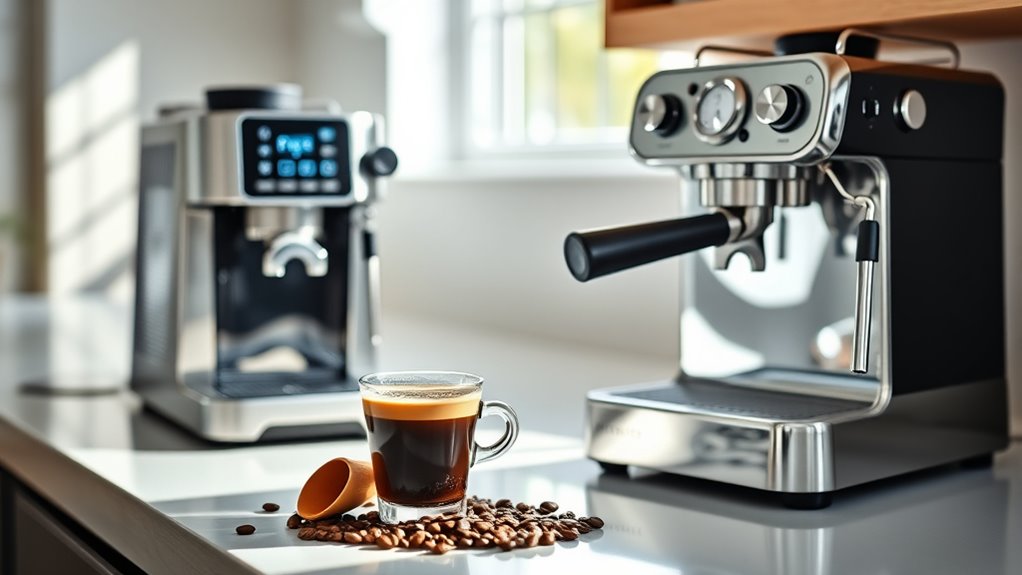
When deciding between automatic and semi-automatic espresso machines, you should consider how much control you want over the brewing process versus the convenience you need.
Automatic machines streamline grinding, tamping, and brewing at the push of a button. They often have built-in grinders and milk frothers, too. This setup delivers consistent espresso quickly, making it ideal if you prioritize speed and ease.
On the other hand, semi-automatic machines require you to manually grind, tamp, and steam. This gives you precise control over variables like grind size and extraction time.
This hands-on approach appeals to enthusiasts who want to customize every step.
Ultimately, your choice comes down to whether you want a fully automated, hassle-free experience or prefer the skill and flexibility involved in crafting espresso with semi-automatic equipment.
Machines with pressure stability and PID temperature control can significantly improve espresso quality by ensuring consistent extraction.
Top Espresso Machines for Home Use in 2024
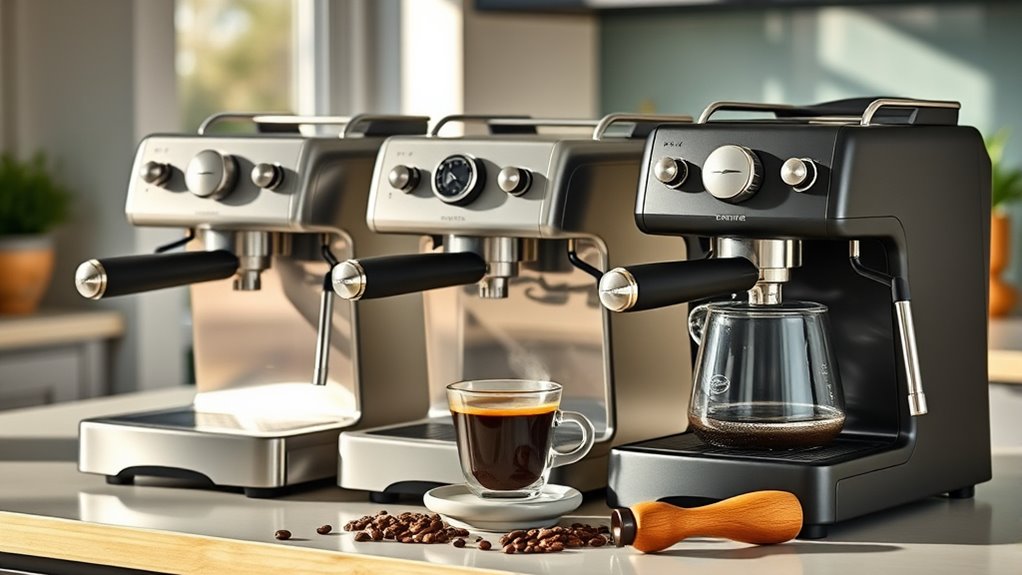
Selecting the right espresso machine hinges on balancing automation with control. And 2024 offers a range of machines tailored to different skill levels and preferences.
Whether you want full automation or manual precision, you’ll find options that deliver exceptional espresso at home.
The DeLonghi Magnifica Evo excels with its automatic operation, integrated grinder, and customizable settings for quick, consistent shots.
Breville Barista Express provides semi-automatic control, perfect for refining your barista skills while maintaining quality.
Philips 3200 LatteGo simplifies brewing with one-touch operation and an intuitive milk system, ideal for beginners.
Compact yet powerful, the Breville Bambino Plus fits small kitchens without compromising espresso quality.
Each machine’s design and functionality respond to specific user needs.
Regular maintenance, including descaling and using filtered water, is crucial to ensure long-lasting performance and optimal flavor extraction with any home espresso machine, particularly for models with high-pressure systems.
Benefits of Built-In Grinders in Espresso Machines
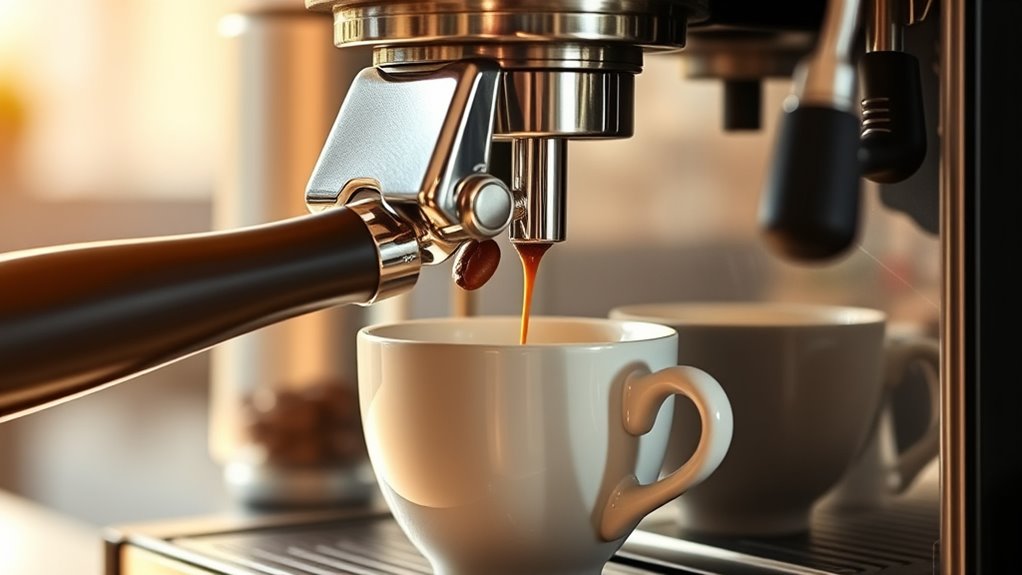
Because grinding beans immediately before brewing locks in maximum freshness, espresso machines with built-in grinders give you a significant edge in flavor and aroma preservation. These integrated grinders deliver a consistent grind size, which is critical for the best extraction and producing a rich, balanced espresso shot.
You’ll benefit from adjustable grind settings, allowing precise customization of grind texture for various coffee beans and roast profiles. Many models feature dosing mechanisms that automatically measure the correct amount of coffee. This enhances repeatability and reduces waste.
Additionally, incorporating the grinder into the machine minimizes countertop clutter and streamlines your workflow, making the brewing process more efficient. Regular calibration and cleaning of the built-in grinder help maintain grind consistency and ensure optimal espresso quality.
Espresso Machine Milk Frothing: Automatic vs. Manual
Although both automatic and manual milk frothing systems aim to achieve the ideal microfoam for espresso-based drinks, they differ quite a bit in how they work and the level of control you get.
Automatic frothers offer one-touch convenience and consistently produce creamy microfoam with very little effort. Plus, they often come with features like automatic cleaning and temperature regulation.
Manual steam wands, on the other hand, take some practice to master. But once you get the hang of it, you have precise control over the froth texture, temperature, and even latte art.
Some machines even combine both options, so you can switch between easy frothing and more customization whenever you want.
Automatic systems are great for beginners because they simplify milk frothing and give consistent results.
Manual steam wands let you fine-tune the foam density and create that silky texture coffee lovers crave.
Automatic frothers often include self-cleaning and temperature management, making things easier.
Mastering manual frothing techniques, though, opens up more room for artistic expression and customization in your drinks.
For the best results, pairing your frothing method with freshly ground beans and proper espresso extraction is essential to maximize aroma and crema quality.
Selecting the Right Water Tank Size for Your Household
Once you’ve settled on the milk frothing style that suits your routine, it’s important to think about how your espresso machine’s water tank size fits your household’s coffee habits. Water tanks usually range from under 1.5 liters for single users to over 2.0 liters for families or high-volume households.
Choosing a larger tank means you won’t have to refill as often, which is great if you’re busy or drink coffee a lot. On the other hand, smaller tanks are more compact and perfect for tight kitchen spaces but will need refilling more frequently.
Take a good look at your daily coffee consumption to pick a tank size that keeps things convenient. Plus, many machines come with removable water tanks, making refilling and cleaning easier.
Picking the right size means your espresso machine fits smoothly into your routine without any unnecessary interruptions. Maintaining consistent water temperature between 195°F and 205°F is also key for optimal extraction and flavor in each shot.
How to Customize Drinks for Perfect Espresso Every Time
You can easily fine-tune your espresso by adjusting the coffee strength and shot volume to match your taste just right. It’s all about finding that perfect balance.
Plus, mastering the milk frothing system—whether it’s automatic or manual—allows you to create microfoam with the ideal texture and consistency for your lattes and cappuccinos.
When you get these adjustments down, every drink you make hits that perfect balance of flavor and mouthfeel every single time.
Adding small touches like the traditional three coffee beans garnish can also enhance the sensory experience and connect you to espresso’s rich cultural roots.
Adjusting Coffee Strength
How do you achieve the perfect espresso strength tailored to your taste? Adjusting coffee strength involves precise control over several variables that influence extraction and flavor intensity.
You can customize by modifying grind size: finer grounds increase extraction, boosting strength.
Also, adjusting tamping pressure guarantees optimal resistance during extraction.
Varying extraction time helps control how much solubles dissolve into your shot.
Using programmable settings on advanced machines lets you save your preferred strength profile.
Some machines add temperature control, letting you tweak brew temperature for flavor depth.
Automatic models with built-in grinders simplify this by adjusting grind and extraction parameters based on strength settings.
Consistently measuring and locking in the same dose weight ensures reliable results when customizing espresso strength.
Perfecting Milk Froth
Why does mastering milk froth make such a difference in your espresso drinks? Because the texture and temperature of your milk can elevate a simple espresso into a velvety cappuccino or a silky latte.
Automatic frothers deliver consistent microfoam with one touch. They’re perfect if you want convenience without sacrificing quality. But if you prefer control, manual steam wands let you fine-tune froth density and temperature. That’s essential for latte art and customized textures.
Always start with cold, fresh milk, and adjust your machine’s temperature and milk quantity settings to match your drink style.
Also, remember to clean frothing components regularly to avoid milk residue. It can compromise foam quality and machine performance.
Mastering these technical details guarantees your espresso drinks are perfectly crafted every time. Understanding the importance of crema can also help you appreciate how milk froth interacts with espresso to enhance flavor and texture.
Choosing the Right Size and Build Quality for Your Kitchen
Although selecting an espresso machine often focuses on features and performance, choosing the right size and build quality is essential to guarantee seamless integration into your kitchen.
Start by measuring your counter space precisely to ensure the machine fits without overcrowding. Larger machines offer more capabilities but need ample room, while compact models suit tight or busy kitchens.
Build quality influences durability and longevity, so prioritize machines made from robust materials like stainless steel. Also, consider portability if you plan to move or store the machine frequently.
Key considerations include:
- Accurate measurement of available countertop space
- Choosing size based on kitchen layout and usage frequency
- Selecting materials that resist wear and corrosion
- Evaluating weight and ease of repositioning for convenience
Understanding the importance of pressure extraction in espresso machines can also help you choose one that delivers quality shots consistently.
This approach ensures your espresso machine complements your kitchen technically and spatially.
Espresso Machine Features and Budget: What to Expect
When you’re picking out an espresso machine, your budget really shapes what features you can get and how much control you’ll have. For starters, models under $200 are pretty basic—they get the job done but don’t offer much beyond that.
Now, if you step up to the mid-range machines, which usually cost between $200 and $700, you’ll notice better build quality and some options to customize your brew. It’s a nice middle ground if you want a bit more without breaking the bank.
But if you’re after the fancy stuff like built-in grinders and automatic frothing, you’ll want to be ready to spend over $700. Those fully automatic machines make things super easy and deliver a more advanced coffee experience.
To keep your machine running well and maintain coffee quality, regular descaling maintenance is essential, especially if you use hard water.
Key Features Overview
Since espresso machines vary widely in features and price, understanding what each budget tier offers will help you select the right model for your needs. Entry-level machines under $200 usually provide basic brewing capabilities with minimal customization.
Mid-range options ($200 to $700) enhance control through built-in grinders and adjustable settings. Premium models above $700 integrate advanced automation and extensive drink customization for café-quality results.
Additionally, consider machine types that affect your experience. Automatic machines offer one-touch brewing and automatic milk frothing for convenience. Semi-automatic models give you manual control over extraction variables.
Integrated grinders in mid to high-end machines improve freshness and grind consistency. Adjustable pressure and temperature settings optimize extraction precision.
Knowing these features helps you balance convenience, control, and quality within your budget. It’s all about finding what fits your style and how involved you want to be in the process.
Budget Tiers Explained
Understanding how different budget tiers align with specific espresso machine features can guide you in making an informed purchase.
Entry-level machines under $200 offer fundamental brewing functions but limit customization and often use lower-quality materials. This can impact durability.
In the mid-range $200 to $700 bracket, you can expect improved build quality and enhanced user controls. These machines often come with extra features like built-in grinders or automatic milk frothers, which add convenience and consistency.
Premium models exceeding $700 incorporate advanced technology and extensive personalization options. They usually have integrated grinders designed to replicate café-quality espresso.
Generally, price correlates directly with machine longevity, ease of operation, and how finely you can customize your drinks.
Feature-Budget Balance
Although espresso machines come with a wide range of features, aligning those capabilities with your budget is essential to maximizing value. When choosing, focus on the balance between performance and cost to avoid overspending on unnecessary specs.
For example, basic models under $200 provide limited customization and average build quality.
Mid-range machines ($200–$700) enhance durability, performance, and include features like adjustable grinders.
High-end machines above $700 offer advanced tech, integrated grinders, and extensive drink customization.
Prioritize features critical to your brewing style, such as grinder quality, milk frothing capability, and machine size.
Best Espresso Machines for Beginners and Casual Drinkers
When you’re new to espresso or just want a hassle-free experience, fully automatic machines like the DeLonghi Magnifica Evo deliver consistent results with one-touch operation. These machines handle grinding, tamping, and brewing automatically, removing guesswork.
If freshness matters, models with built-in grinders such as the Philips 3200 LatteGo grind beans precisely for ideal flavor extraction.
For limited counter space, the Breville Bambino Plus heats up quickly and features automatic milk frothing, simplifying cappuccinos and lattes.
Capsule-based systems like the Nespresso VertuoPlus use pre-measured pods, ensuring fast, mess-free brewing with diverse coffee styles.
If you prefer affordability without complexity, the Cuisinart DCC-3200P1 offers reliable flavor and straightforward controls, making it ideal for casual drinkers who want good espresso without technical hassle.
It’s a simple way to enjoy your coffee without any fuss.
Top Picks for Convenience and Quality in Espresso Machines
If you want an espresso machine that balances ease of use with consistent, high-quality extraction and straightforward maintenance, you’re in the right place.
Look for models that have intuitive controls—these make your brewing experience smooth and hassle-free.
Also, efficient cleaning cycles are a big plus. They save you time and keep your machine running like new.
Don’t forget about reliable grinders or capsule systems; these help guarantee great espresso every single time.
All these features work together to minimize downtime and keep your machine performing at its best with minimal effort.
Ease Of Use
Since convenience plays a crucial role in daily espresso preparation, choosing a machine with intuitive operation can considerably improve your experience. Fully automatic machines like the DeLonghi Magnifica Evo simplify brewing with one-touch controls. Semi-automatic models such as the Breville Barista Express balance control and ease.
Compact units like the Breville Bambino Plus heat up quickly and feature straightforward controls, which is ideal for tight spaces. Capsule systems like the Nespresso VertuoPlus offer fast, hassle-free brewing with minimal upkeep.
- One-touch operation for effortless brewing
- Automatic milk frothers ensuring consistent foam
- Quick heat-up times in compact designs
- Minimal cleanup with capsule-based machines
Picking a user-friendly espresso maker guarantees efficient, precise coffee preparation without unnecessary complexity. It just makes your coffee routine smoother and more enjoyable.
Quality Of Espresso
Although convenience is key, the quality of espresso remains paramount in selecting the best home machine. You’ll want a machine that delivers stable temperature and consistent pressure, around 9 bars, to extract rich flavors and create a thick, lasting crema.
Fully automatic models like the DeLonghi Magnifica Evo excel here, producing robust shots with customizable strength effortlessly. If you prefer control, semi-automatic machines such as the Breville Barista Express let you adjust grind size and tamp pressure, enabling café-level precision.
Machines with integrated burr grinders, like the Philips 3200 LatteGo, guarantee freshly ground beans for each shot, enhancing aroma and taste.
Capsule-based options like the Nespresso VertuoPlus offer reliable quality with one-touch ease, though they require proprietary pods.
Focus on these factors to achieve superior espresso at home. It really makes a difference when you find the right balance between convenience and quality.
Maintenance And Cleaning
Achieving café-quality espresso at home depends not only on the machine’s brewing capabilities but also on consistent maintenance and cleaning. You’ll want a machine with removable brew units and dishwasher-safe parts to simplify routine cleaning.
Automatic cleaning cycles and descaling programs are essential to prevent mineral buildup and prolong your machine’s life.
Don’t overlook the milk frothing system, especially if it’s automatic. Regular cleaning keeps the foam quality high and ensures everything stays hygienic.
For machines with internal reservoirs, periodic descaling with the right solutions helps maintain stable performance.
- Removable, dishwasher-safe components for easy cleaning
- Automatic cleaning and descaling cycles to reduce buildup
- Regular maintenance of milk frothers for consistent foam
- Easy access to parts for straightforward, time-saving upkeep
Frequently Asked Questions
How Often Should I Descale My Espresso Machine?
You should descale your espresso machine every 1 to 3 months, or more often if you have hard water. It helps keep your machine running smoothly and your coffee tasting great.
Keep an eye out for signs like slower flow, longer brew times, or any changes in taste. These can mean it’s time to descale.
Make sure to use a proper descaling solution for the best results. It’s worth taking the time to do it right!
Can I Use Pre-Ground Coffee Instead of Whole Beans?
Think of pre-ground coffee as a locked door. Some machines won’t open without fresh beans. If your machine’s portafilter or grinder isn’t designed for pre-ground, you’ll risk clogging or weak extraction.
What Type of Water Is Best for Espresso Machines?
You should use filtered or spring water with a balanced mineral content, ideally 50-150 ppm TDS. This helps prevent limescale buildup and corrosion, which can damage your espresso machine over time.
Using the right water ensures ideal extraction and helps prolong your machine’s lifespan. So, it’s definitely worth paying attention to this.
Avoid distilled or hard water because they can cause problems with your espresso machine. Stick to water that keeps things running smoothly and your coffee tasting great.
How Do I Clean the Milk Frothing Wand Properly?
Like a knight tending his sword, wipe your wand immediately after use. Purge steam briefly, then scrub with a specialized brush.
It’s also good to soak it weekly in warm water with cleaner. Just follow the manufacturer guidelines to keep performance sharp and flawless.
Cleaning regularly makes all the difference!
Are Espresso Machines Energy-Efficient for Daily Use?
Yes, espresso machines can be energy-efficient for daily use if you choose models with rapid heating systems, automatic shut-off, and standby modes. These features help reduce the amount of power the machine uses when it’s not actively brewing coffee.
It’s also a good idea to turn off your machine when you’re not using it. This simple habit minimizes unnecessary power consumption and helps you get the most efficiency from your espresso maker.
Conclusion
Choosing the best espresso machine boils down to balancing build, budget, and brewing brilliance. Whether you crave the control of a semi-automatic or the convenience of an automatic, consider features like built-in grinders and milk frothing options for flawless flavor.
Focus on finding a fit for your kitchen’s size and your household’s habits to guarantee every extraction delivers rich, robust results. With the right machine, you’ll savor smooth, satisfying shots every single morning.