You can make regular coffee in your espresso machine by adjusting grind size, tamping, and extraction time to mimic drip brewing without risking damage. Use a medium-coarse grind and extend brew time to 4-8 minutes while controlling water temperature and pressure. Avoid coarse pre-ground coffee to guarantee even extraction and prevent clogs.
With the right technique, you’ll enjoy a smoother, full-flavored brew from your espresso machine. Discover how to fine-tune these settings for the best results. It’s easier than you might think once you get the hang of it!
What Makes Espresso Different From Regular Coffee?
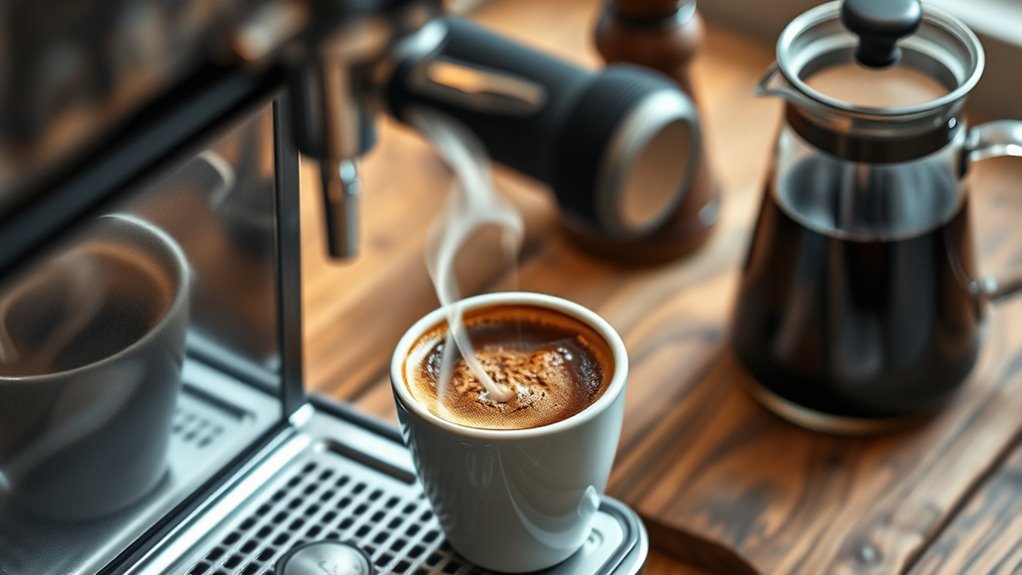
Although both espresso and regular coffee start with the same raw ingredient, coffee beans, their brewing methods set them worlds apart. When you brew espresso, you use finely ground coffee and apply about 9 bars of pressure with water heated between 88°C and 94°C. This process extracts a thick, concentrated shot in roughly 25 seconds, producing a rich crema on top.
In contrast, regular coffee relies on coarser grounds, gravity, and slightly lower water temperatures. It takes several minutes to brew and doesn’t produce crema.
Plus, espresso beans are roasted darker and longer, giving you a bold, intense flavor that medium-roasted beans used in regular coffee just can’t match.
Using the right grind size and precise extraction time is crucial to achieving the perfect espresso shot.
How Do Espresso Machines Extract Coffee Using Pressure and Grind Size?
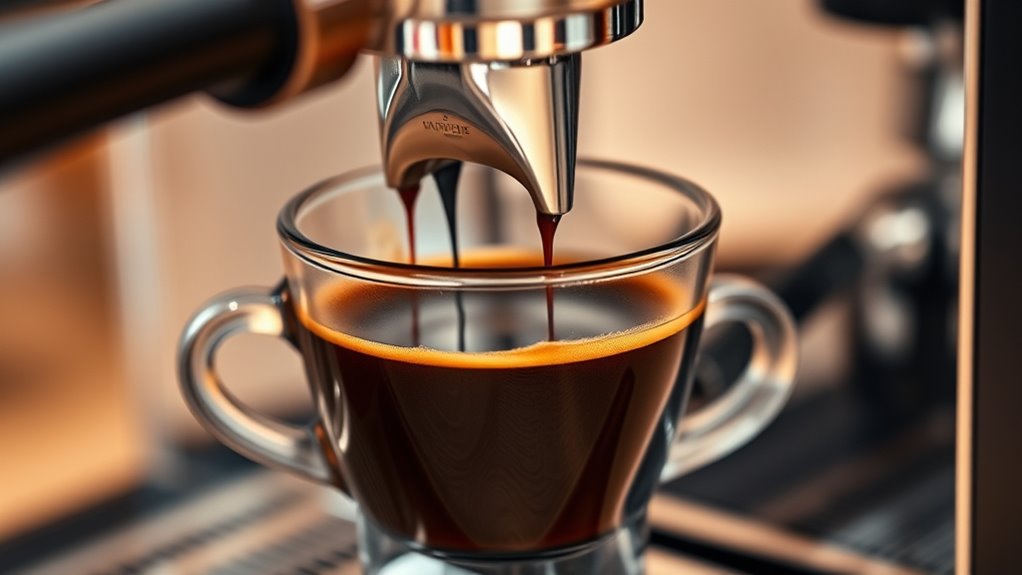
When you use an espresso machine, it extracts coffee by forcing hot water through finely ground beans at around 9 bars of pressure. This process demands precision in grind size and tamping. You need a grind as fine as powdered sugar to create enough resistance for the water to build pressure effectively.
Proper tamping compresses the grounds evenly, making sure water flows through consistently. This high-pressure extraction quickly dissolves the coffee’s soluble compounds, producing a shot rich in flavor, body, and crema.
Even tamping ensures consistent water flow, unlocking rich flavor, full body, and creamy espresso crema.
Timing is vital. About 25 seconds strikes the perfect balance and prevents under- or over-extraction.
Mastering these variables—pressure, grind size, tamping, and extraction time—lets you reveal espresso’s intense, concentrated character that no other brewing method can replicate. Including a brief pre-infusion period can help promote even saturation and improve extraction consistency.
Why Don’t Regular Coffee Grounds Work Well in Espresso Machines?
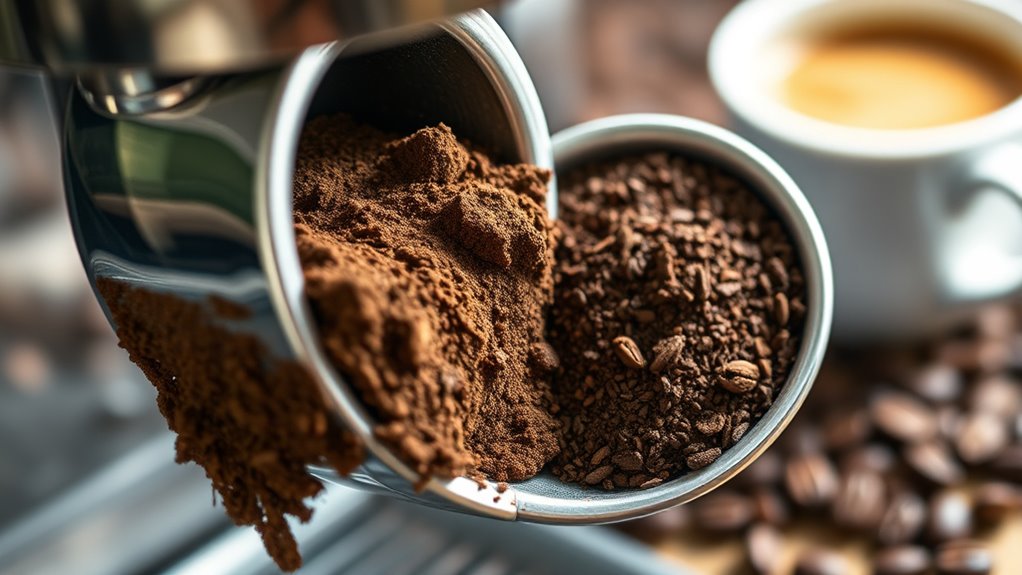
Since espresso machines rely on finely ground coffee to create the precise pressure needed for extraction, using regular coffee grounds throws off the entire process.
Regular grounds are coarser, letting water flow too quickly, which causes under-extraction and a weak, watery shot lacking the signature crema.
You’ll also face inconsistent extraction because regular coffee is often roasted differently, not optimized for the intense pressure espresso machines apply.
This mismatch in grind size and roast profile not only ruins flavor but can also clog your machine’s pressure system, risking damage.
If you want that rich, concentrated espresso shot, you need grounds designed for high-pressure extraction.
Using regular coffee grounds compromises both taste and machine performance, making them a poor choice for your espresso machine.
Additionally, maintaining consistent tamping pressure around 30 pounds is crucial to ensure even water flow and proper extraction.
Can You Use Regular Coffee in an Espresso Machine Without Damage?
If you insist on using regular coffee grounds in your espresso machine, you risk damaging essential components due to improper extraction and pressure imbalances. Regular coffee’s coarser grind isn’t suited for the high-pressure environment of an espresso machine, causing uneven water flow and potential clogging.
This mismatch leads to excessive strain on the pump and valves, increasing the chance of mechanical failure. Plus, the pressure buildup from larger grounds can damage seals and gaskets, which compromises your machine’s longevity.
Beyond mechanical risks, using regular coffee results in over-extraction and bitter flavors, defeating the purpose of your espresso machine’s precision.
To protect your investment and guarantee ideal performance, stick to finely ground espresso coffee designed specifically for your machine’s requirements. It really makes a difference in both taste and machine health.
Adjusting grind size to achieve consistent particle size is crucial for optimal extraction and machine function.
How Can You Adjust Grind Size and Brew Time to Make Regular Coffee?
To make regular coffee in your espresso machine, start by adjusting the grind size to be coarser than espresso grounds. This helps slow down the extraction a bit.
Then, you’ll want to extend the brew time to around 4 to 8 minutes. You can do this by tweaking your machine’s settings or manually controlling the flow.
These little adjustments make a big difference. They let you craft a smoother, less concentrated coffee that’s more like your traditional drip brew.
It’s a great way to switch things up without needing a separate coffee maker.
Keep in mind that a coarser grind and longer brew time help prevent over-extraction, which can cause bitterness and sourness in the coffee.
Grind Size Adjustments
When you adjust the grind size coarser than traditional espresso, you control the water flow rate and extraction time. This is essential for brewing regular coffee in an espresso machine.
Aim for a medium-coarse to medium grind to slow the water flow, promoting a longer extraction time like drip coffee.
This adjustment prevents over-extraction and results in a smoother, less intense flavor profile. Fine-tune your grind size carefully. Too coarse, and the shot flows too fast, under-extracting. Too fine, and it clogs, over-extracting.
Regularly test and tweak based on flow rate and taste. Target an extraction time around 4 to 8 minutes.
Mastering these grind adjustments ensures your espresso machine produces regular coffee with clarity, balance, and the traditional drip-style character you want.
Keep in mind that extraction time significantly affects caffeine levels and flavor intensity, so precise timing is key to achieving the desired coffee profile.
Brew Time Variations
Although espresso machines are designed for quick extraction, you can expertly manipulate grind size and brew time to craft a cup that mirrors regular coffee.
Start by coarsening your grind to reduce resistance, allowing water to flow more slowly and extend the brew time. Aim for an extraction duration between 4 to 8 minutes, much longer than a typical espresso shot, to *release* a fuller, milder flavor profile.
You can increase the coffee dose slightly and apply lighter tamping pressure to balance flow rate and extraction. These adjustments mimic the gentle infusion of drip coffee, enabling your espresso machine to produce a brew that’s rich yet smooth.
Keep in mind that maintaining the proper water temperature between 195°F and 205°F is essential to avoid under- or over-extraction during this extended brew time.
How to Use Bypass or Pre-Infusion Features for Regular Coffee Shots?
Since espresso machines typically operate under high pressure for intense extraction, you’ll want to use the bypass or pre-infusion features thoughtfully to create a coffee shot that feels more like regular drip coffee. Pre-infusion applies low pressure for 5-10 seconds, which gently saturates the grounds and reduces channeling.
By tweaking this timing and pressure, you can mimic the slower extraction process that drip coffee requires. This helps balance the flavor and strength of your shot.
Controlling variables such as grind size and tamping pressure during this process is crucial for achieving a smoother extraction closer to regular coffee.
| Feature | Purpose |
|---|---|
| Pre-infusion | Gradual saturation, even extraction |
| Bypass | Dilutes pressure for lighter shot |
| Time Control | Adjusts extraction duration |
| Pressure Control | Modulates water flow intensity |
Mastering these settings lets you transform your espresso machine’s high-pressure extraction into a smoother, more balanced regular coffee experience. Give it a try—you might be surprised how close you can get to that classic drip coffee taste.
How to Brew Larger Coffee Volumes on an Espresso Machine?
To brew larger coffee volumes on your espresso machine, start by increasing the coffee dose.
At the same time, adjust the grind size to keep the extraction just right.
You’ll want to extend the extraction time a bit too, but be careful not to overdo it.
Keep an eye out for any signs of over-extraction since that can mess with the flavor.
Once you get the hang of balancing these factors, you’ll consistently pull a robust, full-bodied cup without sacrificing quality.
Also, ensure you use freshly ground beans to preserve aroma and achieve optimal extraction.
Adjusting Grind Size
When you want to brew larger volumes of coffee on an espresso machine, adjusting the grind size is essential. Gradually coarsen the grind to increase water flow and extend extraction time, allowing more water to pass through the grounds smoothly.
A slightly coarser grind reduces resistance, preventing over-extraction and bitterness during longer brews.
As you do this, carefully monitor the flow rate and color of the espresso to guarantee balanced flavor and peak extraction. Don’t forget to fine-tune your tamp pressure and dose to maintain harmony in taste.
This precision ensures your larger coffee serves up a full-bodied cup without sacrificing clarity or introducing harshness.
It’s all about revealing the true potential of your espresso machine for bigger brews. So take your time with these adjustments, and enjoy the process as much as the result!
Regularly cleaning your grinder every 2-3 months or after approximately 200 pounds of coffee helps maintain grind consistency and optimal extraction quality.
Increasing Coffee Dose
Adjusting grind size sets the stage, but increasing the coffee dose releases even larger volumes from your espresso machine. You start by using a double or triple shot basket to hold more grounds while maintaining firm tamping. Slightly coarsen the grind to guarantee smooth water flow and avoid channeling.
Extend brew time beyond 25-30 seconds to extract fully without over-extracting. This balance preserves both flavor and crema intensity.
| Dose Increase | Effect on Brew |
|---|---|
| More coffee grounds | Larger coffee volume |
| Coarser grind | Prevents overpressure |
| Longer brew time | Full flavor extraction |
Mastering dose adjustments lets you craft bigger cups without sacrificing espresso’s signature richness. It’s a simple way to get more from your machine while keeping that bold flavor you love.
Extending Extraction Time
Although espresso machines are designed for quick, concentrated shots, you can extend extraction time to brew larger coffee volumes without losing intensity. To do this, increase your coffee dose to around 20-22 grams and adjust your grind slightly coarser to slow water flow.
Consistent tamping pressure and even distribution are vital to maintain balanced extraction over the longer brew.
You might also consider lowering water temperature or pressure carefully, but be mindful these tweaks can shift flavor profiles. Using a double shot or larger capacity brew basket specifically designed for extended extraction helps accommodate the increased grounds and volume.
What Flavor Differences Arise When Making Regular Coffee in an Espresso Machine?
Because espresso machines rely on finely ground coffee and high pressure, using regular coffee grounds disrupts the extraction process, leading to a weak, underdeveloped brew. You’ll notice a thin body, lack of crema, and inconsistent flavor. The coarser grind results in improper water flow, causing sour or flat notes.
Extraction time is too short for complex aromas to develop, leaving you with a dull, watery cup devoid of espresso’s boldness.
| Aspect | Flavor Outcome |
|---|---|
| Grind Size | Under-extracted, sour |
| Body | Thin, watery |
| Crema | Absent, dull |
| Aroma Development | Limited, flat |
| Overall Taste | Weak, inconsistent, bland |
Expect less vibrant flavors and a cup lacking the depth you desire. It just won’t have that rich, bold character you get from a properly made espresso.
Which Coffee Beans Work Best for Brewing Regular Coffee on an Espresso Machine?
The flavor challenges you face when brewing regular coffee in an espresso machine often stem from the beans and grind size you use. Regular coffee beans, typically medium roast and coarser ground, don’t work well because espresso machines demand a fine, dense grind for proper pressure extraction.
Using pre-ground drip coffee risks clogging and uneven extraction, which can potentially damage your machine. Instead, choose whole beans labeled for espresso or darker roasts. Then grind them fresh to a fine consistency just before brewing.
This guarantees ideal extraction and flavor balance while supporting proper crema formation. Avoid beans meant strictly for drip or pour-over methods, since their roast profile and grind size won’t satisfy your espresso machine’s unique extraction needs.
What Are the Best Tips for Brewing Regular Coffee With Your Espresso Machine?
When you want to brew a cup of regular coffee with your espresso machine, adjusting grind size and extraction time is essential. This helps avoid damaging your equipment and improves the flavor.
Use a coarser grind than you normally would for espresso, and extend the extraction time to get something closer to drip coffee.
But keep in mind, this can still lead to under-extracted, weak, or bitter flavors. To get the best results, try filling the portafilter with medium-coarse grounds instead of the fine espresso grind.
Also, extend the extraction time, but watch out for bitterness from over-extraction.
Don’t overpack the grounds because that can clog your machine or cause pressure issues. And it’s a good idea to experiment with water temperature to find the right balance for flavor extraction.
Just remember, espresso machines aren’t really made for regular coffee, so your results might vary. Take it slow and be careful to protect your machine while aiming for the best cup you can make.
Frequently Asked Questions
How Do I Clean My Espresso Machine After Brewing Regular Coffee?
You should run hot water through the portafilter and brew head right after brewing. This helps clear out any leftover coffee grounds and oils. It’s a simple step but makes a big difference in keeping things clean.
Regularly clean the filter basket, shower screen, and drip tray. These parts tend to collect residue that can affect the taste of your coffee. A quick rinse or gentle scrub every few uses will keep them in good shape.
Use descaling solutions carefully, then flush with clean water to prevent buildup. Descaling is important but don’t rush it—make sure to follow the instructions on the product. Flushing afterward ensures no residue is left behind.
Can I Use Espresso Pods to Make Regular Coffee?
You can use espresso pods in your espresso machine, but you won’t get regular coffee’s volume or mild flavor.
For true drip-style coffee, stick to medium-coarse grounds and a dedicated brewing method instead.
It’s really about the grind and the brewing process. So, if you want that classic coffee taste, espresso pods won’t quite do the trick.
What Water Temperature Is Best for Brewing Regular Coffee in an Espresso Machine?
You want to cradle your coffee’s essence at 85°C to 91°C, where flavors bloom perfectly.
Staying within this gentle warmth lets you reveal balanced, rich notes without bitterness or dullness. It’s all about crafting a truly refined cup every time.
How Often Should I Descale My Espresso Machine When Brewing Regular Coffee?
You should descale your espresso machine every 1 to 3 months, depending on your water hardness and how often you use it. Using filtered water can help reduce buildup.
But don’t ignore signs like slower flow or an off taste. When you notice those, it’s time to descale your machine. Doing this regularly protects your machine and keeps your coffee tasting great.
Can I Make Iced Coffee Using My Espresso Machine’s Regular Coffee Method?
You might think you can, but using your espresso machine’s regular method for iced coffee won’t deliver the flavor or texture you want.
Instead, brew strong espresso shots and dilute them over ice for a perfect chilled drink.
This way, you get that rich coffee taste without it being watered down or bland.
Give it a try—you’ll notice the difference right away!
Conclusion
Now that you know how to tweak grind size, pressure, and brew time, you can master making regular coffee on your espresso machine like a true barista. While it’s no magic wand turning espresso shots into endless drip coffee, with the right beans and techniques, you’ll reveal flavors that surprise even the most seasoned coffee lovers.
Keep experimenting. Your espresso machine can be way more versatile than you ever imagined!