Yes, espresso served without milk or cream is definitely considered black coffee. It’s a concentrated, bold brew made by forcing hot water under high pressure through finely ground beans. This results in a small, intense shot with a robust flavor and dark appearance.
While espresso is stronger and quicker than regular black coffee, both share the same pure coffee essence. Keep exploring to understand how brewing methods, roast levels, and serving styles shape your coffee experience.
Is Espresso Considered Black Coffee?
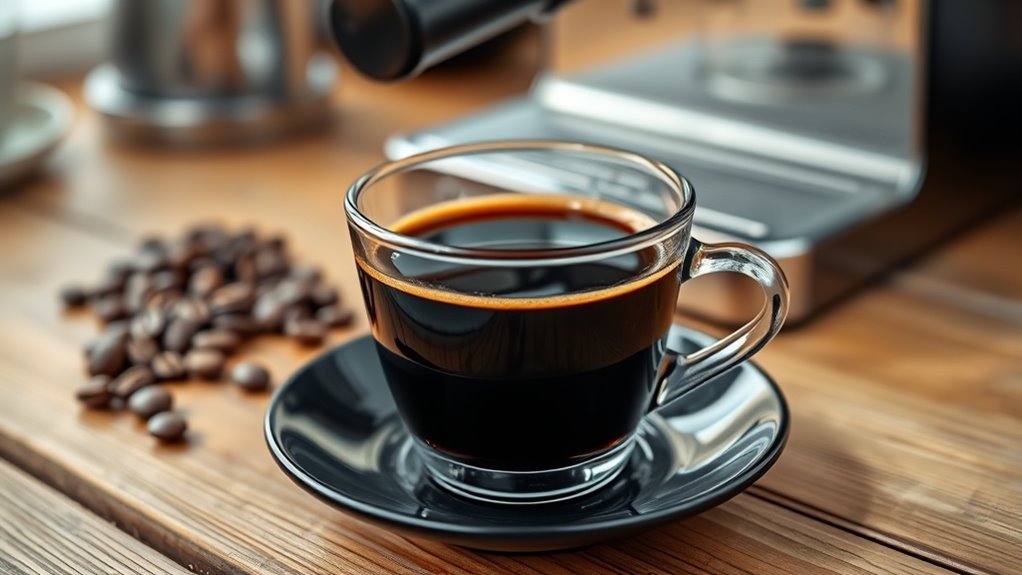
When you order a shot of espresso without any milk or cream, you’re basically enjoying a form of black coffee. Black coffee simply means coffee served without additives, and espresso fits perfectly into this category when served pure.
Espresso is a concentrated, bold brew made by forcing hot water under high pressure through finely ground coffee. This process extracts intense flavors, producing a dark, robust shot that’s inherently black.
Espresso is a bold, concentrated brew crafted by forcing hot water through finely ground coffee under high pressure.
Unlike other brewing methods, espresso’s strength and richness don’t rely on added ingredients, so it stays true to the black coffee definition.
While black coffee includes various brewing styles, espresso stands out as the concentrated, undiluted version you drink straight, showcasing pure coffee essence without any milk, cream, or sweeteners. It’s a straightforward way to enjoy coffee in its most intense form.
Because espresso is brewed under approximately 9 bars pressure, it develops a unique crema and rich flavor that distinguishes it from other black coffee types.
How Does Espresso Brewing Differ From Regular Coffee?
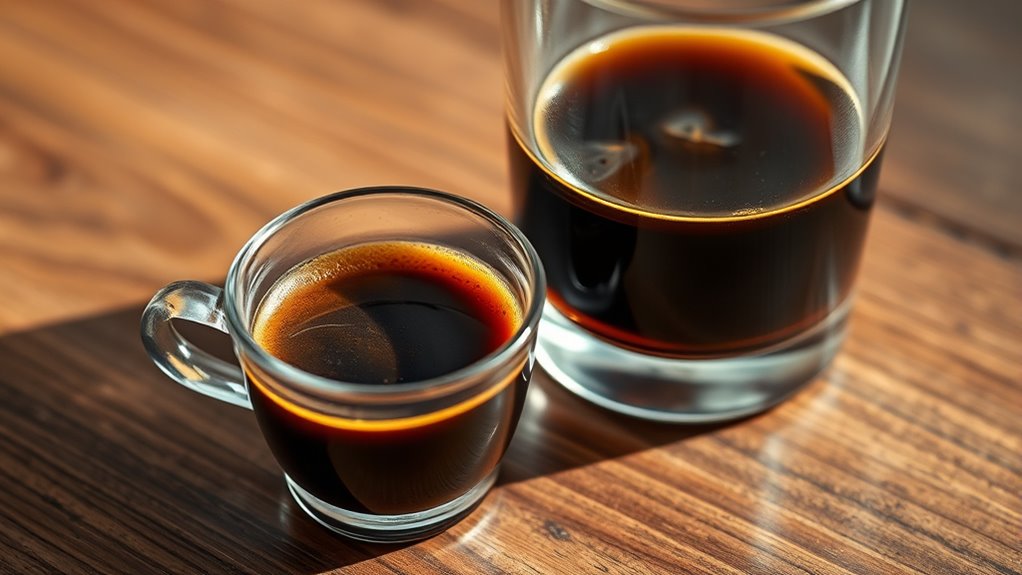
When making espresso, you use a much finer grind than you’d for regular coffee, which needs coarser grounds.
See, espresso relies on high pressure to push water through the coffee, whereas regular brewing methods mostly depend on gravity.
Also, espresso extracts really quickly—usually in about 20 to 30 seconds—while regular coffee takes several minutes to brew.
It’s pretty interesting how different the processes are, right?
Espresso also produces a distinctive crema, a creamy layer on top that regular coffee doesn’t have.
Grind Size Differences
Although both espresso and regular drip coffee start with roasted beans, the grind size used in each method plays a crucial role in shaping their distinct flavors and brewing times.
For espresso, you’ll need a very fine grind, almost like powdered sugar, to allow high-pressure extraction within about 20-30 seconds. This fine grind is essential for producing the rich flavor and the characteristic crema.
On the other hand, drip coffee requires a coarser grind, similar to sea salt, so water can flow steadily without causing over-extraction.
Using too coarse a grind for espresso leads to under-extraction and sourness, while a too fine grind in drip brewing results in bitterness.
Mastering the precise grind size is key to revealing each method’s full potential.
Additionally, the extraction time of around 25 seconds in espresso brewing is critical to achieving the optimal balance of flavor and caffeine content.
Pressure Versus Gravity
How exactly does espresso brewing differ from regular black coffee? The key lies in pressure versus gravity.
When you brew espresso, you force hot water through finely ground coffee at about 9 bars of pressure. This intense pressure extracts more solubles and oils quickly, in just 20 to 30 seconds, yielding a concentrated, rich shot with a distinctive crema.
Regular black coffee, like drip or French press, relies solely on gravity. Water flows naturally over coarser grounds without added pressure, resulting in a milder, larger-volume cup.
This fundamental difference in brewing pressure shapes espresso’s bold flavor and creamy texture, while gravity-based methods produce a smoother, lighter profile.
Understanding this contrast helps you appreciate why espresso stands apart in taste and mouthfeel from your typical black coffee. The choice of alcohol, such as vodka in an espresso martini, complements this bold espresso flavor by providing a neutral base that allows the coffee’s rich notes to shine.
Extraction Time Variations
Beyond the role of pressure, extraction time plays a significant part in defining the character of espresso versus regular coffee. Espresso brews rapidly, usually within 20-30 seconds, using a fine grind and high pressure. This quick extraction pulls a concentrated burst of soluble solids and gases, forming a rich crema and delivering a bold, intense flavor with a thicker mouthfeel.
In contrast, regular coffee brewing methods like drip or French press take several minutes, allowing for slower extraction. This longer process highlights complex flavor development and subtle aromatic compounds, creating a more nuanced cup.
Adjusting grind size and shot time precisely helps optimize espresso flavor and consistency within this short extraction window.
Are Espresso Beans Different From Coffee Beans?
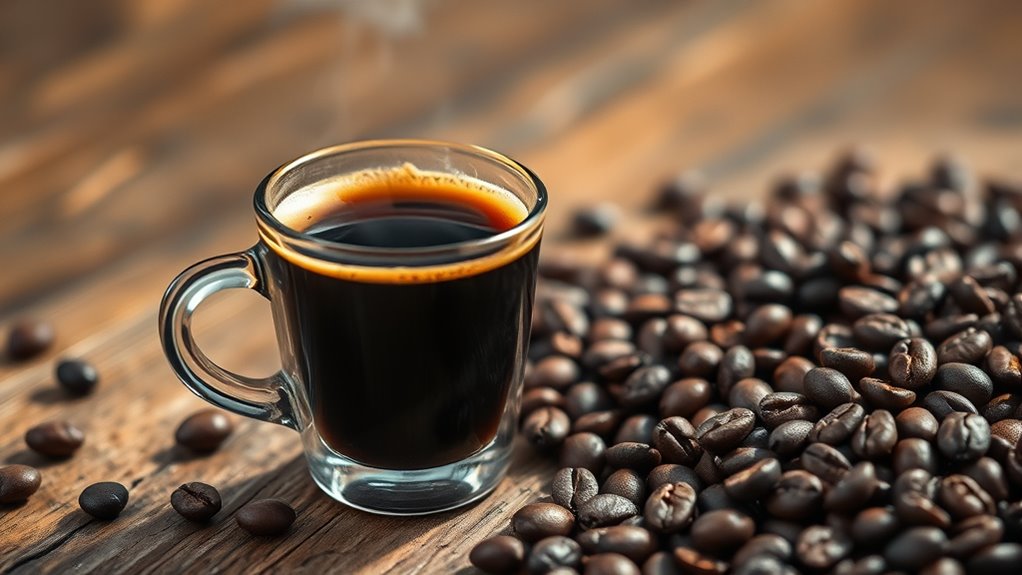
What makes espresso beans different from regular coffee beans? The truth is, there isn’t a specific “espresso bean.” Any coffee bean can be used to make espresso or regular coffee.
The key differences lie in the roast profile and grind size.
Traditionally, espresso beans are medium to dark roasted. This helps bring out bold, rich flavors when brewed under pressure. But lately, specialty coffee trends have introduced lighter roasts for espresso, highlighting different flavor notes.
The same bean can produce vastly different flavors depending on how you roast and brew it. So, the variety of the bean matters less than how it’s processed and prepared.
When choosing beans for espresso, focus on roast and grind rather than the bean type itself. Proper grind size and extraction technique are essential to achieving the best espresso flavor regardless of the bean used.
How Do Roast Levels Affect Espresso and Black Coffee Flavor?
You’ll notice that roast levels really shape the flavor of both espresso and black coffee. Dark roasts tend to bring out bold, bitter, and smoky notes.
On the other hand, lighter roasts highlight bright, fruity, and floral nuances.
Getting a feel for how these roast profiles influence things like acidity, bitterness, and crema richness can help you pick the perfect cup every time. It’s pretty interesting once you start paying attention!
The roast degree also impacts the balance between sweetness, acidity, and body, influencing how espresso and black coffee taste and feel.
Roast Level Flavor Impact
Although both espresso and black coffee come from the same beans, the roast level really shapes their flavor profiles. When you pick darker roasts for espresso, you’ll notice bold, smoky flavors with more bitterness and a fuller body.
Lighter roasts, on the other hand, bring out brighter, fruitier notes and keep delicate, origin-specific flavors like floral or citrus, especially in espresso.
Acidity plays a big role too. Lighter roasts tend to be more acidic, while darker roasts offer a more subdued, bittersweet profile.
With black coffee, the roast’s impact is even stronger because the brewing method lets the beans’ natural characteristics shine through more clearly. This contrasts with espresso, which focuses on intensity and richness.
Knowing about roast levels helps you find the flavor that suits your taste best. Additionally, the extraction quality of espresso significantly influences its flavor beyond just roast level, emphasizing the importance of proper brewing techniques.
Dark Vs. Light Roast
How do different roast levels shape the flavor of your espresso and black coffee? The choice between dark and light roast dramatically influences taste, body, and aroma. Here’s how:
- Flavor Profile: Dark roasts deliver bold, smoky notes with caramelized sugars, enriching both espresso and black coffee. Light roasts highlight fruity, floral nuances, resulting in brighter, more acidic flavors.
- Body and Acidity: Dark roasts create a fuller-bodied, smoother cup with reduced acidity. Light roasts yield a lighter, more complex mouthfeel with pronounced acidity.
- Aroma and Caffeine: Dark roasts offer a deep, roasted aroma, while light roasts present a vibrant, intricate scent. Light roasts generally contain slightly more caffeine, which can subtly affect the flavor perception.
Additionally, the roast level’s impact on espresso flavor is also influenced by the specific bean origin, which imparts unique fruity, nutty, or earthy notes that further differentiate your cup.
Roast Influence On Espresso
When selecting a roast level for your espresso, you shape the flavor experience from bold and smoky to bright and fruity. Dark roasts bring out intense bitterness and smoky notes. They’re perfect for cutting through milk in lattes.
Lighter roasts highlight acidity and fruity origin flavors. These are often favored in specialty espresso. Medium roasts balance fruitiness and roasted depth. They’re versatile for espresso or black coffee.
| Roast Level | Flavor Profile | Best For |
|---|---|---|
| Dark | Bold, smoky, bitter | Milk-based espresso drinks |
| Medium | Balanced acidity & roast | Espresso & black coffee |
| Light | Bright, acidic, fruity | Specialty espresso |
Your roast choice directly influences aroma, body, and flavor intensity. This shapes your overall espresso experience. Additionally, the roast level affects aroma, acidity, and flavor, as well as bean density and oil content, influencing grind size and extraction quality.
Why Does Espresso Taste Stronger Than Black Coffee?
Because espresso brews under high pressure and uses a fine grind, it extracts a concentrated burst of intense flavors and solubles quickly, giving it a stronger taste than black coffee. You’ll notice espresso’s boldness comes from several factors.
Espresso’s bold flavor comes from high pressure and a fine grind, delivering intense taste quickly.
First, the rapid extraction. The high pressure and fine grind draw out more bitter and aromatic compounds in seconds, which really intensifies the flavor.
Then, there’s the concentrated serving size. Espresso’s small volume packs intense solubles into each sip, unlike the larger, more diluted black coffee.
And don’t forget the crema layer. This emulsified oil and gas layer enhances richness and adds depth, boosting the perception of strength.
All these elements work together to create espresso’s robust, full-bodied profile. That’s why it tastes much stronger, even though it’s made from the same coffee beans as black coffee.
How Do Serving Size and Caffeine Compare Between Espresso and Black Coffee?
Espresso’s concentrated flavor profile also reflects its caffeine content, which differs remarkably from black coffee due to serving size and extraction methods. A standard 1-2 oz shot of espresso delivers about 60-100 mg of caffeine, making it highly concentrated per ounce.
In contrast, an 8 oz cup of black coffee contains roughly 120 mg of caffeine, offering more total caffeine but at a lower concentration. This means that while black coffee provides a larger caffeine dose per serving, espresso packs a potent caffeine punch in a much smaller volume.
If you consume 3-4 shots of espresso, you’ll ingest a caffeine amount comparable to or greater than a typical cup of black coffee, highlighting espresso’s intensity despite its modest size.
Can You Drink Espresso as Black Coffee?
You can definitely drink espresso as black coffee since it’s basically just concentrated coffee without any milk or sugar. It’s a bit bolder and more intense in flavor compared to regular black coffee, but both come from the same beans and share a lot in common.
Once you get to know the flavor differences and how each is usually served, it’s easy to see how espresso fits right in as a type of black coffee.
Espresso Versus Black Coffee
How does espresso compare to black coffee, and can you enjoy it the same way? Yes, you can drink espresso as black coffee since it’s basically a concentrated shot of pure black coffee. Here’s how they differ:
First, the brewing method. Espresso uses high pressure to extract a small, intense shot. Black coffee usually brews through gravity over a longer time, which makes it milder.
Next is concentration. Espresso is really concentrated. Just 1-2 ounces pack 60-100mg of caffeine, while black coffee is milder and served in bigger cups.
Then there’s the beans. Both use the same coffee beans, but espresso’s process makes the flavor and body more intense.
Knowing these differences helps you appreciate espresso as a strong, pure form of black coffee you can enjoy straight up.
Flavor Differences Explained
While espresso and black coffee come from the same coffee beans, their flavors are quite different because of how they’re brewed and their concentration.
Espresso is made by forcing hot water through finely ground beans under high pressure. This creates a small, strong shot with a bold flavor and a thicker texture.
Black coffee, on the other hand, is brewed more gently. It usually tastes smoother and milder and comes in a larger volume. You can drink espresso like black coffee, but its intense, sometimes overwhelming flavor might catch you off guard if you’re used to lighter brews.
Espresso also has more caffeine per ounce since it’s so concentrated, but because the serving size is smaller, it balances out.
In the end, espresso gives you a richer, more robust black coffee experience that’s still versatile enough to enjoy straight up.
Serving Styles Compared
Can espresso truly serve as black coffee? Yes, it can. Espresso is basically a concentrated shot of black coffee, served in small 1-2 oz. portions.
When comparing serving styles, think about these key differences:
1. Volume: Traditional black coffee is brewed in larger quantities, usually 8 oz. or more.
2. Espresso, on the other hand, is a compact, intense 1-2 oz. shot.
2. Concentration: Espresso offers a thicker, more robust flavor because of its brewing method.
It really highlights those bold, rich coffee notes.
3. Texture and Experience: Both share natural coffee flavors, but espresso’s crema and intensity create a distinct, more concentrated black coffee experience.
Why Do Some People Prefer Espresso Over Black Coffee?
Because espresso delivers a concentrated and bold flavor in just a small, quick shot, many people prefer it over black coffee when they want a stronger caffeine boost. You’ll notice espresso’s intense crema and rich aroma create a sensory experience that black coffee’s milder profile can’t match.
Its quick extraction process captures more flavor compounds, producing a complex, nuanced taste that appeals to enthusiasts.
Plus, espresso’s compact serving size packs a potent caffeine punch, perfect for when you need energy fast.
If you enjoy versatility, espresso also blends effortlessly into drinks like lattes and cappuccinos, expanding your options beyond a simple black cup.
Ultimately, you might favor espresso for its dynamic flavor, speed, and adaptability, making it ideal for both pure enjoyment and practical caffeine delivery.
How to Choose Between Espresso and Black Coffee for Your Taste and Routine
Choosing between espresso and black coffee comes down to how you prefer your coffee experience and how it fits into your daily routine. To decide which suits you best, consider these factors:
1. Flavor Intensity: If you crave a bold, concentrated taste, espresso’s rich flavor will satisfy you. For a smoother, nuanced profile, black coffee is preferable.
2. Serving Size and Consumption Time: Espresso offers a quick, small shot (1-2 oz), perfect for a fast caffeine boost.
If you enjoy sipping your drink over time, a larger black coffee (8 oz. or more) works better.
3. Caffeine Needs: Espresso packs high caffeine per ounce, ideal for a rapid lift.
However, a larger black coffee can provide more total caffeine throughout your day.
Tips for Enjoying Espresso and Black Coffee at Home
When you want to enjoy espresso and black coffee at home, focusing on quality ingredients and equipment makes all the difference. Start with freshly ground coffee beans using a burr grinder to guarantee consistent flavor extraction.
For espresso, invest in a machine featuring a pressure gauge and precise temperature control. Aim for water between 195-205°F and a 20-30 second brew time to enhance crema and richness. It really helps bring out those bold flavors.
If you prefer black coffee, try different brewing methods like pour-over or French press. This way, you can discover your ideal taste profile.
Also, always store your beans in an airtight container away from light and heat to keep them fresh.
Frequently Asked Questions
What Equipment Is Needed to Make Espresso at Home?
You’ll need an espresso machine with 9 bars pressure, a high-quality burr grinder for fine grounds, and a tamper to compress coffee evenly. A digital scale is also handy for precision.
Plus, don’t forget accessories like a knock box, timer, and tamp mat. These little extras can really make your espresso routine smoother and more enjoyable.
How Long Does Espresso Stay Fresh After Brewing?
Espresso stays fresh for about 15-30 minutes after brewing before it starts losing flavor and aroma. To savor its rich crema and taste, you’ll want to drink it immediately or refrigerate it in a sealed container.
If you can’t finish it right away, storing it properly helps keep it enjoyable for a bit longer. Just remember, the sooner you drink it, the better it tastes!
Can Espresso Be Used in Coffee-Based Desserts?
Yes, you can use espresso in coffee-based desserts. Its rich, concentrated flavor boosts depth and complexity. It blends perfectly with chocolates and creams.
Fresh espresso adds a bold aroma and taste. This really enhances tiramisu, mousses, and syrups beautifully. It’s a great way to bring out those coffee notes.
What Is the History of Espresso Coffee?
Imagine a burst of flavor captured in seconds. Espresso’s history starts in 1884 with Moriondo’s steam machine, evolving through Bezzera’s 1906 design. It truly embodies Italy’s passion for fast, rich coffee brewed with precision and innovation.
It’s pretty amazing how this style of coffee became such a big deal, right? From those early machines to the espresso we enjoy today, it’s all about delivering a quick, intense coffee experience.
Are There Health Benefits Specific to Espresso Versus Black Coffee?
You’ll find espresso offers a concentrated dose of caffeine and antioxidants, giving you a quicker energy boost and potential metabolic benefits.
Black coffee provides similar health perks but in larger, less intense servings. So, it really comes down to how you like your coffee and how fast you want that caffeine hit. Both options can be great for your health in their own way.
Conclusion
Choosing between espresso and black coffee is like picking between a lightning bolt and a steady sunrise. Both deliver caffeine, but in different ways. Espresso gives you an intense, concentrated burst.
Black coffee, on the other hand, offers a smoother, more extended flavor journey. Understanding their differences helps you tailor your brewing and tasting experience to fit your mood and routine.
So, embrace the nuances. You’ll enjoy each cup with a newfound appreciation and clarity.