Yes, you can use regular coffee beans for espresso, but you’ll need to grind them very fine and adjust your extraction technique carefully. Regular beans often roast lighter and have less oil, which can affect crema and flavor richness. Darker, oilier roasts work best, but with proper grind size, tamping, and pressure, you can still pull a satisfying shot.
Want to get the most out of your beans? Explore how roast, grind, and brewing details make a difference.
What Is Espresso and How Does It Differ From Regular Coffee?
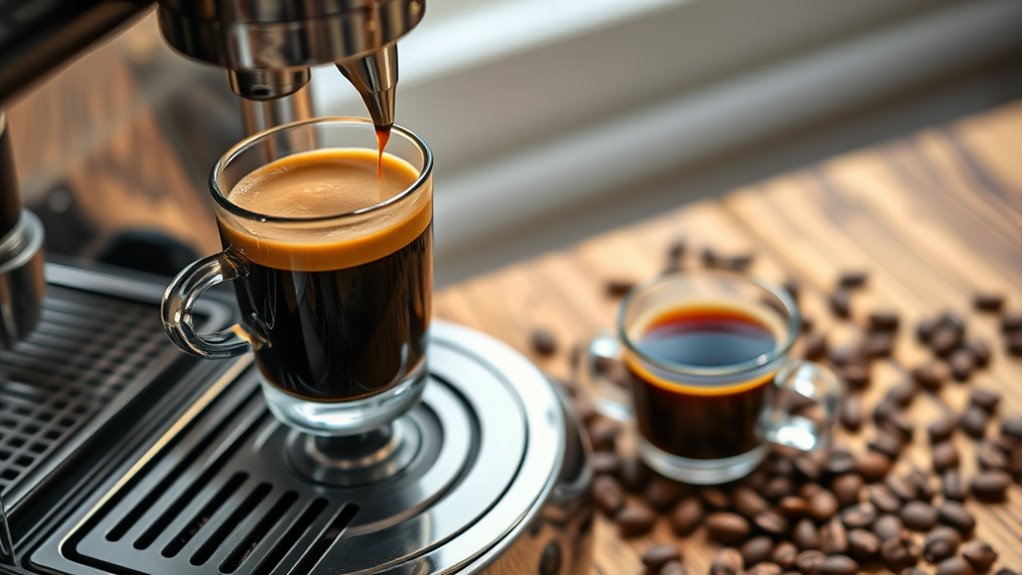
Although espresso and regular coffee both start with coffee beans, they differ fundamentally in how they’re brewed. Espresso forces hot water through finely ground coffee using high pressure, usually around 9 bars, extracting intense flavors quickly. This method creates a concentrated, full-bodied shot crowned by a thick, golden crema, a signature feature that sets espresso apart.
In contrast, regular coffee uses coarser grounds and relies on gravity with longer extraction times, resulting in a lighter, less intense brew. The key distinction lies in the brewing process itself, not the beans.
While espresso often involves dark roasts, what truly defines it is this high-pressure extraction, producing a richer, more layered cup that demands precision and passion in its preparation. So, it’s not just about the beans but how you bring out their best flavors. Proper grind size and pressure are essential to achieve the perfect extraction and crema quality in espresso.
Can You Use Regular Coffee Beans to Make Espresso?
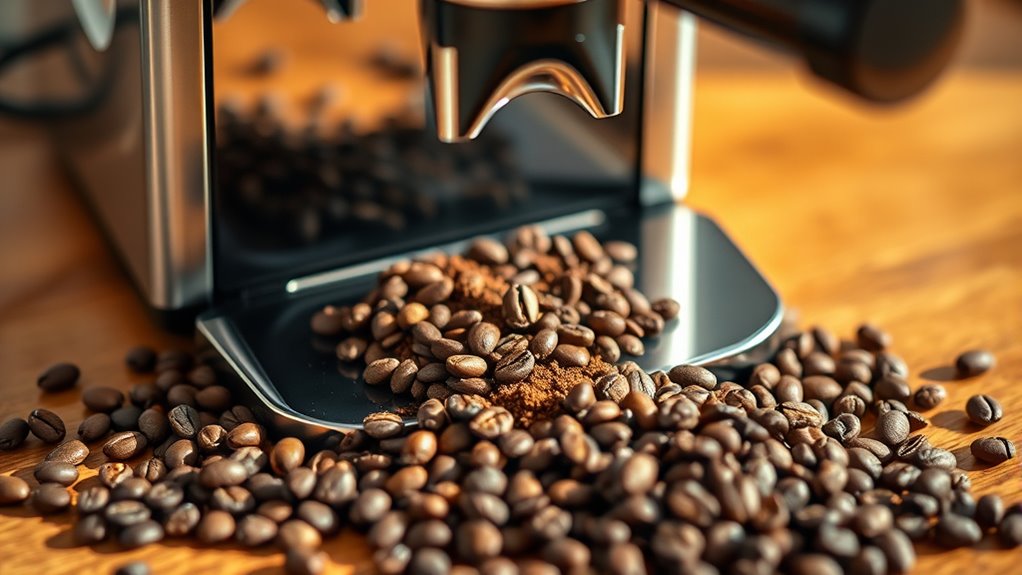
You can definitely use regular coffee beans to make espresso. The key is to grind them very finely, so the grind size matches what you’d typically use for espresso.
Just keep in mind, beans that aren’t roasted or ground specifically for espresso might give you a shot that’s a bit weaker, with less crema and a milder flavor.
It helps to understand how things like bean type, grind size, and extraction time all play a role in the taste. Once you get a feel for that, you’ll be able to pull a really good espresso even with regular beans.
Adjusting the grind size and timing carefully is essential to achieve consistent extraction time and flavor balance.
Bean Compatibility Explained
While any coffee bean can technically be used to make espresso, achieving the rich, full-bodied flavor you expect depends heavily on how finely the beans are ground and their roast profile.
Beans roasted specifically for espresso tend to be darker and oilier, which helps with extraction and creates that signature crema.
If you use regular coffee beans, especially lighter roasts, you might notice your espresso shot tastes weaker or more acidic because they contain less oil and develop different flavor compounds.
Still, the key to good espresso lies in the brewing process and grind size rather than the bean itself.
So, while regular beans can work, choosing those compatible with espresso roasting will enhance your shot’s depth and balance.
It really comes down to what kind of flavor experience you’re after.
Typically, a shot of espresso contains about 63 mg of caffeine, which can vary based on the beans and roast level.
Grind Size Importance
Getting the right grind size makes all the difference when pulling espresso shots, especially if you’re working with regular coffee beans. Espresso demands a very fine, almost powdery grind to create the proper resistance for high-pressure extraction.
Regular coffee beans are usually ground coarser, which causes water to flow too quickly through the puck. This leads to under-extraction, producing sour, weak, or flat espresso.
To avoid this, you need a burr grinder to precisely adjust your grind to the fine setting required for espresso. This fine grind maximizes surface area, allowing hot water and pressure to extract rich oils and flavors while forming that signature crema.
Without dialing in your grind size, regular beans won’t deliver the espresso experience you expect. So, if you want that perfect shot, getting your grind just right is key. It really changes the whole game. Adjusting the grind size within the ideal range of 200-400 microns is essential to achieve balanced extraction and optimal flavor.
Flavor And Extraction
Although regular coffee beans can technically be used to make espresso, the flavor and extraction quality often fall short compared to beans roasted and ground specifically for espresso.
When you use regular beans, especially lighter roasts, you’ll notice a weaker shot with less intensity and a thinner crema.
This happens because these beans have lower oil content and a different roast profile, which affects how the espresso extracts under high pressure.
You’ll also find the flavor leaning more acidic or sour, lacking the bold, rich character typical of a true espresso.
Achieving proper extraction requires a very fine grind, which can be tricky with standard equipment.
Additionally, the caffeine content can vary significantly depending on factors like bean type and extraction time, which may impact the strength and effects of your espresso shot, making an understanding of caffeine content variability important.
Using Regular Coffee Beans for Espresso: What to Expect
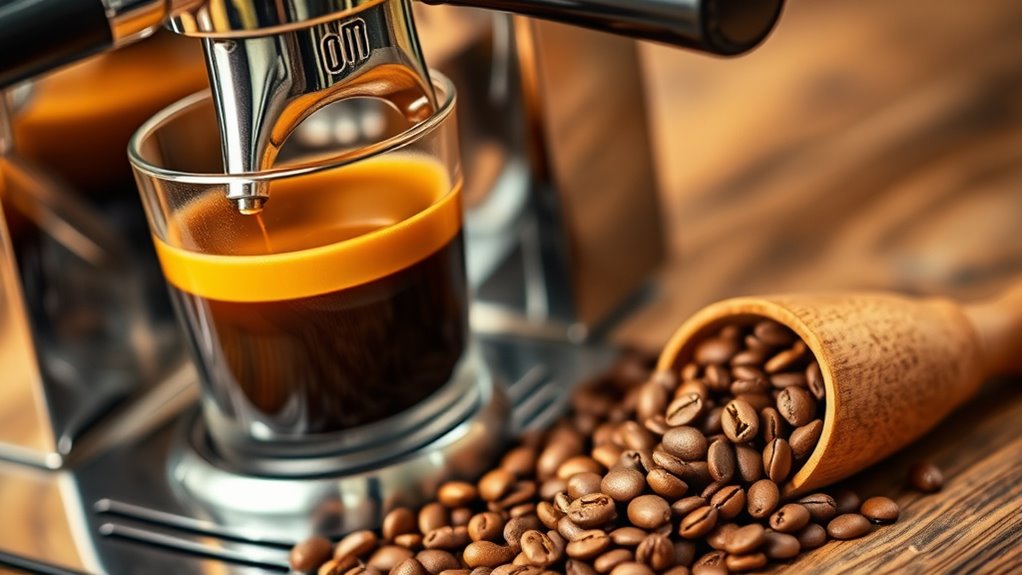
When you use regular coffee beans for espresso, getting the grind size just right is key to avoiding weak or sour shots.
You’ll definitely notice some flavor differences because these beans often don’t have the oils and roast profile that give espresso its rich crema and bold taste.
Plus, expect a few extraction challenges since your machine really needs a fine, uniform grind to pull a proper shot.
Understanding how grind size influences extraction can help you adjust for better flavor and texture.
Grind Size Importance
Because espresso demands intense pressure and quick extraction, you’ll need to grind regular coffee beans extremely fine, almost like powdered sugar, to pull a rich, balanced shot.
If you use a coarser grind typical for drip coffee, the water flows too quickly. This results in under-extracted, sour, and weak espresso.
The grind size controls how water interacts with the coffee. Too coarse causes channeling and poor flavor, while too fine risks clogging your machine.
To get the best from regular beans, use a burr grinder for consistent, uniform grounds.
This precision maximizes flavor extraction and helps create that coveted crema.
Mastering grind size is essential. You’re not just grinding beans, you’re releasing their full potential in your espresso shot.
Adjusting grind size is necessary when changing espresso dose amounts to maintain balanced extraction and optimal flavor.
Flavor Profile Differences
Adjusting your grind size is just one piece of the puzzle. How regular coffee beans influence the flavor profile of your espresso is equally important.
When you use regular beans, especially lighter roasts, you’ll notice a less bold, more acidic shot.
The natural oils these beans contain often fall short in producing the rich crema you expect from espresso. As a result, your espresso might taste thinner, weaker, and lack the body that defines a great shot.
You’ll also miss those deep chocolate and caramel notes typical of beans roasted specifically for espresso.
Instead, the flavor tends to lean sour or even flat, leaving your espresso less intense and complex than it could be.
Understanding these differences helps set your expectations when brewing espresso with regular coffee beans. It’s good to know what you’re working with!
Regular maintenance, including descaling frequency, is essential to preserve your espresso machine’s performance and ensure the best extraction from any beans you use.
Extraction Challenges
Although it’s tempting to brew espresso with regular coffee beans, you’ll quickly run into extraction challenges that mess with both taste and texture. Regular coffee grounds are usually coarser, which makes water flow too fast through the puck during the short 20-30 second brew. This causes under-extraction, leaving your shot weak, sour, and flat.
You’ll probably notice a thin or even missing crema, which takes away from both the look and mouthfeel. Plus, the coarser grind can’t hold up well against the espresso machine’s high pressure, so extraction ends up inconsistent.
Over time, using regular grounds can lead to clogging and buildup in the portafilter and filter basket, which means more maintenance. If you want a true espresso experience, getting the grind size and extraction balance right is super important. Regular beans just don’t cut it.
For best results, it’s essential to use a fine, consistent grind specifically adjusted for espresso machines to ensure balanced extraction and flavor.
Why Roast Level Matters for Espresso Beans
When you choose espresso beans, the roast level plays a crucial role in shaping the flavor and texture of your shot. Darker roasts are typically preferred because they develop oils on the bean’s surface, creating the rich crema and full-bodied mouthfeel essential for espresso. These roasts highlight chocolate, caramel, and smoky notes that stand up well to the high-pressure brewing process.
Medium roasts, like Café Espresso, offer balanced acidity and nuanced flavors, making them a versatile option if you want a slightly lighter profile without sacrificing body.
On the other hand, lighter roasts often lack the boldness and oil content needed for a proper espresso shot. That usually results in a thinner, less satisfying extraction.
Understanding roast levels guarantees you get the flavor intensity and texture you expect from espresso. So, it’s worth paying attention to what kind of roast you’re picking. It really makes a difference in your cup.
For optimal results, many baristas recommend using medium to dark roasts specifically designed for espresso to achieve the best balance of acidity, body, and crema.
How Espresso Beans Are Roasted Differently From Regular Beans
Because espresso demands a concentrated, intense flavor, roasters push beans through a longer, hotter roasting cycle than they do with regular coffee. This extended roasting darkens the beans and brings oils to the surface. That plays a big role in creating the signature crema you expect.
Regular coffee beans, by contrast, get a shorter roast, which results in a lighter color and less surface oil.
The darker roast profile for espresso also emphasizes caramelization and deep chocolate notes. These are key to its bold taste.
Plus, these beans are specifically roasted to endure the high-pressure extraction espresso requires. Lighter roasts can’t handle that as well.
Understanding this difference helps you appreciate why espresso beans aren’t just any coffee beans roasted longer—they’re crafted for that unique, powerful shot.
How Grind Size and Consistency Affect Espresso Extraction
Mastering the grind size and consistency is essential if you want to pull a perfect espresso shot. You need a fine, almost powdery grind to guarantee hot water flows evenly through the coffee grounds within 20-30 seconds.
If your grind is too coarse, water channels through unevenly, causing under-extraction and resulting in weak, sour flavors.
On the other hand, if it’s too fine, you risk over-extraction, producing bitterness and astringency.
Consistency in grind size is just as crucial because it prevents uneven extraction, which leads to variability in shot quality.
Finding this balance lets you get the most out of your coffee, whether you use regular or espresso-specific beans. It also ensures every shot is rich, balanced, and satisfying.
Tips for Using Regular Coffee Beans in an Espresso Machine
Getting the grind size and tamping just right sets the stage, but using regular coffee beans in your espresso machine demands a few additional adjustments.
Use a high-quality burr grinder to achieve a very fine, consistent grind, almost like powdered sugar. This precision is vital for proper extraction.
Next, adjust your tamping pressure to guarantee even compression. Uneven tamping leads to channeling, which ruins flavor.
Since regular beans differ from espresso-specific ones, experiment with extraction times. Try slightly longer or shorter pulls to find the sweet spot.
Also, make sure your machine maintains a steady 9 bars of pressure. Without it, espresso quality suffers.
Finally, grind your beans fresh to enhance flavor, though beans roasted specifically for espresso will always yield superior results.
Choosing the Right Roast for Your Espresso Preference
When selecting the right roast for your espresso, consider how roast levels dramatically shape flavor and aroma. Dark roasts, like French or Italian, deliver bold, rich tastes with smoky, chocolatey notes that define classic espresso.
Choosing the right roast transforms your espresso’s flavor and aroma, with dark roasts offering bold, smoky richness.
If you prefer balance, medium roasts offer nuanced acidity alongside fuller body. This gives you a versatile flavor profile that works well in many ways.
Lighter roasts tend to highlight acidity more than depth, which mightn’t satisfy traditional espresso expectations.
But if you like brighter, more vibrant flavors, they could be your thing.
Ultimately, your personal taste and the flavor profile you want should guide your choice. Whether you crave intensity or subtle complexity, understanding how roast levels impact the cup lets you tailor your espresso experience exactly to your liking.
Choose thoughtfully, and your espresso will reward you with every sip.
How to Improve Espresso Results When Using Regular Beans
Although regular coffee beans aren’t specifically roasted for espresso, you can still achieve a rich, satisfying shot by refining your technique.
Start by using a high-quality burr grinder to get a very fine, consistent grind, like powdered sugar texture. Tamp the grounds evenly and firmly to prevent channeling, which can ruin extraction.
Since regular beans may grind coarser, extend your brew time to around 25-30 seconds to draw out more flavor.
Always calibrate your espresso machine’s temperature and pressure to optimize extraction with these beans.
Finally, grind your beans just before brewing. Fresh grounds preserve the coffee’s aroma and flavor, which is essential when working with regular beans.
With these steps, you’ll elevate your espresso beyond expectation.
Frequently Asked Questions
Can I Mix Regular and Espresso Beans for a Unique Flavor?
You can mix regular and espresso beans to create a unique flavor profile. Just experiment with ratios, like 75% espresso and 25% regular, to balance acidity and boldness. This helps ensure smooth extraction and a satisfying crema.
Give it a try and see what combination suits your taste best. It’s all about finding that perfect balance you enjoy!
Does Water Temperature Affect Espresso Made From Regular Beans?
Just like a knight wouldn’t charge without armor, you shouldn’t brew espresso with regular beans without regulating water temperature.
Staying between 195°F and 205°F ensures balanced extraction. This helps prevent bitterness or sourness in your shot.
How Does Bean Freshness Impact Espresso Quality?
Bean freshness profoundly impacts espresso quality. You’ll get brighter flavors, richer aroma, and a thick, golden crema from fresh beans.
Using stale beans dulls taste and reduces crema. This leaves your espresso flat and uninspiring. So, always go for fresh beans to enjoy a better cup.
Can Regular Beans Damage My Espresso Machine?
Up to 40% of espresso machine failures come from using the wrong beans or grind size. If you use regular beans, you might face clogging, pump strain, and residue buildup. This can damage seals and shorten your machine’s lifespan.
Are There Specific Coffee Origins Better for Espresso?
You won’t find a single best origin for espresso; instead, focus on quality and roast. Ethiopian beans bring fruity notes, Brazilian ones add nuttiness. Choose beans that match your flavor preference and roast them for espresso.
It’s all about what you enjoy. Some like bright and fruity, others prefer rich and nutty. So, pick what suits your taste and experiment a bit!
Conclusion
So, yes, you *can* use regular coffee beans for espresso, but don’t expect a magic trick. Espresso demands more than just any bean; it’s about roast, grind, and extraction precision. If you’re craving that rich, bold shot, regular beans might leave you wondering where the espresso went.
But hey, if you love surprises and a little adventure in your cup, go ahead. Just don’t say we didn’t warn you. Enjoy the experiment!