To descale your De’Longhi espresso machine, start by filling the water tank with the recommended descaling solution and water. Remove any water filters and position a container under the spouts.
Activate the descaling mode by holding the button until it blinks, then confirm with OK. After the cycle, rinse thoroughly with fresh water and run the rinse cycle.
If the process gets interrupted, just cancel and restart properly. Follow these precise steps to keep your machine performing well and lasting longer.
There’s more detailed guidance available ahead if you need it.
How To Tell When Your De’Longhi Needs Descaling
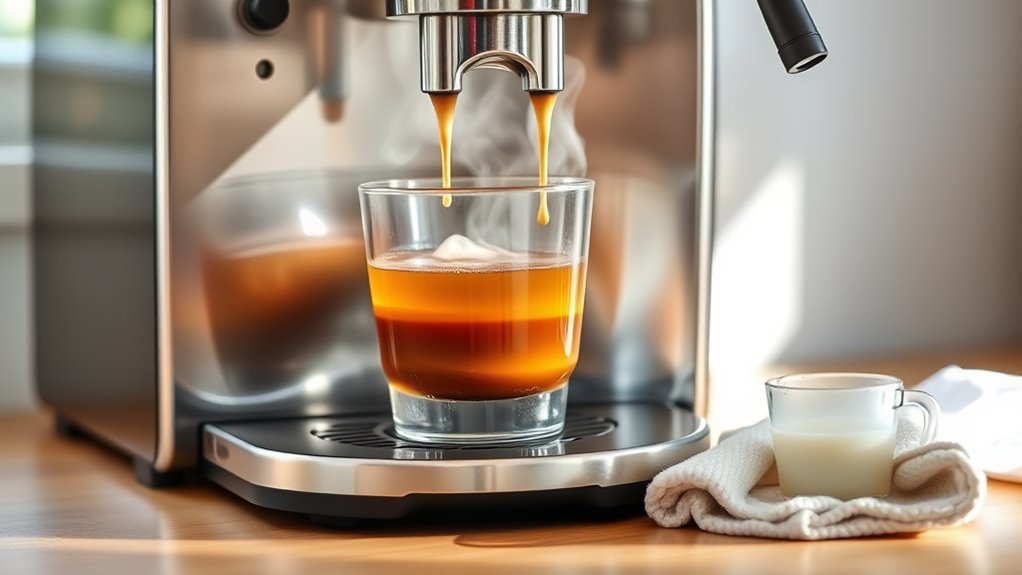
Although your De’Longhi espresso machine often signals the need for descaling with a dedicated indicator light, you should also keep an eye on performance changes like slower water flow or weaker extraction. These issues usually happen because of mineral buildup inside the machine.
You might also notice unusual noises or clogging during operation, which can mean scale is affecting the internal parts. To stay ahead, try testing your water hardness with De’Longhi SoftBalls. They give you a simple and reliable way to check the risk of scale forming.
Remember, if you’re in a hard water area, you’ll probably need to descale more often, usually every 2-3 months. But don’t just rely on the indicator light—watch how your machine performs too. Regular descaling maintains consistent water temperature and flow for optimal espresso quality.
How Often Should You Descale Based On Water Hardness?
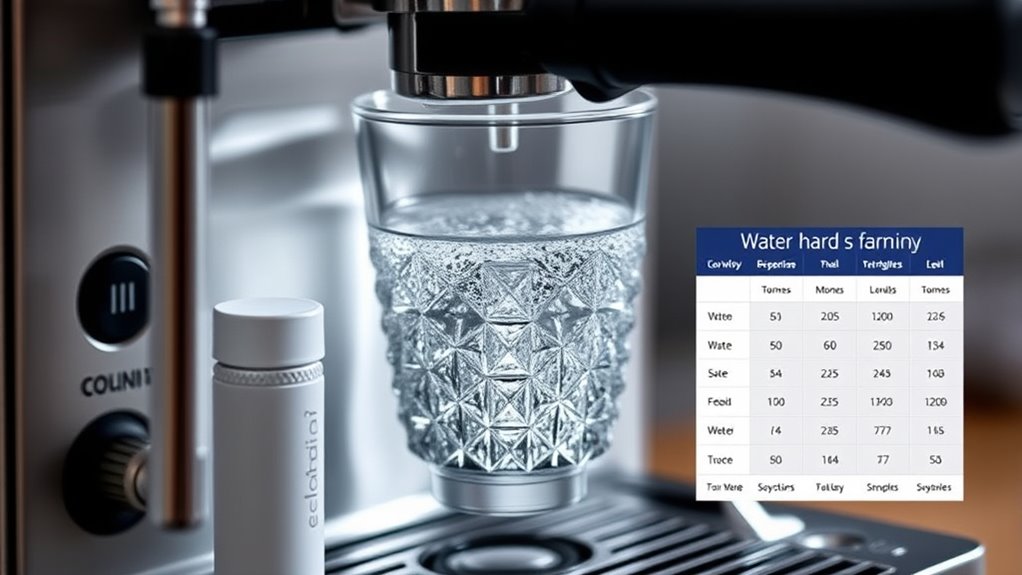
The frequency at which you should descale your De’Longhi espresso machine depends directly on your local water hardness.
If you use hard water with high mineral content, descale every 2-3 months to prevent scale buildup that can impair performance.
In areas with soft water and low mineral levels, descaling every 6-12 months is usually sufficient.
Utilize water hardness test strips to accurately assess your water’s mineral concentration and adjust descaling intervals accordingly.
Also, pay attention to the machine’s descaling indicator. It may signal the need for more frequent maintenance in very hard water regions.
Regularly adapting your descaling schedule based on these factors ensures effective machine efficiency and extends its lifespan.
Maintaining machine pressure through regular descaling helps preserve consistent espresso extraction and flavor quality.
What You’ll Need Before You Start Descaling
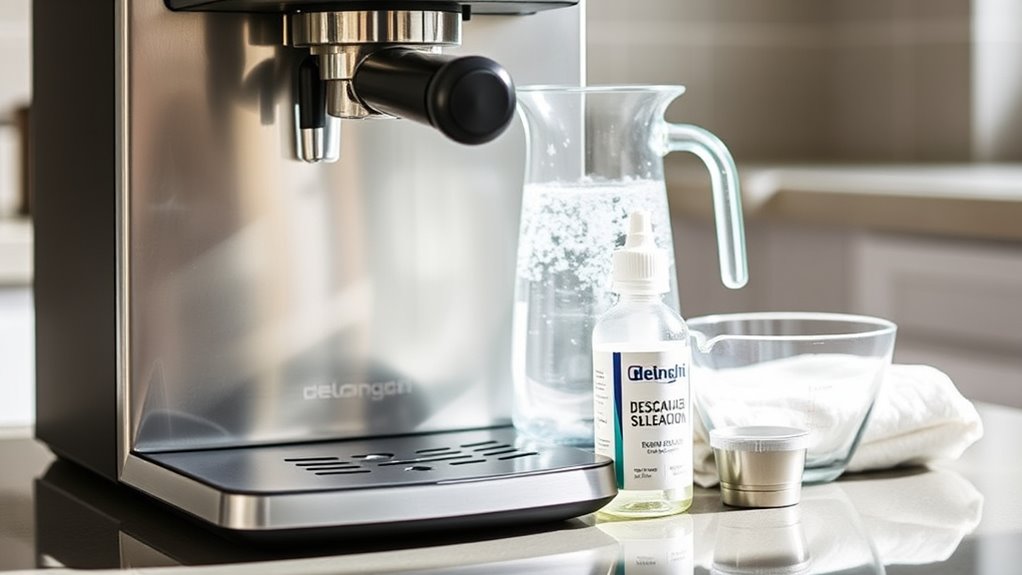
Before you start descaling your De’Longhi espresso machine, gather all necessary materials to guarantee a smooth process. Make sure you have the De’Longhi EcoDecalk or a recommended descaling solution. Remove any water filters from the machine beforehand.
You’ll need a container to collect used descaling liquid and residual water. Also, review your machine’s manual to understand specific instructions and safety precautions.
Regular descaling is essential to prevent mineral deposits that can affect your machine’s performance and longevity.
| Item | Purpose |
|---|---|
| De’Longhi EcoDecalk | Effective descaling solution |
| Container | Collects expelled descaling liquid |
| Instruction Manual | Reference for model-specific descaling steps |
Prepare these before you begin to streamline the descaling process without interruptions. It’ll make everything easier and quicker.
How To Prepare The Water Tank And Remove The Filter
First, go ahead and take out the water filter from the tank if your machine has one.
After that, fill the tank with the De’Longhi-approved descaling solution up to the indicated level.
Then, top it off with water until it reaches the maximum mark.
Finally, make sure to securely put the tank back into the machine so everything runs smoothly during the descaling process.
Regularly using NSF-certified descalers ensures safe and effective removal of mineral deposits.
Removing Water Filter
How do you guarantee your Delonghi espresso machine descaling is effective? Start by properly removing the water filter to prevent clogging and ensure thorough descaling. Follow these precise steps:
First, empty the water tank completely and rinse it to eliminate any leftover water and debris.
If your model has a filter compartment, carefully detach the water filter and set it aside for cleaning or replacement.
Don’t reinstall the filter before descaling; this lets the descaling solution reach all the internal parts.
After removing the filter, fill the tank with fresh water at the right level for the descaling process.
This step-by-step approach makes sure the descaling agent fully contacts the machine’s internal surfaces, so you get the best cleaning results.
Keep in mind that regular descaling helps maintain optimal extraction time and flavor quality, which are crucial for a rich double shot of espresso.
Filling Water Tank
Where do you begin when preparing your Delonghi espresso machine’s water tank for descaling? Start by removing the water tank from the machine completely.
Next, empty any remaining water to avoid dilution and guarantee accurate filling.
Take a moment to check the tank for any installed water filter and remove it carefully. This helps prevent filter damage and stops any blockages during descaling.
Once the filter is out, fill the tank with fresh, clean water up to the maximum fill line clearly marked on the reservoir.
Be careful not to overfill because that can cause overflow or mess up the descaling process.
Finally, reinsert the water tank securely into the espresso machine, making sure it locks into place.
This simple preparation gets your machine ready for an effective descaling cycle.
Why Using De’Longhi EcoDecalk For Descaling Matters
Although many descaling products are available, using De’Longhi EcoDecalk matters because it’s specifically formulated to remove limescale buildup in your espresso machine without damaging its internal components.
This guarantees your machine operates at peak efficiency while safeguarding delicate parts.
You should choose EcoDecalk for these key reasons:
- It effectively dissolves mineral deposits to maintain ideal performance.
- It protects internal components, preventing damage from hard water scale.
- It employs an eco-friendly formula, reducing environmental impact.
- It extends machine lifespan by preventing clogging and malfunctions.
Additionally, maintaining your espresso machine with proper care helps preserve the smooth, nuanced taste that espresso powder is known for.
Step-By-Step Descaling Cycle Guide For Your Machine
First, get your machine ready by placing containers under the spouts and filling the water tank with the descaling solution mixed with water.
Once that’s set, go ahead and start the descaling cycle by pressing the right buttons to let the solution flow through the system.
After the cycle finishes, make sure to rinse the machine thoroughly with fresh water and reset the components following the instructions provided.
Regular equipment calibration after descaling ensures your espresso machine maintains accurate brewing ratios and optimal performance.
Preparing The Machine
Before initiating the descaling cycle, you need to prepare your DeLonghi espresso machine carefully. Proper preparation guarantees effective descaling and prevents damage. So, let’s go through the steps together.
First, remove the water filter and thoroughly clean the water tank to get rid of any contaminants.
Then, fill the water tank with the recommended De’Longhi descaling solution up to the specified level.
After that, add fresh water to the tank as directed, usually up to the MAX line, to help with rinsing after the descaling process.
Finally, position the machine over a container that’s large enough to catch all the water and descaler that will come out during the cycle.
Completing these steps exactly gets your machine ready for the descaling cycle, making sure it removes scale efficiently and keeps your espresso tasting great.
Remember to turn off the machine and empty the water tank before starting the descaling cycle for safe and effective cleaning.
Running Descale Cycle
When you’re ready to run the descale cycle, fill the water tank with De’Longhi EcoDecalk solution up to level A, then add water up to level B. Place a container under both the coffee spout and hot water outlet to catch the expelled liquid.
Next, hold the descale button until its indicator light blinks, then press OK to start the process. The machine will automatically pump the descaling solution through internal circuits, pausing intermittently to allow the solution to break down limescale. It will also perform programmed rinses during the cycle.
Keep an eye on the OK indicator; once it turns blue, the descale phase is complete. At this point, refill the water tank with fresh water and press OK to start the rinse cycle. This makes sure the machine clears out any remaining descaling solution.
Regular descaling helps maintain optimal temperature stability, which is crucial for consistent espresso extraction and flavor.
Rinse And Finish
After completing the descaling cycle, refill the water tank with fresh water up to the MAX level and press the OK button to initiate the rinse cycle. This step flushes out any residual descaling solution, making sure your machine is clean and safe for brewing.
Follow these steps precisely:
- Press the OK button to start the rinse cycle.
- Allow the rinse cycle to finish automatically, keeping an eye on the water flow until it stops.
- Empty the rinse water container; refill it with fresh water if you need to rinse again.
- Put the drip tray and any other removed parts back in place to get your machine ready for use.
Doing this will guarantee a thorough cleaning and help maintain the best espresso quality. Proper machine maintenance and water temperature (195-205°F) help ensure consistent extraction and optimal caffeine levels.
How To Properly Rinse Your De’Longhi After Descaling
Since descaling involves chemicals that can affect your espresso’s taste and machine performance, you need to thoroughly rinse your De’Longhi to remove any leftover solution.
Start by refilling the water tank with fresh water, filling it up to the MAX level. Then, press the OK button to start the rinse cycle, which flushes out any remaining descaling agents.
Let the cycle run automatically; it stops when the OK indicator turns blue. Once it’s done, empty the rinse water container and put it back into the machine.
If you think there’s still some residue, just repeat the rinse cycle to make sure everything’s gone.
Thorough rinsing helps keep your machine working well and makes sure your espresso tastes great by preventing any chemical contamination. Following these steps carefully after every descaling will give you the best results.
What To Do If Your Descaling Cycle Gets Interrupted
If your descaling cycle gets interrupted, you’ll need to cancel the process by holding the descaling button for about 10 seconds. Once canceled, follow these steps to properly resume:
First, make sure the water tank is filled with fresh water and securely reinserted.
Then, check the water spout and outlet for any blockages or clogs that might’ve caused the interruption.
If the interruption happened during rinsing, be sure to empty and refill the rinse water container before you restart.
Also, it’s a good idea to consult your machine’s manual for any specific instructions on how to restart or resume the descaling cycle.
Where To Turn For Help With De’Longhi Descaling Problems
When you encounter descaling problems with your De’Longhi espresso machine, the most reliable step is to contact De’Longhi customer support through their official website or helpline. You can also refer to your user manual or specific online tutorials for model-tailored guidance.
If issues persist, authorized service centers provide professional diagnostics and repairs. Always use the recommended De’Longhi descaling solution to avoid compatibility problems.
Additionally, check FAQs and community forums for practical user-shared tips that address similar challenges. These resources can offer useful advice that might save you time and hassle.
| Resource Type | Purpose |
|---|---|
| Customer Support | Direct troubleshooting and technical help |
| User Manual | Step-by-step descaling instructions |
| Authorized Service | Professional repair and maintenance |
| Descaling Solution | Ensures chemical compatibility |
| FAQs & Forums | Peer advice and problem-solving insights |
How To Register Your Machine And Extend Its Warranty
Registering your De’Longhi espresso machine online is essential to activate the warranty and access full support services. Follow these steps to guarantee proper registration and consider warranty extension options:
Register your De’Longhi espresso machine online to activate your warranty and unlock full support services.
First, visit the official De’Longhi website and find the product registration section. Then, enter your machine’s serial number and provide proof of purchase to validate warranty coverage.
Make sure to complete the registration promptly so you can qualify for promotional offers and potential discounts.
Also, explore extended warranty plans available during registration or through authorized sellers to prolong your coverage.
After you register, save your confirmation and warranty documents in a safe place.
This methodical approach ensures you get full manufacturer support and makes future service claims easier.
That way, you can keep your espresso machine running at its best.
Frequently Asked Questions
Can I Use Vinegar Instead of De’Longhi Ecodecalk?
You shouldn’t use vinegar instead of De’Longhi EcoDecalk. Vinegar can corrode internal parts, leave residues, and void your warranty.
It’s really best to stick with the manufacturer-approved descaling solution. That way, you’re protecting your machine and making sure minerals get removed effectively.
Using the right product keeps everything running smoothly without any risks. So, save yourself the trouble and go with EcoDecalk!
Will Descaling Remove Coffee Stains Inside the Machine?
Descaling won’t remove coffee stains inside your machine; it targets mineral buildup and limescale. To eliminate stains, you’ll need specific coffee machine cleaners or vinegar solutions.
Make sure to descale regularly and clean thoroughly. Keeping up with maintenance will help your machine perform at its best.
How Long Does the Descaling Process Typically Take?
The descaling process typically takes 30 to 45 minutes, including rinsing. You might see variations based on your model and water hardness.
Some machines automatically pause, so make sure to allocate enough time for thorough cleaning. It’s a good idea to keep an eye on your machine during the process just in case.
That way, you can be sure everything is working smoothly and your coffee tastes great afterward.
Can I Descale My Machine if It Has a Built-In Grinder?
Yes, you can descale your Delonghi with a built-in grinder. First, remove the beans from the hopper. If possible, disengage the grinder before starting the process.
Make sure to follow the specific instructions in your manual carefully. Rinse everything thoroughly afterward to prevent mineral buildup. This will also help protect the grinder mechanism during descaling.
Is It Necessary to Descale if I Use Bottled Water?
Don’t put all your eggs in one basket; even with bottled water, you’ll need to descale your De’Longhi espresso machine periodically. Mineral buildup varies, so test hardness and descale to maintain ideal performance and longevity.
It’s a good idea to keep an eye on your machine, even if you think the water is soft. Regular descaling helps keep things running smoothly and extends the life of your espresso maker. Trust me, a little maintenance goes a long way!
Conclusion
Descaling your De’Longhi espresso machine might seem time-consuming, but skipping it risks damaging your machine and ruining coffee quality. By following the precise steps and using De’Longhi EcoDecalk, you protect your investment and guarantee consistent performance.
Regular descaling, based on your water hardness, prevents buildup and costly repairs. Even if you think your machine looks fine, scaling can silently harm it. So take the few minutes now to extend its life and keep every cup perfect.

Pingback: What Makes A Good Espresso Martini – Bar Tips