To use your DeLonghi espresso machine, start by filling the water tank with filtered water and securely attaching it. Preheat the machine for at least 15 minutes until the green light glows. Measure and tamp fresh coffee grounds evenly into the portafilter, then lock it firmly in place.
Brew your shot by turning the knob to the cup icon, and froth milk using the steam function when ready. Regular cleaning and descaling guarantee peak performance. Keep following for detailed tips on maintenance and troubleshooting.
Unboxing and Initial Setup of Your DeLonghi Espresso Machine
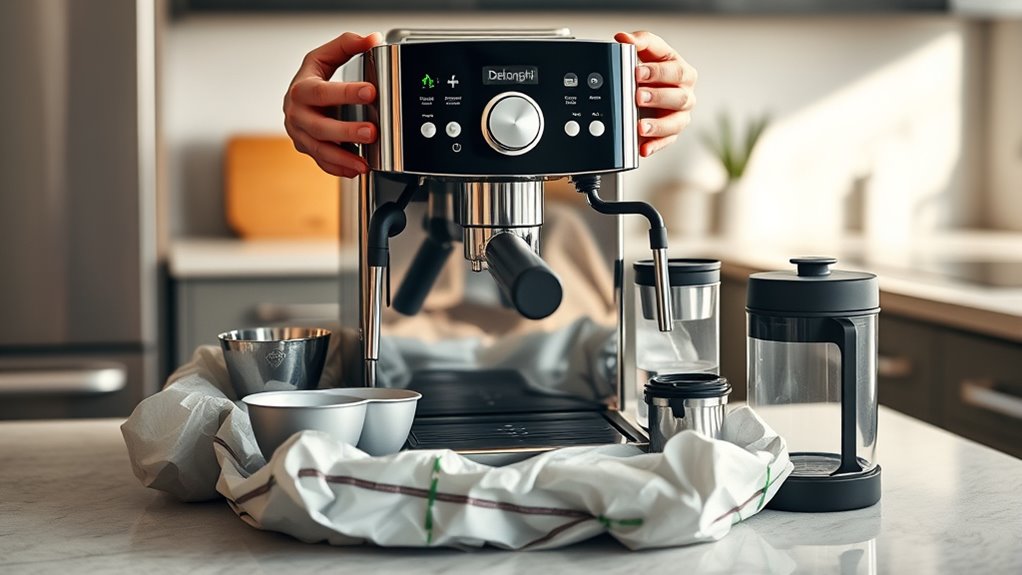
Before you start brewing, carefully unbox your DeLonghi espresso machine along with all included accessories like the portafilter, tamper, and water tank. Place the machine on a flat, stable surface, making sure it’s positioned away from sinks, hot appliances, and any water sources to prevent damage or accidents.
Before filling, rinse the water tank and internal components thoroughly to remove any manufacturing residue. After reattaching the water tank securely, power on the machine and let it preheat for at least 15 minutes.
Wait until the green ready light illuminates, signaling the machine is at the ideal temperature for brewing.
Performing daily maintenance after use will help keep your machine in optimal condition.
This initial setup ensures your espresso machine functions correctly and delivers the best coffee experience from the start. It’s a quick process, but doing it right makes all the difference. Enjoy your espresso!
Filling the Water Tank and Preparing Coffee Grounds Properly
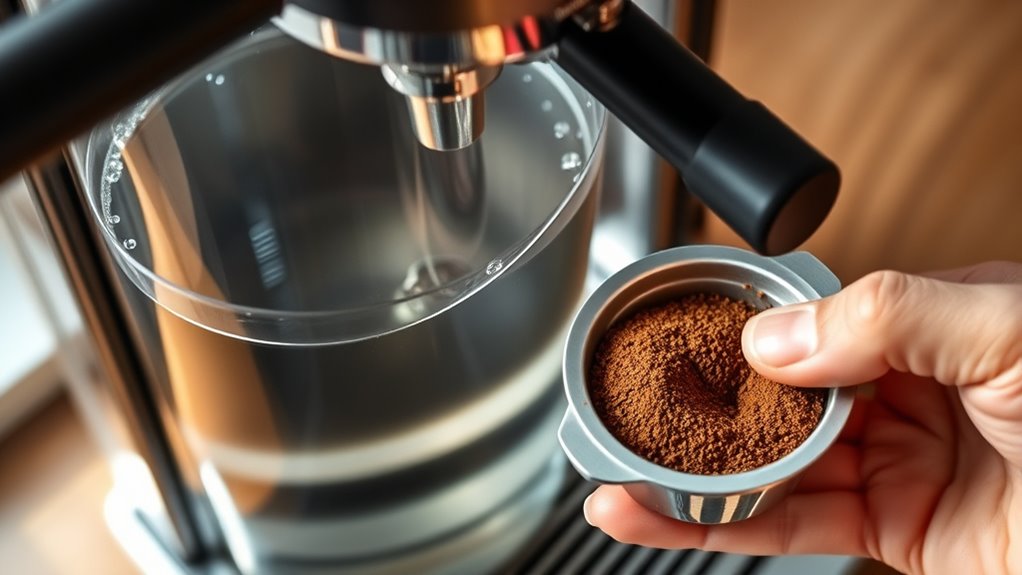
When you fill the water tank, make sure to use clean, filtered water. Pour it carefully up to the maximum fill line to avoid overflow. Remove the tank gently to prevent spills, then reattach it securely to guarantee proper operation.
Use clean, filtered water and fill only to the max line for safe, spill-free operation.
For your coffee grounds, measure about 2 tablespoons (30 ml) of fresh, finely ground coffee per shot. Level the coffee evenly in the filter to promote uniform extraction.
Choose the correct filter for single or double servings, or opt for a compatible ESE pod if you prefer.
Before locking the filter holder into place, sweep off any excess grounds from the filter rim. This step is really important for a tight seal and ideal pressure during brewing.
Following these steps makes sure you get consistent, high-quality espresso every time. Remember that grind size plays a crucial role in controlling extraction time and flavor balance.
How to Preheat Your DeLonghi Espresso Machine Correctly
Since filling the water tank up to the maximum line is essential, start by doing that before powering on your DeLonghi espresso machine.
Once filled, turn the control knob to the squiggly line icon to initiate the preheating process.
Allow the machine to warm up for at least 15 minutes to reach the ideal brewing temperature.
Keep an eye on the green ready light; once it illuminates steadily, your machine is preheated and ready.
Avoid brewing before this indicator is on to guarantee consistent espresso quality.
Fill water tank to the max line for adequate steam and pressure.
Turn control knob to squiggly line for preheating start.
Wait minimum 15 minutes for thorough warming.
Confirm readiness by steady green light illumination.
Never brew before preheating completes to avoid temperature inconsistency.
How to Load and Secure Your Portafilter for the Best Espresso
Start by filling your portafilter with about two tablespoons of fresh, evenly ground coffee. Then, tamp it down evenly to make sure the extraction is consistent.
Next, line up the portafilter with the group head and twist it clockwise until it locks in place firmly. Make sure the handle is facing forward and feels secure before you start brewing.
This way, you’ll avoid leaks and get the best flavor possible. Adjusting the espresso dose precisely helps ensure balanced extraction and optimal flavor from your shot.
Preparing Coffee Grounds
How exactly do you prepare coffee grounds to guarantee your DeLonghi espresso machine delivers the richest, most balanced shot? Start by measuring about 2 tablespoons (30 ml) of fresh coffee grounds. Level these grounds evenly using a scoop before loading them into your portafilter’s filter basket.
Make sure the coffee is distributed uniformly, avoiding clumps or uneven patches. Next, tamp the grounds lightly but firmly with a tamper to create a compact, even surface. This step is critical for maximum extraction.
Keep these key points in mind:
- Use freshly ground coffee for best flavor.
- Measure precisely to maintain consistency.
- Distribute grounds evenly to prevent channeling.
- Tamp with steady pressure for uniform density.
- Avoid overpacking, which can lead to bitter shots.
Adjusting the grind size within the ideal 200-400 microns range can dramatically improve extraction time and flavor balance.
This careful preparation sets the foundation for a superior espresso experience. Give it a try and taste the difference!
Locking Portafilter Properly
Where should you begin when locking your portafilter to guarantee a perfect espresso shot? Start by filling it with the correct amount of coffee grounds and tamping evenly. Align the portafilter handle forward, insert it at a slight angle into the group head, then twist clockwise until it clicks securely.
Make sure the handle faces forward and is tightly engaged to prevent leaks and maintain pressure. Running hot water through the group head before locking the portafilter helps stabilize the temperature for extraction.
| Step | Action | Purpose |
|---|---|---|
| 1. Fill & Tamp | Use correct coffee amount | Ensure even extraction |
| 2. Align Handle | Handle facing forward | Proper insertion angle |
| 3. Insert & Twist | Slight angle, twist clockwise | Secure locking |
| 4. Verify Lock | Confirm handle is tight | Prevent leaks, maintain pressure |
Always lock tightly before extraction for maximum safety and espresso quality. It really makes all the difference!
How to Brew Single and Double Shot Espresso on Your DeLonghi
Wondering how to pull the perfect single or double shot with your DeLonghi espresso machine? Start by filling the portafilter with 7 grams of coffee for a single shot or 14 grams for a double. Tamp evenly and lock it into place.
Then, turn the control knob to the cup and spout icon to begin extraction.
Keep these essentials in mind:
- Use the single or double shot setting if your machine offers it.
- For a double shot, use the double-dose filter basket and extract for 25-30 seconds.
- Stop extraction early by switching the knob to “O” once you reach about 1 ounce (single) or 2 ounces (double).
- Always place your cup directly under the spout to avoid spills.
Consistent tamping and precise timing guarantee balanced flavor and crema. Just keep at it, and you’ll be pulling shots like a pro in no time! Make sure to maintain a stable brew temperature around 90–96°C for the best extraction results.
Frothing Milk for Cappuccinos and Lattes With Your DeLonghi
Once you’ve mastered pulling the perfect espresso shots, enhancing your drink with expertly frothed milk is the next step to crafting café-quality cappuccinos and lattes.
Start by filling a frothing pitcher with about 3.5 ounces (99 g) of cold milk. Place the pitcher under the steam wand and wait until the steam indicator light turns on. This guarantees ideal steam pressure.
Turn the steam control to the steam icon, then rotate the steam knob counterclockwise to begin frothing. Keep frothing until the milk doubles in volume and reaches your desired temperature.
Turn off the steam, gently tap the pitcher on a surface to eliminate large bubbles, and swirl the milk to create a smooth, velvety microfoam.
This texture is crucial for a rich, creamy cappuccino or latte experience. It might take a little practice, but once you get it down, your homemade drinks will taste just like your favorite café’s.
Remember to heat milk to 140–150°F to preserve its flavor and prevent protein destabilization during frothing.
Give it a try and enjoy!
Operating Hot Water and Steam Functions Safely on Your DeLonghi
To operate these functions safely, start by setting the control knob to the steam or hot water icon. Then, place a cup or container under the spout to catch the hot water or steam.
Turn the steam knob slowly counterclockwise to release steam or hot water.
Use the steam cloud icon for frothing, but make sure to wait for the indicator light before you start frothing milk.
And remember, always turn off the steam or hot water function when you’re done. Unplug the machine after use to be extra safe.
Following these steps helps prevent spills, burns, and accidents efficiently. It’s a simple routine that keeps you and your machine safe every time. Regular maintenance, including descaling your espresso machine, is essential to ensure consistent performance and safety.
Daily Cleaning for Optimal DeLonghi Espresso Machine Performance
Maintaining your DeLonghi espresso machine daily guarantees consistent performance and extends its lifespan. Start by wiping the exterior with a damp cloth to remove coffee splashes and dust.
Empty and rinse the drip tray and grounds container every day to prevent buildup and odors.
Don’t forget to detach the water tank and rinse it thoroughly to guarantee a fresh water supply.
After each use, clean the steam wand or milk frother by wiping it with a damp cloth. This stops milk residue from hardening and keeps things working smoothly.
Make sure to regularly inspect and clean the brew filter and portafilter. This helps maintain ideal extraction and avoid clogs.
Following these simple daily steps keeps your machine running smoothly and ensures every cup tastes fresh and rich, preserving your investment in quality espresso.
Additionally, it is important to descale your machine regularly to remove mineral deposits that can affect performance and flavor.
Descaling Your DeLonghi Espresso Machine to Prevent Mineral Build-Up
Although your DeLonghi espresso machine delivers exceptional coffee, neglecting regular descaling can lead to mineral buildup that impairs performance and shortens its lifespan. To keep your machine running smoothly, descale it every 2-3 months with a DeLonghi-recommended solution, following your model’s specific instructions.
Regular descaling every 2-3 months prevents mineral buildup and keeps your DeLonghi espresso machine performing at its best.
Before you start, turn off the machine and empty the water tank for safety. Then, run the descaling cycle, which usually involves multiple brew cycles with the solution.
Afterward, rinse the tank thoroughly and run clean water through the machine to flush out any residual descaler.
Doing this prevents clogging and guarantees ideal water flow. It also maintains consistent brewing temperature and pressure, which is super important. Plus, it prolongs the espresso machine’s functional lifespan.
You’ll notice your coffee tastes better because mineral deposits get removed. And, you’ll avoid costly repairs caused by scale buildup. Regular maintenance also helps preserve the extraction quality to ensure your espresso has the rich, bold flavor and caffeine content you expect.
Troubleshooting Common DeLonghi Espresso Machine Issues
If your DeLonghi espresso machine isn’t brewing correctly or shows error messages, you’ll want to start by checking several key areas to pinpoint the issue. First, verify the water tank is filled with fresh, filtered water and properly seated to avoid brewing interruptions.
Next, confirm the portafilter is securely locked in place to prevent leaks and incomplete extraction.
Check your grind size and tamping pressure. Incorrect settings can cause weak or bitter espresso.
Mineral build-up can also cause problems, so descale the machine regularly to maintain consistent pressure.
If error messages persist or the machine fails to operate, reset it by unplugging for a few minutes.
Following these steps will help you quickly resolve common issues and enjoy perfect espresso every time.
Frequently Asked Questions
Can I Use Pre-Ground Coffee Instead of Fresh Beans?
Wondering if pre-ground coffee works as well as fresh beans? Yes, it does! Just use finely ground, fresh coffee, about two tablespoons per shot. Level and tamp it well, and adjust settings for maximum flavor extraction.
It’s really all about getting the grind size and tamping right. That way, you still get a great cup even without grinding fresh beans every time. Give it a try and see how it works for you!
What Type of Filtered Water Is Best for the Machine?
You should use filtered water with low mineral content, ideally below 150 ppm TDS. Avoid reverse osmosis or deionized water, as they can harm sensors.
Balanced minerals improve flavor and prevent scale buildup in your machine. It’s all about finding the right balance to keep things running smoothly.
How Do I Store the Portafilter When Not in Use?
You should thoroughly dry the portafilter after cleaning, then store it in a clean, dry place to prevent rust or mold. Use your machine’s holder or a dedicated drawer. Avoid humid environments for long-term protection.
Keeping it dry and away from moisture really helps keep it in good shape. Just a little extra care goes a long way!
Are There Any Recommended Coffee Brands for Delonghi Machines?
You should try Lavazza, Illy, or Peet’s Coffee. They offer consistent grinds and rich flavors that work great with your Delonghi.
Choose medium to dark roasts and whole beans. This helps maximize freshness and improve the quality of your espresso crema. Give them a shot and see what you think!
Can the Machine Be Used Without a Milk Frother?
You don’t need the milk frother to use your DeLonghi espresso machine; it’s just icing on the cake for milk drinks.
Simply skip the steam function, and you’ll brew rich espresso effortlessly every time.
It’s really that easy! So go ahead and enjoy your espresso just the way you like it.
Conclusion
Now that you’ve unboxed, filled, and preheated your DeLonghi espresso machine, you’re ready to grind, tamp, and brew with precision. Remember to steam, clean, and descale regularly to keep every shot rich and smooth.
By mastering each step, from loading the portafilter to troubleshooting, you guarantee a flawless espresso experience every time. With care and practice, your DeLonghi will deliver café-quality coffee morning after morning, with consistency and ease.

Pingback: Can You Use Espresso Beans For Drip Coffee – Answered
Pingback: Does Espresso Have Less Caffeine Than Coffee – Answered
Pingback: What Are Espresso Beans – Explained