You create the rich froth on an espresso martini by vigorously shaking freshly brewed espresso loaded with natural oils and CO₂ alongside coffee liqueur and crème de cacao. These add emulsifiers that stabilize microbubbles.
The shaking technique aerates and emulsifies these components, producing dense, velvety foam. Careful straining helps preserve its delicate structure.
Using fresh espresso with crema is essential for lasting foam. Keep exploring to uncover advanced tips and ingredient impacts that perfect this iconic cocktail.
What Is Espresso Martini Froth And How It Forms?
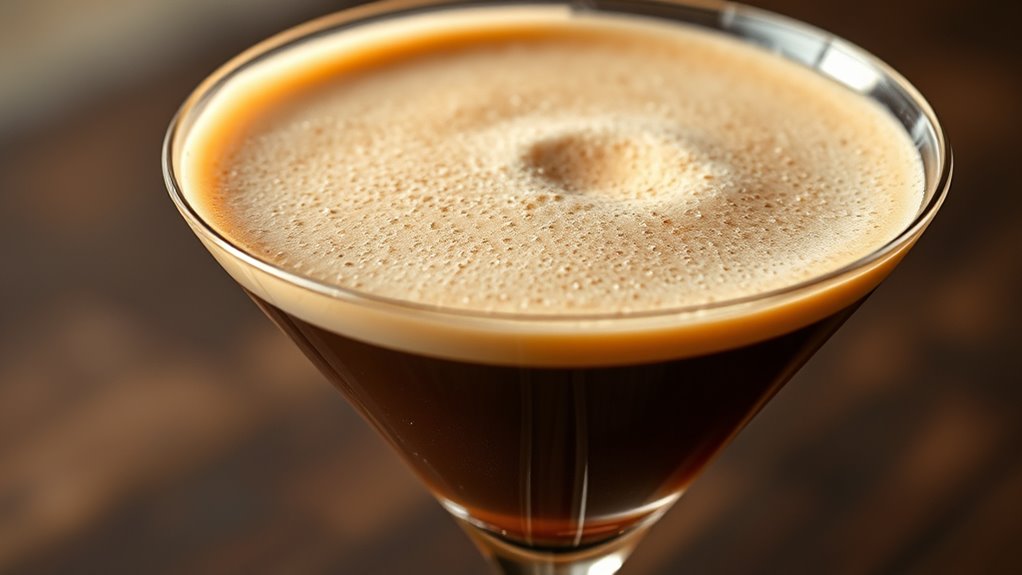
Although it may seem simple, the froth on an espresso martini forms through a complex interplay of emulsification and aeration. You create this froth by vigorously shaking freshly brewed espresso, coffee liqueur, and vodka, which emulsifies the coffee oils with air and CO₂ bubbles.
The signature froth of an espresso martini emerges from emulsifying coffee oils with air and CO₂ through vigorous shaking.
These oils, released during espresso extraction, act as natural emulsifiers, stabilizing the foam.
Shaking for at least 20 seconds injects sufficient air, producing microfoam visible on the surface. This microfoam results from tiny air bubbles trapped by emulsified oils, creating a creamy, stable froth.
Proper straining prevents large bubbles and guarantees a smooth layer.
Also, serving the drink immediately preserves its texture and visual appeal. Understanding these mechanisms helps you master the ideal espresso martini froth every time.
It’s all about the right shake, fresh ingredients, and quick serving. Additionally, maintaining the optimal espresso extraction time ensures the coffee oils responsible for froth formation are present in the right balance for stable foam.
Why Fresh Espresso And Crema Matter For Foam
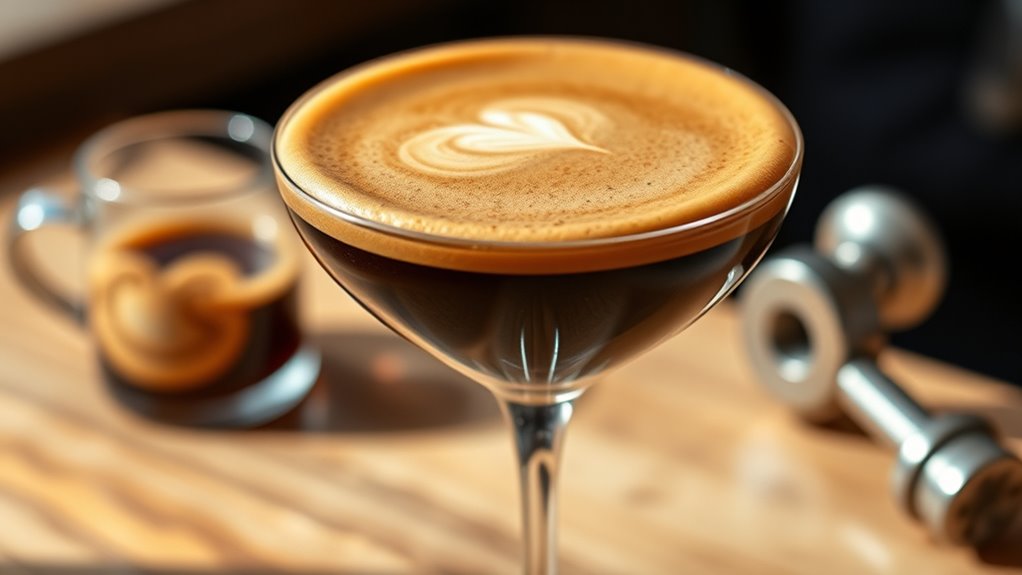
When you use fresh espresso with its rich crema, you guarantee that the natural oils and CO₂ essential for foam formation are present in your espresso martini. These oils act as emulsifiers, trapping air bubbles and creating the thick, velvety froth that defines a quality espresso martini.
The crema’s presence ensures that the foam isn’t only visually appealing but also stable and long-lasting.
In contrast, using cold or stale espresso, which lacks these oils and CO₂, results in a thinner, less stable foam that dissipates quickly. So, if you want that perfect foam, fresh espresso is definitely the way to go. It really makes a difference.
Consequently, prioritizing fresh espresso with intact crema markedly enhances the texture and professional appearance of your cocktail. This directly impacts the overall drinking experience with superior foam quality.
It’s a small step that pays off big in your espresso martini.
Additionally, maintaining the ideal espresso extraction ratio during brewing helps preserve these essential oils and CO₂, ensuring optimal crema quality for the best foam results.
Key Ingredients That Build Stable Espresso Martini Foam
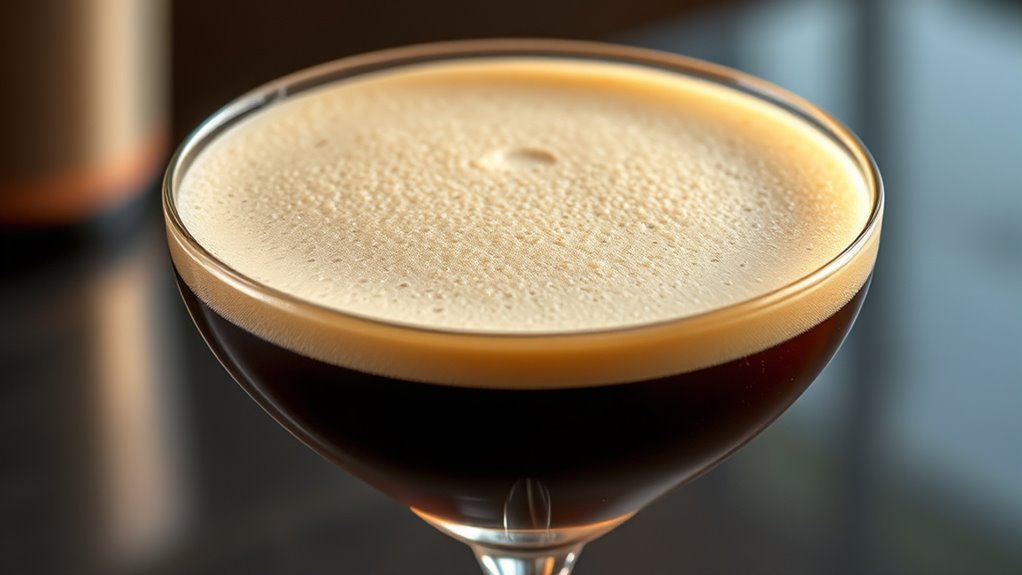
You want to start with freshly brewed espresso that has a rich crema. This is important because the natural oils and CO₂ in the crema help create stable foam.
Then, when you add coffee liqueur like Kahlúa, it brings in emulsifiers that make the bubbles stronger and longer-lasting.
On top of that, a little crème de cacao can gently change the foam’s texture, giving you a nice, balanced froth that holds up well.
Using espresso powder in small amounts can also enhance the coffee flavor depth without affecting the foam stability.
Fresh Espresso Importance
Because freshly brewed espresso contains natural oils and CO₂ released during extraction, it plays a crucial role in creating the stable, frothy foam that defines a quality espresso martini. The microbubbles and emulsified oils in fresh espresso trap air during shaking, forming a dense and long-lasting froth.
Without the crema and oils present only in fresh espresso, the foam collapses quickly, losing texture and appeal. So, using fresh espresso really makes all the difference when you want that perfect foam.
| Component | Function | Effect on Foam |
|---|---|---|
| Natural Oils | Emulsify air bubbles | Creates velvety, dense froth |
| CO₂ | Generates microbubbles | Stabilizes foam structure |
| Crema | Surface bubble layer | Resists foam collapse |
Using fresh espresso ensures your espresso martini’s foam is rich, stable, and visually enticing. It’s definitely worth the extra effort for that flawless finish. The caffeine content in fresh espresso also contributes to the overall intensity and character of the drink’s flavor profile.
Role Of Coffee Liquor
How exactly does coffee liqueur contribute to the signature froth of an espresso martini? Coffee liqueur contains oils and sugars that play a vital role in stabilizing the foam.
When you shake the cocktail, these components act as emulsifiers, creating a thicker, creamier froth by supporting microbubble formation.
The sugars increase the foam’s density, while the fats and oils help maintain bubble stability, preventing the foam from collapsing quickly.
By adding more coffee liqueur, you enhance both the density and longevity of the froth due to its sugar content and emulsifying properties.
Essentially, coffee liqueur isn’t just a flavoring agent; it’s a functional ingredient that builds and preserves the espresso martini’s distinctive, velvety top layer.
Using a high-quality coffee liqueur with real coffee extracts significantly improves both flavor and foam quality.
Creme De Cacao Effect
Although often overlooked, creme de cacao plays a crucial role in enhancing the stability and texture of espresso martini foam. It contributes oils and sugars that emulsify the mixture during shaking. This helps support a thicker, longer-lasting froth.
Its natural fats and sugars trap air bubbles, creating a resilient foam that holds well atop the cocktail. When you increase creme de cacao, it intensifies the viscosity and richness. This results in a denser foam layer that feels luxurious.
Key effects of creme de cacao include:
- Emulsifying ingredients to stabilize foam structure
- Enhancing viscosity for thicker, creamier froth
- Trapping air bubbles to maintain foam resilience
When you combine creme de cacao with vodka and espresso, you get a consistently creamy foam. This foam is sturdy enough to support garnishes like coffee beans with ease. Using freshly brewed espresso further enhances the richness and crema, improving the overall texture and stability of the foam.
How Shaking Technique Creates Perfect Foam
When you shake an espresso martini vigorously for at least 20 seconds, you introduce countless microbubbles that form the essential foam layer. This agitation emulsifies oils and CO₂ from the fresh espresso, creating a stable, creamy froth.
Using a large or Boston-style shaker lets you shake more vigorously, enhancing foam development.
A large or Boston-style shaker allows for more vigorous shaking, boosting rich, creamy espresso martini foam.
Incorporating plenty of ice cools the mixture rapidly, which helps trap air within the liquid. This results in thicker, longer-lasting foam.
The key is to shake using a circular, washing machine-like motion. This maximizes aeration by continuously folding air into the mixture.
Proper shaking technique controls bubble size and distribution, ensuring the foam holds its structure. Mastering this method is critical for consistently producing the perfect espresso martini froth.
It’s all about getting that smooth, creamy top every time.
Understanding the role of microfoam texture in coffee drinks can help improve the quality and stability of the espresso martini froth.
Using Equipment And Strainers To Preserve Foam
To preserve the delicate foam atop your espresso martini, you need to use the right equipment and straining techniques that minimize disruption. Using a fine-mesh or Hawthorne strainer during pouring is essential to filter out ice shards and unstable foam particles. This way, the froth stays smooth and stable.
Double-straining, first with the shaker’s built-in strainer and then through a fine mesh, really helps improve foam clarity and consistency. Pour gently through the strainer to avoid disturbing the crema’s delicate bubbles. This careful pouring helps maintain the foam’s structure and makes your drink look great.
Here are some key points to focus on:
- Use a double-straining method for cleaner, longer-lasting foam
- Choose high-quality strainers to avoid foam collapse
- Pour gently to preserve the foam’s delicate bubbles
Maintaining a stable brew temperature during espresso extraction also supports a richer crema, which enhances the foam’s texture and longevity in your martini.
Pro Tips For Enhancing And Maintaining Espresso Martini Foam
Since the quality of foam defines the espresso martini experience, you’ll want to shake the cocktail vigorously for at least 20 seconds with plenty of ice to build a stable froth.
Shaking vigorously for 20 seconds with plenty of ice creates the rich, stable foam essential to an espresso martini.
Use freshly brewed espresso with crema, as its oils and bubbles greatly enhance foam richness and longevity.
Chill your martini glass beforehand; a colder surface helps maintain foam stability once poured.
For a professional, lasting froth, consider adding a small amount of aquafaba or egg whites during shaking. They increase foam volume and texture.
After shaking, strain carefully through a fine mesh strainer to remove ice shards. This ensures the froth remains smooth and intact.
These precise steps collectively optimize foam formation and preservation. They really elevate your espresso martini’s presentation and mouthfeel.
Give them a try and enjoy the difference!
Regular maintenance like descaling espresso machines helps preserve the quality of espresso used, indirectly supporting better foam creation in cocktails.
Common Mistakes That Prevent Good Espresso Martini Foam
Although crafting a perfect espresso martini foam requires technique, certain common mistakes consistently undermine your efforts. Using cold or pre-made espresso reduces essential oils and CO₂, which are vital for stable foam formation.
Similarly, shaking the cocktail insufficiently or with too little ice inhibits microfoam development, resulting in a weak froth. Overloading the mix with cream or heavy ingredients fills air bubbles, preventing proper foam growth.
Additionally, improper straining introduces ice shards and large bubbles, destabilizing the froth and ruining presentation.
Avoid these pitfalls by always using freshly brewed, hot espresso for maximum oil and CO₂ content. Shake vigorously for at least 20 seconds with ample ice to create dense microfoam.
And don’t forget to strain carefully to remove ice shards and maintain smooth, steady foam.
For best results, ensure your espresso is brewed using proper heat control to preserve flavor and essential oils.
How Vodka And Creme De Cacao Affect Espresso Martini Foam
When you combine vodka and creme de cacao in an espresso martini, their effects on the foam differ quite a bit. Vodka, being a neutral spirit, offers structural balance but doesn’t really help with foam formation directly.
On the other hand, creme de cacao has oils and fats that help stabilize and thicken the foam. It increases viscosity and improves emulsification with the coffee oils. This teamwork creates a froth that lasts longer and feels richer.
| Ingredient | Effect on Foam |
|---|---|
| Vodka | Minimal direct impact; structural |
| Creme de Cacao | Stabilizes, thickens, enhances foam |
| Coffee Oils | Essential for rich, frothy top layer |
Knowing how each part affects the foam lets you tweak your espresso martini recipe to get that perfect frothy top every time.
Frequently Asked Questions
Can I Use Instant Coffee Instead of Espresso for Froth?
You can use instant coffee, but it won’t create the same stable froth as espresso.
You’ll need additives like egg whites or aquafaba to mimic crema and get a similar foam quality in your espresso martini.
How Long Does Espresso Martini Froth Typically Last?
The froth on your espresso martini typically lingers like morning mist for 5 to 15 minutes. Its lifespan hinges on espresso freshness, vigorous shaking, chilled glassware, and optional additives like egg whites to stabilize and extend the foam.
Does the Type of Ice Affect the Froth Quality?
Yes, the type of ice directly affects froth quality. You’ll get denser, longer-lasting foam using large, fresh, cold cubes.
On the other hand, crushed or warm ice melts faster, which dilutes the mix. This leads to weaker, less stable froth. So, choosing the right ice really makes a difference!
Can Non-Alcoholic Versions Create the Same Froth?
Yes, you can create similar froth in non-alcoholic versions by using egg whites or aquafaba. However, you’ll notice slight differences in texture and stability. It takes a bit more effort, requiring vigorous shaking to incorporate enough air for those microbubbles.
But don’t worry, with a little practice, you can get pretty close to that classic frothy finish. Just keep shaking until you see the foam build up nicely on top.
Is Froth Affected by the Glass Type or Size?
Yes, your glass type and size directly affect froth stability. Smaller, chilled, narrow glasses trap foam longer, while wider glasses increase surface exposure, causing quicker dissipation.
Glass material also influences heat transfer and foam preservation. So, choosing the right glass really makes a difference in keeping that froth intact. It’s all about how the shape and material work together to hold the foam.
Conclusion
Mastering espresso martini froth is like crafting a delicate cloud atop your drink. Each element plays a precise role. Fresh espresso and crema provide the essential foundation.
The right ingredients and shaking technique build stable, lasting foam. Using proper equipment helps preserve this texture. Avoiding common mistakes guarantees success.
Understanding how vodka and crème de cacao influence froth lets you fine-tune your cocktail. That way, you get a consistently flawless finish every time.

Pingback: When Is National Espresso Martini Day – Date Guide