Espresso packs more caffeine per ounce than drip coffee, about 63 mg in a 1 oz shot versus 12 mg per ounce in drip. But since shots are small, the total caffeine often stays lower than a full cup of brewed coffee.
Your caffeine buzz really depends on serving size and how fast you drink. Roast level doesn’t affect caffeine much. It’s really the amount of coffee and brewing method that count.
Curious how all these factors shape your espresso’s strength?
What Makes Espresso Caffeine “Strong”?
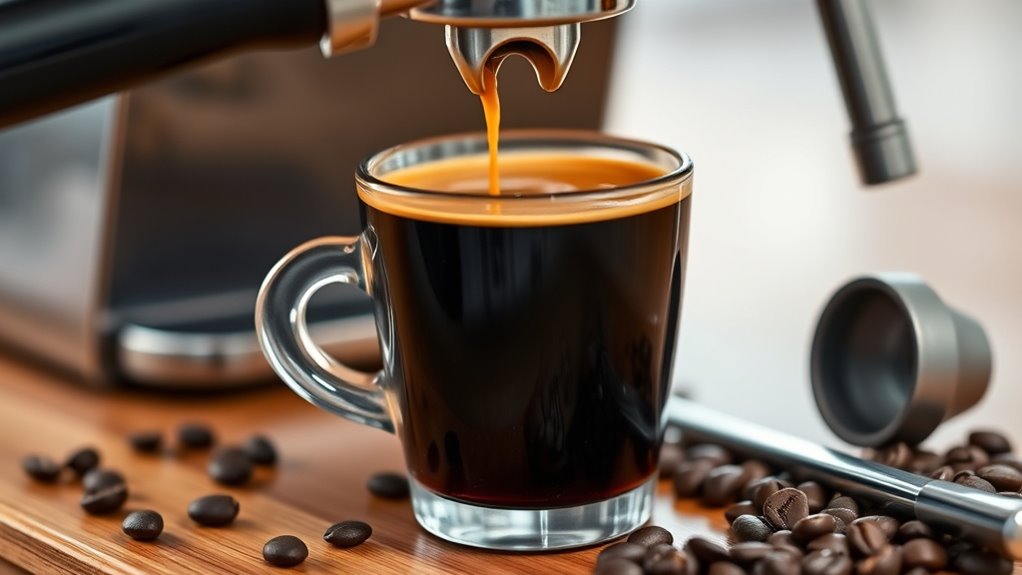
Although espresso contains less total caffeine than a standard cup of brewed coffee, its caffeine concentration per ounce is markedly higher, about 40 mg compared to 10 mg in drip coffee. This intense concentration results from espresso’s rapid extraction process, which uses finely ground coffee, high pressure, and a short brewing time of just 20 to 30 seconds.
You’ll notice that this method efficiently extracts caffeine into a small volume, making each ounce densely packed with caffeine. So, while a single 1 oz shot has roughly 63 mg of caffeine, less than an 8 oz cup of drip coffee, the strength you perceive comes from this concentrated caffeine density.
Essentially, espresso’s “strength” lies not in total caffeine but in how much caffeine is delivered per sip. It’s all about that caffeine punch in a small, intense shot. The coffee-to-water ratio in espresso is much higher than brewed coffee, which intensifies both flavor and caffeine concentration.
How Much Caffeine Is in Espresso vs. Drip Coffee?
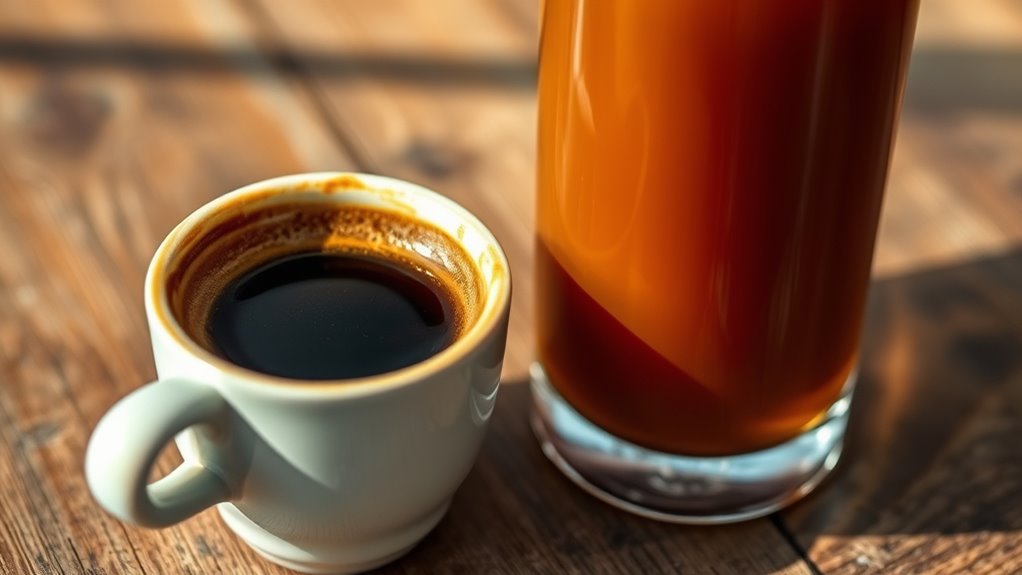
When you compare caffeine in espresso versus drip coffee, it’s clear that espresso packs more caffeine per ounce but less overall in a single shot.
So, a typical 1 oz espresso has about 63 mg of caffeine.
On the other hand, an 8 oz cup of drip coffee contains around 95 mg.
Knowing how serving size impacts total caffeine can really help you pick the right brew to match your energy needs.
Espresso’s caffeine concentration is much higher, at about 2.1 mg/mL, compared to drip coffee’s 0.4 mg/mL.
Caffeine Content Comparison
How much caffeine do you really get from your espresso compared to a cup of drip coffee? A 2 oz double shot of espresso packs about 126 mg of caffeine, while a 12 oz brewed coffee contains roughly 144 mg.
Per ounce, espresso is far more concentrated, delivering around 63 mg versus drip coffee’s 12 mg.
However, total caffeine depends on volume, not just concentration. That means a standard serving of drip coffee usually offers more caffeine overall due to its larger size.
If you drink more drip coffee, your caffeine intake can easily surpass that from a small espresso shot.
Extraction time and grind size play a crucial role in optimizing the caffeine content and flavor of espresso.
Serving Size Impact
Why does serving size matter so much when comparing caffeine in espresso and drip coffee? Because the total caffeine you consume depends more on how much you drink than on caffeine concentration alone.
A single espresso shot is highly concentrated but small. Drip coffee offers a larger volume with more caffeine overall.
Consider these facts:
- A 1 oz espresso shot has about 63 mg of caffeine, whereas an 8 oz drip coffee contains roughly 95 mg.
- Drinking a 12 oz drip coffee gives you around 180 mg of caffeine, surpassing a double espresso’s total caffeine.
- Multiple espresso shots or larger coffee servings dramatically increase caffeine intake beyond that of a single shot.
Understanding serving size helps you control your caffeine consumption more accurately than just comparing strength. Additionally, espresso’s rapid absorption means its caffeine effects peak faster, providing a quick energy boost.
Why Espresso’s High Concentration Doesn’t Mean More Total Caffeine
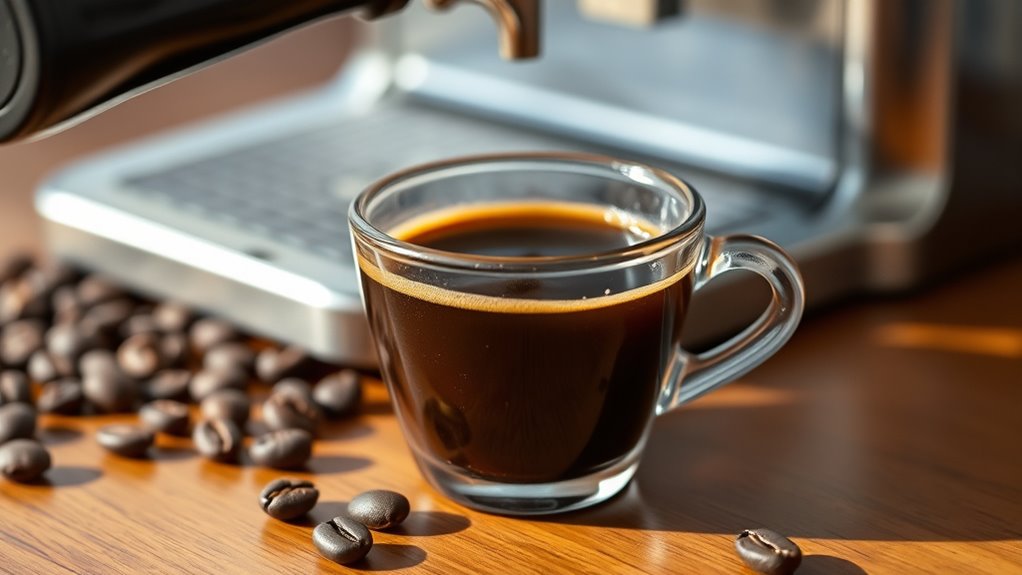
You might think espresso packs more caffeine because it’s so concentrated, but here’s the thing: total caffeine depends on both concentration and volume.
A tiny 1-ounce shot has less caffeine overall than a larger cup of brewed coffee, even though it’s stronger per ounce.
Typically, three shots of espresso contain between 180 and 225 mg of caffeine, which is generally within the FDA’s recommended daily limit of 400 mg for most adults, highlighting the caffeine content in espresso.
Concentration Versus Volume
Although espresso packs about 40 mg of caffeine per ounce, making it much more concentrated than brewed coffee, you won’t necessarily get more caffeine from a single shot. The key lies in understanding how concentration and volume interact.
Espresso’s small serving size, around 1 oz, limits total caffeine to roughly 63 mg despite its potency per ounce.
Brewed coffee has about 10 mg of caffeine per ounce and delivers more total caffeine because it’s typically served in larger volumes. For example, an 8 oz cup totals about 95 mg.
The extraction time of espresso also influences its flavor and caffeine extraction, typically lasting 25-30 seconds for optimal balance.
Serving Size Impact
How much caffeine you actually consume depends largely on the serving size rather than just the coffee’s concentration.
Espresso packs about 40 mg of caffeine per ounce, which is much higher than brewed coffee’s 10 mg per ounce. But a standard espresso shot is just 1 to 2 ounces, delivering roughly 63 to 126 mg of caffeine.
In contrast, an 8-ounce cup of brewed coffee can provide 95 to 144 mg. So, despite espresso’s intensity, the smaller volume means it often contains less total caffeine than a larger brewed coffee.
If you drink multiple shots or larger servings, your caffeine intake rises.
How Serving Size and Drinking Speed Change Your Caffeine Buzz
Since caffeine absorption varies with consumption speed and volume, the way you drink your espresso or coffee dramatically shapes your caffeine buzz. How fast and how much you consume directly influences the caffeine’s impact on your system.
Caffeine’s effect depends not just on strength but on how quickly and how much you drink.
Consider these points: Drinking espresso quickly causes a rapid caffeine spike, intensifying its stimulating effect almost immediately. Larger drip coffee servings taken slowly provide a steadier, prolonged caffeine release, keeping you alert longer without sharp peaks.
Sipping espresso gradually moderates caffeine absorption, softening the initial buzz despite its high concentration per ounce. Understanding these factors helps you control your caffeine experience, whether you want a quick jolt or sustained alertness.
It’s not just about how strong your coffee is, but how you consume it that defines your caffeine buzz. Espresso’s effects are typically felt within 5-10 minutes, making the timing of consumption key to managing your alertness.
Does Roast Level Affect Espresso’s Caffeine Strength?
When you choose between dark and light roasts for your espresso, the caffeine difference is surprisingly minimal. Caffeine stays stable during roasting, so whether you pick a dark or light roast, the amount of caffeine per bean doesn’t change much.
Dark roasts are less dense and weigh less per bean, but that doesn’t really reduce caffeine content that much.
Since caffeine is water-soluble and unaffected by roasting, what really matters is the amount of coffee grounds you use. Using more grounds, no matter the roast, boosts caffeine levels in your espresso shot.
How Brewing Method and Coffee Amount Affect Espresso’s Caffeine
Although many factors influence espresso’s flavor, the caffeine content largely depends on how much coffee you use and the brewing method you choose. When you brew espresso, the quantity of coffee grounds directly affects caffeine levels. More grounds mean more caffeine extracted.
The brewing process itself is essential. Espresso’s high-pressure extraction lasts 20-30 seconds and dissolves caffeine efficiently, especially with a fine grind size.
To optimize caffeine content, focus on these key points:
- Adjust the coffee dose. Using more grounds increases caffeine per shot.
- Use a fine grind to maximize extraction within the short brew time.
- Consider brewing methods that extend contact time or increase grounds for stronger caffeine impact.
Frequently Asked Questions
Can Espresso Caffeine Content Vary by Coffee Bean Origin?
Yes, espresso caffeine content varies by coffee bean origin because different regions produce beans with unique caffeine levels. You’ll notice beans from certain areas pack more punch, so your espresso’s strength depends on where those beans come from.
It’s pretty interesting how the place where the beans grow can change the caffeine kick you get. So next time you sip your espresso, think about where those beans traveled from!
Does Espresso Consumption Affect Sleep Differently Than Drip Coffee?
If you drink espresso late, you might find it disrupts your sleep more than drip coffee because its concentrated caffeine hits faster. You’ll feel alert sharply, making it tougher to wind down at night.
How Does Espresso Impact Metabolism Compared to Other Caffeine Sources?
Espresso boosts your metabolism similarly to other caffeine sources, but its concentrated dose delivers a quicker, more intense effect. You’ll feel a faster metabolic kick, though total caffeine content ultimately dictates the overall impact.
Are Espresso-Based Drinks Less Caffeinated Than Straight Espresso Shots?
Surprisingly, espresso-based drinks usually pack less caffeine than straight shots because they’re diluted with milk or water.
Can Adding Milk or Sugar Change Espresso’s Caffeine Absorption?
Adding milk or sugar doesn’t change espresso’s caffeine content or absorption considerably. Your body absorbs caffeine the same way.
But milk might slightly slow absorption. Sugar mainly affects flavor, not how caffeine impacts you.
Conclusion
So, is espresso really stronger? It’s not just about caffeine content but how quickly you sip it and how it’s brewed. You might think that tiny shot packs a massive punch, but the truth is more nuanced and surprisingly personal.
Next time you reach for that espresso, remember: strength isn’t just measured in milligrams but in how it hits you. Ready to rethink your caffeine buzz? The answer might just surprise you.