You’ll get about 189 milligrams of caffeine from three shots of espresso, giving you a solid and quick energy boost without going over daily limits.
Each shot typically contains around 63 milligrams, which adds up to a powerful, concentrated dose that wakes you up fast. Keep in mind, factors like bean type and extraction affect caffeine levels.
If you want to understand how this fits into your daily intake and how it impacts your body, there’s more to explore.
SUBHEADING TITLE]:
Caffeine Content in Three Espresso Shots
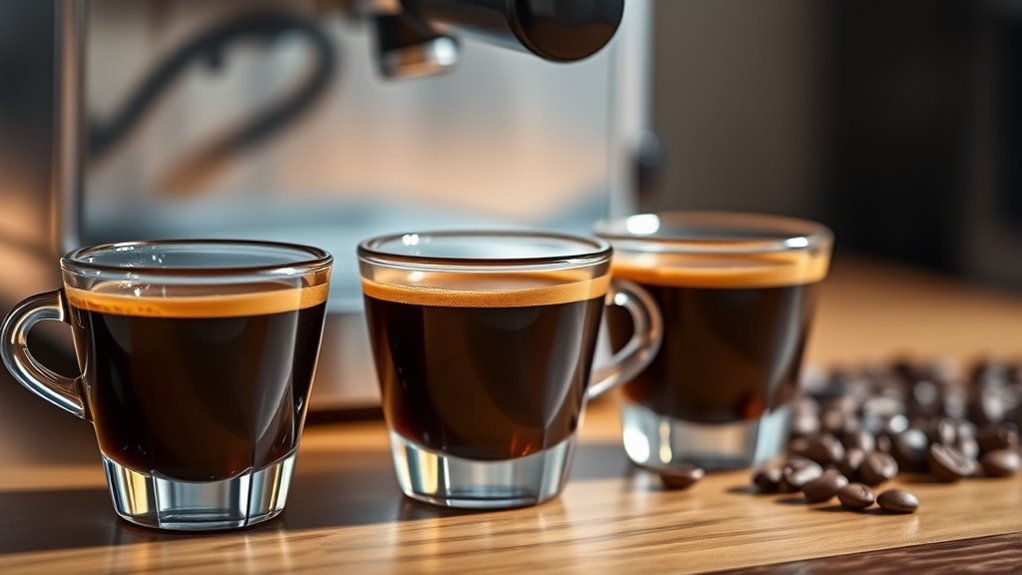
Wondering how much caffeine you’re getting in three shots of espresso? Typically, you can expect anywhere between 180 and 225 milligrams of caffeine, since each shot generally carries around 60 to 75 milligrams. Most cafés stick close to the average, pouring espresso shots with about 63 milligrams of caffeine each.
Three espresso shots usually deliver between 180 and 225 milligrams of caffeine for a solid energy boost.
That means three shots usually add up to roughly 189 milligrams, which is a solid dose without pushing you toward excessive intake.
Keep in mind that the caffeine content isn’t set in stone. It varies based on several factors like the type of coffee bean, the roast level, and even the brewing method. For example, a darker roast might’ve slightly less caffeine by volume because the beans lose some caffeine during roasting, while lighter roasts tend to retain more.
Your barista’s technique also plays a role: the grind size, extraction time, and pressure can subtly influence how much caffeine ends up in your cup. So, the number you get is an estimate but a reliable one for most purposes.
Even though three shots pack a strong caffeine punch, it’s well within the FDA’s suggested daily limit of 400 milligrams for most adults. That means you can enjoy this energy boost without worrying about overdoing it, assuming you don’t have other major caffeine sources during the day.
This concentrated caffeine dose is why espresso feels so powerful despite the small volume you’re sipping. It delivers a quick, sharp lift in alertness and focus, making it a favorite choice when you need to wake up fast or power through a slump.
If you’re mindful of your caffeine intake, knowing these numbers can help you manage your consumption better. It’s easy to underestimate how much caffeine you’re taking in when you grab multiple espresso shots or espresso-based drinks throughout the day.
Each shot adds up, and while three shots are generally safe, exceeding that regularly might push you closer to the upper limit, especially combined with other caffeinated beverages.
In short, three shots of espresso give you a robust caffeine boost, usually hovering around 189 milligrams, but it can vary. This level is enough to energize you effectively without overstressing your system if you keep your total daily caffeine within recommended bounds. Additionally, the extraction ratio influences the caffeine concentration and overall strength of each shot.
Frequently Asked Questions
How Does Espresso Caffeine Compare to Drip Coffee?
Espresso packs more caffeine per ounce than drip coffee, so when you drink three shots, you get a caffeine boost comparable to or slightly stronger than an 8 oz cup of drip coffee.
It’s pretty handy if you want a quick jolt without drinking a whole cup of coffee. Just keep in mind that the total caffeine depends on the size and how it’s brewed. So, if you’re looking for a strong pick-me-up, espresso shots can do the trick!
Does Espresso Caffeine Affect Sleep Differently?
Yes, espresso caffeine affects your sleep differently because it’s rapidly absorbed, causing quicker, stronger alertness. If you consume three shots late, you’ll likely experience more noticeable sleep disruption compared to other coffee types.
Can Pregnant Women Safely Drink Espresso?
You might think espresso’s off-limits, but you can safely drink it in moderation while pregnant. Just keep caffeine under 200 mg daily and check with your doctor.
Individual sensitivity varies, so it’s always best to be cautious. When in doubt, ask your healthcare provider for personalized advice.
How Long Does Caffeine From Espresso Stay in Your System?
Caffeine from espresso stays in your system about 8 to 14 hours, with a half-life of 3 to 5 hours.
Factors like age or medications can extend this, so you’ll still feel effects several hours after drinking.
It’s pretty normal to notice caffeine lingering longer than you expect, especially if you’re sensitive to it.
Just keep in mind that everyone’s body handles caffeine a little differently!
Are There Decaf Espresso Options With Low Caffeine?
Yes, you’ll find decaf espresso options with low caffeine, offering rich flavor. They maintain the aroma while minimizing caffeine content.
They’re crafted through advanced methods, so you can enjoy espresso without the jitters or excess stimulation. It’s a great choice if you want the taste without the buzz.
Conclusion
After savoring three shots of espresso, you’re riding a caffeine wave that packs about 240 milligrams of energy into your veins. It’s enough to ignite your focus and fuel your day. Think of it as a triple lightning bolt sparking your brain to life.
But remember, balance keeps the storm from turning wild. With this knowledge, you can master your caffeine intake like a seasoned barista. That way, you craft your perfect buzz without the crash.