To keep your espresso machine brewing great-tasting coffee, clean it daily by wiping the steam wand, rinsing the portafilter, and running a blank shot to remove oils.
Backflush every few days with detergent for deeper cleaning, and descale every 2-3 months to prevent mineral buildup.
Disassemble and clean milk frothing parts weekly, and regularly maintain your grinder and hopper.
Using approved cleaning products protects your machine and flavor quality. For detailed steps on each task, keep exploring this guide.
Why You Need to Clean Your Espresso Machine
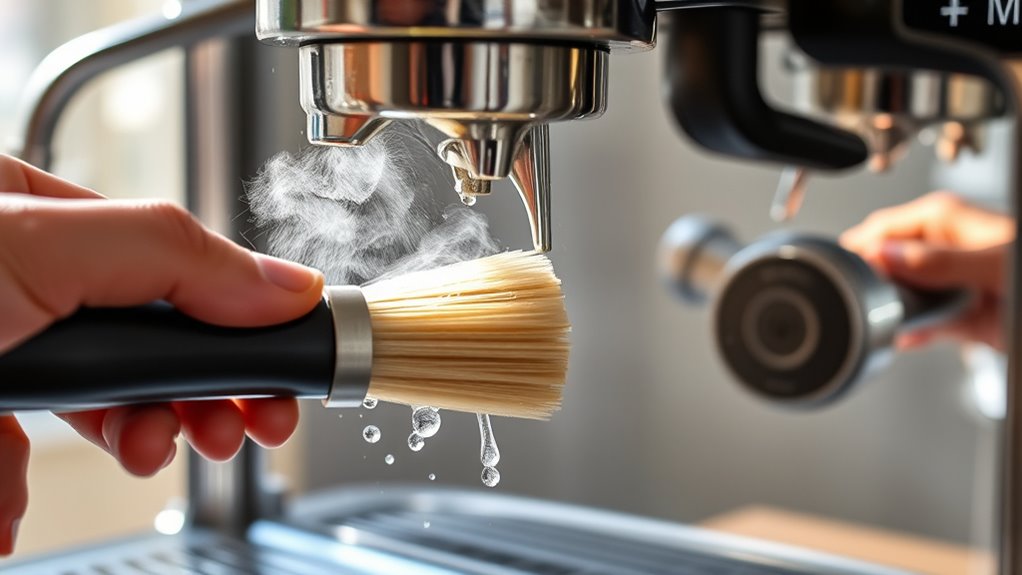
Because coffee oils, residue, and mineral deposits build up quickly, you need to clean your espresso machine regularly to keep your espresso tasting fresh. These deposits affect flavor and can clog internal parts, leading to malfunctions or costly repairs.
By removing milk fats and proteins from the milk system, you prevent bacterial growth and uphold hygiene. Descaling removes mineral buildup, preserving your machine’s efficiency and extending its lifespan.
Consistent cleaning keeps your espresso flavorful and your machine operating at peak performance. Neglecting this routine risks compromising taste, machine function, and overall durability.
Cleaning isn’t just about maintenance; it safeguards your investment and guarantees every cup delivers the rich, balanced flavor you expect. So, keeping up with this simple habit really pays off in the long run.
Regular maintenance also helps maintain steady machine pressure, which is crucial for consistent extraction and flavor quality.
How Often Should You Clean Your Espresso Machine?
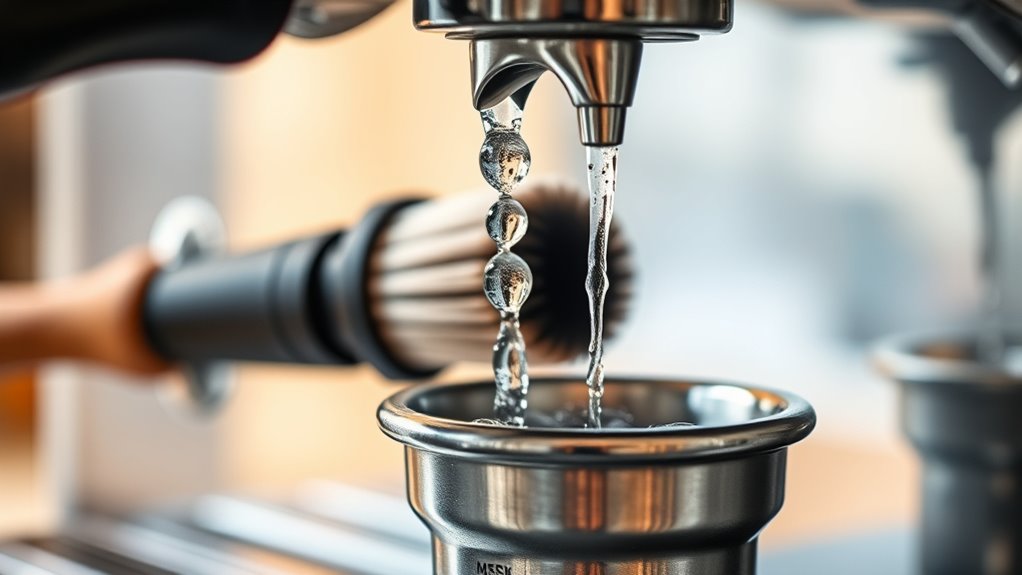
Daily cleaning is essential to keep your espresso machine running smoothly and producing great-tasting coffee. Each day, wipe the steam wand, rinse the portafilter, and run a blank shot to remove coffee oils.
For machines with frequent use, especially commercial ones, backflushing with detergent every 1-3 days prevents buildup.
Deep cleaning and descaling depend on water hardness and usage. Typically, you should descale every 2-3 months or whenever brewing slows or the quality drops.
Weekly or monthly deep cleaning helps maintain ideal function.
Always follow your manufacturer’s guidelines for cleaning frequency to avoid mineral buildup and protect your machine. Staying consistent with these intervals ensures your espresso machine performs at its best and extends its lifespan.
Regular maintenance also helps in early detection of potential issues, saving costs and extending the machine’s lifespan through consistent cleaning.
Quick Cleaning Steps After Each Use
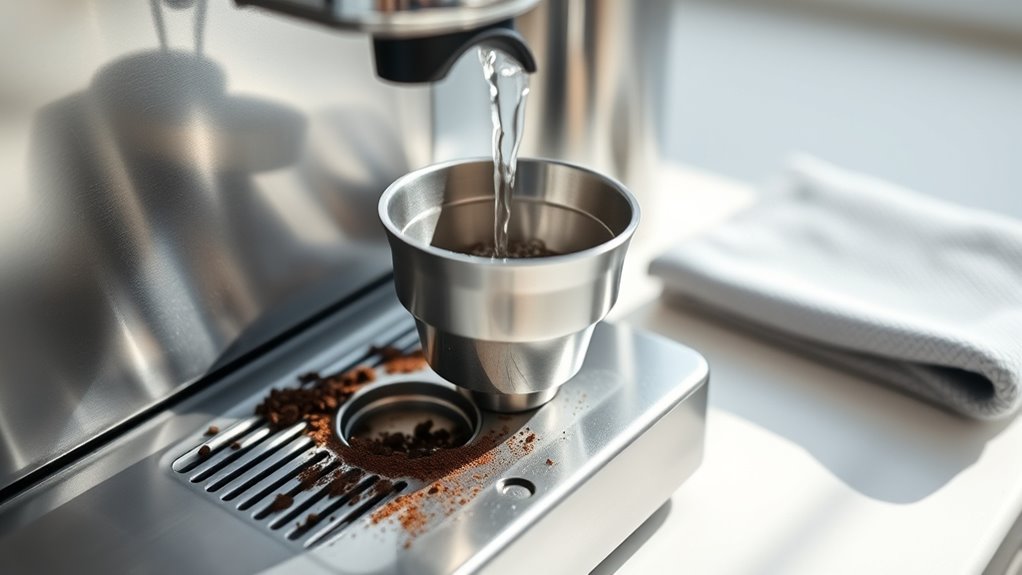
Keeping your espresso machine in top shape means paying attention to quick cleaning right after each use. Start by removing the coffee puck immediately after brewing to prevent residue buildup and make cleaning easier. Rinse the portafilter under running water and wipe it dry to eliminate leftover coffee oils.
Next, run a blank shot, just hot water, through the group head to flush out any remaining coffee oils or grounds. Purge the steam wand by releasing steam into a towel, which clears milk residue and prevents clogging.
Finally, wipe down the steam wand and the machine’s exterior surfaces with a damp cloth to maintain overall cleanliness. These quick steps guarantee your espresso machine stays efficient and ready for the next brew without lingering buildup. Performing regular quick cleaning also helps delay the need for descaling maintenance, protecting your machine’s longevity.
How to Clean the Portafilter and Group Head
Start by removing the used coffee puck from the portafilter and giving it a good rinse to clear away any oils and leftover grounds.
Then, move on to backflushing the group head—either with a cleaning tablet or just a damp cloth—to help break down any buildup inside.
Finally, make sure to scrub the portafilter basket and group head areas thoroughly.
Doing this regularly will keep everything running smoothly and tasting great.
For optimal machine performance, it is also important to descale regularly using an NSF-certified descaler to remove mineral deposits.
Removing Coffee Residue
Although it might seem tedious, removing coffee residue from the portafilter and group head immediately after brewing prevents buildup that can affect flavor and machine performance. Right after brewing, knock out the used coffee puck from the portafilter. Then rinse it under warm water and wipe it dry to remove oils and grounds.
Next, run a blank shot, just hot water, through the group head to flush out remaining coffee oils and particles.
Weekly, remove the shower screen and dispersion screw. Soak them in warm water and scrub gently with a soft brush to eliminate stubborn residues.
Staying consistent with these steps keeps your espresso machine clean and guarantees every shot tastes fresh and balanced. It’s really worth the small effort to keep your coffee tasting great! Regular cleaning also helps maintain pressure stability, which is crucial for consistent extraction and flavor.
Backflushing The Group
Why is backflushing essential for your espresso machine? It removes coffee oils and residue that build up inside the group head, making sure you get consistent flavor every time. Plus, it helps prevent blockages that can mess with your espresso.
To backflush, start by removing the portafilter and inserting a blind filter disc. Then, add a cleaning tablet or just a small amount of espresso machine detergent into the blind filter.
After that, reattach the portafilter. Next, activate the machine’s backflush cycle by pressing the brew button for 10-15 seconds, then release it. Repeat this process several times to get the best results.
When you’re done, take out the portafilter and rinse both the blind filter and portafilter thoroughly with water to wash away detergent and oils. Finally, run a rinse cycle with only water to flush out any leftover cleaning agents.
This leaves your group head clean and ready for ideal espresso extraction. Regular maintenance like this helps prevent mineral buildup that can affect machine performance over time.
Cleaning Portafilter Basket
When you remove the portafilter from your espresso machine, rinse it under warm water to clear away loose coffee grounds.
Next, detach the basket from the portafilter and soak it in a warm water and espresso machine cleaner solution for 10-15 minutes. This loosens stubborn oils and residue.
After soaking, scrub the basket and the group head’s shower screen with a small brush or toothbrush to remove any remaining buildup.
To finish, run hot water through the group head without the portafilter to flush out debris. Then, reassemble the portafilter and wipe down the group head exterior for complete maintenance.
Follow these steps for thorough cleaning:
- Soak basket in warm water with cleaner
- Brush basket and shower screen
- Flush group head with hot water
Regular cleaning helps maintain consistent caffeine extraction and flavor quality in your espresso shots.
How to Backflush Your Espresso Machine
To backflush your espresso machine effectively, start by inserting a cleaning disc or blind filter into the portafilter and adding a specialized cleaning tablet. Attach the portafilter securely to the brew group, then activate the backflush cycle.
This process forces water and detergent through the internal components, breaking down oils and residues.
After the initial cycle, repeat the backflush several times using only fresh water to rinse away any remaining cleaning solution.
Once finished, remove the portafilter to manually clean the filter basket and group gasket, ensuring all residues are eliminated.
Finally, run a rinse cycle without any cleaning agent to flush out any leftover detergent.
This routine keeps your machine’s brew group clean, maintaining best performance and espresso quality. It’s a simple step that really helps your espresso taste great every time.
Regular maintenance like backflushing also supports maintaining equipment calibration which is crucial for consistent espresso extraction.
How to Deep Clean Your Espresso Machine
To deep clean your espresso machine, start by mixing up a cleaning solution that’s perfect for soaking the removable parts, like the portafilter and milk frother. This helps loosen up any stubborn coffee oils and milk residue.
Then, run a descaling cycle using a descaler recommended by the manufacturer. This step is key to getting rid of mineral buildup inside the machine, which can affect how it brews.
Finally, make sure to rinse everything thoroughly by running several water cycles. This clears out any leftover cleaning agents and keeps your machine running smoothly for the next cup.
Regular maintenance, including cleaning and descaling, supports consistent espresso yield by preventing blockages that can affect extraction time and brew ratios.
Cleaning Solution Preparation
How exactly do you prepare the cleaning solution for a deep espresso machine clean? Start by mixing the manufacturer-approved descaling liquid with water, following the recommended ratio. It’s usually 1:1 or as specified by the instructions.
Before you begin, make sure to remove any water filters or accessories that shouldn’t come into contact with the solution to avoid damage. Then, you’ll want to use a separate container or drip tray to catch the solution as it flows through the machine. This helps prevent spills and lets you keep an eye on the process.
Next, follow your machine’s instructions to run the solution through all functions. Be sure to include the brew group, steam wand, and water outlet for a thorough internal cleaning.
Finally, prepare to rinse the machine thoroughly afterward. This ensures no cleaning solution residue remains and keeps your espresso extraction safe and tasty.
Using filtered or low-mineral water during this process helps prevent mineral buildup and protects the machine.
This careful preparation really sets the foundation for an effective deep clean.
Descaling And Rinsing
Although descaling might seem like a tedious task, it plays an essential role in maintaining your espresso machine’s performance. Mineral deposits build up inside the water system, affecting taste and functionality.
To descale, dissolve a recommended descaling product, such as Jura 3-Phase Cleaning Tablets or Urnex Biocaf Descaling Liquid, in water. Make sure to follow your machine’s specific instructions.
Run this solution through all functions, including the steam wand and pump. This process usually takes about 25 minutes.
Afterward, thoroughly rinse the machine with fresh water to remove any residue. Regular descaling prevents scale buildup, guarantees ideal performance, and extends your machine’s lifespan.
Always use products recommended for your model and stick closely to the manufacturer’s guidance for the best results.
Neglecting this step risks damage and costly repairs, so it’s really worth keeping up with it.
How to Descale Your Espresso Machine
Since mineral buildup can substantially affect your espresso machine’s performance, you should descale it every one to three months using a manufacturer-recommended solution. Begin by diluting the descaling liquid with water per the instructions.
Then, run the solution through the brew cycle, steam wand, and water outlet to target all internal components.
To descale effectively, activate all functions including the pump and steam system during the 25-minute process. Use trusted products like Jura 3-Phase Tablets, Urnex Biocaf Liquid, or Gaggia Decalcifier.
After descaling, flush the machine with several clean water cycles to remove any residue.
Following these steps guarantees your machine stays free from scale buildup, maintaining peak performance and taste quality. It’s really worth the effort to keep your espresso tasting great!
How to Clean and Maintain the Milk Frothing System
To keep your milk frothing system working smoothly, it’s important to clean the milk lines and steam wand regularly. Make sure to take apart the components and rinse them at least once a week.
Also, using a cleaning solution helps get rid of milk fats and proteins that can build up over time. After cleaning, don’t forget to run purge cycles—this step ensures there’s no leftover residue hiding in the system.
Keeping up with these habits will make your frother last longer and keep your drinks tasting great!
Milk Line Cleaning
When you clean the milk frothing system regularly, you prevent milk residue buildup that can affect taste and hygiene. To keep your milk line in ideal condition, follow these key steps:
Disassemble the milk frothing components weekly and rinse all parts thoroughly with warm water to remove fresh milk deposits. Use Rinza tablets dissolved in water and run a cleaning cycle through the milk line to eliminate fats, proteins, and mineral buildup.
After cleaning, perform multiple purge cycles with clean water to flush out any remaining cleaning solution and residues.
Also, wipe down external surfaces with a damp cloth or designated cleaner to maintain cleanliness. This routine guarantees your milk delivery system remains hygienic and prevents clogs.
It helps preserve the quality of your espresso drinks.
Steam Wand Maintenance
Although you might feel tempted to skip it, cleaning and maintaining your steam wand after every use is essential for preventing milk residue buildup and ensuring consistent steam performance.
Immediately after frothing milk, wipe the wand with a damp cloth to remove fresh residue. Then, purge steam into a damp towel for a few seconds to clear internal milk deposits.
Do this every time, and you’ll keep your steam wand working great. Weekly, soak the wand in a Rinza solution or specialized milk line cleaner to dissolve stubborn milk fats.
Use a small brush or pin to clear any blockages in the tip, making sure steam flows properly.
Finally, always run hot water or steam through the wand after cleaning to flush out any leftover cleaner and milk deposits. This keeps things hygienic and ensures your wand performs at its best.
It’s a bit of effort, but totally worth it!
How to Clean Your Espresso Machine Grinder and Hopper
Since leftover coffee grounds can quickly lead to stale flavors and buildup, you should start by removing the hopper from your grinder and emptying any remaining beans.
Next, clean the grinder and hopper thoroughly to maintain ideal performance and taste.
Here’s what to do: Use a dry brush or vacuum to clear coffee grounds from inside the hopper and around the burrs. Wash the hopper with warm water and mild detergent, avoiding abrasive scrubbers, then rinse and dry completely.
Periodically run cleaning pellets through the grinder to eliminate oils and buildup on the burrs.
Avoid putting the hopper in a dishwasher or using harsh scrubbing tools, as they can damage plastic or glass parts.
Regular cleaning keeps your grinder running smoothly and your espresso tasting fresh. It’s a simple routine but makes a big difference!
Recommended Cleaning Products and Accessories
To keep your espresso machine performing at its best, you’ll want to use cleaning products and accessories designed specifically for your model. Brands like Breville offer cleaning tablets, water filters, and descaling solutions tailored to their machines. This ensures safe and effective maintenance.
Using recommended products such as Urnex Cafiza or Gaggia Decalcifier helps remove oils, residues, and mineral buildup efficiently. This preserves your machine’s internal components and flavor quality.
Proper accessories also make it easier to clean brew groups and milk lines thoroughly. That reduces the risk of damage from using the wrong cleaning agents.
Regular use of approved cleaners not only extends your espresso machine’s lifespan but also keeps it performing at its peak. Buying official accessories guarantees compatibility and maximizes cleaning effectiveness every time.
Frequently Asked Questions
Can I Use Vinegar Instead of Descaling Solutions?
You can use vinegar, but it risks damaging your espresso machine, voiding warranties, and leaving residues that affect flavor.
It’s better to use manufacturer-recommended descaling solutions to protect your machine and guarantee ideal taste.
Trust me, it’s worth sticking to what the makers suggest!
How Do I Troubleshoot Poor Espresso Taste After Cleaning?
Think of your espresso as a symphony. If it sounds off, first check for any leftover cleaning agents. Make sure to rinse everything thoroughly.
Next, descale any mineral buildup that might be hiding in your machine. Also, always use fresh, properly ground beans for the best flavor.
These simple steps can bring back the harmony to your brew’s taste. Trust me, your espresso will thank you!
Is It Safe to Clean My Machine With a Dishwasher?
You shouldn’t clean your entire espresso machine in a dishwasher. Only dishwasher-safe parts like portafilters and drip trays are fine.
Avoid electrical components and delicate seals to prevent damage and preserve your machine’s warranty.
It’s better to hand wash those parts to keep everything working smoothly. That way, you don’t risk breaking anything important.
Can Cleaning Frequency Affect Espresso Machine Warranty?
Yes, your espresso machine’s warranty can be voided if you don’t clean it regularly. Manufacturers require proper maintenance, so sticking to their recommended cleaning schedule protects your warranty.
Plus, it helps prevent costly damage that can happen from neglect. It’s really worth keeping up with the cleaning to avoid any issues down the line.
How Do I Store My Machine During Long Periods of Non-Use?
You should empty the water reservoir and thoroughly dry all parts. Then, run a cleaning cycle to make sure everything is fresh.
After that, cover your espresso machine with a breathable cloth. It’s best to store it in a cool, dry place away from sunlight and temperature extremes.
This will help prevent any damage and keep your machine in good shape during long periods of non-use.
Conclusion
You might think skipping cleaning won’t matter until your espresso tastes like old coffee grounds or your machine starts sounding like a distressed robot.
Keeping your espresso machine spotless isn’t just about hygiene. It’s about preserving flavor and extending its life.
Follow these simple steps regularly, and your daily brew will stay rich and smooth. After all, a clean machine makes for a happy barista—you.
So, don’t let grime steal your perfect shot!

Pingback: Is Espresso Powder The Same As Instant Coffee – Answered