To make coffee with an espresso machine, start by selecting fresh, dark-roasted beans. Grind them just before brewing to a fine, uniform consistency. Dose about 16-18 grams into the portafilter, tamp firmly, and secure it in.
Extract your shot over 25-30 seconds at around 9 bars pressure and 90-96°C for balanced flavor and crema. Steam milk to silky microfoam for drinks like cappuccinos or lattes. Master these steps now, and you’ll reveal deeper espresso expertise ahead.
What Is an Espresso Machine and How Does It Work?
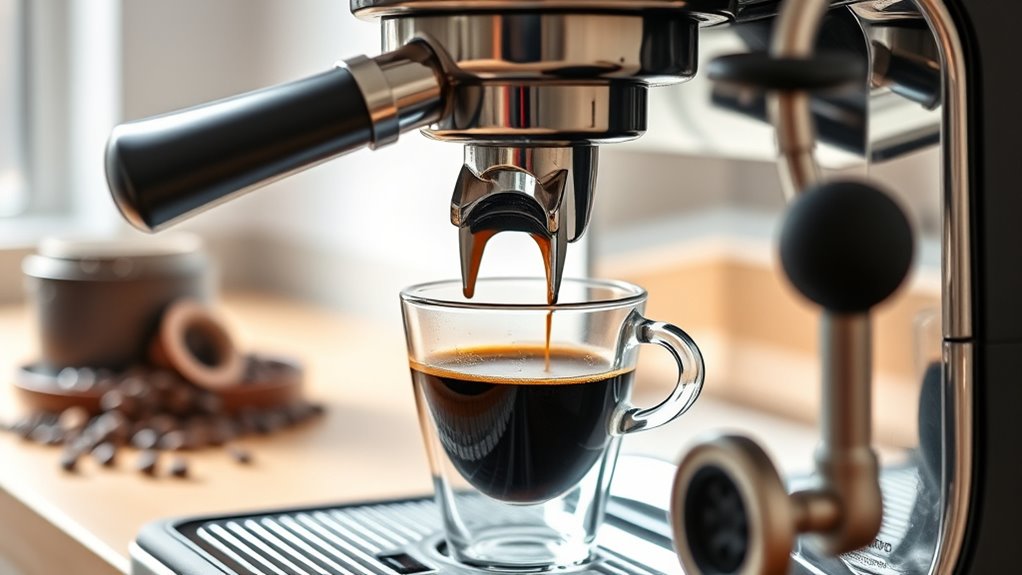
Although espresso machines come in various designs, they all work by using high pressure, around 9 bars, to force hot water heated to about 90-96°C through finely ground coffee. This process extracts a concentrated and flavorful shot, rich with crema.
You’ll find that the machine’s pump generates the necessary pressure, pushing water through the coffee in the portafilter.
The precise temperature guarantees ideal flavor extraction without burning the grounds. Espresso machines vary from manual to fully automatic, offering you different levels of control over brewing.
Whether you’re adjusting pressure, temperature, or extraction time, the machine’s components work in harmony to deliver that perfect, dense, aromatic espresso you crave.
Understanding this foundation sets you up for mastering espresso-making. It’s pretty cool how all these parts come together, isn’t it? Once you get the hang of it, making espresso becomes second nature.
Consistent extraction timing is essential for reproducible flavor and crema quality, so timing your shot from pump start is a key step to master.
Know Your Espresso Machine’s Key Parts
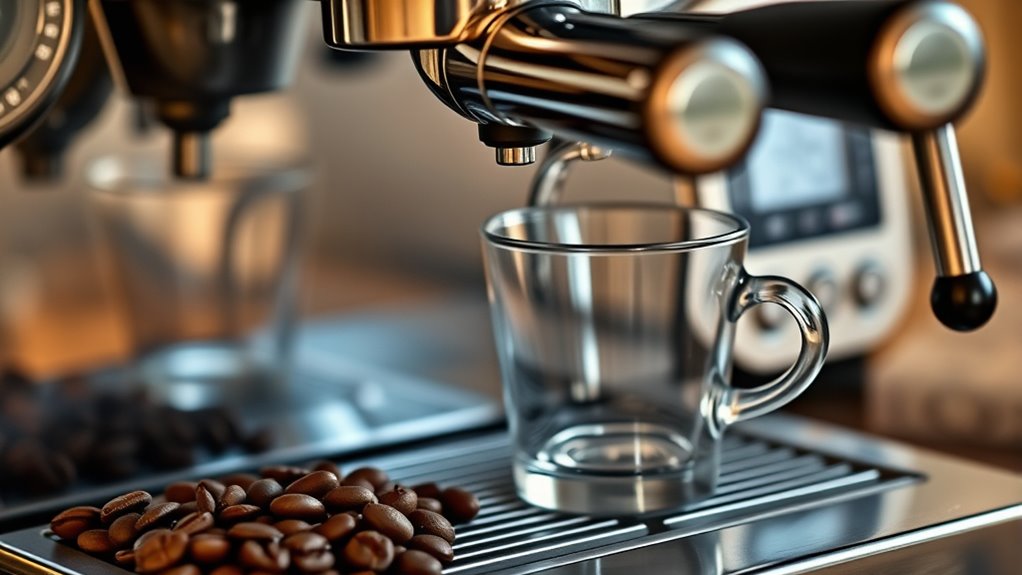
To really get the hang of your espresso machine, it helps to know its key parts. First up, there’s the portafilter — that’s the piece that holds your coffee grounds.
Then, you’ve got the grouphead, which locks in place to make sure the extraction is just right.
On the other hand, the steam wand is what you use for frothing milk, giving you that creamy texture in your lattes or cappuccinos.
And of course, the control buttons let you manage your shots and steam with ease.
Once you’re familiar with these, making espresso becomes a breeze!
Measuring espresso yield by weight not volume is essential for consistent and balanced shots.
Essential Espresso Machine Components
When you learn the essential components of an espresso machine, you’ll gain the confidence to operate it like a pro. The steam wand is your tool for frothing and heating milk, controlled by a simple knob or lever. Some machines even feature multiple wands for versatility.
The hot water spigot delivers boiling water separately, which is perfect for making Americanos or tea without interrupting your espresso shot. Equally important are the pressure and temperature dials. They let you monitor and adjust brewing conditions precisely, ensuring each shot extracts perfectly.
Understanding these key parts helps you maintain control over the process and produce rich, balanced espresso every time. Mastery of these elements sets the foundation before moving on to the portafilter and group head. Many espresso machines also include a 54mm stainless steel portafilter, which is essential for holding the coffee grounds firmly during extraction.
Portafilter And Grouphead
Because the portafilter and grouphead work together seamlessly, they form the heart of your espresso machine’s brewing system. The portafilter, with its handle, spigot, and brew basket, holds the coffee grounds tightly during extraction.
You’ll find different sizes and baskets designed for single, double, or even triple shots, giving you control over your espresso strength.
The grouphead secures the portafilter firmly, using a rubber gasket and metal filter to regulate water flow. It connects directly to the machine’s boiler and pump, ensuring consistent water pressure and temperature.
When you lock the portafilter properly into the grouphead, you create a perfect seal that’s essential for extracting rich, flavorful espresso every time.
Mastering this connection is key to your brewing success. It might seem tricky at first, but once you get the hang of it, pulling a great shot becomes second nature.
Just take your time and enjoy the process!
Proper puck preparation and dialing-in grind size are crucial steps to optimize extraction and achieve the best flavor.
Steam Wand And Controls
Once you’ve locked the portafilter into the grouphead and mastered the art of espresso extraction, it’s time to turn your attention to the steam wand and controls. These are what bring your drinks to life with perfectly textured milk.
The steam wand releases steam to froth and heat milk, controlled by a dedicated knob or lever. Before steaming, always purge the wand to clear any residual water. This ensures you get dry, stable foam every time.
Position the wand’s tip just below the milk surface to create a vortex. This is key for smooth microfoam. Most wands are adjustable, so you can regulate air and steam to get the ideal texture.
Larger machines often feature multiple wands, letting you prepare several drinks at once.
Mastering these controls really elevates your espresso beverages to café-quality perfection. Regularly purging and cleaning the steam wand helps prevent milk residue blockages and ensures consistent performance.
Selecting and Grinding Coffee for the Perfect Espresso
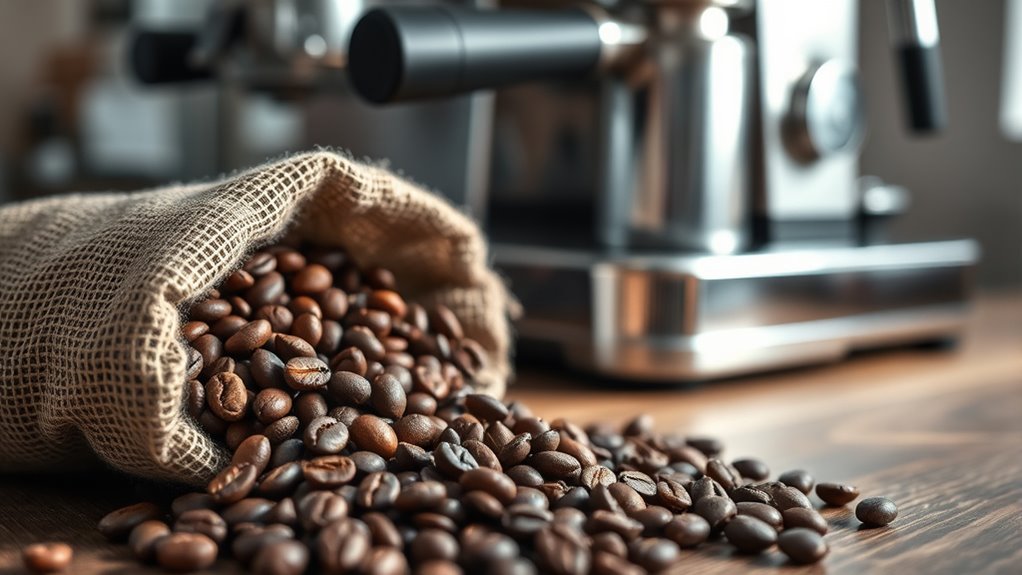
You’ll want to start with high-quality espresso beans because the right choice really lays the foundation for great flavor.
Using a burr grinder helps you grind consistently, which guarantees even extraction—super important for that perfect shot.
And remember, always grind just before brewing to keep your coffee fresh.
Plus, storing your beans properly will help maintain their vibrant taste.
For the best flavor and crema, focus on dark-roasted beans that develop rich oils and bold notes.
Choosing Espresso Beans
How do you choose the perfect espresso beans to reveal a rich, robust flavor? Start by selecting dark roast beans like French roast or espresso blends. They deliver the deep, intense taste espresso demands.
Freshness is key, so always grind your beans just before brewing to lock in those aromatic oils. Measuring precisely 16-18 grams for a double shot guarantees consistency every time.
Consider these essentials:
- Opt for dark roast beans to maximize flavor intensity.
- Buy whole beans and grind immediately before use.
- Use a precise scale for accurate coffee measurement.
- Choose blends designed for espresso to enhance crema and body.
Storing your beans in an airtight, dark container helps preserve freshness and flavor for the best results.
Simple tips like these make all the difference in your espresso experience. Give them a try and enjoy that rich, bold cup every time!
Grinding Consistency Importance
Because grind consistency directly influences extraction quality, choosing the right grinder and adjusting grind size are critical steps in crafting the perfect espresso. Burr grinders deliver uniform particles, which helps prevent uneven extraction and channeling.
Fine grinding, resembling sand or powder, allows hot water to extract rich flavors within 25-30 seconds. Adjusting grind size controls extraction speed and pressure, giving you precise control over taste.
| Grind Size | Extraction Impact |
|---|---|
| Fine (powdery) | Faster, intense |
| Medium-fine | Balanced, smooth |
| Coarse | Slower, weak |
| Too fine | Over-extracted, bitter |
Mastering grind consistency ensures your espresso bursts with complexity and richness every time. It really makes all the difference in your cup! A consistent and uniform particle size is essential to prevent channeling and achieve even extraction for a richer flavor profile.
Freshness and Storage
When should you grind your coffee beans to capture their full flavor? The answer is simple: right before brewing. Grinding immediately preserves the volatile oils and aromas essential for a rich espresso.
To keep your coffee fresh, store your beans properly in airtight, opaque containers. These protect them from light, heat, and moisture, all of which can ruin the quality.
Keep these key points in mind: use freshly roasted beans within one month for the best flavor. Grind to a fine, consistent texture, somewhere between sand and powder.
Also, avoid pre-ground coffee that’s been sitting around too long. And store your beans away from heat and light in airtight containers to make sure they stay fresh.
How to Pull the Perfect Espresso Shot
Although pulling the perfect espresso shot requires attention to detail, mastering it is totally within your reach. It’s all about controlling key variables like grind size, tamp pressure, and timing.
Start with 16-18 grams of finely ground coffee and tamp evenly using 15-20 kg of pressure. Lock the portafilter in place, start timing right away, and aim for a 25-30 second extraction. This helps you capture that rich crema and full flavor.
If your shot pulls too fast or too slow, just adjust the grind size accordingly. After brewing, be sure to promptly discard the grounds and rinse the portafilter to keep things consistent. Regular maintenance, including descaling your espresso machine, ensures optimal performance and flavor quality.
| Variable | Ideal Range | Purpose |
|---|---|---|
| Coffee Dose | 16-18 grams | Proper extraction balance |
| Tamping Force | 15-20 kg | Even coffee bed compression |
| Brew Time | 25-30 seconds | Balanced flavor & crema |
| Grind Size | Adjust as needed | Control extraction speed |
How to Steam Milk Like a Barista at Home
Nailing the perfect espresso shot sets the foundation, but steaming milk like a pro brings your coffee to life. To master this, start by purging the steam wand to clear any water.
Use cold milk in a stainless steel pitcher filled one-third full, so there’s room for expansion.
Position the wand just below the surface to introduce air and create creamy microfoam, then submerge it slightly for even heating.
Creating a vortex by swirling the pitcher breaks down bubbles, giving you that silky texture.
- Purge steam wand before use
- Fill pitcher one-third with cold milk
- Introduce air then submerge wand for even heat
- Create a vortex to produce smooth microfoam
Finish steaming when the pitcher feels hot, and wipe the wand immediately to keep it clean. It’s a simple step, but it really helps keep everything working smoothly. Regularly wiping and purging the steam wand is essential to prevent bacterial growth and maintain hygiene.
How to Assemble Popular Espresso Drinks
Since the foundation of any great espresso drink is a perfectly pulled shot, assembling your favorite beverages becomes an art of balance and technique. You start with the espresso base, then carefully add steamed milk and foam according to the drink’s style.
| Drink | Assembly Method |
|---|---|
| Cappuccino | Equal parts espresso, steamed milk, and milk foam |
| Latte | Espresso + more steamed milk, topped with thin foam |
| Flat White | Double espresso + microfoam milk |
| Espresso Macchiato | Espresso topped with a small dollop of frothy milk |
| Mocha | Espresso + chocolate syrup + steamed milk + whipped cream |
Mastering these builds lets you craft each drink’s unique flavor and texture with precision. It’s all about getting that perfect balance in every cup. Once you nail it, your espresso drinks will taste like they came from a top café.
How to Troubleshoot Common Espresso Machine Issues
When your espresso machine doesn’t perform as expected, diagnosing the issue quickly can save you time and preserve the quality of your shots. Start by evaluating the grind size and tamp pressure to ensure proper extraction.
Taste can guide you: sour notes usually mean under-extraction, while bitterness signals over-extraction.
Watch for inconsistent pressure or temperature, which often indicate mechanical problems needing expert repair.
If espresso flows too fast, try a finer grind and firmer tamp.
Sour flavor? Increase brewing time or grind finer.
Bitter taste? Use a coarser grind or shorten extraction.
Erratic pressure or temperature? Inspect the boiler or pump.
Understanding these signs helps you adjust for flawless espresso every time.
Cleaning and Maintenance Tips for Your Espresso Machine
Once you’ve mastered troubleshooting your espresso machine, keeping it clean and well-maintained will guarantee it performs smoothly and consistently. Regularly clean the portafilter, basket, and group head with hot water and a brush to prevent coffee oil buildup. This buildup can affect both flavor and function.
Master cleaning your espresso machine to ensure smooth operation and prevent flavor-robbing coffee oil buildup.
Backflush your machine weekly using a detergent designed specifically for espresso machines to maintain peak performance. Always purge the steam wand immediately after each use to clear residual milk and avoid clogging. This little habit makes a big difference.
Descale every 1-3 months, depending on your water hardness, to remove mineral deposits that can impair operation. Don’t forget to wipe down the exterior and control panel daily with a damp cloth to keep your machine spotless and functioning properly.
Consistent care ensures every shot tastes perfect and your machine lasts longer. It’s worth the effort for that great cup every time!
Advanced Tips to Improve Your Espresso Skills
Although mastering the basics sets a solid foundation, honing your espresso skills demands attention to detail and fine-tuning. To elevate your shots, focus on precise calibration and consistent technique.
Use a digital scale to dose 16-18 grams and tamp evenly with 15-20 kg pressure.
Monitor your extraction time. Aim for 25-30 seconds and adjust grind size accordingly to control flow rate.
Keep your brew head and portafilter spotless after each shot to avoid flavor contamination.
Additionally, experiment with temperature and pressure settings. Small tweaks like 9 bars pressure and 93-95°C water temperature can transform your espresso’s flavor and crema.
- Calibrate grinder for uniform grind size and extraction time
- Dose and tamp with precision for consistency
- Adjust grind size based on shot timing and flow
- Maintain cleanliness of brew components for pure flavor
Frequently Asked Questions
Can I Use Pre-Ground Coffee Instead of Grinding Fresh Beans?
You can use pre-ground coffee, but it won’t match the freshness or flavor of freshly ground beans. For best results, pick a high-quality espresso grind and use it quickly to preserve aroma and crema quality.
That said, grinding your own beans just before brewing really makes a difference. The flavor and aroma are noticeably better when you grind fresh. But if convenience is key, pre-ground coffee can still do the job. Just try to store it properly and use it soon after opening.
How Do I Choose the Best Water for My Espresso Machine?
Choose filtered or bottled water with balanced minerals (50-150 ppm TDS) and a pH around 6.5-7.5. This helps protect your espresso machine and brings out the best flavor in your coffee.
Avoid distilled water because it can harm your machine and make your espresso taste flat. It’s a good idea to test your water regularly to make sure it stays within the right range.
You might also want to consider using conditioning additives if your water isn’t quite right. That way, you can keep your machine in top shape and enjoy great espresso every time.
What Are the Benefits of Using a Burr Grinder Versus a Blade Grinder?
You get uniform grounds, consistent extraction, precise control, less heat, and cleaner results when you use a burr grinder.
You won’t settle for uneven, overheated, messy grounds that ruin espresso’s flavor and texture like blade grinders do.
How Long Does an Espresso Machine Typically Last With Regular Use?
Your espresso machine typically lasts 5 to 15 years with regular use. To get the most out of it, keep it clean and descale it frequently. Also, make sure to replace any worn parts as needed.
This helps maximize its lifespan and keeps your coffee tasting great. Commercial models usually last even longer, often exceeding 10 years. That’s because they’re built with more durable components and sturdier construction.
Can I Make Espresso Without an Espresso Machine?
You can’t make true espresso without an espresso machine because it needs high pressure. However, you can use a Moka pot or AeroPress for strong coffee. They won’t replicate authentic espresso’s crema or extraction, though.
But if you’re just looking for a bold, concentrated coffee, these methods work pretty well. So, while it’s not exactly espresso, it’s still a tasty alternative.
Conclusion
Don’t worry if you’re new to espresso machines. It’s easier than it seems once you get the hang of it. With the right grind, precise technique, and regular maintenance, you’ll pull rich, flavorful shots every time.
Remember, practice and patience turn good coffee into great coffee. Keep experimenting, stay curious, and enjoy the process. Your perfect espresso is just a few steps away. You’ve got this!

Pingback: What Is An Espresso Martini – Explained
Pingback: How Much Caffeine In Chocolate Covered Espresso Beans Guide
Pingback: Where To Buy Espresso Beans – Best Places