To descale your espresso machine, start by turning it off and letting it cool down. Remove parts like the portafilter and drip tray. Then, empty the water reservoir and discard any old water.
Use a manufacturer-approved descaling solution. Run it through the brew head and steam wand—manually if you have a semi-automatic machine or using the built-in cycle for fully automatic ones. After that, rinse everything thoroughly with clean water.
Proper descaling helps your machine last longer and keeps your coffee tasting better. Keep reading to master the whole process and steer clear of common mistakes.
What Is Descaling and Why It Matters for Espresso Machines
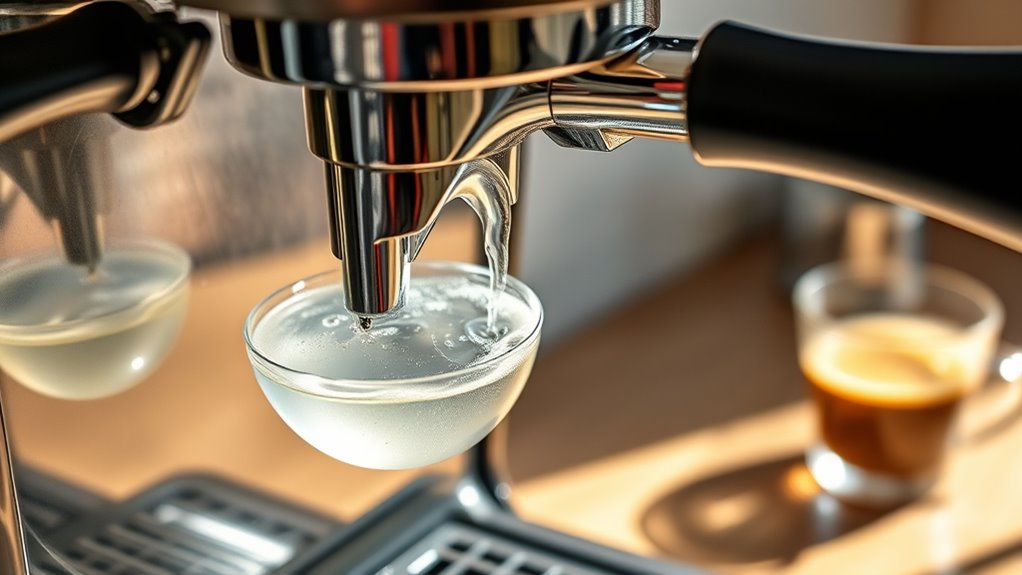
Why does descaling matter so much for your espresso machine? Because it removes mineral deposits, mainly calcium and magnesium, that build up from hard water inside your machine. These scale deposits insulate heating elements and narrow water passages, causing your espresso maker to perform poorly.
When you skip descaling, you might notice longer heat-up times, weaker steam, and uneven shot temperatures. All of these hurt the quality of your coffee.
Regular descaling guarantees your machine maintains consistent water temperature, flow, and pressure, which are critical for perfect espresso extraction.
Plus, it protects your machine from damage and extends its lifespan, helping you avoid costly repairs. Keeping your espresso machine free of mineral buildup is essential for both performance and longevity.
Maintaining consistent water temperature within the ideal 90-96°C range is essential for preserving extraction quality and flavor consistency.
How to Tell When Your Espresso Machine Needs Descaling
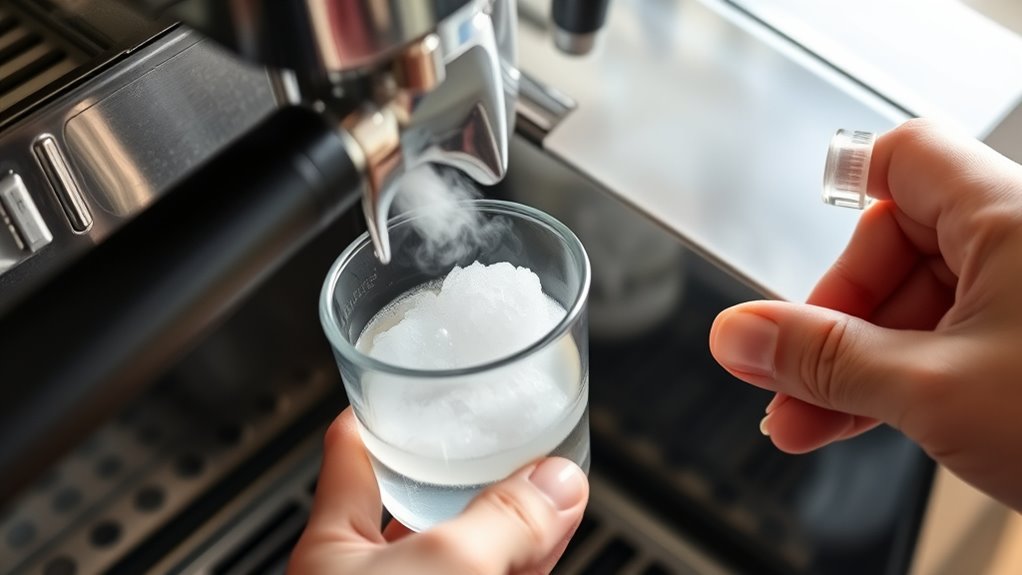
You’ll notice your espresso machine needs descaling when it takes longer to heat up or the steam pressure starts to weaken. Also, keep an eye out for white mineral deposits on parts like the steam wand or drip tray.
If you hear sputtering sounds during brewing, that’s another sign something’s up. These little changes in performance, along with those visible signs, usually mean there’s scale buildup affecting how well your machine works.
Additionally, maintaining machine pressure within the recommended range is crucial for consistent extraction and overall espresso quality.
Signs of Scale
Although scale buildup often starts unseen inside your espresso machine, certain clear signs can alert you when it’s time to descale. You might spot white deposits on the steam wand or drip tray, hear sputtering sounds during brewing, or notice weak steam pressure. These indicators show mineral deposits are affecting your machine’s performance and longevity.
| Sign | What It Indicates |
|---|---|
| White deposits | Visible mineral buildup on components |
| Longer heat-up times | Scale affecting heating elements |
| Weak steam/frothing | Clogged or insulated steam wand |
| Sputtering/gurgling sounds | Narrowed water pathways from deposits |
Keep an eye out for these signs—they help you know when your espresso machine needs some attention. Catching scale buildup early means your machine will keep running smoothly and your coffee will taste great every time. Proper maintenance also ensures consistent caffeine extraction, which affects the strength and flavor of your espresso.
Performance Changes
Spotting visible signs like white deposits or unusual sounds gives you an early heads-up. But paying attention to how your espresso machine performs can reveal hidden scale buildup before it gets worse.
If you notice a drop in water temperature during brewing, it means scale is messing with your machine’s heating efficiency. Reduced water flow or longer extraction times usually mean mineral deposits are clogging the internal pathways.
Sputtering steam wands or inconsistent steam pressure point to blockages in the steam channels.
Also, warning lights or alerts often come on when scale seriously affects performance. By catching these subtle changes early, you can descale right away, keeping your machine efficient and making sure every espresso shot tastes just right.
Ignoring these signs can lead to costly damage and a drop in coffee quality. Regular maintenance and calibration of your machine’s components, including grind size adjustments, help ensure consistent extraction and flavor balance, preventing issues caused by scale buildup and wear. This includes monitoring extraction time closely as a key indicator of machine health.
Choosing the Right Descaling Solution for Your Espresso Machine

You’ll want to pick a descaling solution made especially for espresso machines. This helps protect your equipment and ensures minerals get removed effectively.
Try to avoid household acids like vinegar unless your manufacturer says it’s okay. Vinegar can damage seals and leave behind residue you don’t want.
Instead, look for NSF-certified, food-safe products like Fellow Descaling Concentrate or Urnex Dezcal.
And remember, always follow the manufacturer’s instructions to get the best results.
Proper descaling also helps maintain equipment calibration, which is essential for preserving precise brew ratios and optimal espresso extraction.
Descaling Solution Options
How do you choose the right descaling solution for your espresso machine? Stick to products specifically formulated for espresso machines, like Urnex Dezcal or Fellow Descaling Concentrate. These commercial descalers are NSF certified and designed to effectively dissolve mineral deposits without harming internal components or rubber seals.
Avoid household vinegar or acidic cleaners not approved by your machine’s manufacturer. They can degrade seals and leave residues.
Always follow the manufacturer’s instructions on dilution ratios and application methods to maximize efficiency.
Also, replace your descaling solution regularly to maintain its potency.
Using properly mineralized water during brewing helps reduce the buildup of scale and prolongs the effectiveness of water quality maintenance.
Safe Ingredients to Use
Choosing the right descaling solution means focusing on safe, effective ingredients tailored for espresso machines. You should use only descalers specifically formulated for espresso machines, like NSF-certified products such as Fellow Descaling Concentrate or Urnex Dezcal. These guarantee compatibility and protect your machine’s components.
Avoid household acids like white vinegar or lemon juice. They can damage rubber seals and leave unpleasant tastes or odors. Always check product labels to confirm the solution’s safety for your machine’s materials.
Make sure to follow the manufacturer’s dilution and application instructions carefully to prevent harm. It’s best to opt for professional-grade descalers designed to dissolve mineral buildup efficiently without corroding delicate parts.
Using filtered or low-mineral water after descaling helps prevent new mineral buildup and maintains machine efficiency.
Preparing Your Espresso Machine for Descaling
Before starting the descaling process, make sure your espresso machine is turned off and completely cooled down. This helps prevent any risk of burns or damage.
Begin by removing detachable parts like the portafilter, drip tray, and milk frother. This allows for thorough cleaning.
Next, empty the water reservoir completely and discard any leftover water. You don’t want to dilute the descaling solution.
If your machine uses a water filter, such as an AquaClean filter, take it out. This ensures the descaling solution can work effectively.
Finally, clear the brew group and steam wand area. This provides unobstructed access for the descaling solution to flow freely.
These steps set the foundation for an efficient and safe descaling process. They help maintain your espresso machine’s performance. Maintaining proper temperature stability during and after descaling is essential to ensure consistent espresso extraction and prevent machine wear.
Understanding Semi-Automatic vs. Fully Automatic Machines
Once you’ve prepared your espresso machine for descaling, it’s important to recognize that the process can differ considerably depending on whether you’re working with a semi-automatic or fully automatic model.
Semi-automatic machines require you to manually control water flow and steam, giving you more hands-on involvement during descaling. This means following specific cleaning cycles and performing manual flushing steps.
On the other hand, fully automatic machines automate water dosing, brewing, and steaming. They often include built-in descaling programs that simplify maintenance. These machines also feature sensors and alerts that notify you when descaling is needed, which reduces guesswork.
Knowing these differences helps you tackle descaling efficiently. This way, your espresso machine stays in great shape without any unnecessary complications or missed steps. Additionally, using a high-quality espresso machine ensures rich crema and concentrated flavor, which can be preserved by regular descaling.
How to Descale Semi-Automatic Espresso Machines
To descale your semi-automatic espresso machine effectively, start by filling the water reservoir with a descaling solution prepared according to the manufacturer’s guidelines. Remove the portafilter and accessories, then run the solution through the brew head and steam wand. Pause as recommended to let the solution break down mineral buildup inside.
After that, flush the system thoroughly with clean water to remove any residue. Finally, reassemble all parts and run a test shot or steam to confirm proper descaling.
Using a digital scale to measure espresso yield can help ensure your machine is functioning correctly after descaling by verifying consistent espresso output.
| Step | Action |
|---|---|
| Prepare Solution | Mix descaler per instructions |
| Run & Pause | Cycle solution through brew head, steam wand |
| Rinse & Test | Flush with water, reassemble, test machine |
How to Descale Fully Automatic Espresso Machines
Although fully automatic espresso machines simplify brewing, they still need regular descaling to keep running smoothly.
These machines come with built-in descaling modes that guide you through the process using their control panel or touchscreen.
Built-in descaling modes provide step-by-step guidance through the machine’s control panel or touchscreen.
To descale effectively, just follow these simple steps:
Fill the water reservoir with a manufacturer-approved descaling solution. Then, activate the descaling cycle from the machine’s menu.
The machine will run the solution through its internal pipes, boiler, and coffee outlet automatically.
During the cycle, it will pause to let the solution dissolve any mineral buildup.
Once the cycle is complete, rinse the tank and run clean water through the system to flush out any residues.
Descaling every 1 to 3 months, depending on how hard your water is, helps guarantee peak performance and keeps your machine in good shape for longer.
How to Rinse and Flush Your Machine After Descaling
Because residual descaling solution can affect the taste of your espresso and damage machine components, you need to thoroughly rinse and flush your espresso machine after descaling.
Start by emptying and rinsing the water reservoir with clean water to remove any remaining descaler.
Then, run at least two full tanks of fresh water through the brew head, steam wand, and hot water outlet to flush the system completely.
Be sure to discard any water collected in the drip tray after each cycle.
Once you’re done, reassemble all parts correctly.
Finally, taste-test the water from the brew head to make sure no descaling solution lingers.
This careful rinsing guarantees your machine is clean and ready to brew perfect espresso without any off-flavors.
Common Descaling Mistakes and Maintenance Tips
When you skip essential steps or use improper products during descaling, your espresso machine can suffer from lingering residues, damaged seals, and off-flavors in your coffee. To keep your machine in top shape, avoid these common mistakes and follow key maintenance tips:
Don’t use vinegar; stick to approved descaling solutions to protect seals and internal parts. Always rinse thoroughly after descaling to prevent mineral buildup and bad tastes.
Avoid vinegar; use approved descalers and rinse well to protect seals and ensure great coffee flavor.
Avoid over-descaling or doing it too frequently to reduce wear on gaskets.
Make sure you follow the manufacturer’s recommended procedure and timing for effective cleaning. It really helps keep everything running smoothly.
Also, test your water hardness regularly to adjust descaling frequency and avoid unnoticed scale buildup.
Frequently Asked Questions
Can I Use Vinegar Instead of a Commercial Descaling Solution?
You shouldn’t use vinegar because it can damage your machine’s seals and leave unpleasant odors.
Instead, choose a commercial descaling solution designed to protect components and effectively remove mineral buildup without risking costly repairs or warranty issues. It’s really worth it to stick with products made for your machine. That way, you keep everything running smoothly and avoid headaches down the road.
How Often Should I Descale My Espresso Machine?
You should descale your espresso machine every 2 to 3 months. But if you have hard water, monthly descaling might be necessary.
Always keep an eye out for signs like slow flow or longer heat-up times. These usually mean it’s time to descale sooner rather than later.
Will Descaling Remove Coffee Stains From the Machine’s Exterior?
Descaling won’t wipe away coffee stains from your machine’s exterior like rain washing away dust.
Instead, use a soft cloth with warm, soapy water or a mild cleaner to gently erase those stubborn coffee marks.
That way, you can keep your machine looking clean and gleaming.
Can Descaling Damage My Espresso Machine’s Warranty?
Yes, descaling can damage your warranty if you don’t use manufacturer-approved solutions or follow their instructions.
It’s really important to stick to recommended products and schedules. This way, you protect your machine and keep your warranty valid and intact.
Just follow the guidelines, and you should be good to go!
How Long Does the Descaling Process Typically Take?
You’ll find descaling takes about 30 to 45 minutes, give or take. It’s not rocket science but requires patience as the machine cycles through soaking and rinsing.
This process keeps your espresso tasting first-rate. Just let the machine do its thing, and you’re good to go.
Conclusion
So, you’ve learned how to descale your espresso machine because apparently, your coffee maker needs a spa day just like you do. Skipping this step might leave you with bitter brews and a grumpy machine. And no one wants that.
Keep up with descaling, and your espresso will stay smooth, your machine happy, and your mornings way better. Who knew that a little mineral buildup could cause such drama?
Now, go enjoy that perfect shot!

Pingback: How To Descale Breville Espresso Machine – Easy Steps
Pingback: How To Descale Delonghi Espresso Machine – Easy Steps
Pingback: How To Reset Breville Espresso Machine – Quick Steps