You’ll find about 63 milligrams of caffeine in a standard 1-ounce shot of espresso, though this can vary slightly based on bean type, grind, and extraction time. Robusta beans pack more caffeine than Arabica, and lighter roasts carry a bit more caffeine by volume.
Keep in mind, double or triple shots multiply that amount. Factors like brewing method and serving size also play a role. Understanding these can help you better manage your caffeine intake and flavor preferences.
Espresso Shot Size: What’s Standard?
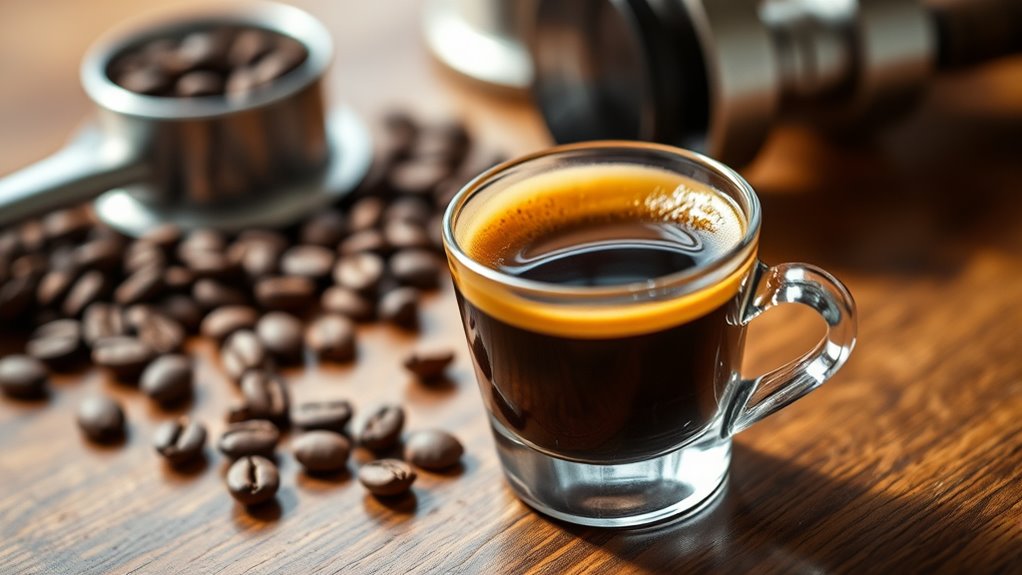
How much espresso do you expect in a standard shot? Typically, it’s about 1 fluid ounce (30 milliliters). Many espresso machines, however, default to a double shot, which is roughly 2 ounces (60 milliliters).
A standard espresso shot is about 1 fluid ounce, though many machines default to a 2-ounce double shot.
When you order a single shot, it’s usually made with 7-9 grams of coffee grounds, yielding approximately 30-36 grams of brewed espresso.
While the exact size can vary slightly depending on the café or machine, 1 ounce remains the most widely accepted standard.
You might also encounter ristretto shots, which are shorter and more concentrated, or lungo shots, which are longer and milder. Both generally fall within the 1 to 2-ounce range.
Knowing these variations helps you understand what’s in your cup before you sip.
The amount of coffee grounds and the shot volume are carefully balanced with factors like grind size and tamping to optimize flavor and extraction quality.
How Much Caffeine Is in a Single Shot of Espresso?
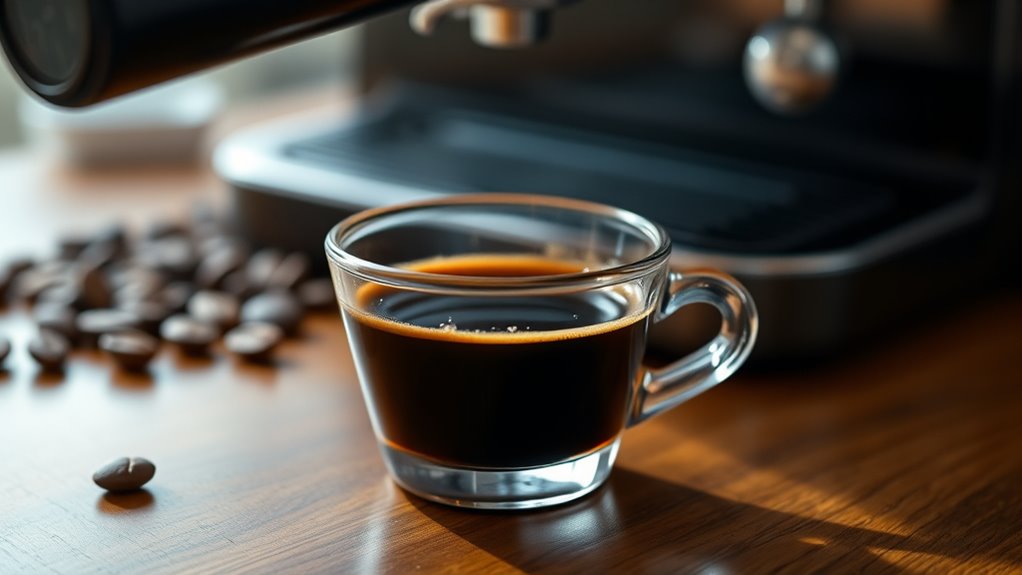
You might be surprised to learn that a single shot of espresso typically packs about 63 mg of caffeine. Though, it can vary between 47 mg and 65 mg depending on a few things.
It really comes down to factors like the type of coffee bean, the dose, and how it’s brewed. So, the serving size plays a big role in how much caffeine ends up in your cup.
Knowing how these elements affect caffeine content can help you get a better idea of just how much of a kick you’re getting from your espresso shot.
Adjusting the espresso dose precisely influences extraction and flavor, which can also affect the caffeine concentration in each shot.
Caffeine Content Overview
Although caffeine levels can vary, a standard shot of espresso usually contains about 63 milligrams of caffeine, giving you a quick and potent energy boost. This amount can range from 47 to 65 milligrams depending on factors like the coffee bean type, grind size, dose, and brewing time.
For example, espresso made with Robusta beans typically has about twice the caffeine of those using Arabica beans. While a single shot offers this concentrated kick, a double shot doubles the caffeine, reaching around 126 milligrams.
Understanding these variables helps you gauge your caffeine intake more accurately, whether you’re seeking a mild lift or a stronger buzz.
Knowing the caffeine content lets you enjoy espresso responsibly and tailor your consumption to your needs.
Extraction time and grind size play a crucial role in caffeine concentration, as longer extraction times generally increase the amount of caffeine extracted from the coffee grounds.
Serving Size Impact
Since serving size directly affects caffeine intake, understanding the amount in a single shot of espresso is essential for managing your consumption.
A standard shot, measuring about 1 ounce (30 mL), contains roughly 63 mg of caffeine. This amount can vary slightly, from 47 to 65 mg, depending on the bean type and brewing technique used.
If you opt for a double shot, you’re looking at approximately 126 mg of caffeine, effectively doubling your intake.
Even different shot styles, like ristretto or lungo, only cause minor changes in caffeine content.
By knowing these serving size differences, you can better control how much caffeine you consume.
This way, your espresso fix fits your personal tolerance and energy needs without surprises.
The espresso extraction ratio also influences the concentration of caffeine per shot, as it determines the strength and volume of the espresso produced.
Estimation Methods Explained
Understanding the caffeine content in your espresso starts with reliable estimation methods. A standard single shot usually contains about 63 mg of caffeine, but this can range from 47 to 65 mg depending on factors like bean type and brewing technique.
To estimate caffeine, multiply the number of shots by roughly 63 mg. So, two shots have around 126 mg.
Keep in mind, Arabica beans typically have less caffeine than Robusta, and variations in grind size, brew time, and coffee dose affect extraction.
Commercial espresso shots, such as those from Starbucks or Nespresso, may contain 60 to 120 mg per shot due to brand and preparation differences.
Using these guidelines helps you gauge caffeine intake with reasonable accuracy. Additionally, brew temperature stability plays a key role in extraction consistency, which can subtly influence caffeine concentration in each shot.
Caffeine in Double, Triple, and Quad Espresso Shots
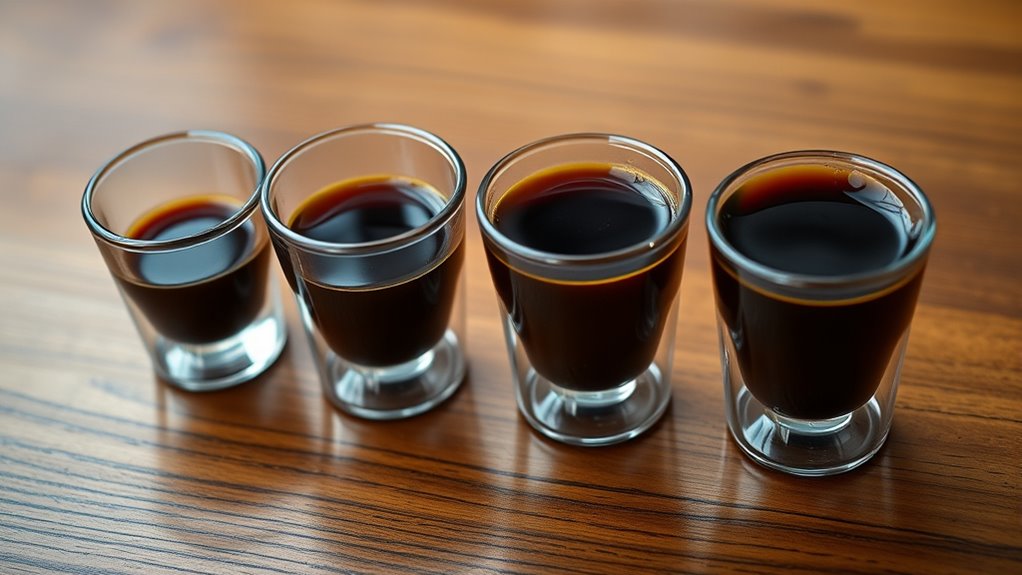
When you order multiple espresso shots, you increase your caffeine intake proportionally, with each shot adding about 63 mg. This means a double shot packs roughly 126 mg of caffeine, a triple shot hits around 189 mg, and a quad shot delivers close to 252 mg.
Knowing this helps you control your caffeine levels and tailor your coffee experience. Consider this:
- Double shots give you a solid, balanced boost
- Triple shots push your alertness further
- Quad shots are intense, perfect for a serious jolt
- Each shot’s caffeine adds consistently
- You can easily calculate your total intake
Keep in mind that factors like grind size and extraction time can influence the caffeine content and flavor of each shot.
How Bean Type and Roast Affect Espresso Caffeine
Although many coffee lovers focus on the number of shots they order, the type of bean and roast you choose also play a key role in your espresso’s caffeine content.
Robusta beans pack roughly twice the caffeine of Arabica, averaging 2.2–2.7% compared to Arabica’s 1.2–1.5%. So, if you want a stronger caffeine kick, Robusta is your go-to.
Robusta beans deliver about twice the caffeine of Arabica, making them the choice for a stronger boost.
As for roast levels, the caffeine content remains mostly stable since roasting doesn’t break down caffeine chemically. Lighter roasts retain slightly more caffeine by volume because they’re denser, while darker roasts are less dense and may yield a bit less caffeine per scoop.
However, these differences are minor.
Ultimately, bean type impacts caffeine more profoundly than roast, though both choices primarily influence flavor and body rather than caffeine content.
Adjusting espresso yield through factors like brew ratios can also influence caffeine concentration per shot.
Impact of Grind and Extraction on Espresso Caffeine
You’ll find that grind size plays a vital role in how much caffeine your espresso contains. Using finer grinds actually boosts extraction efficiency.
Extraction time also matters. If it’s too long, you risk over-extraction, which can increase caffeine but also add bitterness.
Grind Size Effects
How does grind size shape the caffeine content in your espresso shot? The grind size controls how much caffeine extracts from your coffee grounds. A finer grind increases surface area, boosting caffeine extraction, but going too fine risks over-extraction. That can lead to bitterness and potentially too much caffeine.
Coarser grinds under-extract, which means you get weaker, less caffeinated shots. Finding the perfect grind size means balancing extraction efficiency and flavor. You want a fine grind that fits within the ideal 25-30 second brew time.
Remember:
- Finer grind = more caffeine, risk of bitterness
- Overly fine grind can overpower flavor
- Coarser grind lowers caffeine and intensity
- Ideal grind ensures balanced extraction
- Grind size directly impacts caffeine yield
Mastering grind size lets you control caffeine precisely and enjoy the best espresso experience.
Extraction Time Influence
When exactly should you stop pulling your espresso shot to maximize caffeine without sacrificing flavor? Aim for an extraction time around 25 to 30 seconds. This window balances caffeine yield and taste, ensuring you avoid under-extraction, which yields less caffeine, and over-extraction, which can make your espresso bitter.
Finer grinds speed up caffeine extraction, but if you extend the shot too long, the extra caffeine comes with harsh, unpleasant flavors. While longer extraction times generally increase caffeine content, there’s a point of diminishing returns where bitterness outweighs benefits.
Espresso Caffeine vs. Drip Coffee: What’s the Difference?
Although espresso and drip coffee both deliver caffeine, their differences in concentration and serving size shape your overall caffeine intake. Espresso packs about 63 mg of caffeine in just 1 oz, while an 8 oz cup of drip coffee contains roughly 95 mg. This means espresso is more concentrated but served in smaller amounts.
Here’s what you should know:
- Espresso’s caffeine concentration is about 2.1 mg/mL, much higher than drip coffee’s 0.4 mg/mL.
- A double shot of espresso (2 oz) has about 126 mg caffeine, close to a 12 oz brewed cup.
- Despite volume differences, drip coffee generally gives you more caffeine per serving.
- Your caffeine kick depends on both how much you drink and the brew type.
- Concentration and serving size together define your caffeine experience.
How Espresso Drinks Affect Your Caffeine Intake
Understanding the caffeine content in espresso shots sets the stage for examining how different espresso drinks influence your overall intake. Each 1 oz shot delivers about 63 mg of caffeine, so the total amount depends on how many shots your drink contains.
For example, a double espresso packs roughly 126 mg, which contributes considerably to your daily caffeine limit.
Drinks like lattes and cappuccinos usually contain two or more shots, increasing your caffeine intake accordingly.
Larger espresso beverages, such as Americanos or flat whites, often include multiple shots, further raising caffeine levels.
Espresso Caffeine Myths You Should Know
Since espresso is such a popular coffee choice, you’ve probably heard a few myths about its caffeine content that aren’t entirely true. Let’s clear them up so you can enjoy your shot with confidence.
Espresso always has more caffeine than other coffee. Actually, larger volumes of drip or cold brew often contain more caffeine overall.
Espresso isn’t always higher in caffeine; larger servings of drip or cold brew can have more.
Lighter roasts pack considerably more caffeine. The differences are minimal, just a few milligrams.
The crema on top holds more caffeine. Caffeine is evenly distributed throughout the shot. Every espresso shot contains the same caffeine amount. Caffeine varies with bean type, roast, and brewing.
Espresso gives a faster caffeine kick solely due to concentration. Absorption speed depends on shot size and metabolism, not just caffeine content.
Knowing the facts helps you appreciate espresso’s true caffeine profile.
How to Estimate Your Total Caffeine From Espresso Shots
When you want to gauge your caffeine intake from espresso, start by counting the shots in your drink and multiplying by about 63 mg of caffeine per shot. Keep in mind, caffeine varies with bean type and brewing method, so this is just an estimate. Always confirm the number of shots in your beverage to get the most accurate calculation.
| Shots | Avg. Caffeine (mg) | Range (mg) |
|---|---|---|
| 1 | 63 | 47 – 65 |
| 2 | 126 | 94 – 130 |
| 3 | 189 | 141 – 195 |
Using this simple method lets you estimate your total caffeine quickly. That way, you can make informed choices about your espresso intake.
Frequently Asked Questions
Can Decaf Espresso Shots Contain Any Caffeine?
Yes, decaf espresso shots still contain some caffeine. You’ll usually find between 1 to 7 milligrams per shot. It can be slightly higher depending on the decaffeination method and brand.
How Long Does Caffeine From Espresso Stay in Your System?
You might think caffeine leaves your system quickly, but it actually stays 3 to 5 hours on average, sometimes up to 14 hours.
Your metabolism, age, and tolerance all influence how long its effects last. So, it really depends on the person. Some people feel the buzz longer than others.
Does Espresso Caffeine Affect People With Caffeine Sensitivity Differently?
Yes, espresso caffeine affects you differently if you’re sensitive. You’ll likely feel stronger, longer-lasting effects like jitters or a racing heart because your body processes caffeine slowly.
It’s smart to limit your intake or choose decaf instead. That way, you can still enjoy your coffee without the unpleasant side effects.
Is Caffeine Content Higher in Cold Brew Espresso-Based Drinks?
When it comes to caffeine, cold brew espresso-based drinks can pack more punch if you add extra shots. You’ll find the caffeine per shot stays steady, but more shots mean higher overall caffeine content.
How Does Altitude Influence Caffeine Extraction in Espresso?
Altitude lowers atmospheric pressure and boiling points, so you’ll need to adjust grind size and brewing time to maintain caffeine extraction.
Otherwise, your espresso might have less caffeine due to less efficient extraction and temperature inconsistencies.
It’s all about finding that sweet spot where the flavors and caffeine come through just right. Keep experimenting until you get it perfect!
Conclusion
You now know the standard espresso shot size and the caffeine content in single and multiple shots. Plus, you’ve learned how factors like bean type, roast, grind, and extraction influence caffeine levels.
You can compare espresso to drip coffee and understand how espresso drinks change your intake. You’ve also debunked some common myths along the way.
By applying this knowledge, you can estimate your total caffeine consumption and control your energy boost. So go ahead and enjoy your espresso with confidence and clarity every time!
Pingback: How Much Caffeine In A Double Shot Of Espresso – Answered
Pingback: What Is Blonde Espresso – Explained
Pingback: What Is The Difference Between Espresso And Coffee – Guide
Pingback: What Is Espresso Powder – Uses And Tips
Pingback: How Much Caffeine In One Shot Of Espresso Starbucks – Facts
Pingback: Is Cold Brew Stronger Than Espresso – Answered
Pingback: How Much Caffeine Is In 3 Shots Of Espresso – Answered
Pingback: Can You Make Espresso In A Keurig – Answered
Pingback: How Much Caffeine Does Espresso Have – Exact Amount
Pingback: How Much Caffeine In A Cup Of Espresso – Answered
Pingback: How Much Caffeine In Starbucks Espresso – Full Chart