You want to dial your espresso water temperature between 90–96°C (194–205°F) to balance sweetness, acidity, and bitterness perfectly. Lighter roasts benefit from hotter water around 203–205°F, while darker roasts do better near 200–202°F to avoid harsh flavors.
Consistent temperature control, especially with PID machines, sharpens flavor clarity and repeatability. Mastering temperature surfing and pre-infusion effects also plays a big role in your shot’s taste.
And there’s plenty more to fine-tune for your best espresso.
Water Temperature’s Role in Espresso Extraction
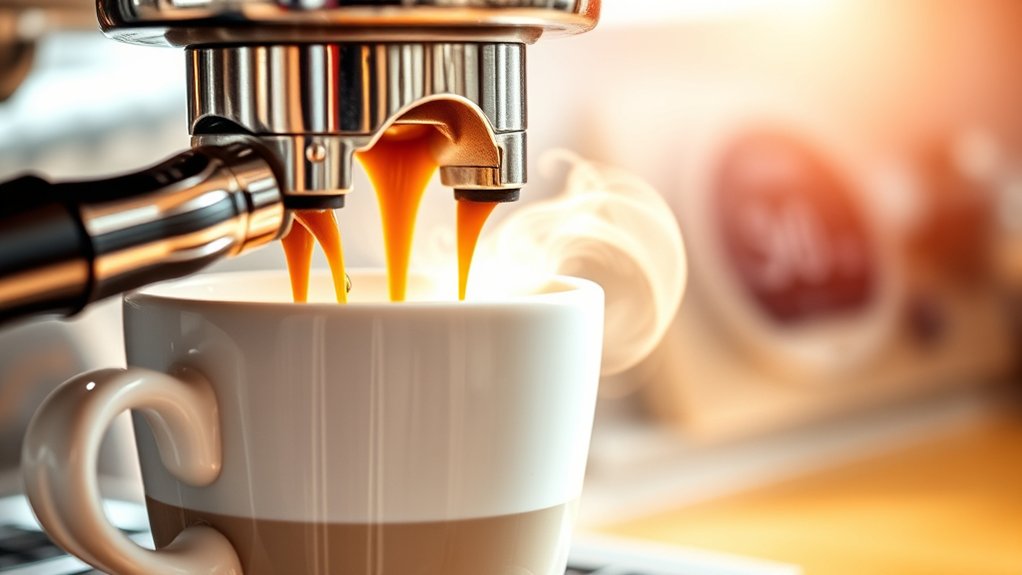
When you brew espresso, water temperature plays a key role in controlling the extraction rate and the flavor profile of your shot. Staying within the ideal range of 90–96°C (194–205°F) helps ensure you dissolve the right coffee compounds for a balanced flavor. If your water is too cool, extraction slows, leading to sour or weak shots caused by under-extraction. On the other hand, water that’s too hot speeds up extraction and often produces bitter and harsh flavors.
Different compounds dissolve at varying rates depending on temperature, so you’re not just adjusting strength but also the sensory balance — sweetness, acidity, bitterness, and astringency. Precision matters here.
Even minor temperature fluctuations can greatly alter your espresso’s taste, so water mineral content should also be considered to maintain consistent extraction and clarity. consistent water temperature also helps support predictable shot timing in the 25–30 second window.
Why Roast Level Changes Your Ideal Brew Temperature
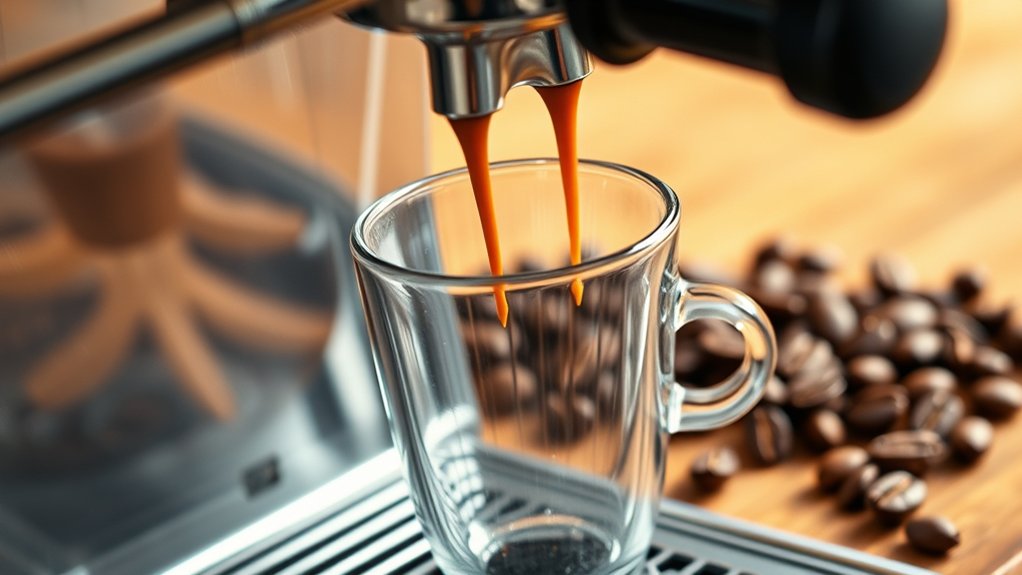
You’ll notice that roast level directly impacts your ideal brew temperature. Lighter roasts need hotter water—around 203 to 205°F—to fully develop their flavors. On the other hand, darker roasts extract more easily, so you can lower the temperature a bit to avoid bitterness and those ashy notes. By adjusting your machine’s temperature within this range, you can find the perfect balance for each roast.
It’s all about dialing it in so you get the best flavor every time. 1:1 to 1:2 espresso extraction ratios help you understand how the ideal temperature interacts with strength and flavor as you fine-tune your settings. Grind size matters too, since espresso typically targets 200-400 microns for balanced extraction.
Roast Level Temperature Guide
Because roast level dramatically affects how coffee compounds dissolve, adjusting your brew temperature based on roast is essential for balanced extraction. Lighter roasts need hotter water, around 203–205°F (90.5–96°C), to fully release sweetness and body. Medium-dark roasts extract more readily, so dialing down to 200–202°F prevents over-extraction bitterness.
If it’s bitter or ashy, lower your temperature a few degrees toward 200°F. If it’s sour or underdeveloped, increase it toward 203–205°F. Remember, temperature isn’t one-size-fits-all. It’s a dial keyed to your specific coffee’s roast level and freshness. Freshly roasted beans can shift extraction dynamics, so fine-tune accordingly.
Using this guide helps you hit the ideal temperature range for your roast, ensuring a balanced, flavorful espresso every time. Also, keep your shot yield measured by weight so temperature changes translate into consistent extraction results, and use 25–30 seconds as your baseline target for extraction time.
Light Roast Temperature Needs
Adjusting brew temperature according to roast level lets your espresso reach its full potential, especially with light roasts. These beans extract more slowly, so starting around 203–205°F (95–96°C) helps avoid thin, sour shots. Brewing light roasts too cool often means under-extraction, leaving your espresso weak and lacking sweetness.
By raising the temperature, you increase extraction yield, pulling more soluble compounds quickly for a fuller body without changing grind or dose. Keep temperature stable within ±1°F to ensure consistent flavor. Small fluctuations can really impact your shot.
If your light roast includes medium-dark notes or tastes bitter and ashy, try lowering the temperature slightly within the 194–205°F range to prevent over-extraction. This precise control helps you highlight the clarity and complexity unique to light roasts.
Dark Roast Temperature Benefits
While light roasts benefit from higher brew temperatures to fully develop their flavors, dark roasts often perform best at slightly lower temperatures, around 200–202°F (93–94°C). Dark roasts extract more aggressively, so hotter water can quickly push you into bitter or ashy territory.
Dialing in temperature after stabilizing grind and dose helps you isolate flavor changes more effectively. If your dark roast tastes too intense or bitter, try lowering the temperature before adjusting grind size.
- Extracts faster, reducing risk of over-extraction
- Avoids burnt or hollow flavors from excessive heat
- Small temperature shifts greatly impact bitterness
- Helps reveal chocolatey, caramelized notes without harshness
Adjusting brew temperature thoughtfully lets you highlight the best qualities of your dark roast. Just a little tweak can make a big difference in taste.
Temperature Stability and Its Effect on Espresso Flavor
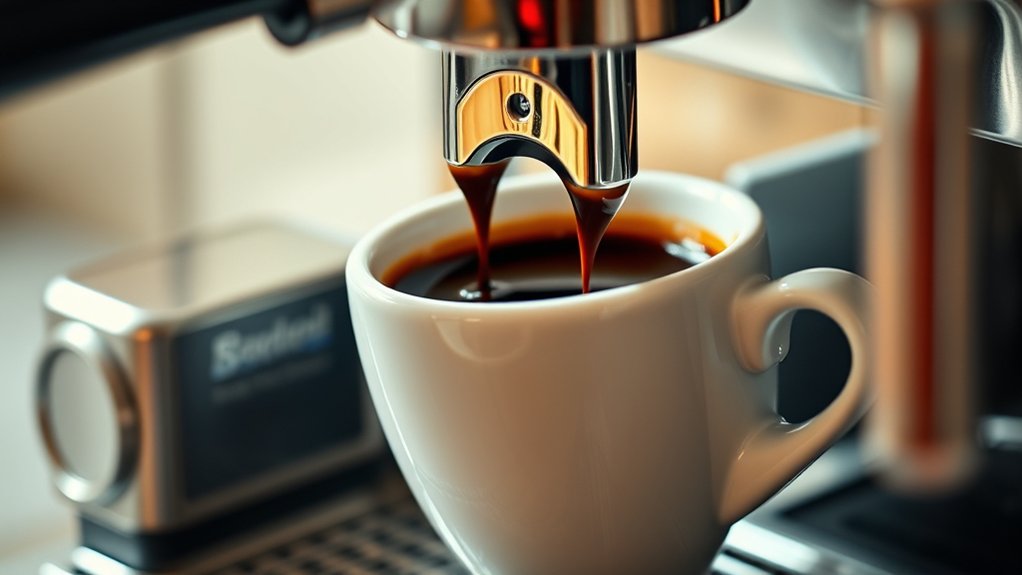
Since espresso extraction happens rapidly, even slight temperature swings can dramatically alter which coffee compounds dissolve into your shot. You need stable brew water temperatures, typically between 90–96°C (194–205°F), to maintain consistent flavor. Unstable temperature control can turn your setpoint into fiction, causing unpredictable taste variations shot after shot.
Many machines without PID control fluctuate by about ±5°F. This can shift solubility rates and extract more bitter or astringent compounds. This instability makes dialing in your grind and dose frustrating.
Small thermal differences impact the balance between sweetness, acidity, and bitterness. By ensuring tight temperature stability, you can reliably fine-tune your espresso. This lets you make precise adjustments to correct sour or bitter notes without unwanted surprises. Stability is key to repeatable, balanced espresso flavor.
PID Machines: Precision Brew Temperature Control Explained
When you want consistent espresso temperature control, a PID machine offers a big advantage over traditional mechanical thermostats. It constantly monitors the brew boiler and adjusts heating power in real time to keep the temperature stable within about ±1°F. This precision means the set temperature closely matches what your coffee puck experiences.
That really helps improve shot consistency.
Here’s why PID machines stand out:
They maintain a stable brew temperature without needing manual adjustments. Dual-boiler models have separate brew and steam boilers, which prevent temperature swings. Plus, they actively compensate for temperature fluctuations during extraction.
You also don’t have to do temperature surfing between shots anymore.
With PID control, you get reliable, repeatable espresso temperature. That’s essential for dialing in flavor and getting the best out of your beans.
Dialing Brew Temperature After Grind and Dose
Now that you’ve secured precise temperature control with a PID machine, it’s time to focus on how brew temperature fits into your overall espresso dialing process.
First, lock in your grind size and dose, as they’ve the most immediate impact on flow rate and extraction.
Once you dial those in to bring your shot within a good range, use temperature as a fine tuner. Adjust brew temperature by a few degrees. Raise it if your espresso tastes sour or under-extracted. Lower it if it’s bitter or over-extracted.
Temperature Surfing Tips for Non-PID Machines
If your espresso machine doesn’t have PID control, you’ll need to handle temperature swings a bit differently. One way is by timing water flushes to cool down or warm up the grouphead before each shot.
Running water through the grouphead lets you dial in the actual brewing temperature, keeping it within that sweet spot of 90–96 °C (194–205 °F).
Getting the timing just right is really important—it helps you pull consistent shots even with the usual ±5 °F fluctuations you see in non-PID machines.
Managing Temperature Fluctuations
Because machines without PID controllers experience brew temperature swings of about ±5°F (≈±2.5°C), you’ll need to manage these fluctuations carefully to achieve consistent espresso shots. Temperature surfing helps you control the grouphead temperature by flushing water just before extraction. This way, you can nudge the temperature into the ideal 90–96°C (194–205°F) range.
To manage temperature fluctuations effectively, flush the grouphead briefly to cool down a hot machine before pulling a shot. Use a short flush on cooler machines to warm the grouphead up. Make small temperature adjustments to avoid bitter or sour flavors.
Keep your dose and grind consistent, and fine-tune based on taste as you go. Mastering these steps will help you extract balanced espresso without a PID controller.
Group-Head Water Runs
When you work with a non-PID espresso machine, mastering group-head water runs or temperature surfing becomes essential to hitting the ideal brew temperature consistently. Boiler cycling causes temperature swings, so you’ll run short bursts of hot water through the group-head to either cool down an overheated system or warm a cool one.
Aim to stabilize the group-head between 90–96°C (194–205°F) to avoid over-extraction bitterness or sour under-extraction. Keep your water flushes consistent in duration and timing because fluctuations can reach ±5°F, making the setpoint unreliable on its own.
Many shops minimize surfing by maintaining strict specs and consistent workflows across groups. After adjusting temperature, stick to a fixed brew routine, especially pre-infusion and shot timing, to ensure extraction uniformity. This way, you get the best results from your temperature surfing efforts.
Timing Water Flushes
Mastering temperature surfing means paying close attention to the timing of your grouphead flushes. On non-PID machines, boiler temperature swings make it essential to flush strategically.
Cool down a hot grouphead with a brief flush or warm a cool one by pre-running water to hit the ideal 90–96 °C range.
Since fresh coffee releases gas differently, keep flush timing consistent shot-to-shot to manage extraction variability.
Taste signals guide your flush time adjustments.
Longer flushes cool the grouphead, reducing bitterness and ashy notes. Shorter flushes or longer warm-ups raise temperature, combating sourness and weak flavors.
Lock dose and grind; only tweak flush timing for fine-tuning.
Expect ±5 °F temperature swings without PID, so flush timing controls real brew temp better than relying on thermostat readings.
This precise timing lets you nudge extraction temperature within your recipe’s sweet spot.
Brew Temperature’s Effect on Pre-Infusion and Shot Timing
During pre-infusion, the water temperature plays a key role in how the coffee puck saturates and begins to extract flavors. Higher temperatures speed up early extraction during this low-pressure soak, helping achieve more uniform saturation.
This uniformity means temperature shifts reveal clearer flavor changes instead of random extraction inconsistencies, allowing you to dial in temperature more reliably.
Temperature also impacts shot timing. Hotter water accelerates extraction and flow, so a shot may start slow but finish fast, even with pre-infusion.
Machines without stable temperature control can vary brew temps by ±5°F, making pre-infusion less consistent and distorting timing and balance.
If your shot tastes bitter or ashy, try lowering the brew temperature slightly to curb over-extraction during both pre-infusion and full-pressure extraction. It’s a simple way to get better balance and smoother flavor overall.
Frequently Asked Questions
How Does Water Mineral Content Affect Espresso Extraction Temperature?
You’ll find water minerals shift how flavors extract at specific temperatures, with harder water boosting brightness but risking bitterness near 96°C. Softer water may dull taste.
Can Altitude Impact the Ideal Espresso Extraction Temperature?
Yes, altitude affects your ideal espresso temperature since water boils roughly 1°C lower every 290 meters above sea level.
So, you’ll want to adjust by lowering the brew temperature slightly. This helps avoid bitterness and ensures a balanced extraction when you’re at higher elevations.
It’s a small tweak but can make a big difference in your espresso’s flavor.
What Is the Best Way to Measure Water Temperature Accurately at Home?
You should measure water temperature at the group head using a precise digital probe reading 90–96°C. Warm your machine fully, then take multiple readings during pre-infusion for consistent, accurate shot-to-shot temperature control.
This way, you can be sure your water temperature stays just right every time. It makes a big difference in the taste and quality of your coffee. Give it a try and see how much it improves your brew!
Does Water Temperature Affect Crema Quality in Espresso?
Yes, water temperature directly impacts crema quality. You’ll get livelier, richer crema at ideal temperatures around 90–96°C.
Too hot or unstable temps can cause bitterness and inconsistent crema, so maintaining control is key. It really makes a difference in how your espresso turns out. Just keeping it steady within that range helps a lot.
How Does Water Temperature Influence Espresso Machine Maintenance?
Like tuning a fine instrument, you’ll find that managing water temperature reduces thermal cycling stress on your espresso machine. This tight control prevents wear, scale buildup, and costly maintenance. It keeps your machine humming smoothly longer.
When you keep the temperature steady, your espresso machine works more efficiently. Less stress means fewer breakdowns and a longer lifespan. So, paying attention to water temperature is definitely worth it.
Conclusion
Mastering espresso extraction temperature is like tuning a fine instrument. You control the harmony between water and coffee. Just as a maestro adjusts the tempo, you’ll find your ideal brew by respecting roast levels and stabilizing temperature.
Whether you use a PID or embrace temperature surfing, precision shapes flavor’s crescendo. Remember, each shot is a delicate dance where temperature guides extraction’s rhythm. It reveals espresso’s fullest expression with every sip you take.