Your espresso tastes bitter because you’re likely over-extracting due to too fine a grind, long brew time, or high water temperature above 200°F. These factors pull out harsh compounds that make your shot taste off.
Using stale or dark roasted beans can also make bitterness worse, as can uneven tamping. Both affect how the water flows through the coffee grounds.
Equipment issues like dirty machines and clogged parts disrupt extraction too. Keeping your gear clean is super important.
By controlling grind size, tamping, brew parameters, and maintaining fresh beans and clean equipment, you can achieve a better balance. Try adjusting these factors to find a smoother espresso flavor.
What Causes Espresso to Taste Bitter
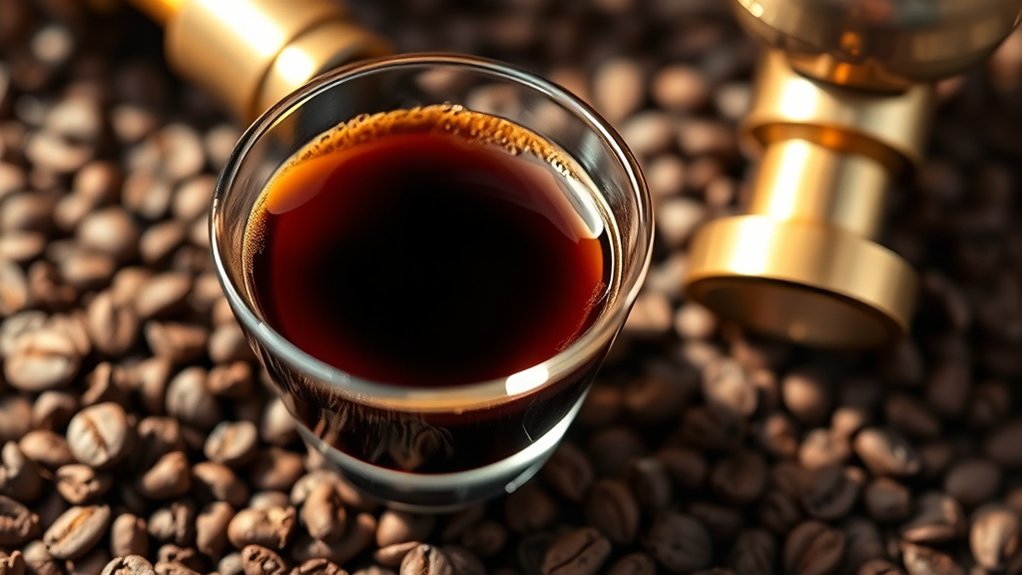
Although many factors can influence espresso’s flavor, bitterness often stems from over-extraction during brewing. This usually happens when your grind size is too fine or your shot exceeds 30 seconds. For the full picture of how this process works, see our guide on how espresso extraction works.
Bitterness in espresso often results from over-extraction due to overly fine grinds or brewing beyond 30 seconds.
When the grind is too fine, water struggles to flow evenly, which prolongs contact time and extracts bitter compounds.
Also, using water temperature above 200°F can scorch the grounds and intensify harsh flavors.
Beyond grind and water temperature, stale or dark roasted beans naturally contain more bitter oils and charred notes that affect taste.
Equipment maintenance plays a role too. Oil buildup and mineral deposits inside your machine can produce stale, off flavors.
And uneven tamping or channeling causes inconsistent extraction, letting bitter compounds seep through.
How Over-Extraction Makes Espresso Bitter
Bitterness in your espresso often points to over-extraction, where water spends too much time interacting with the coffee grounds. When your brew time goes over 30 seconds, you end up pulling out harsh, bitter compounds that give you a dry, ashy taste and a thin crema.
One common cause is using a grind size that’s too fine. This increases resistance and slows down the water flow, which means the water hangs out with the grounds longer than it should.
To prevent over-extraction, try adjusting your grind to be a bit coarser. Aim for a brew time around 25 to 30 seconds. This way, you’ll get those desirable flavors without dragging in the bitter notes.
Keep an eye on these variables, and you’ll be able to maintain a clean, balanced espresso that’s free from that unpleasant bitterness caused by over-extraction.
How Water Temperature Makes Espresso Bitter
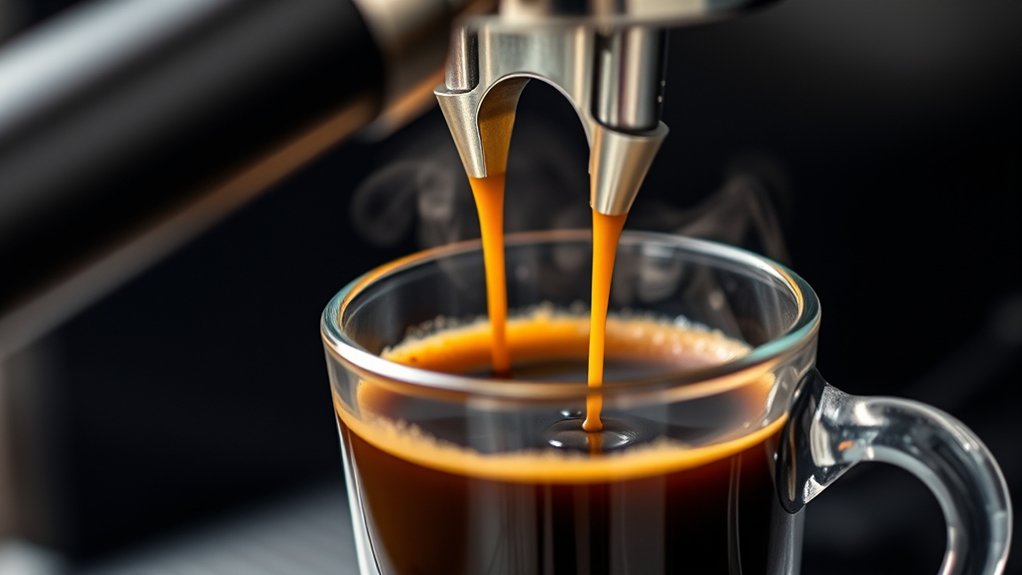
You want to keep your water temperature between 195°F and 205°F to avoid pulling out those bitter compounds from the coffee.
If the water gets hotter than 200°F, it can over-extract, which makes your espresso taste harsh and unpleasant.
So, using precise temperature controls really helps.
Also, flushing your machine before brewing is a good idea because it keeps the brew temperature just right for a balanced flavor.
Ideal Brew Temperature
When water temperature exceeds 200°F during brewing, it over-extracts the espresso, pulling out bitter compounds that ruin the flavor. To avoid this, maintain your brew temperature between 195°F and 205°F. Precision is key. Using a PID controller helps you keep the temperature steady, preventing spikes that cause over-extraction.
Flushing your machine before each shot also stabilizes the brew temperature, reducing the risk of bitterness. If you notice persistent harshness, try lowering the water temperature by 1-2 degrees to fine-tune the extraction.
Effects Of Overheating
Although maintaining the right water temperature can seem straightforward, overheating during extraction considerably impacts your espresso’s flavor profile.
When water temperature exceeds 200°F (93°C), it accelerates extraction, causing over-extraction that releases harsh, bitter compounds. This overheating not only produces a dry, ashy taste but also results in a thin crema, diminishing the espresso’s overall quality.
To prevent this, use a PID controller to maintain water temperature between 195°F and 205°F, ensuring balanced extraction. Furthermore, flushing your machine before brewing helps stabilize temperature and reduces the chance of excessively hot water contacting the coffee grounds.
Why Old or Dark Beans Make Espresso Bitter
Since espresso’s flavor hinges on bean quality and freshness, using old or dark roasted beans often leads to a bitter cup. Dark roasted beans undergo extended Maillard reactions, which increase bitter, smoky compounds. Beans older than 60 days lose freshness, turning into stale coffee that dulls flavor and raises bitterness.
The higher oil content in dark roasts can also cause buildup, which further contributes to bitter espresso. Using beans past their prime or heavily roasted just intensifies those unwanted bitter notes. This ends up overshadowing espresso’s natural sweetness.
| Factor | Cause | Effect on Espresso |
|---|---|---|
| Dark Roasted Beans | Extended Maillard reaction | Bitter, smoky flavors |
| Old Beans (>60 days) | Loss of freshness | Stale coffee, harsh taste |
| High Oil Content | Surface oils from roasting | Equipment buildup, bitterness |
| Over-Roasting | Excess bitter compound release | Overpowering bitterness |
What Equipment Problems Cause Bitter Espresso
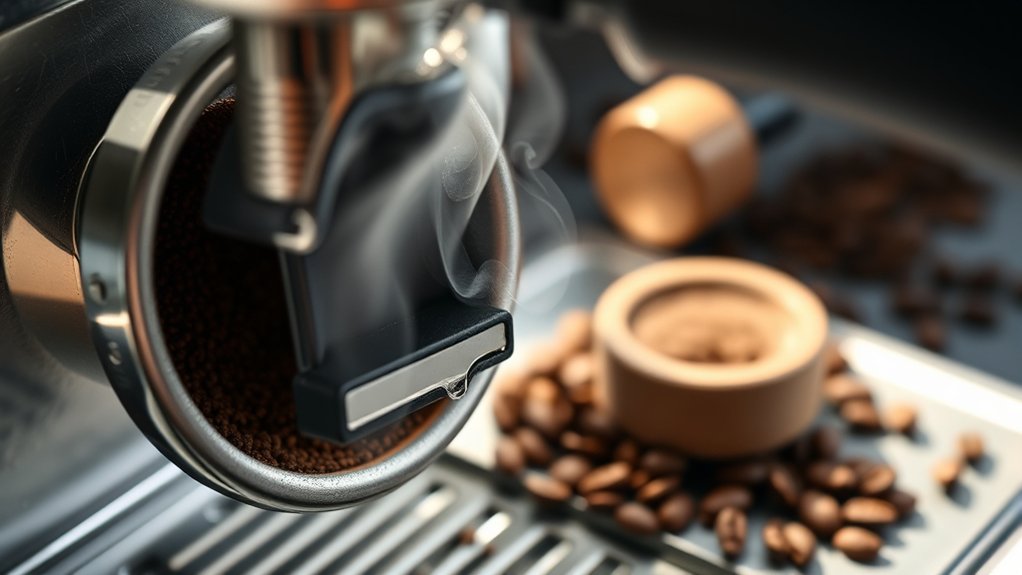
You’ll find that a dirty espresso machine and a poorly maintained grinder can quickly lead to bitter flavors. That’s because oil and mineral buildup start to affect the taste.
Dirty Machine Effects
When your espresso machine isn’t properly maintained, accumulated oils and mineral deposits can cause over-extraction and taint the flavor, resulting in a bitter shot. A dirty machine disrupts the extraction process, allowing residues to build up in critical components.
This leads to uneven water flow and intensified bitterness. To prevent this, focus on thorough cleaning routines that target all parts exposed to coffee oils and minerals. Key areas to maintain include shower screens clogged with old coffee oils, portafilters harboring residue, brew gaskets accumulating deposits, and mineral scale inside water lines causing blockages.
Regular backflushing with proper cleaning agents and routine descaling minimize mineral deposits. Keeping your equipment clean guarantees balanced extraction and preserves your espresso’s true flavor. This way, you avoid unnecessary bitterness caused by a dirty machine.
Grinder Maintenance Importance
Although many focus on machine cleanliness, maintaining your grinder plays an equally essential role in preventing bitterness in espresso. Regular grinder cleaning with products like Grindz or tablets removes oil build-up that can impart bitter flavors.
You should also brush the burrs and chute frequently to prevent debris accumulation and guarantee stable grind consistency.
Worn burrs negatively affect particle size uniformity, promoting over-extraction and bitterness, so replace them as needed.
Furthermore, descaling both the grinder and espresso machine reduces mineral deposits that alter taste.
Backflushing the espresso machine weekly with Cafiza further minimizes residue that contaminates the grind.
By prioritizing grinder maintenance, you preserve ideal grind consistency and flavor clarity, effectively reducing bitterness caused by equipment problems.
It’s definitely worth making this a regular part of your routine!
Why Regular Cleaning Prevents Bitter Espresso
Since oils and mineral deposits accumulate quickly in your espresso machine and grinder, regular cleaning is really important to keep bitterness out of your coffee. If you skip cleaning, those oils and mineral residues build up and cause stale, bitter flavors that nobody wants.
To keep your espresso tasting great, you should backflush weekly with a detergent like Cafiza. This helps get rid of leftover oils and deposits that can mess with the flavor.
Also, make sure to clean the shower screen and portafilter regularly. This prevents blockages and ensures water flows evenly when brewing.
Don’t forget to descale your equipment from time to time. Mineral build-up can throw off brewing temperature and ruin the flavor.
Sticking to a consistent cleaning schedule not only keeps your coffee tasting top-notch but also extends the life of your espresso machine. It’s a win-win!
How Grind Size and Tamping Affect Bitterness
Keeping your espresso machine clean sets the foundation for great flavor, but the grind size and tamping pressure play a major role in controlling bitterness.
A clean machine is key, but grind size and tamping pressure truly control espresso bitterness.
If your grind size is too fine, it increases resistance during extraction, causing over-extraction and a bitter taste.
Similarly, applying excessive tamping pressure above 30 pounds compacts the coffee puck too tightly. This slows water flow and promotes over-extraction.
Uneven tamping leads to channeling, where water bypasses some areas, resulting in inconsistent and bitter flavors.
To avoid these issues, adjust your grind size coarser and apply consistent, moderate tamping pressure.
Calibrating both precisely controls extraction time, preventing bitterness and ensuring a balanced, smooth espresso.
Mastering these variables is essential for improving your espresso’s flavor profile.
Adjust Brew Time and Coffee Ratio for Balance
When you adjust your brew time and coffee-to-water ratio, you gain precise control over your espresso’s balance and bitterness. Target a shot time between 20-30 seconds to avoid over-extraction, which often causes bitterness.
Maintain a coffee ratio near 1:2, for example, 18 grams of coffee yielding about 36 grams of espresso.
Fine-tuning these variables helps achieve ideal extraction and flavor. Lengthy shots indicate over-extraction; coarsen grind and reduce dose to shorten brew time.
Short shots suggest under-extraction; grind finer or increase brew time within 20-30 seconds.
Consistently monitor shot timing and coffee ratio for repeatable results. Small adjustments drive a smooth, well-balanced espresso with minimal bitterness.
Mastering brew time and coffee ratio ensures your espresso tastes balanced and satisfying.
How Bean Choice and Storage Reduce Bitterness
Fine-tuning your brew time and coffee ratio sets the foundation for a balanced espresso, but the beans you choose and how you store them play an equally important role in reducing bitterness.
Using freshly roasted beans within 60 days of roasting ensures maximum flavor and prevents bitterness caused by staleness.
Focus on bean quality by selecting beans from regions like Brazil or Sumatra, which are known for their lower acidity and milder profiles.
Proper storage is essential. Keep your beans in airtight containers, away from light and heat, to preserve freshness and flavor.
Avoid pre-ground or older beans from large chains, as they often contribute to a bitter taste.
Regularly replacing your coffee with high-quality, freshly roasted beans enhances sweetness and minimizes bitterness. This will improve your espresso experience.
Frequently Asked Questions
Can the Type of Water Used Affect Espresso Bitterness?
Yes, the type of water you use can considerably affect espresso bitterness. If your water has too many minerals, especially calcium and magnesium, it can cause over-extraction and harsh flavors.
On the other hand, water that’s too pure lacks essential minerals and can produce flat, sour espresso.
To get a balanced flavor, you want water with a total dissolved solids (TDS) level between 50-150 ppm. This helps ensure ideal extraction and keeps bitterness to a minimum.
Does Milk or Creamer Influence Espresso Bitterness?
You might think milk or creamer just masks bitterness, but they actually interact with it. When you add milk, its proteins bind to bitter compounds, softening the harshness.
Plus, natural sugars like lactose enhance sweetness, which helps balance the flavor.
That said, relying only on milk won’t fix the underlying issues causing bitterness. Use milk or creamer to improve taste, but also make sure you’re addressing extraction and bean quality.
That way, you get a truly smooth espresso experience.
How Does Espresso Bitterness Change With Altitude?
Espresso bitterness tends to increase as you brew at higher altitudes. You’ll notice faster extraction due to lower atmospheric pressure, which can over-extract bitter compounds.
To balance flavors, you need to grind finer and lower your water temperature.
These adjustments help counteract the reduced boiling point of water and altered pressure. They prevent excessive bitterness and ensure a smoother, well-balanced espresso despite the challenging conditions at altitude.
It might take a little experimenting, but it’s worth it for a great cup.
Can the Roast Date on the Package Impact Bitterness?
Of course, that roast date on your package isn’t just there for decoration. It absolutely impacts bitterness. If you’re using beans roasted over 60 days ago, you’re inviting harsh, stale flavors to crash your espresso party.
Fresh beans, ideally within 4-6 weeks of roasting, keep bitterness in check and preserve those bright, sweet notes you want.
Does the Espresso Machine Brand Affect Bitterness Levels?
Yes, your espresso machine brand can affect bitterness levels. Higher-end brands often offer precise temperature and pressure control, which helps you avoid over-extraction that causes bitterness.
In contrast, budget machines might have inconsistent heating. This can lead to hotter water and harsher flavors.
Choosing a machine with reliable brewing parameters and a quality build helps you maintain ideal extraction.
That way, you get a smoother, less bitter espresso. So, investing in a good brand really matters for flavor consistency.
Conclusion
Just like a skilled conductor balances every note, you hold the power to harmonize your espresso’s flavors. Avoid the bitterness lurking in over-extraction, scorching water, or stale beans by fine-tuning your grind, timing, and equipment care.
Remember, a well-chosen bean stored with care is your secret weapon. With mindful adjustments, your espresso can sing smooth, rich, and perfectly balanced. Every cup becomes a masterpiece worth savoring. And if your next shot swings too far the other way and tastes sharp or tangy, our guide on why espresso tastes too sour can help you dial it back.

Pingback: Siphon Coffee Brewing: A Blend of Science and Showmanship – iPourCoffee