Your espresso tastes too sour because it’s likely under-extracted. This means the water pulls sharp, acidic flavors too quickly. It often happens if your grind is too coarse, the water temperature is too low (below 93°C), or your brew time is too short.
Light roasts and fresh beans naturally have more acidity, so technique and equipment maintenance really matter. Adjusting your grind size, temperature, and tamping can help balance the flavor. You can explore how these factors interact to fix sour espresso effectively.
What Sour Espresso Tastes Like
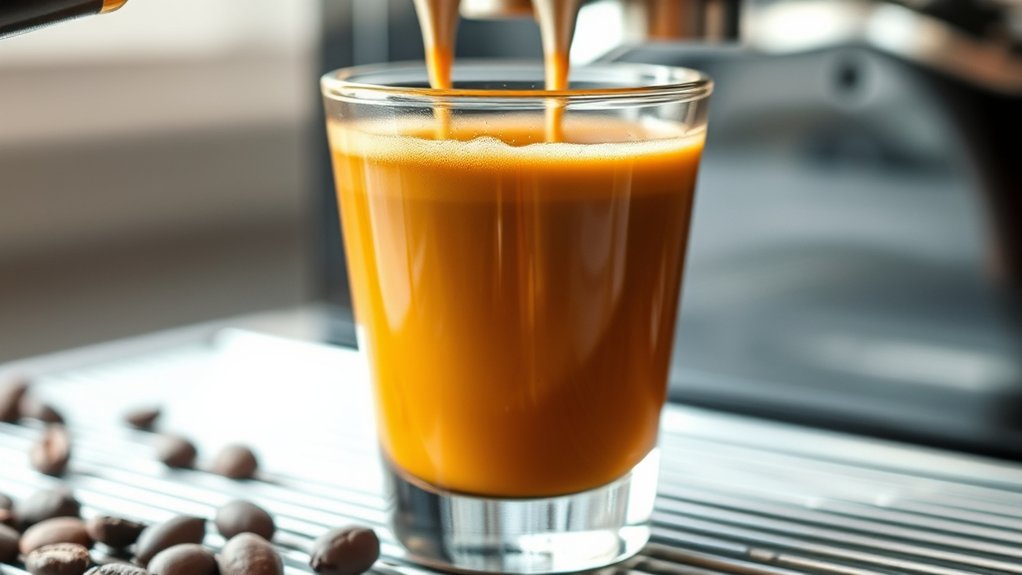
When your espresso tastes sour, it usually means the shot was under-extracted, causing bright, sharp acidity to dominate the flavor. This sourness comes from early extraction of acids, which makes the coffee taste tangy and sharp, often resembling citrus, green apple, or unripe fruit notes.
Sour espresso signals under-extraction, highlighting bright, sharp acidity with citrus and green apple notes.
You’ll notice the espresso feels thin or flat, lacking sweetness, body, and the balanced complexity that a properly extracted shot offers. If your shot instead runs thin and watery rather than sharp and tangy, see our guide on why espresso tastes watery — a closely related under-extraction symptom.
In under-extracted coffee, water moves too quickly through the grounds, pulling acids before more complex flavors develop. This incomplete extraction leaves you with a raw, unfinished taste that doesn’t satisfy the palate. To understand exactly what’s happening inside the puck, it helps to review how espresso extraction works.
Understanding these flavor characteristics helps you identify when sourness signals a problem with your espresso’s extraction process.
Common Causes of Sour Espresso
Although sour espresso primarily stems from under-extraction, several specific factors commonly cause this issue. A coarse grind size lets water flow too quickly through the coffee, shortening extraction time and leaving acids dominant.
If your water temperature is too low, below about 93°C, it won’t extract the full flavor profile, resulting in sourness.
Under-dosing coffee or uneven tamping can create channels, causing uneven water flow and further under-extraction. Getting your coffee dose right is one of the easiest ways to correct this.
Furthermore, very fresh or light roast beans are naturally harder to extract fully, so you’ll need to adjust your technique carefully.
How Grind Size Affects Sour Espresso
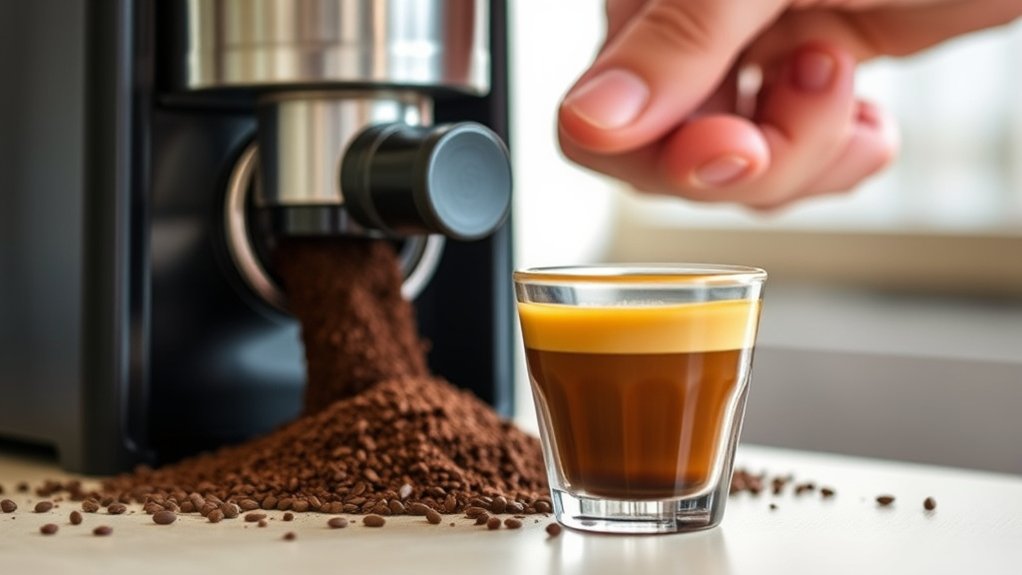
Because grind size directly influences how water interacts with coffee grounds, it plays a crucial role in preventing sour espresso. If your grind is too coarse, water flows through too quickly, causing under-extraction and leaving your shot sour.
To fix this, grind finer to increase contact time, allowing water to extract sugars and heavier compounds more effectively. This adjustment slows the shot flow, making sure acids fully develop before the shot ends.
Coarse grounds also encourage uneven water flow or channeling, which results in inconsistent extraction and makes sourness worse.
Fine-tuning your grind size is essential for balancing extraction and reducing those unwanted sour espresso flavors. By dialing in the grind finer, you’ll get a more balanced, sweeter, and fuller espresso shot every time.
How Water Temperature Influences Sour Espresso
You’ll want to keep a close eye on your water temperature because it has a big impact on how your espresso turns out.
If you brew below 93°C, you might end up under-extracting, which often brings out sourness by highlighting those acidic flavors.
So, try to keep your temperature in the sweet spot between 93°C and 96°C.
This range helps pull out the sugars and richer flavors, which can really cut down on those sour notes in your espresso.
Optimal Brewing Temperatures
When your espresso tastes too sour, one key factor to check is the water temperature during brewing. Water temperatures below 93°C tend to extract acids first, causing that sharp sourness you want to avoid.
By raising the water temperature to the ideal range of 93°C to 96°C, you’ll improve extraction of sugars and heavier compounds. This helps you achieve a balanced espresso with well-rounded flavors.
Keep in mind, temperatures above 96°C can lead to over-extraction, which introduces bitterness instead of balance.
Consistency is essential here. Calibrating your machine to maintain stable water temperature ensures reliable extraction and minimizes sour or under-extracted shots.
Temperature Effects On Extraction
Adjusting your water temperature by just a degree or two can really change how your espresso tastes. When your espresso is too sour, it usually means the water temperature is too low. This causes under-extraction of sugars and heavier compounds.
Here’s how water temperature affects extraction and sour espresso:
- Water below 93°C extracts acids early, which leads to a sour espresso.
- Increasing the temperature to 95-96°C helps balance the extraction of sugars, reducing sourness.
- Temperatures above 96°C can cause over-extraction, resulting in bitterness rather than sourness.
Keeping a consistent water temperature during extraction is key. It ensures stable flavor development and helps avoid sour espresso by preventing under-extraction of acids.
When you control the water temperature precisely, you can get a well-balanced, less sour espresso every single time.
Why Your Coffee Beans and Roast Level Matter for Sour Espresso
The coffee beans you pick and the roast level you go for really shape the acidity and flavor balance in your espresso. If you’re using light roasts or beans from high-altitude areas, they usually have more acidity, which might make your espresso taste sour if you don’t get the settings just right.
Bean Acidity Impact
How do the beans and roast level influence the sourness in your espresso? Bean acidity plays a crucial role, especially with light roasts from high-altitude regions. These beans naturally have higher acidity and can produce sour notes if not dialed in properly.
Here’s what to consider:
- Beans from high-altitude regions often carry bright, fruity notes that intensify acidity. This contributes to sourness in espresso.
- Light roasts preserve more of the bean’s natural acids. That increases the risk of sour flavors if extraction isn’t balanced.
- Coffee processed with pulped natural methods or sourced from lower elevations usually has lower acidity. This results in a smoother espresso.
Roast Level Influence
Because roast level directly affects acidity, it plays a critical role in whether your espresso tastes sour. Light roasted beans preserve more of the natural acids, which can increase the acidity of your shot and lead to sour flavors if extraction isn’t balanced.
On the other hand, darker roasts reduce acidity through extended roasting, lowering the risk of sourness but potentially muting some complex, bright notes.
When selecting your roast level, consider the bean origin and the flavor profile you want.
Choosing a roast that matches your extraction technique helps prevent sour espresso.
Understanding how roast level influences acidity empowers you to adjust your coffee beans accordingly, ensuring a more balanced and enjoyable espresso.
How Equipment and Maintenance Impact Espresso Flavor
Even the best coffee beans can produce sour espresso if your equipment isn’t properly maintained. Your espresso machine’s performance really depends on cleaning and temperature stability. Neglecting maintenance can mess up extraction, leading to off-flavors and sourness.
Proper maintenance is key—cleaning and temperature control prevent sour espresso, even with top-quality beans.
So, focus on these three critical areas:
- Regular Cleaning: Clean portafilters, baskets, and group heads to keep water flowing consistently and prevent acidic buildup.
- Temperature Stability: Limescale buildup or faulty thermostats cause fluctuations that mess with extraction and add sour notes.
- Grind Consistency: A worn burr grinder gives uneven grind sizes, which leads to under-extraction and sour flavors.
Step-by-Step Fixes for Sour Espresso
Maintaining your equipment sets the stage, but fixing sour espresso requires targeted adjustments during brewing. Start by adjusting your grind finer to slow water flow and increase extraction, which helps reduce sourness. Check your tamping to ensure even pressure and distribution. This prevents channeling and uneven extraction.
Raise the brew temperature by 1-2°C to extract more balanced flavors. You can also extend the brew time to 25-30 seconds. This allows acids to develop fully, avoiding under-extraction. Taste after each change to find the perfect balance, but make sure you don’t alter multiple variables at the same time.
| Adjustment | Purpose | Tip |
|---|---|---|
| Grind finer | Slows water flow | Use small increments |
| Even tamping | Prevents channeling | Apply consistent pressure |
| Increase temp | Enhances extraction | Adjust in 1-2°C steps |
| Extend brew time | Develops acids properly | Target 25-30 seconds |
| Taste & evaluate | Finds ideal balance | Change one variable at a time |
Understanding Acceptable Sour Notes in Espresso
While sourness in espresso often signals a problem, you should recognize that certain bright, citrusy, or fruity notes are both natural and desirable, especially in light roasts. These flavors highlight the bean’s origin and roast profile rather than indicating a flaw.
To understand acceptable sour notes, keep in mind:
- Light roast espresso often showcases lively acidity that complements sweetness and balances well with milk.
- Sourness becomes problematic when it’s a sign of under-extraction, producing thin, harsh, or unbalanced flavors.
- Beans from high-altitude regions or specific processing methods naturally emphasize sour, vibrant notes without compromising quality.
Frequently Asked Questions
Can Sour Espresso Damage My Espresso Machine?
No, sour espresso won’t damage your espresso machine. Sourness usually comes from under-extraction, low water temperature, or pressure issues. None of these directly harm your equipment.
That said, if you consistently brew poorly or neglect maintenance, mineral buildup and clogs might strain your machine over time.
So, it’s really about keeping up with proper cleaning, descaling, and using the right brewing techniques.
Focus on those, and you’ll keep your espresso tasting great and your machine running smoothly.
Does the Type of Water Affect Espresso Sourness?
Yes, the type of water you use directly affects espresso sourness. If your water is too acidic or contains high mineral content, it can emphasize sour flavors.
Using neutral or slightly alkaline water (pH 7-8) helps balance taste.
You can soften or filter your water to reduce minerals, but be careful not to strip too much, as that may dull flavor clarity.
Regularly testing and adjusting water chemistry is key. It’s all about finding the right balance to get the best espresso flavor.
How Does Humidity Impact Espresso Sourness?
Humidity can be the sneaky villain stealing your espresso’s balance. When the air’s moisture climbs, your beans absorb water, making them tough to grind evenly and prone to under-extraction, which highlights sourness.
High humidity also speeds up bean degradation, dulling sweetness and boosting acidity.
To keep your espresso tasting right, store your beans airtight and control the surrounding humidity. This helps preserve freshness and prevents those unwanted sour notes.
Can Milk Reduce Espresso Sourness?
Yes, milk can reduce espresso sourness effectively. When you add milk, its proteins bind to the acids in your espresso, softening the sharp, sour notes you might taste.
The natural sweetness and creaminess of milk also help balance acidity, making your coffee smoother and more enjoyable.
Frothing milk enhances this effect, especially in lattes or cappuccinos. So, if you want to mellow your espresso’s brightness, incorporating milk is a smart, practical choice.
It’s an easy way to make your coffee taste just the way you like it.
Is Sour Espresso Healthier Than Bitter Espresso?
Sour espresso isn’t inherently healthier than bitter espresso. When you taste sourness, it usually means the coffee’s under-extracted, missing some beneficial compounds.
Bitter espresso, on the other hand, can come from over-extraction. This might increase certain compounds but also brings unwanted bitterness. If your shot swings the other way and tastes harsh instead of sour, check out our guide on why espresso tastes too bitter.
Your best bet is to aim for balanced extraction. That way, you preserve antioxidants and flavors without leaning too sour or bitter. It makes for a more enjoyable and nutrient-rich cup.
Conclusion
It’s funny how a single tweak, like adjusting your grind size or water temperature, can transform that sour espresso into a balanced delight. You might’ve thought it was just your beans or equipment, but often, it’s a small detail you overlooked.
By understanding these factors and maintaining your gear, you’ll consistently pull shots that hit the perfect flavor. So next time your espresso tastes off, remember: the fix might be simpler than you think.

Pingback: A Guide to Coffee Bean Origins: Ethiopia, Colombia, Brazil, and Indonesia – iPourCoffee