Your espresso turns watery mainly due to under-extraction caused by fast water flow through a coarse grind or inconsistent tamping. Fix this by using a finer grind, distributing grounds evenly, and applying firm, level tamp pressure.
Also, make certain you use fresh beans and keep your machine clean. Descale regularly to avoid blockages. Increasing your coffee dose can help strengthen shots too.
Master these key adjustments, and you’ll reveal the full flavor potential from your espresso. Give them a try and enjoy a richer, bolder cup every time.
Diagnose Watery Espresso: How to Identify Under-Extraction
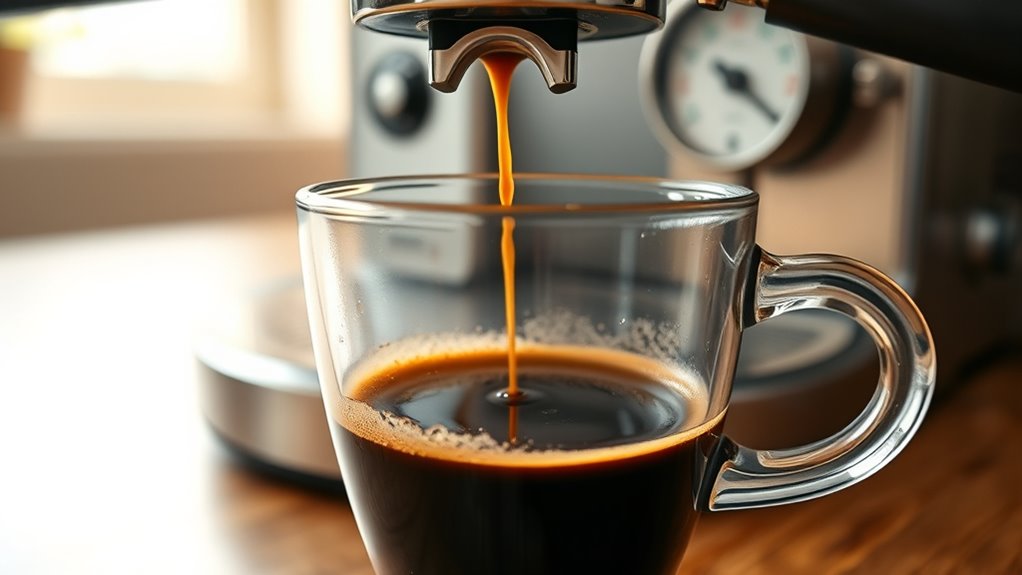
When your espresso shot flows in less than 25 seconds, it usually means under-extraction, which causes a watery result. Pay close attention to the initial flow: if the first drops come out in under 6 seconds, the extraction is probably not enough.
If your espresso flows in under 25 seconds, it’s likely under-extracted and watery.
This quick flow often happens because the grind is too coarse, which lowers resistance and limits flavor transfer.
Visually, under-extracted espresso has a thin, pale crema that’s missing the rich, golden color you want.
On the palate, it tastes weak, hollow, and sour instead of balanced and sweet. Sourness is a key sign of under-extraction, showing that the water hasn’t fully dissolved the good coffee compounds.
Adjusting the grind size and tamping pressure can help increase resistance and improve extraction by balancing flow rate and flavor development.
Adjust Your Grind Size to Fix Watery Espresso
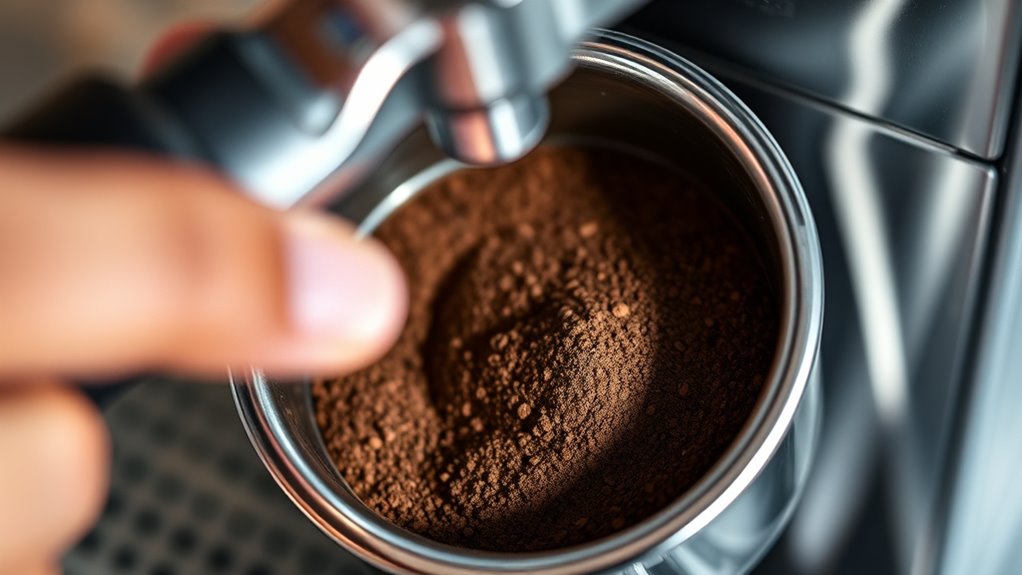
If your espresso tastes watery, a good place to start is by adjusting your grind size to boost extraction. You’ll want to avoid using a grind that’s too coarse because that lets the water flow through too quickly, making the shot weak and under-extracted.
Try making small changes—just one or two notches finer at a time. This way, you can find the right amount of resistance without risking clogging or channeling in your espresso shot.
Keep tweaking until it tastes just right! Remember that the extraction time typically ranges from 25-30 seconds and plays a key role in espresso flavor without significantly affecting calorie content.
Find Optimal Grind
Since grind size directly influences water resistance and extraction quality, adjusting it’s essential to fix watery espresso. Aim for a finer grind to increase resistance, which slows water flow and enhances extraction, producing a richer shot.
Adjust your grinder dial incrementally, about one notch at a time, to avoid over-fining, which can cause channeling or clogging.
Watch your extraction flow: a slow, steady pour signals an ideal grind, while a fast flow indicates it’s too coarse. Achieving a powder-like consistency helps guarantee balanced extraction.
Remember, different beans and roast levels require re-tuning your grind size to maintain perfect flow and flavor.
By systematically finding your ideal grind, you’ll eliminate watery espresso and improve shot quality consistently. It’s all about tweaking little by little until you get that smooth, rich shot you want.
Keep at it, and your espresso will thank you!
Also, consider that bean freshness affects grind size adjustments since fresher beans often require a finer grind for optimal extraction.
Avoid Overly Coarse
Because an overly coarse grind allows water to flow through your coffee puck too rapidly, it leads to under-extraction and a thin, watery espresso shot. A coarse grind reduces resistance within the puck, shortening contact time between water and coffee solids.
This insufficient contact prevents the full range of flavors and oils from being extracted, resulting in a weak, diluted shot.
To fix this, adjust your grinder to a finer setting. This increases puck resistance and extends extraction time, promoting richer flavor and better body.
If your shot pulls in under 25 seconds, that’s a clear sign your grind is too coarse. Maintaining a consistent, uniform particle size is essential to prevent channeling and ensure even extraction for a balanced espresso.
Adjust Gradually
Once you’ve identified that your grind is too coarse, fine-tune the setting gradually by adjusting one notch finer at a time. Each incremental change increases resistance within the coffee puck, slowing water flow and promoting better extraction. This process helps develop a richer, more balanced espresso shot.
Avoid making large adjustments. Going too fine too quickly can cause channeling or clogging, which disrupts the flow.
After each tweak, pull a shot and monitor the extraction time, aiming for approximately 25 seconds. If the shot flows too fast, keep refining the grind size slowly.
Just keep adjusting and testing until you get a slower, steady flow that produces a fuller-bodied espresso with the right strength and complexity you want.
Regularly recalibrate your grinder when switching beans or roast levels to maintain grind size consistency and achieve optimal extraction.
Increase Coffee Dose Gradually to Strengthen Shots
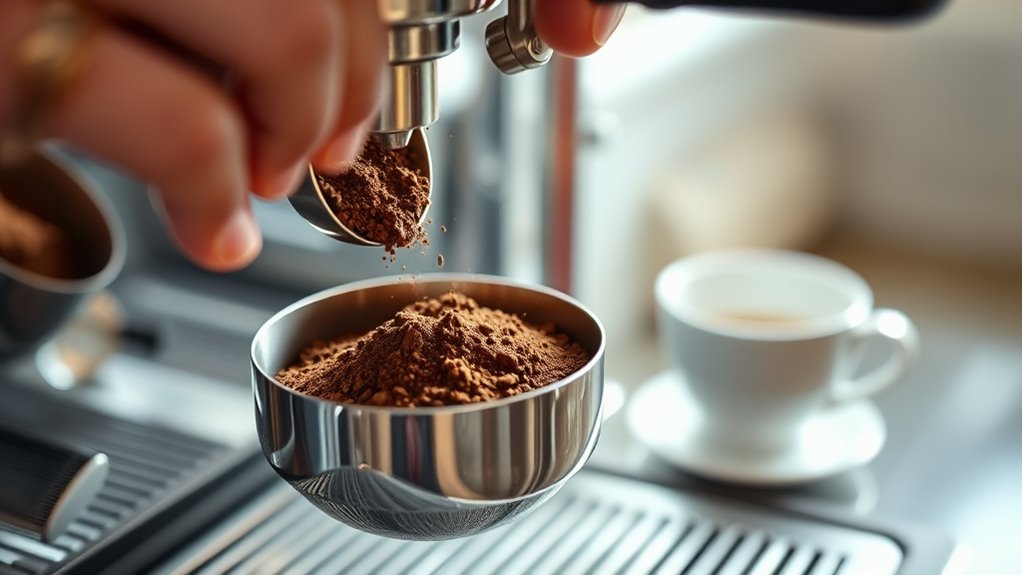
Although adjusting your espresso shot involves multiple variables, increasing the coffee dose gradually is a reliable method to strengthen your shots. By raising the dose in small increments, such as 0.50g, you boost puck resistance and extraction efficiency, producing a richer espresso.
Gradually increasing your coffee dose enhances puck resistance and extraction, resulting in a richer, stronger espresso.
Here’s how to approach it:
- Use a precise coffee scale to ensure consistent dosing and replicate results accurately.
- Increase dose slowly to avoid overloading the portafilter, which can cause clogging and disrupt water flow.
- Monitor shot time and flavor closely to identify the dose that yields a balanced, full-bodied espresso.
A thicker coffee puck reduces water channeling, promoting even extraction and intensifying shot strength. Gradual increases let you fine-tune without compromising flow or taste.
Just take it step by step. It’s all about finding that sweet spot where your espresso tastes just right without any hiccups in the process. Remember that dose adjustment affects extraction time by balancing acids, sugars, and oils for optimal flavor.
Tamp Consistently With Firm Pressure to Avoid Watery Shots
You want to make sure you’re applying firm, consistent pressure when tamping—about 30 pounds is the sweet spot. This helps create an even coffee puck density and stops any channeling from happening.
It’s important to distribute the coffee evenly first, then tamp right away. This keeps the resistance uniform, which is key for a balanced extraction.
Using a calibrated tamper can really help you nail that perfect pressure each time, so you avoid those watery, under-extracted shots.
For best results, use freshly brewed espresso immediately and avoid storing it too long to prevent flavor deterioration that can affect taste.
Ideal Tamping Pressure
When tamping espresso grounds, applying firm and consistent pressure, ideally around 30 pounds, is essential to create uniform resistance for proper extraction. Without this, water will flow unevenly, leading to watery shots.
To guarantee you hit the mark every time, use a calibrated tamper to maintain consistent 30-pound pressure. This helps promote even puck density.
Avoid tamping too lightly because reduced resistance lets water pass too quickly, causing under-extraction.
Also, apply even pressure across the puck to prevent channeling, which leads to fast water flow and weak espresso.
Proper tamping technique, including a polishing motion after compression, ensures a smooth, crack-free puck for optimal water flow.
Even Coffee Distribution
How evenly you distribute coffee grounds before tamping directly affects the extraction quality and shot consistency. To avoid watery espresso, make sure you distribute the grounds uniformly. Using a distribution tool can help prevent uneven density.
Tamp immediately after distribution with firm, level pressure, about 30 pounds, to compact the puck evenly. Consistent tamping pressure eliminates channels where water flows too quickly, causing under-extraction and watery shots.
Using a calibrated tamper helps maintain this precise force every time. This reduces the risk of cracks or gaps in the puck.
Remember, any shifting or settling between distribution and tamping leads to voids, promoting uneven water flow.
Achieving the right grind size and consistency is also crucial to prevent water from flowing too fast through the puck, which results in a weak and watery espresso shot.
Use Fresh Espresso Beans to Improve Shot Strength
Although many factors impact espresso quality, using fresh espresso beans plays a critical role in shot strength. Freshly roasted beans, ideally used within 3 to 21 days post-roast, retain essential oils and CO₂ that enhance crema, body, and overall concentration.
Stale beans lose these components and end up producing a weaker, watery shot. So, to get the most strength out of your espresso, there are a few simple steps you can follow.
First, grind your espresso beans immediately before brewing to keep those oils and that fresh flavor locked in.
Then, store your beans in an airtight, opaque container and keep them away from heat and light to prevent them from going bad.
Also, try to use beans roasted no longer than three weeks ago to maintain the best flavor and extraction quality.
Doing these little things can really make a big difference in your espresso shot. Additionally, selecting the right roast level can affect caffeine retention and overall espresso strength.
Keep Your Espresso Machine Clean to Prevent Watery Shots
Because residue and mineral buildup directly affect water flow and pressure, keeping your espresso machine clean is crucial to prevent watery shots. Regularly clean the group head, portafilter, and baskets to avoid oil and coffee residue restricting flow.
Descale your machine every 1-3 months to remove mineral deposits that block water pathways. Replace worn gaskets and screens to maintain proper pressure and seal integrity. Backflush routinely with appropriate cleaning agents to prevent clogs and guarantee ideal temperature and pressure.
| Maintenance Task | Frequency | Purpose |
|---|---|---|
| Clean group head | After every use | Remove coffee oils and residue |
| Descale machine | Every 1-3 months | Remove mineral buildup |
| Replace gaskets | As needed | Maintain pressure seal |
| Backflush | Weekly | Prevent clogs and residue |
| Clean filters/screens | Weekly | Improve water distribution |
Frequently Asked Questions
Can Water Quality Affect Espresso Taste and Strength?
Yes, water quality directly impacts espresso taste and strength. Hard or chlorinated water can disrupt extraction, causing weak or off-flavors.
Using filtered or softened water helps guarantee consistent pressure and temperature. This, in turn, enhances flavor clarity and shot strength. It’s a simple change that makes a big difference in your espresso.
How Does Water Temperature Impact Espresso Extraction?
You need to maintain water between 195°F and 205°F for ideal extraction. Too low, and you’ll end up with under-extraction and a weak flavor. On the other hand, if the temperature is too high, it leads to over-extraction, bitterness, and harshness.
This can really compromise your espresso’s balance and richness. So, keeping the right temperature is key to getting that perfect shot every time.
Is Espresso Shot Volume Important for Flavor Balance?
Oh sure, just pour any amount you want because espresso flavor doesn’t thrive on chaos.
But seriously, you need precise shot volume control to balance extraction. That ensures ideal sweetness, acidity, and body without bitterness or dilution ruining your cup.
Can Using the Wrong Espresso Machine Settings Cause Watery Shots?
Yes, using incorrect espresso machine settings like the wrong temperature, low brew pressure, or improper shot timing can cause watery shots by under-extracting flavors.
You need precise calibration and matching grind size for ideal extraction and rich espresso.
Getting these settings right makes all the difference in your shot quality.
Does the Age of the Coffee Grinder Burrs Matter?
Yes, the age of your grinder burrs matters. Worn burrs create inconsistent, coarser grinds, which leads to uneven extraction and watery espresso.
You want to replace them regularly to keep your grind precise. That way, you’ll guarantee the ideal shot strength and flavor every time.
Conclusion
If your espresso feels a bit too light, don’t worry. It’s just asking for a little more attention. By fine-tuning your grind size, adjusting your coffee dose, and applying consistent tamping pressure, you’ll coax out richer flavors.
Using fresh beans and keeping your machine spotless guarantees every shot reaches its full potential. With these subtle adjustments, you’ll transform those watery sips into a perfectly balanced, satisfying espresso experience.