Yes, espresso definitely has caffeine. A standard single shot (about 1 ounce) contains roughly 50 to 75 mg of caffeine. This makes it much more concentrated than regular drip coffee.
Double shots and larger espresso-based drinks naturally have proportionally more caffeine. Plus, factors like bean type, grind size, and brewing variables also influence the exact amount you get.
Understanding these details can help you better manage your caffeine intake. It also helps you grasp why espresso feels so strong.
Caffeine Content in a Single Shot of Espresso
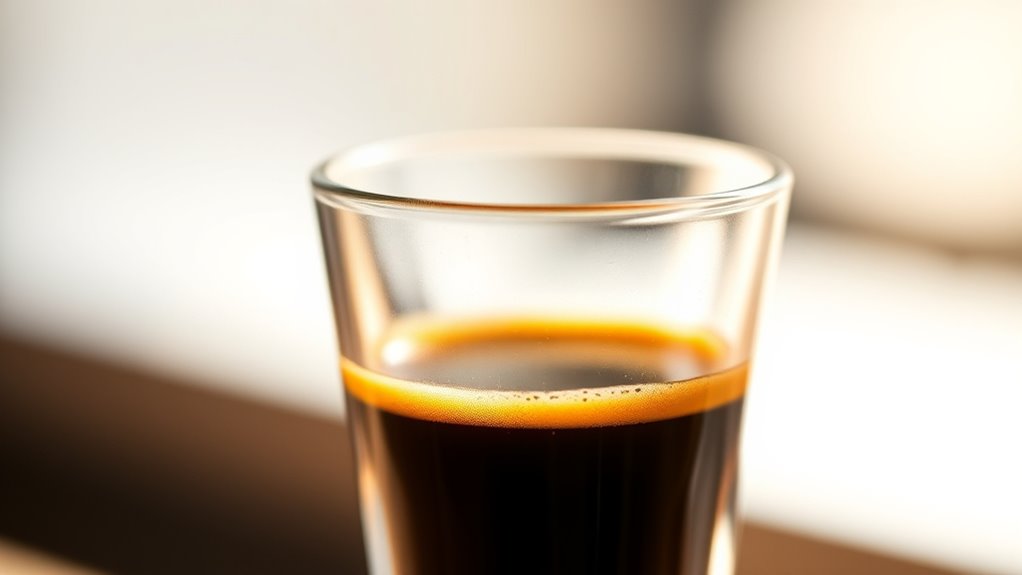
Although a single shot of espresso measures only about 1 ounce, it typically contains around 63 mg of caffeine, making it a highly concentrated source of caffeine. You should know that this amount can vary between 50 and 75 mg depending on factors like the type of coffee bean and grind size.
The typical dose of coffee grounds used is about 7 grams, which directly influences caffeine extraction.
On average, espresso delivers roughly 40 mg of caffeine per ounce, highlighting its high caffeine density compared to other coffee preparations. However, despite its concentration, a single espresso shot contains less total caffeine than an 8-ounce brewed coffee cup, which usually has more caffeine overall due to its larger volume.
The caffeine content can also be affected by extraction time, which alters how much caffeine is drawn from the coffee grounds during brewing.
Why Espresso Has More Caffeine Per Ounce Than Drip Coffee
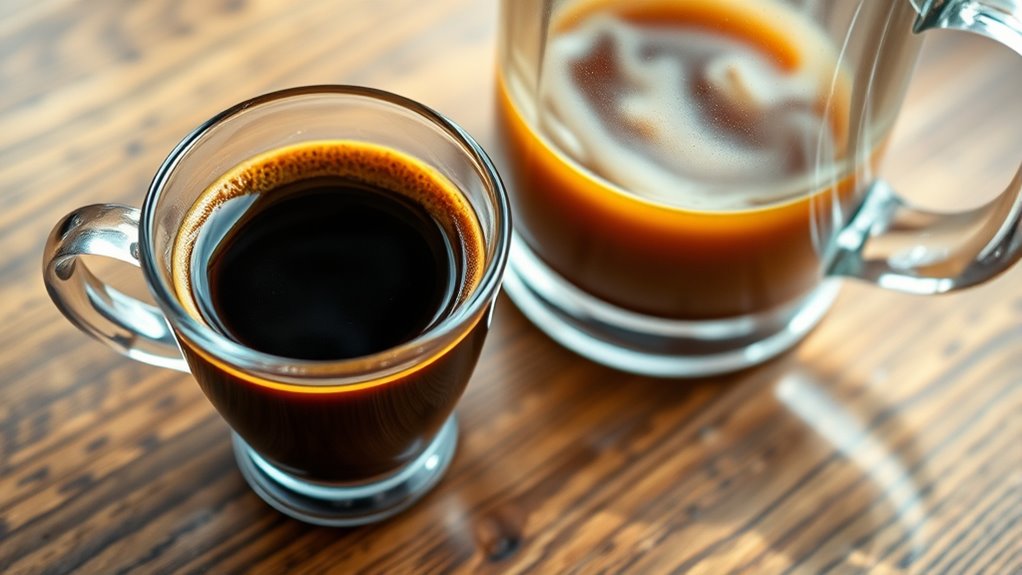
Because espresso uses hot water forced through finely ground coffee under high pressure, it extracts caffeine much more quickly and efficiently than drip coffee. This technique leads to a higher caffeine concentration per ounce despite the smaller serving size.
Espresso’s high-pressure extraction through finely ground coffee delivers caffeine faster and more efficiently than drip brewing.
Here’s why espresso packs more caffeine per ounce:
- Uses finely ground coffee for faster extraction
- Applies high pressure to extract caffeine rapidly
- Produces about 40 mg caffeine per ounce, compared to 10 mg in drip coffee
- Shorter brewing time yields concentrated caffeine, not total caffeine amount
- Grind size and brewing method impact caffeine concentration more than bean type
Understanding these factors helps you appreciate why espresso feels stronger per ounce, even if total caffeine intake may be comparable to drip coffee. It’s all about how the coffee is made, not just how much you drink. Adjusting the grind size precisely is crucial for controlling extraction time and maximizing caffeine concentration in espresso.
How Espresso Drink Size Affects Your Total Caffeine Intake
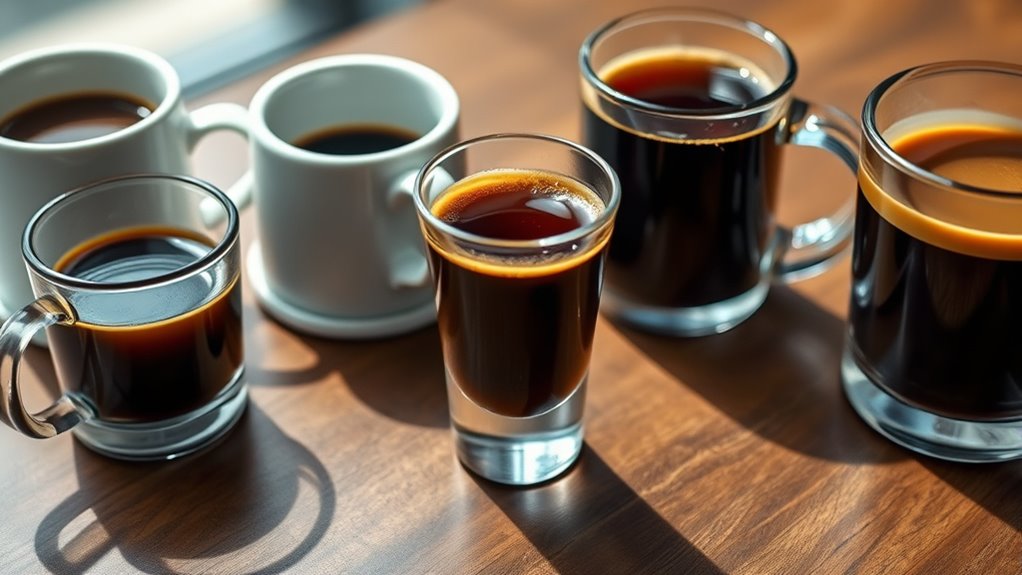
When you choose your espresso drink size, you directly influence your total caffeine intake. A standard 1 oz espresso shot contains about 63 mg of caffeine. If you go for larger servings or multiple shots, your caffeine intake increases proportionally since caffeine concentration stays near 40 mg per ounce.
For example, a double shot doubles the caffeine. Espresso-based drinks like a grande latte raise intake even more because they have added espresso volume. Below is a comparison:
| Drink Size | Volume (oz) | Approximate Caffeine (mg) |
|---|---|---|
| Single Shot | 1 | 63 |
| Double Shot | 2 | 126 |
| Small Latte | 8 | 126 (2 shots) |
| Grande Latte | 16 | 252 (4 shots) |
| Brewed Coffee (12 oz) | 12 | 120 |
The caffeine content can also vary depending on factors like bean type and roast level, which influence the final amount you consume.
Key Factors That Influence Espresso’s Caffeine Levels
Understanding the key factors that influence espresso’s caffeine levels helps you better control your caffeine intake. Several variables determine how much caffeine ends up in your espresso shot, and knowing these can help you tailor your brew to your needs.
- Amount of coffee grounds: More grounds yield higher caffeine.
- Brewing process: Pressure, temperature, and extraction time affect caffeine extraction.
- Grind size: Finer grinds increase caffeine concentration through faster extraction.
- Coffee bean type: Robusta beans contain about twice the caffeine of Arabica.
- Roast level: Light vs. dark roasts minimally impact caffeine, as denser light roasts offset darker roast ground volume.
Proper extraction time ensures optimal caffeine and flavor balance in your espresso.
Espresso vs. Other Coffee Types: A Caffeine Comparison
Although espresso packs more caffeine per ounce than brewed coffee, its smaller serving size means you usually consume less caffeine in a single shot. A standard 1 oz espresso contains about 63 mg of caffeine, whereas an 8 oz cup of brewed coffee averages around 95 mg.
This difference arises because brewed coffee’s larger volume contains more total caffeine despite lower concentration.
If you opt for a double shot espresso (2 oz), the caffeine content rises to approximately 126 mg, comparable to a 12 oz brewed coffee.
Keep in mind, larger coffee drinks like venti lattes or cold brews often exceed 200 mg of caffeine.
Espresso’s caffeine concentration is about 2.1 mg/mL, making it significantly more concentrated than drip coffee.
Why Espresso Feels Stronger When You Drink It Fast
Espresso’s concentrated caffeine content doesn’t just affect how much you consume. It also influences how quickly your body absorbs it. When you drink espresso fast, caffeine enters your bloodstream rapidly, causing a sudden spike in stimulation.
This quick intake prevents even distribution, making the effects hit your central nervous system more abruptly. So, the alertness and jitteriness you feel amplify compared to sipping slowly.
Here are some key reasons why espresso feels stronger when consumed fast:
- Rapid caffeine absorption intensifies its stimulating effects
- Concentrated espresso increases caffeine entry rate into the bloodstream
- Quick consumption disrupts even caffeine distribution
- Small, fast sips cause abrupt central nervous system impact
- Fast intake amplifies alertness and jitteriness more than slow sipping
Additionally, the presence of crema enhances the sensory experience, making the caffeine hit feel even more pronounced.
That’s why speed really changes your espresso experience.
Tips to Manage Your Caffeine Intake From Espresso
If you want to keep your caffeine intake from espresso in check, start by paying close attention to your serving sizes. The amount of caffeine can change quite a bit depending on how big your shot is and how it’s made.
It’s a good idea to notice how different amounts affect you personally, so you can avoid feeling jittery or having trouble sleeping later on.
Also, picking coffee beans that naturally have less caffeine can help you control how much you’re consuming without giving up on flavor.
Typically, three shots of espresso contain between 180 and 225 mg of caffeine, which is generally within the FDA’s recommended daily limit of 400 mg.
Monitor Serving Sizes
How much caffeine do you consume with each espresso serving? A single shot contains about 75 mg of caffeine, so monitoring your serving sizes is essential to control your total intake.
Choosing smaller servings or avoiding double shots helps prevent excessive caffeine consumption.
Keep in mind that larger drinks like venti lattes or double shots markedly increase caffeine levels.
Rapidly drinking concentrated espresso leads to faster caffeine absorption, making portion control even more important.
To stay within your desired limits, use a caffeine tracking app or keep a journal.
- Standard single shot espresso ≈ 75 mg caffeine
- Limit double shots to reduce total intake
- Larger drinks contain considerably more caffeine
- Rapid consumption increases absorption speed
- Track intake with apps or journals for precision
For those seeking lower caffeine options, decaf espresso contains significantly less caffeine per shot, typically between 3 to 15 mg.
Understand Caffeine Effects
Although caffeine stimulates your central nervous system, consuming espresso too quickly can amplify its effects, leading to jitteriness or anxiety. To manage this, drink espresso slowly, allowing your body to process caffeine more gradually. Limit the number of shots you consume daily, especially if you’re sensitive to caffeine.
Keep in mind that larger espresso-based drinks, like lattes and cappuccinos, often contain multiple shots, which increases your overall caffeine intake. Monitoring how your body responds to espresso helps you adjust consumption to maintain alertness without adverse effects.
By pacing your intake and being mindful of serving sizes, you can enjoy espresso’s stimulating benefits while minimizing potential side effects such as nervousness or restlessness. This approach supports better caffeine management tailored to your individual tolerance. Regular maintenance, such as descaling your espresso machine, ensures consistent flavor and extraction, which can also influence caffeine content per shot.
Choose Bean Varieties
When selecting espresso beans, understanding the caffeine differences between varieties can help you control your intake effectively. Robusta beans contain about twice the caffeine of Arabica, making them suitable for stronger espresso but higher caffeine levels. Arabica beans, with lower caffeine, offer a milder option.
Additionally, roast level impacts caffeine: light roasts retain more caffeine than dark roasts. By choosing bean type and roast carefully, you can tailor your caffeine consumption precisely.
- Robusta beans: higher caffeine, stronger espresso
- Arabica beans: lower caffeine, gentler effect
- Light roasts retain more caffeine than dark roasts
- Dark roasts slightly reduce caffeine content
- Single shots limit caffeine better than doubles
Proper machine maintenance, including descaling, is also vital to ensure consistent extraction and caffeine levels.
Picking beans with these factors in mind really helps you manage your espresso’s caffeine effectively.
Frequently Asked Questions
Does Espresso Caffeine Affect People Differently Based on Age?
Yes, espresso caffeine affects you differently with age. Your metabolism slows as you age, which means caffeine sticks around in your system longer. This can make you more sensitive to its effects.
Can Decaf Espresso Still Contain Caffeine?
Think of decaf espresso like a leaky faucet. It’s mostly off, but a few drops still fall. You’ll find 2 to 15 mg of caffeine per shot.
How Long Does Espresso Caffeine Stay in Your System?
Espresso caffeine typically stays in your system for 6 to 10 hours, depending on your metabolism. Its effects peak within an hour and start to fade after about 4 to 6 hours.
But even when you don’t feel it anymore, caffeine traces can still be detectable in your body for a longer time. So, it’s not just about how you feel but also what’s happening behind the scenes.
Is Espresso Caffeine Addictive Compared to Other Sources?
Wondering if espresso caffeine’s more addictive than others? Yes, because its higher concentration per ounce delivers a rapid, intense stimulant effect. This boosts your risk of dependence compared to milder sources like tea or soda.
Does Espresso Caffeine Impact Sleep Differently Than Drip Coffee?
Yes, espresso caffeine impacts your sleep differently. It’s absorbed faster because of the smaller volume, which causes quicker stimulant effects.
This rapid absorption can disrupt sleep more acutely if you drink it late. Compared to drip coffee, which has a slower onset, espresso hits you quicker. So, timing really matters when choosing your caffeine fix.
Conclusion
You might be surprised to learn that a single shot of espresso contains about 63 mg of caffeine. That’s more than twice the caffeine per ounce compared to drip coffee. So even a small amount packs a significant punch.
Knowing this helps you manage your caffeine intake more accurately, especially if you drink multiple shots or espresso-based drinks. Being aware of these details means you can enjoy your coffee without overdoing it on caffeine.
Pingback: How Many Espresso Shots In A Day – Safe Limit
Pingback: Does Cold Brew Have More Caffeine Than Espresso – Answer
Pingback: How Much Caffeine In Starbucks Espresso And Cream – Facts
Pingback: What Is A Long Shot Espresso – Explained
Pingback: Can You Eat Espresso Beans – What To Know
Pingback: What To Look For In An Espresso Machine – Buying Tips