An espresso shot is a concentrated brew made by forcing hot water at about 9 bars of pressure through 18-20 grams of finely ground coffee for 25-30 seconds. You get a rich, bold flavor with a smooth, velvety crema on top that traps aromas and balances bitterness.
This quick, high-pressure extraction really sets espresso apart from drip coffee’s longer brew time. It’s a pretty neat process when you think about it.
Keep exploring to discover how mastering this craft can elevate your coffee experience. Trust me, once you get the hang of it, your daily coffee routine will never be the same.
How Do You Make an Espresso Shot?
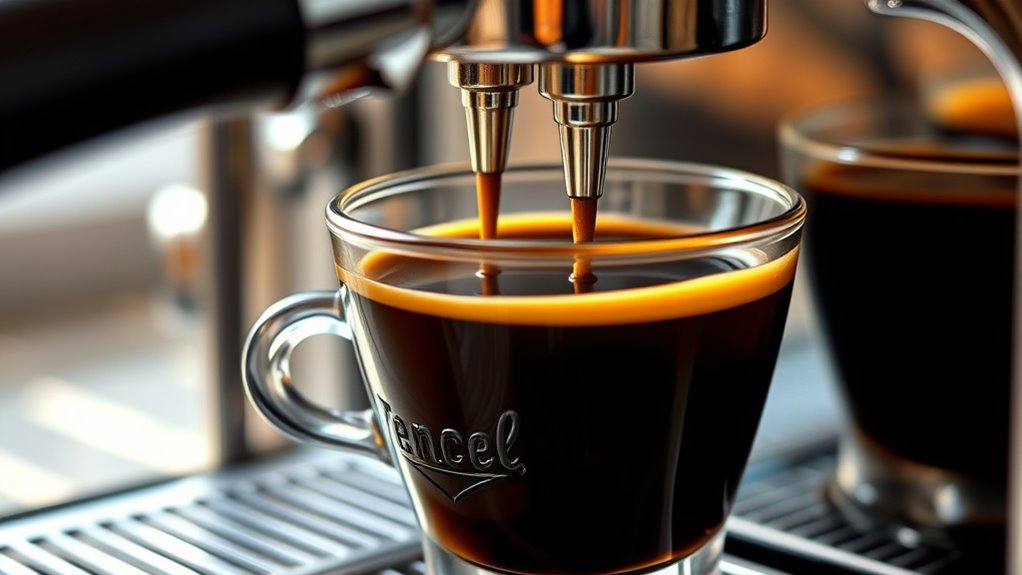
How exactly do you make an espresso shot that’s rich and balanced? Start by measuring 18-20 grams of finely ground coffee, then dose it evenly into the espresso basket.
Tamp the grounds firmly with about 30 pounds of pressure to create a uniform puck.
Next, lock the portafilter into your espresso machine and begin extraction. Make sure the machine’s water temperature is between 90-96°C (194-205°F) and the pressure is set at 9 bars.
Time the extraction carefully. It should last about 25-30 seconds.
Finally, stop when your shot yield reaches 30-40 grams for a double espresso.
This precise control over dose, tamp, temperature, pressure, and timing guarantees your espresso is consistently rich and balanced every time.
The caffeine content in a typical Starbucks espresso shot averages around 75-80 mg, influenced by factors such as blend and roast level.
Why Espresso Shots Taste Different From Drip Coffee
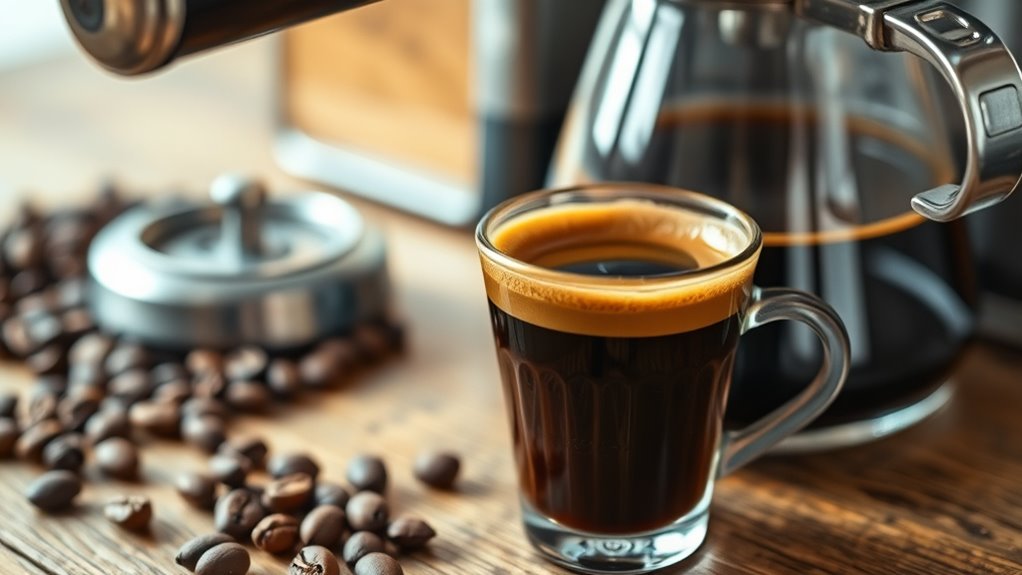
Because espresso shots are brewed under high pressure with finely ground coffee, they deliver a much richer and more concentrated flavor than drip coffee. You’ll notice this intensity partly comes from the high-pressure extraction, about 9 bars, that pulls more solids and oils from the coffee. This gives each shot a bold, full-bodied profile.
The finer grind size increases surface area, letting you extract flavors more efficiently in just 25 to 30 seconds. This short brewing time preserves delicate aromatic compounds often lost during drip coffee’s longer extraction.
Unlike drip coffee, which relies on gravity, espresso’s pressure-driven process draws out different chemical compounds. This makes the taste sharper and more complex. These factors combine, giving you a distinct experience that’s both richer and more vibrant than your typical drip brew.
Timing the extraction from pump activation, including pre-infusion, is crucial to ensure consistency and flavor balance in every shot.
How Crema Enhances Espresso Flavor and Texture
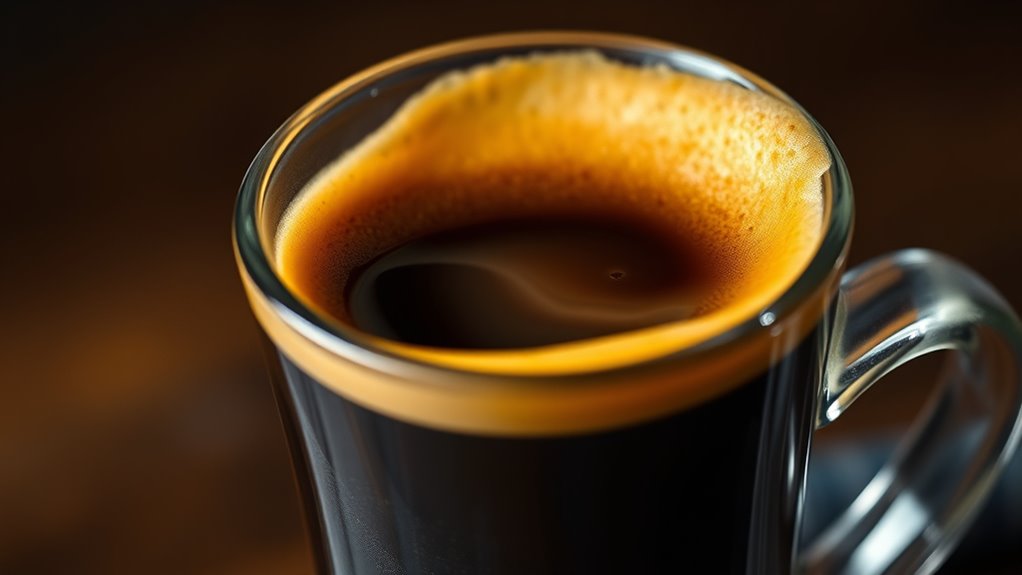
When you pull a fresh espresso shot, the rich, golden crema that forms on top isn’t just for show. It plays an essential role in shaping the coffee’s flavor and texture. This dense foam is made of emulsified oils, proteins, and air, and it traps aromatic compounds, amplifying the espresso’s complex aroma.
Crema acts as a flavor barrier, preserving those delicate scents until the first sip. It also adds a velvety texture and body thanks to the emulsified oils. These oils introduce a subtle sweetness that balances the espresso’s natural bitterness and acidity.
A thick, persistent crema signals proper extraction and freshness. It enhances your espresso experience by delivering a richer, more satisfying mouthfeel.
Plus, it gives you that nuanced flavor profile that really sets espresso apart from other brewing methods.
Additionally, used espresso grounds can be dried and ground into espresso powder, which captures the essence of brewed espresso in a concentrated form.
How Much Caffeine Is in a Single Espresso Shot?
While the crema enriches the flavor and texture of your espresso, the shot’s caffeine content plays a big part in the overall experience. A standard single shot, about 30 ml, contains roughly 60 mg of caffeine. This can range from 50 to 70 mg depending on the coffee bean type, roast level, and extraction time.
Compared to an 8 oz cup of drip coffee with approximately 95 mg, espresso delivers a more concentrated but smaller caffeine dose per serving.
If you opt for a double shot, expect around 120 mg of caffeine. That effectively doubles the amount.
Understanding these variables helps you tailor your caffeine intake precisely. Whether you’re aiming for a quick boost or savoring a rich, balanced espresso, it’s good to know what you’re getting.
Caffeine content can also vary depending on factors like bean type and extraction methods, which influence the final caffeine yield.
Espresso-Based Drinks You’ll Love
If you appreciate the bold intensity of espresso, you’ll find that it forms the heart of many beloved coffee drinks. A standard double shot, using 18–20 grams of finely ground coffee, yields 30–40 ml of rich liquid that serves as the base.
Take the cappuccino, for example. It blends this espresso with equal parts steamed milk and foam, offering a creamy, balanced experience.
The cappuccino perfectly balances bold espresso with equal parts steamed milk and foam for a creamy delight.
If you prefer something milder, a latte combines one or two shots with a larger volume of steamed milk, softening the espresso’s boldness.
For those who love espresso’s pure strength, a macchiato “stains” the shot with just a touch of milk or foam, emphasizing its intense flavor.
These drinks highlight espresso’s versatility and appeal. Using freshly ground beans just before brewing is essential to maximize aroma and crema in every shot.
How to Make Quality Espresso Shots at Home
To craft quality espresso shots at home, start with the right equipment—a reliable burr grinder and a consistent espresso machine. You really want tools that can deliver consistent results every time.
Next, focus on mastering your brewing technique. Things like grind size and tamping pressure might seem small, but they’ve a big impact on the flavor and the crema on top. It’s all about getting those details just right.
Also, keep an eye on temperature, pressure, and extraction time. When you control these precisely, you’ll unlock the full potential of your coffee beans and enjoy a delicious shot every time.
Adjusting the espresso dose carefully is essential to balance flavor extraction and prevent bitterness or under-extraction.
Essential Espresso Equipment
Achieving a quality espresso shot at home demands the right equipment that delivers both pressure and temperature stability. Your espresso machine should reach 9 bars of pressure and maintain consistent heat for ideal extraction.
You’ll also need a burr grinder. It’s vital for producing a fine, uniform grind that extracts flavor evenly and creates the crema. Fresh, high-quality beans roasted specifically for espresso make a huge difference in taste and crema quality.
Don’t overlook a reliable tamper. Applying about 30 pounds of even pressure compacts the coffee puck properly.
While timing and grind adjustments fall under brewing techniques, having precise equipment sets the foundation.
Investing in these essentials ensures you can consistently pull balanced, flavorful espresso shots right in your own kitchen. It’s all about setting yourself up for success with the right tools!
Understanding the role of the portafilter and grouphead is crucial to ensure proper water flow and pressure during extraction.
Brewing Techniques and Tips
While mastering espresso equipment lays the groundwork, dialing in your brewing technique truly releases exceptional shot quality. To make quality espresso shots at home, focus on these essentials:
- Use a fine, consistent grind, like table salt, and tamp firmly with about 30 pounds of pressure to guarantee even extraction.
- Measure your dose carefully, typically 16 to 20 grams for a double shot. Aim for a yield of 30 to 40 grams for balance.
- Maintain brewing parameters: water temperature around 90 to 96°C (194 to 205°F) and pressure near 9 bars.
- Time your shot between 25 and 30 seconds. If the shot pulls too fast or too slow, just adjust the grind size to optimize flavor and crema.
Frequently Asked Questions
What Is the Ideal Water Temperature for Brewing Espresso?
You want to brew espresso with water between 90°C and 96°C (194°F to 205°F). Staying in this range guarantees balanced extraction, rich flavor, and a smooth crema.
This helps you avoid bitterness or sourness from improper temperatures. It’s really about hitting that sweet spot to get the best taste. So, keep your water within that range for a great cup every time.
How Does Grind Size Affect Espresso Extraction?
Grind size directly controls extraction speed. Finer grounds slow water flow, which boosts flavor concentration but can also risk bitterness. On the other hand, coarser grounds speed things up, leading to a weak, under-extracted espresso.
You’ll want to find the perfect balance to get the best taste. It’s all about adjusting the grind until your espresso tastes just right. Keep experimenting, and you’ll nail it!
What Types of Coffee Beans Are Best for Espresso?
You want Arabica beans for balanced acidity and complex flavors, often blended with Robusta for extra body and crema. Choose dark roasts for richness and freshness within weeks to get the best espresso taste and aroma.
Go for freshly roasted beans to really enjoy that deep, rich espresso flavor. It’s all about timing—freshness makes a big difference. Don’t worry too much about the fancy stuff; just pick what tastes good to you!
Can Espresso Shots Be Decaffeinated Effectively?
Yes, you can decaffeinate espresso shots effectively. Modern processes remove most of the caffeine while preserving the flavor. This means you can still enjoy a rich, aromatic espresso with very little caffeine.
It’s perfect if you want the taste without the jitters. So, no need to miss out on that espresso experience just because you’re cutting back on caffeine.
What Equipment Maintenance Is Needed for Espresso Machines?
You’ve got to treat your espresso machine like royalty. Descale regularly, clean the portafilter daily, and backflush weekly. Also, swap water filters on time and replace worn parts.
If you neglect these tasks, it’ll revolt. And trust me, that means ruining your perfect shot every time! So keep up with the maintenance—it’s worth it.
Conclusion
Now that you know how to pull that rich, velvety espresso shot, imagine the warm, aromatic crema swirling atop your cup, inviting you in. Each sip delivers a bold, concentrated burst of flavor that drip coffee can’t match.
Whether you’re crafting lattes or savoring a straight shot, mastering espresso at home turns your kitchen into a cozy, café-like haven. Embrace the art, and let every cup energize and delight you.

Pingback: How Many Shots Of Espresso In A Venti – Answered
Pingback: How Many Calories In An Espresso Martini – Answered
Pingback: How To Get A Creamt Espresso – Barista Tips
Pingback: How To Make An Espresso Martini At Home – Easy Recipe
Pingback: What Espresso Machine Does Starbucks Use – Revealed
Pingback: How Many Calories In A Shot Of Espresso – Exact Count
Pingback: How Much Alcohol In Espresso Martini – Explained
Pingback: How Much Espresso Is Too Much – Safe Limit
Pingback: How Much Caffeine Is In 5 Shots Of Espresso – Answered
Pingback: Does Espresso Break A Fast – The Truth