If you want the best coffee for espresso, choose freshly roasted, high-quality beans with a medium to dark roast. This will give you a rich, full-bodied flavor and a thick crema.
Single-origin beans bring bright, nuanced notes, while blends offer balance and consistency. Blends are especially great for milk-based drinks.
Brands like La Colombe Corsica and Peet’s Major Dickason’s deliver excellent choices. Remember, grind and freshness play essential roles too.
Keep exploring to discover how to perfect your espresso experience. It’s all about finding what works best for your taste!
How to Choose the Best Coffee for Espresso
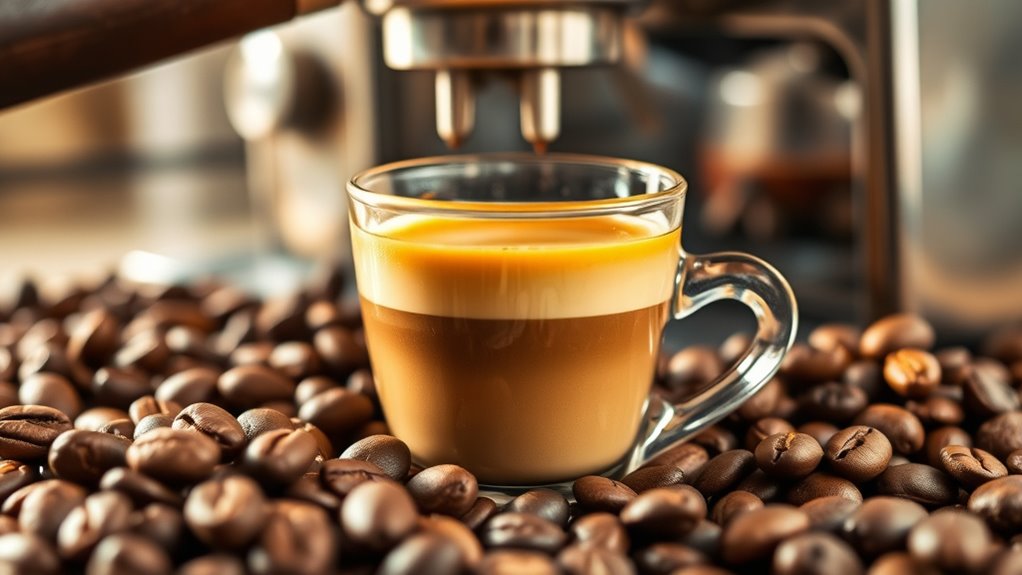
When choosing the best coffee for espresso, start by selecting a dark roast or an espresso blend. These beans are roasted longer to develop the bold, full-bodied flavor espresso demands.
You’ll want freshly ground beans just before brewing to capture maximum aroma, crema, and complex flavors.
Focus on high-quality options, either single-origin or expertly crafted blends, to achieve a balanced profile rich in desirable notes.
Consider the coffee’s origin; Brazil, Colombia, and Ethiopia produce beans with distinctive characteristics that shine in espresso.
Pay attention to flavor notes like chocolate, caramel, nuttiness, or subtle fruitiness to match your taste preference.
Choosing carefully guarantees each shot delivers the intensity and nuance that make espresso truly exceptional.
It’s all about finding that perfect balance that suits your palate and gives you the best experience every time.
Adjusting grind size and tamping can further enhance flavor extraction and ensure a well-balanced shot.
Top Whole Bean Espresso Brands
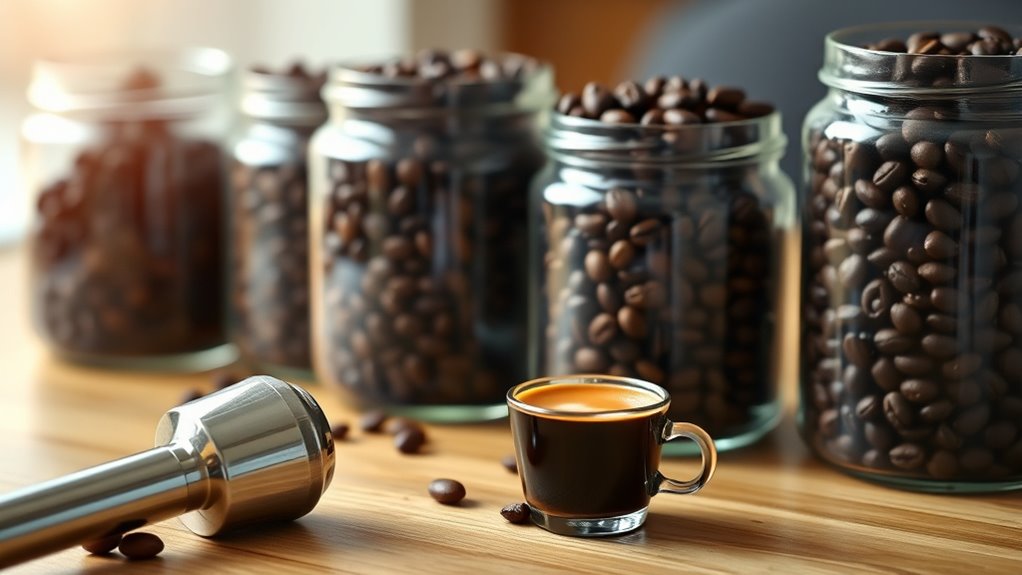
Four standout whole bean espresso brands consistently deliver rich flavor and a velvety crema that espresso lovers crave. La Colombe Corsica, Peet’s Major Dickason’s, Blue Bottle Espresso, and San Francisco Bay Espresso Roast each use fresh, high-quality beans roasted specifically for espresso brewing.
You’ll find these brands offer a range of roasts from medium to dark, allowing you to tailor your espresso to your taste. Many are highly rated with ★★★★★ reviews and readily available both online and in stores, ensuring consistent quality.
Additionally, if you seek specialty options like organic, fairtrade, or decaf, these brands provide diverse choices that don’t compromise on flavor. Choosing any of these top whole bean espresso brands guarantees a bold, satisfying cup every time.
For best results, it’s important to use the correct espresso dose to balance extraction and maximize flavor from these quality beans.
How Roast Level Affects Espresso Bean Flavor
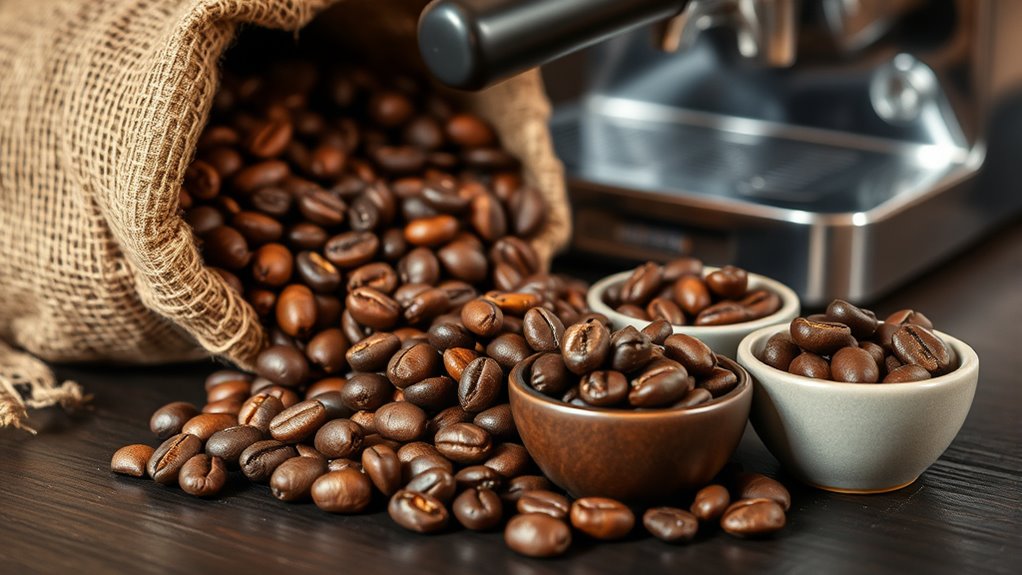
Choosing the right whole bean espresso brand is just the beginning. You also need to think about how roast level shapes the flavor profile of your espresso.
Dark roasts, with their extended roasting, reduce acidity and deliver bold, smoky flavors that many espresso lovers crave.
Light roasts preserve the bean’s original fruity and floral notes, resulting in a brighter, more acidic shot.
Medium roasts strike a balance, combining subtle bean characteristics with rich, caramelized flavors.
Beyond flavor, roast level impacts crema quality. Darker roasts produce thicker, longer-lasting crema because they’ve higher solubility.
This also leads to stronger extraction and a fuller-bodied espresso.
Understanding these nuances helps you tailor your espresso experience precisely to your taste preferences. It’s all about finding what works best for you.
Adjusting your espresso yield according to roast type can further enhance flavor clarity and balance, with lighter roasts benefiting from higher brew ratios to highlight their delicate notes.
Single Origin vs. Espresso Blends: Which to Choose
When you’re deciding between single origin and espresso blends, it’s interesting to see how the flavor profiles and roast levels really shape your shot’s character and versatility.
Single origins often bring out bright, complex notes that can make your espresso feel unique and expressive.
On the other hand, blends tend to deliver balanced, consistent flavors with a richer body.
So, if you’re after something reliable for everyday performance, blends might be the way to go.
It really comes down to whether you want that standout uniqueness or something you can count on every time.
To keep your espresso tasting its best, regular cleaning and maintenance of your machine is essential to preserve flavor quality and machine performance.
Flavor Profiles Compared
Although single origin espresso beans offer bright, complex flavors that highlight distinct regional characteristics like fruity or floral notes, espresso blends provide a balanced, consistent profile by harmonizing acidity, body, and sweetness.
When you choose single origin, you get expressive, nuanced shots that showcase terroir but might feel sharp or less smooth as straight espresso.
Blends, on the other hand, aim to mellow extremes, making them ideal for everyday use and milk-based drinks where harmony matters most.
Your choice depends on whether you crave the unique, vivid character of a single origin or the reliable, versatile nature of a blend.
Understanding these flavor profiles helps you tailor your espresso experience precisely to your taste preferences and brewing style. It’s all about what you enjoy most in your cup!
Additionally, using light roast espresso beans can bring out brighter, citrusy notes that enhance single origin characteristics.
Roast Level Impact
Since roast level profoundly shapes espresso’s character, understanding its impact on single origin beans versus blends can elevate your brewing decisions.
Single origin espresso beans are typically roasted lighter to preserve their unique flavor characteristics and vibrant acidity. This lighter roast highlights nuanced fruity or floral notes, offering a complex, bright espresso experience if brewed with care.
In contrast, espresso blends usually undergo a darker roast to boost body, crema, and boldness. This produces a rich, full-bodied shot with mellow acidity.
These dark roasts excel in traditional espresso profiles and pair beautifully with milk-based drinks like lattes.
When choosing, consider if you want the distinctive, bright flavors of a light roast single origin or the consistent, robust depth of a dark roast blend to match your espresso preferences.
It’s all about what suits your taste and brewing style best.
To achieve the best results, it’s important to grind beans to a fine, consistent texture just before brewing to preserve aroma, oils, and flavor.
Brewing Versatility
Roast levels shape not only flavor but also how a coffee performs across different espresso preparations. When choosing between single origin and espresso blends, consider what you want from your shot.
Single origin coffees offer unique, complex flavors that shine in straight espresso shots but may fall short in milk-based drinks due to their brighter acidity and less consistent crema.
Espresso blends, roasted medium to dark, prioritize balance and full-bodied flavor. They deliver reliable crema and versatility for lattes, cappuccinos, and more.
If you crave distinctive, nuanced flavors and primarily enjoy straight shots, single origins will excite your palate.
However, if you want a coffee that performs consistently across various espresso recipes with dependable texture and flavor, blends are your best bet.
Your preference ultimately guides the choice. Understanding and controlling espresso extraction ratios can further enhance how these coffees express their unique qualities.
Best Coffees for Milk-Based Espresso
What makes a coffee stand out in milk-based espresso drinks? It’s all about a full-bodied, balanced flavor that holds up well when combined with steamed milk. Darker roasts like La Colombe Corsica and Peet’s Major Dickason’s create a rich, creamy texture perfect for lattes and cappuccinos.
Coffees with nutty, chocolatey, or caramel notes, such as Crown Point Espresso and Organic Espresso, enhance sweetness and smoothness, elevating your drink’s complexity.
Even milder or more acidic beans like Kauai Dark Roast become more approachable when paired with milk, as dairy softens sharper edges.
Choosing well-balanced, full-bodied espresso beans guarantees your milk-based drinks stay flavorful and satisfying. It makes every sip a harmonious blend of richness and depth. You really can’t go wrong with the right beans here.
For best results, adjusting the brew temperature according to the roast level ensures optimal flavor extraction and balance for milk-based drinks, highlighting the importance of temperature control during espresso preparation.
Choosing Between Budget and Premium Espresso Beans
How do you decide between budget and premium espresso beans when shopping for your perfect shot? Budget beans like Hot Shot and Matriarch offer great value at about $18.45 per 2lb bag. They deliver reliable everyday espresso with simpler flavor profiles.
Premium beans, such as Organic Decaf Espresso or WBC Worlds Best Espresso, cost between $23.25 and $26.25. They provide complex notes, organic certifications, and specialty origins.
Your choice boils down to whether you prioritize flavor complexity or cost savings, depending on your preferences and budget. Keep in mind that the caffeine content can vary widely depending on the bean type and roast, which influences the intensity of your espresso.
| Aspect | Budget Beans | Premium Beans |
|---|---|---|
| Price | ~$18.45 per 2lb | $23.25 – $26.25 per 2lb |
| Flavor Complexity | Simple, straightforward | Complex, nuanced |
| Certifications | Generally none | Often organic or specialty |
| Target User | Everyday espresso drinkers | Enthusiasts and connoisseurs |
| Value Proposition | Affordable, reliable | Premium quality, unique taste |
How Freshness and Grind Impact Espresso Quality
You really can’t underestimate how freshness transforms your espresso. Grinding your beans just before brewing helps preserve those essential oils and vibrant aromas that make each shot special.
Plus, having a consistent, fine grind size ensures even extraction, which brings out the full depth of flavor in every cup.
When you get these factors right, your espresso goes from ordinary to truly extraordinary.
Keep in mind that the extraction ratio also plays a crucial role in determining the caffeine concentration and overall strength of your espresso.
Importance Of Freshness
Two factors make or break the quality of your espresso: freshness and grind. Freshly ground coffee beans release volatile aromatic compounds that dramatically enhance flavor and aroma, giving your espresso its vibrant character.
When you use pre-ground coffee stored for weeks, oxidation dulls those essential oils, resulting in a stale, flat shot. Grinding your beans just before brewing locks in preferable freshness and guarantees the ideal particle size for proper extraction and crema formation.
This freshness directly impacts extraction time and flavor balance, preventing weak or bitter notes. By prioritizing freshness, you assure a full-bodied, balanced espresso that truly expresses the coffee’s potential.
Don’t settle for anything less. Your espresso deserves to be fresh every single time.
Grind Size Consistency
Freshness alone won’t guarantee a great espresso without consistent grind size to match. When your grind size is uniform, each coffee particle extracts evenly, creating balanced flavor and a rich crema.
Grinding fresh maximizes aroma and clarity, but oxidation starts immediately, so any inconsistency in grind size can compromise your shot.
Finer grinds increase brewing resistance, meaning you need precise adjustments to avoid under- or over-extraction. Variations in grind size cause fluctuations in shot volume and strength, disrupting your espresso’s quality and consistency.
To achieve this precision, invest in a high-quality burr grinder. It delivers uniform particles essential for rich body and depth.
Mastering grind size consistency ensures your espresso is always vibrant, controlled, and true to the coffee’s potential.
Impact On Flavor
Although many factors influence espresso quality, the freshness of your beans and the precision of your grind play pivotal roles in shaping flavor. Freshly roasted beans ground just before brewing release vibrant aromas and complex flavors that pre-ground or stale coffee simply can’t match.
You need a fine, consistent grind to guarantee proper pressure and crema formation, which defines espresso’s rich texture. If your grind is uneven, you risk over-extraction, causing bitterness, or under-extraction, leading to sourness. Both will ruin the shot.
Using stale or pre-ground coffee dulls taste and weakens crema, stripping away the espresso’s character. To capture the full spectrum of your coffee’s potential, prioritize freshly ground beans and precise grind size.
Your palate will thank you for it with every sip.
Brewing Tips for the Best Espresso
When you grind your coffee beans just before brewing and aim for a fine texture like powdered sugar, you set the foundation for a rich espresso.
Next, tamp the grounds evenly with about 30 pounds of pressure to guarantee uniform water flow through the coffee puck.
Tamp your coffee grounds evenly with 30 pounds of pressure to ensure consistent water flow and perfect extraction.
Your espresso machine should be set between 195-205°F (90-96°C) with a pressure of 9 bars for ideal extraction.
Pull your shot for 25-30 seconds to balance flavors and develop that signature crema.
Always use clean, well-maintained equipment and filtered water to avoid off-flavors that can ruin your espresso.
These precise steps release the full potential of your beans, delivering a bold, smooth, and deeply satisfying espresso every time you brew.
Best Places to Buy Espresso Beans Online
Finding the best espresso beans online can really elevate your coffee experience by giving you access to a curated selection of high-quality options. Whether you prefer specialty roasters, subscription services, or large retailers, these platforms guarantee freshness, variety, and convenience.
Here’s a quick guide to top online sellers:
| Seller Type | Notable Brands | Highlights |
|---|---|---|
| Specialty Roasters | Blue Bottle, Intelligentsia | Fresh, premium quality direct |
| Subscription Boxes | Trade Coffee, Mistobox | Personalized, diverse selections |
| Major Retailers | Amazon, Starbucks, Peets | Wide variety, user reviews, deals |
With these choices, you can confidently select espresso beans that suit your taste and brewing style. This way, every cup you make is sure to impress.
Frequently Asked Questions
How Should I Store Espresso Beans to Maintain Freshness?
You should store espresso beans in an airtight, opaque container. Keep it in a cool, dark place away from heat and moisture. This helps preserve their flavor and freshness.
Grind the beans just before brewing to get the best taste. Try to use them within 2 to 4 weeks of roasting for peak freshness. That way, your espresso will always taste great.
Can Espresso Coffee Beans Be Used for Other Brewing Methods?
You can definitely use espresso beans for other brewing methods, but expect a bold, smoky symphony. Adjust the grind size and experiment with extraction. Embrace their intense flavor.
They’ll transform your cup, but they may overshadow delicate notes. So, if you’re after something lighter or more nuanced, keep that in mind. Otherwise, enjoy the rich kick they bring!
What Equipment Is Essential for Making Espresso at Home?
You’ll need a pump-driven espresso machine, a burr grinder for a consistent fine grind, and a tamper for even compression.
A scale comes in handy for precise measurements, and fresh filtered water guarantees your espresso tastes clean and rich every time.
It’s really about having the right tools to make your coffee experience enjoyable and consistent.
How Does Water Quality Affect Espresso Taste?
You’ll notice up to 30% flavor loss if your water’s too hard or chlorinated. Using balanced, filtered water guarantees rich, clean espresso. It preserves delicate notes and crema while protecting your machine from scale buildup.
Are There Health Benefits Associated With Drinking Espresso?
Yes, you’ll benefit from espresso’s antioxidants, which may reduce risks of diseases like Parkinson’s and diabetes. It also boosts your metabolism and mental alertness.
Just be careful not to overdo it, so you avoid any negative effects. Enjoying espresso in moderation is the key!
Conclusion
Choosing the best coffee for espresso isn’t rocket science, but it does take some know-how. Whether you opt for a bold blend or a nuanced single origin, remember freshness and grind are your secret weapons.
Just like a skilled clockmaker fine-tunes gears, your careful selection and brewing elevate every shot. Trust your palate, experiment with roast levels, and don’t hesitate to invest in quality beans. You’ll savor espresso that’s nothing short of perfection.

Pingback: What Color Is Espresso – Shade Guide
Pingback: How Much Caffeine Is In An Espresso Bean – Answered
Pingback: How To Make Chocolate Covered Espresso Beans – Recipe