Blonde espresso comes from lightly roasted beans, stopped before the second crack at around 355-400°F. This process preserves delicate citrus and floral flavors that often get lost in darker roasts. So, you end up with a brighter, cleaner shot that has less bitterness and a bit more caffeine per volume.
Brewing blonde espresso means you need to be precise with your grind size and temperature control. This helps keep the clarity and vibrancy of the flavors intact. If you’re curious about how roast profiles, bean selection, and brewing techniques all work together to create this unique espresso, there’s definitely more to explore.
What Is Blonde Espresso?
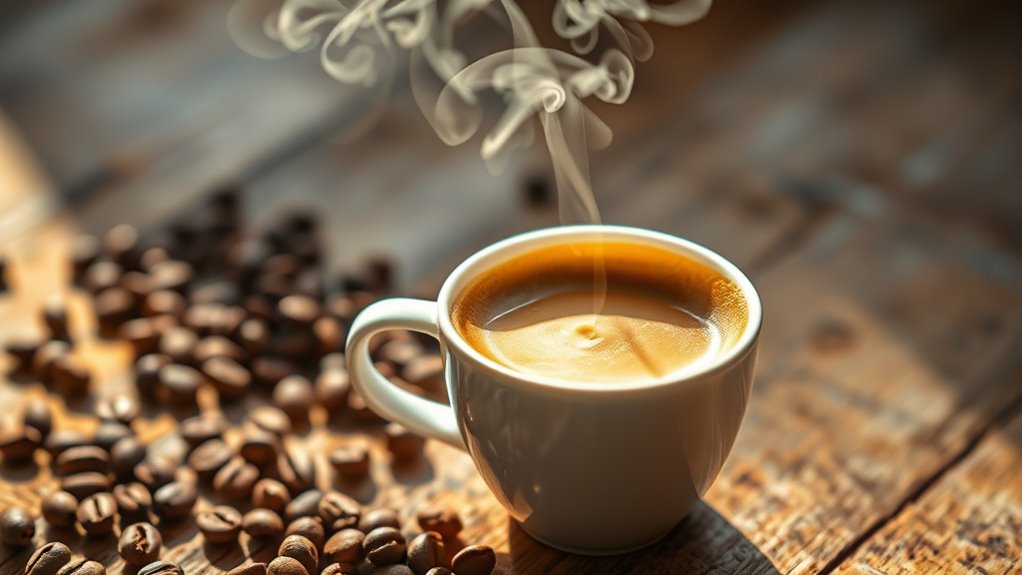
Although it shares the name “espresso,” blonde espresso comes from coffee beans roasted lightly before the first crack. This produces a lighter color and a milder, brighter flavor profile with citrus, floral, and fruity notes.
You’ll find these beans roasted for about 8-10 minutes at temperatures between 355-400°F. This shorter roast preserves more of the bean’s natural characteristics and caffeine content.
When brewing blonde espresso, you need to adjust grind size and brewing temperature to accommodate the denser, lighter beans.
Even though it’s brewed under similar pressure and extraction times as traditional espresso, these tweaks are essential to balance the delicate flavors and get the best extraction.
This process really highlights the nuanced, vibrant qualities that make blonde espresso unique.
Because lighter roasts retain slightly more caffeine by volume, blonde espresso often contains slightly higher caffeine than darker roasts brewed the same way.
Differences Between Blonde and Regular Espresso
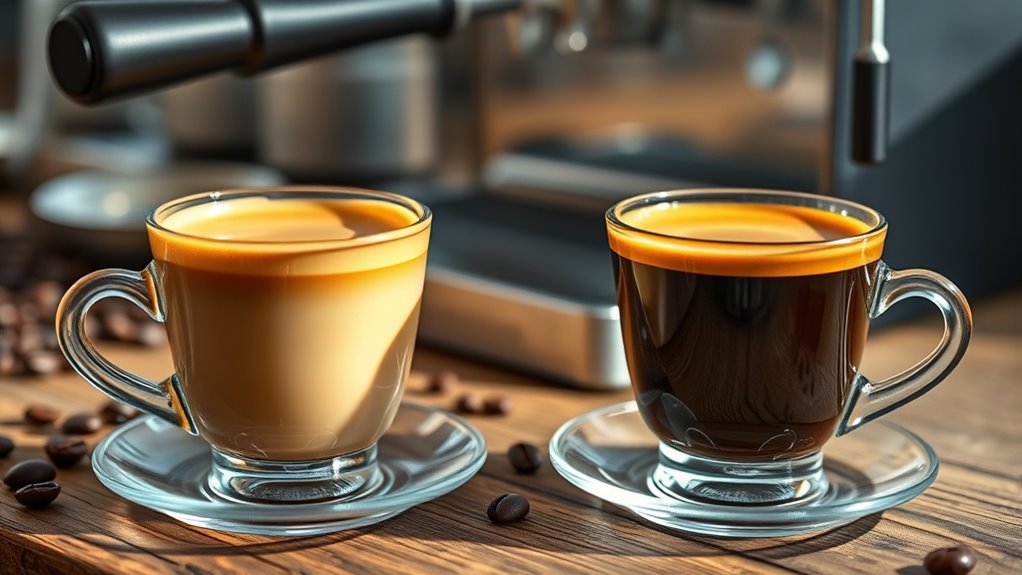
You’ll notice that blonde espresso uses lightly roasted beans, which gives it a brighter roast profile compared to the dark, oily beans you find in regular espresso. This difference really changes the flavor and acidity.
Blonde espresso tends to offer citrusy and floral notes, while regular espresso leans more toward rich, roasted tones.
On top of that, blonde espresso often contains a bit more caffeine because the lighter roast helps preserve more of the compound.
The brewing process for blonde espresso still requires precise control over extraction time and grind size to achieve the best flavor.
Roast Profile Comparison
When comparing blonde and regular espresso, the key differences lie in their roast profiles, which directly affect flavor and appearance. Blonde espresso uses lightly roasted beans, developed before the second crack at 355-400°F for 8-10 minutes, resulting in a matte, light brown bean.
In contrast, regular espresso employs medium-dark to dark roasted beans, roasted longer at 425-455°F. This produces a shiny, oily surface.
These roasting variations influence physical characteristics: blonde beans are lighter and dry-looking, while regular beans appear darker and oily due to extended roasting.
Understanding these temperature and duration distinctions helps you recognize why the roast profile shapes the espresso’s body and extraction properties. This difference sets blonde espresso apart as a lighter, more delicate option compared to the fuller-bodied regular espresso.
Additionally, the roast profile can influence the caffeine content, with lighter roasts like blonde espresso often retaining slightly more caffeine than darker roasts.
Flavor And Acidity
Because blonde espresso uses a lighter roast, it delivers a flavor profile that’s noticeably brighter and more vibrant than regular espresso. You’ll detect prominent citrus and floral notes, alongside a crisp, clean acidity that heightens clarity and brightness on your palate.
This higher acidity contrasts with the balanced acidity in regular espresso, which leans toward deeper, caramelized flavors.
Blonde espresso’s taste is delicate and nuanced, emphasizing fruity and floral aromas. Regular espresso offers bold, full-bodied richness with roasted, chocolate, and nutty undertones.
When you sip blonde espresso, you experience a lighter, more pronounced fruity brightness. Regular espresso feels smoother and richer due to its smoky, roasted character.
This distinction in flavor and acidity stems directly from their differing roast profiles. To achieve the best balance and avoid under-extraction that can cause sourness, blonde espresso requires a higher brew temperature compared to darker roasts.
Caffeine Content Differences
Beyond flavor and acidity, the caffeine content in blonde espresso differs slightly from that in regular espresso. Blonde espresso typically contains more caffeine per shot because its lighter roast preserves more caffeine molecules.
For example, Starbucks’ blonde espresso delivers about 4.7 mg of caffeine per milliliter, whereas traditional dark roast espresso has around 4.2 mg/ml.
This difference arises because lighter roasted beans are denser and retain more caffeine by weight. However, caffeine content depends more on the bean’s weight and extraction process than roast level alone.
While you’ll notice a marginal caffeine increase with blonde espresso, the difference remains minimal overall.
Understanding this helps you make an informed choice based on both taste and caffeine intensity. So, if you’re looking for a little extra kick, blonde espresso might be your go-to.
But either way, you’re getting a solid caffeine boost with both options.
Adjusting the espresso dose can further influence the caffeine concentration and overall flavor balance in your shot.
Understanding Roast Profiles in Blonde Espresso
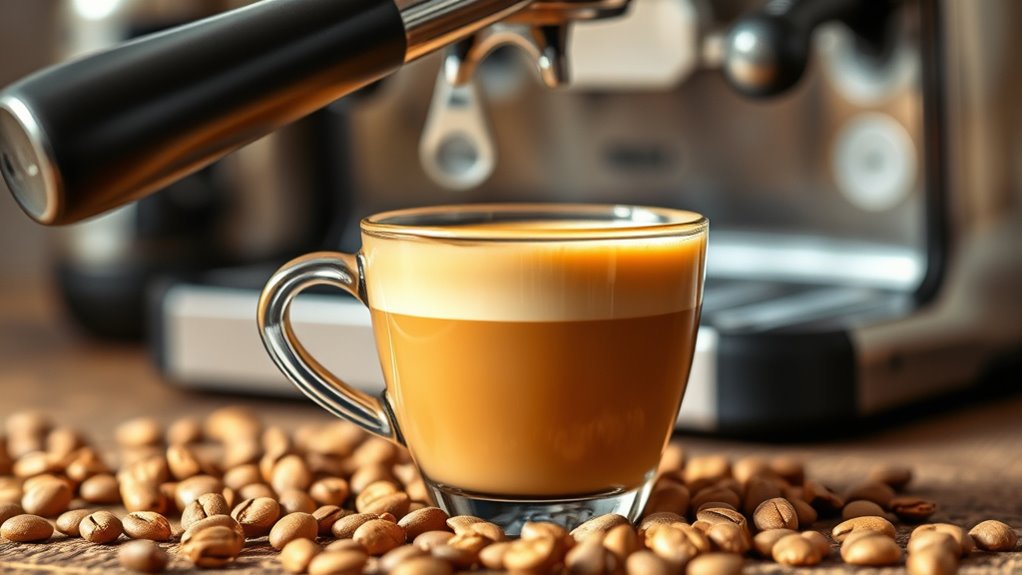
Although roast profiles vary widely, blonde espresso specifically relies on light roast beans that are roasted before the second crack, typically between 355-400°F. This shorter roasting time, usually 8-10 minutes, preserves the beans’ natural characteristics.
It really brings out bright acidity along with original fruit and floral notes from their origin.
The beans show a matte, light brown appearance and don’t have the oily sheen you see in darker roasts. Because the roast stops early, the chemical changes that happen in darker roasts like caramelization and Maillard reactions are minimized.
This results in a cleaner, crisper cup.
This precise roast profile also affects the perceived caffeine content since lighter roasts keep slightly more caffeine by weight.
Knowing these details helps you appreciate how the roast level shapes blonde espresso’s distinct technical profile. It’s pretty cool how much the roast impacts the flavor and feel of your espresso.
Additionally, adjusting the espresso extraction ratio can help balance the bright acidity and delicate flavors typical of blonde espresso.
Blonde Espresso Flavor and Aroma Notes
When you sip blonde espresso, you’ll notice bright, citrusy notes like lemon zest and sweet orange peel that highlight its lighter roast profile. These flavors create a crisp, vibrant sensation with a lemony or bergamot-like clarity that lingers on your palate.
The lighter roast preserves origin-specific nuances, allowing you to detect subtle floral hints such as jasmine and chamomile in the aroma.
Plus, you’ll encounter sweet, nutty, and buttery caramel scents that balance the coffee’s high acidity. This complex aroma profile results in a delicate, fragrant character with fresh, lively qualities.
To achieve the best flavor clarity in blonde espresso, it’s important to measure espresso yield precisely by weight, not volume, ensuring consistency and balance in each shot.
Caffeine in Blonde vs. Regular Espresso
While blonde espresso’s flavor profile highlights brightness and clarity, its caffeine content also sets it apart from regular espresso. Blonde espresso typically contains slightly more caffeine per shot because lighter roasting retains more caffeine within the beans.
For example, Starbucks’ blonde espresso delivers about 4.7 mg of caffeine per milliliter, marginally higher than their standard espresso.
However, caffeine concentration depends more on bean density and dosage than roast level alone. Dark roast beans expand during roasting, reducing density and caffeine content per volume.
Despite this, the overall difference in caffeine between blonde and regular espresso remains minimal, with blonde espresso offering just a subtle increase.
Additionally, using high-quality, freshly roasted beans ensures the best flavor and caffeine consistency in any espresso shot.
Choosing the Right Beans for Blonde Espresso
Selecting the right beans is essential for achieving the bright, nuanced flavors characteristic of blonde espresso. Choose Arabica beans sourced from high-altitude regions like Ethiopia, Costa Rica, Colombia, or Kenya. These origins provide bright, fruity, and floral notes that define blonde espresso’s profile.
Prioritize freshly roasted beans, ideally consumed within two weeks of roasting, to preserve their brightness and complexity.
Opt for a light roast profile, roasted before the second crack. This results in a matte, light brown bean rather than oily, dark ones.
Specialty roasters often label these light roasts as suitable for blonde espresso, which makes selection easier.
Focus on beans with natural citrus, floral, or fruity characteristics to enhance the espresso’s delicate, vibrant flavor. This ensures a superior foundation for brewing.
To extract the full flavor potential of blonde espresso, it is crucial to maintain an optimal extraction time tailored to the lighter roast profile.
Brewing Blonde Espresso at Home
Mastering the brewing process for blonde espresso involves precise control over grind size, water temperature, and extraction time to highlight its subtle, bright flavors.
Start by using finely ground, lightly roasted beans. Adjust your grinder to a finer setting than for darker roasts, as denser blonde beans need this for proper extraction.
Use finely ground, lightly roasted beans and set your grinder finer than for dark roasts to ensure proper extraction.
Preheat your espresso machine and portafilter thoroughly to guarantee temperature stability.
Brew at 93-95°C (200-203°F) and aim for a 20-25 second extraction, targeting a 30 ml shot volume.
To emphasize bright, citrusy, and floral notes, try experimenting with slightly higher water temperatures and shorter extraction times.
These precise adjustments will help you access the delicate flavor profile distinctive to blonde espresso.
This way, you’ll get consistent, nuanced results right at home.
Regular maintenance, including descaling your espresso machine, ensures optimal temperature and flow for the best brewing results.
Why Blonde Espresso Is Becoming Popular
You’ll notice blonde espresso stands out because it has a milder flavor and brighter acidity. This makes it perfect for people who prefer a less intense coffee.
Plus, it actually has a bit more caffeine per shot, so you get a smooth but energizing boost.
On top of that, it’s becoming more popular in trendy coffee culture, which makes it a favorite among enthusiasts looking to try something new.
Milder Flavor Appeal
Although traditional espresso is known for its bold and intense flavor, blonde espresso offers a milder, more delicate profile with bright citrus and floral notes. It’s perfect for those who want a less overpowering coffee experience.
This lighter roast really brings out the natural characteristics of the coffee bean. By reducing bitterness, it delivers a smoother cup that’s easy to enjoy.
If you’re into a nuanced and approachable coffee, blonde espresso is a great choice. Its brightness and subtlety make it an excellent base for milk or flavor additions. This way, you can enhance its gentle taste without overwhelming it.
The trend toward milder flavors is definitely driving its popularity. More and more consumers are looking for vibrant, less intense options.
That’s why specialty coffee menus around the world are featuring blonde espresso more often. It’s all about offering a refined, balanced espresso experience.
Higher Caffeine Perception
Why do many coffee drinkers believe blonde espresso packs a bigger caffeine punch? It’s mainly because lighter roasts, like blonde espresso, retain more of the bean’s original caffeine content due to less roasting time.
Also, the higher density of light roast beans means a scoop contains more caffeine by volume compared to darker roasts.
However, when measured by weight, caffeine levels in blonde and traditional espresso are nearly identical. The misconception arises from blonde espresso’s brighter, more vibrant flavor and the perceived energy boost it provides.
As a result, you might opt for blonde espresso not just for its milder taste but because you associate it with a stronger caffeine effect, even though the actual caffeine difference is minimal.
Trendy Coffee Culture
Where’s blonde espresso’s surge in popularity come from? Its lighter, brighter flavor profile appeals to those seeking a milder coffee experience without sacrificing caffeine content.
You’ll notice that major coffee chains like Starbucks have actively promoted blonde espresso, targeting younger and health-conscious consumers.
This shift aligns with the broader specialty coffee movement, emphasizing nuanced flavors over traditional boldness.
You’ll find that blonde espresso offers higher caffeine per shot, yet tastes gentler, which attracts customers wanting an energizing but less intense brew.
Additionally, its versatility in diverse specialty drinks enhances its appeal in modern coffee culture.
Frequently Asked Questions
Can Blonde Espresso Be Used in Cold Brew Recipes?
Yes, you can use blonde espresso in cold brew recipes. It enhances acidity and floral notes, creating a brighter, more nuanced flavor.
Just remember to adjust your brewing time and coffee-to-water ratio to balance its lighter body and delicate flavors. It’s all about finding the right mix that suits your taste. Give it a try and see how it changes your cold brew experience!
Is Blonde Espresso Suitable for Espresso Machines Only?
No, blonde espresso isn’t limited to espresso machines only. You can use it in drip brewers or cold brew setups.
However, it requires precise grind and temperature control to optimize extraction. This is especially important because of its lighter roast profile.
How Does Blonde Espresso Affect Milk Frothing Compared to Dark Roast?
You might think blonde espresso froths milk like dark roast, but its lighter roast and higher acidity create airier, less dense foam.
You’ll need a finer grind and higher steam pressure to get that ideal frothing texture and stability.
It’s a bit different, but once you get the hang of it, the results can be just as delicious.
Are There Any Health Benefits Unique to Blonde Espresso?
You’ll benefit from blonde espresso’s higher preserved antioxidants, which support reduced inflammation, improved digestion, and enhanced cognitive function. Its lighter roast also lessens bitterness, making it gentler on your stomach compared to darker roasts.
It’s kind of a win-win, right? You get the health perks without that harsh, bitter taste. So if you’re looking for something smooth but still packed with benefits, blonde espresso is worth a try.
Can Blonde Espresso Be Blended With Other Coffee Roasts?
Yes, you can blend blonde espresso with medium or dark roasts to customize acidity, sweetness, and boldness. Adjust grind size and brewing parameters to optimize extraction and highlight both bright and rich flavor characteristics effectively.
It’s all about finding the right balance that suits your taste. Don’t be afraid to experiment until you get the perfect cup.
Conclusion
Now that you know blonde espresso is a lighter roast with a brighter, fruitier profile and slightly higher caffeine, you can confidently choose the right beans and brewing method. Think of it as the sunrise of espresso, offering a fresh, nuanced start to your coffee experience.
Whether you want a gentler taste or a caffeine boost, mastering blonde espresso lets you enjoy a technically refined cup tailored to your preferences. It’s all about finding that perfect balance that suits your mood and style. Give it a try and see how it changes your coffee game!

Pingback: What Is White Espresso – Explained
Pingback: What's The Difference Between Blonde Espresso And Regular Espresso Facts
Pingback: How Much Caffeine In A Shot Of Blonde Espresso – Answered
Pingback: What Does Blonde Espresso Mean – Explained
Pingback: Is Blonde Espresso Strong – The Truth
Pingback: Is Blonde Espresso Sweeter – Taste Guide