To use an espresso machine, start by filling the reservoir with fresh, filtered water and heating it to the right temperature. Grind fresh beans to a fine, consistent texture and dose 18-21 grams into the portafilter. Tamp evenly with firm pressure, secure it in place, and extract your shot aiming for 25-30 seconds for balanced flavor.
Next, steam your milk to about 150°F for creamy drinks. Master these basics, and you’ll reveal the secrets to café-quality espresso at home. It’s easier than you might think once you get the hang of it!
Prepare Your Espresso Machine: Water & Heating
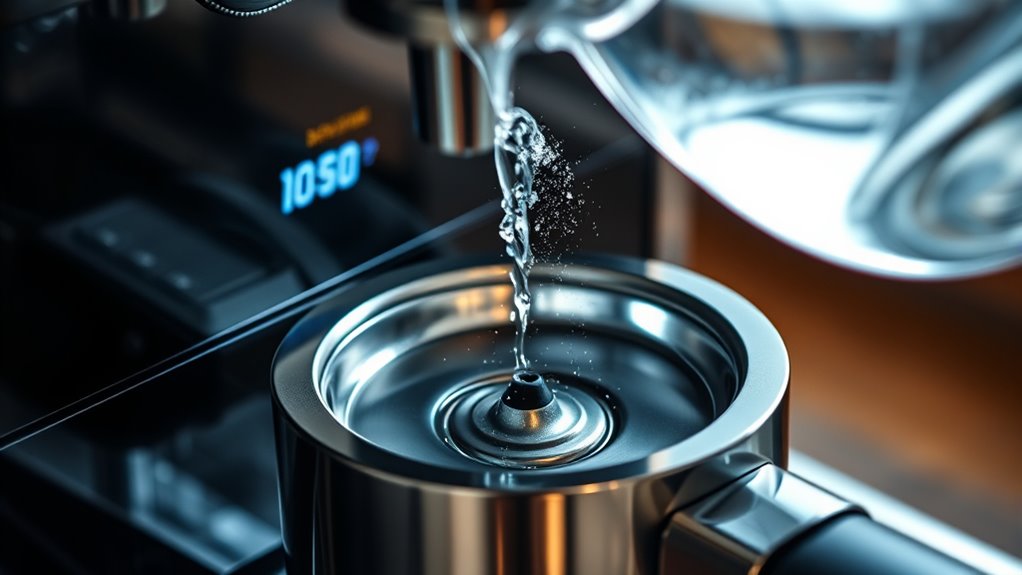
Before you start brewing, make sure you fill the water reservoir with fresh, filtered water. It’s best if the water is low in minerals to prevent scale buildup and keep the espresso tasting great.
Start with fresh, filtered water low in minerals to prevent scale and ensure great espresso flavor.
Next, turn on your espresso machine and wait until it reaches the ideal temperature, usually between 190-205°F (88-96°C). You’ll know it’s ready when the indicator shows the proper heat level.
To stabilize the temperature, run hot water through the group head and discard this initial shot. This preheating step helps ensure consistent extraction every time.
Keep an eye on the machine’s temperature dial or gauge to make sure it stays within range during use.
And don’t forget to regularly descale and clean the reservoir and internal parts. This keeps heating efficient and avoids mineral deposits that can affect performance and taste.
Maintaining the correct water temperature is crucial for balanced flavor and proper extraction.
Select and Grind Coffee Beans for Espresso
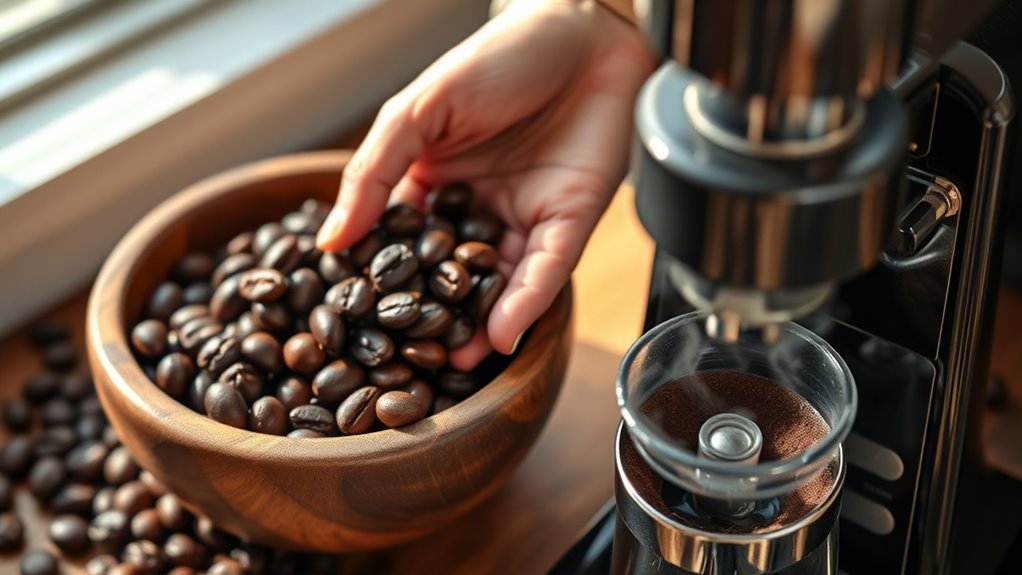
You’ll want to start with high-quality, freshly roasted beans—ideally medium to dark roast—for the best espresso flavor.
Grinding your beans to a fine, consistent texture is really important because it helps with proper extraction and prevents your espresso from tasting bitter or sour.
It’s best to grind your coffee just before brewing to keep those grounds fresh.
And when you’re measuring, aim for about 18 to 21 grams if you’re making a double shot.
Using a digital scale makes this super easy and accurate.
Adjusting your grind size within the ideal range of 200-400 microns can significantly improve extraction time and flavor balance.
Choosing Espresso Coffee Beans
Selecting the right coffee beans plays a crucial role in pulling the perfect espresso shot. For the richest flavor, choose dark roast beans like French or Italian blends. Freshness matters. Use beans roasted within the last month and store them airtight, away from heat, light, and moisture.
Grinding just before brewing preserves essential oils and aroma. This is critical for crema and flavor. Adjusting the espresso yield by controlling grind size and dose helps achieve the ideal shot strength and flavor balance.
| Aspect | Recommendation | Reason |
|---|---|---|
| Roast Level | Dark (French/Italian) | Rich, concentrated flavor |
| Freshness | Within 1 month | Maximizes aroma and freshness |
| Storage | Airtight, cool, dark | Prevents staling and flavor loss |
Grinding Coffee To Fineness
Once you have the right beans, grinding them to the perfect fineness guarantees you release their full potential in your espresso shot. Use a high-quality burr grinder to achieve a consistent, fine grind. Think powdered sugar or fine sand.
Here’s how to nail it:
- Measure 18-21 grams of coffee grounds for a double shot using a scale.
- Adjust your grinder gradually, testing shots to hit a balanced extraction time of 25-30 seconds.
- Confirm the grind size is uniform to prevent uneven extraction and channeling.
- Grind just before brewing to preserve aroma and flavor.
Mastering this step sets a solid foundation for rich, balanced espresso every time. It’s a simple trick that makes a big difference, trust me! Keep in mind that a standard double shot typically contains around 126 mg of caffeine, which you can adjust by changing the dose or shot size.
Importance Of Fresh Grounds
How fresh your coffee grounds are can make or break your espresso shot. Grinding your beans just before brewing preserves the volatile compounds responsible for espresso’s rich flavor and enticing aroma.
If you use stale or pre-ground coffee, your espresso will likely taste flat and dull, with a weak crema.
To keep your beans fresh until grinding, store them in an airtight container away from light, heat, and moisture.
Remember, the grind size for espresso should be very fine, like powdered sugar, to ensure proper pressure and extraction.
By prioritizing freshness and the correct grind size, you’ll maximize your espresso’s flavor and crema quality.
This way, you get a truly satisfying shot every time.
Adjusting your espresso dose and grind size together is essential to achieving balanced extraction and consistent flavor.
Dose and Tamp Coffee Grounds Properly
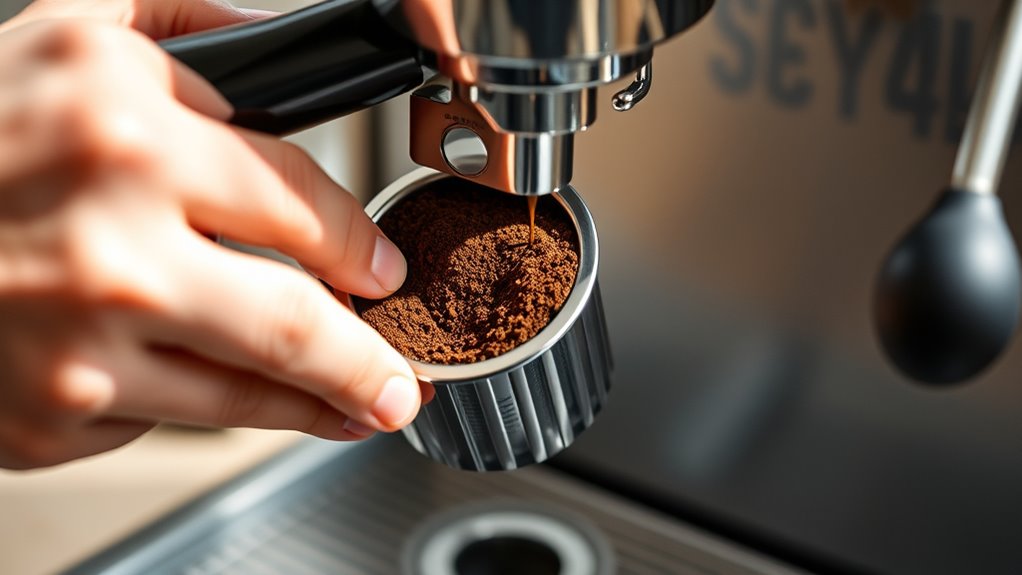
Why does dosing and tamping coffee grounds properly matter so much? Because these steps directly influence the flavor and quality of your espresso. Precise dosing and tamping ensure even extraction and prevent bitterness or sourness.
Proper dosing and tamping are key for balanced espresso, ensuring even extraction and great flavor.
Here’s how to nail it: Measure 18-21 grams of coffee grounds with a scale for consistency every time. Distribute the grounds evenly in the portafilter basket to avoid channeling.
Tamp with about 30 pounds of firm, even pressure using a flat-base tamper. Check the puck is level, smooth, and crack-free for ideal water flow.
Mastering these techniques guarantees a balanced, rich espresso shot that highlights your coffee’s best qualities. Give it a try and taste the difference! Regular maintenance, including descaling your espresso machine, also plays a crucial role in preserving extraction quality and machine performance.
Attach Portafilter and Start Espresso Extraction
Once you’ve tamped the grounds, go ahead and lock the portafilter into the grouphead. Just align it and twist until you hear that satisfying click.
It’s a good idea to give the portafilter a quick preheat shot to clear out any leftover residue before you start brewing.
Then, start the machine and keep an eye on the extraction time. You’re aiming for about 25 to 30 seconds to get that perfect shot.
Maintaining consistent extraction time is key to achieving balanced flavor and avoiding bitterness or sourness.
Securing The Portafilter
Where should you position the portafilter to guarantee a flawless espresso extraction? Align its handle with the grouphead, matching the tabs and slots precisely. Secure it firmly to avoid leaks and ensure an even flow through the coffee puck.
Follow these steps to lock the portafilter correctly:
- Insert the portafilter into the grouphead firmly until it locks in place.
- Turn the handle clockwise or press the locking button, depending on your machine.
- Confirm the portafilter is snug and level to promote uniform water distribution.
- Double-check its secure attachment to prevent spills and guarantee excellent extraction.
Proper securing of the portafilter is essential to maintain the ideal espresso extraction ratios and achieve consistent flavor.
Starting The Brew
After securing the portafilter firmly in place, you’re ready to start the brewing process. Make certain the portafilter locks horizontally and the coffee grounds are tamped evenly and firmly to prevent channeling.
Place your cup or shot glass directly under the portafilter spout to catch the espresso as it flows.
To begin extraction, press the brew button or pull the lever, allowing hot water under pressure to pass through the coffee grounds. This step forces the rich flavors and oils into your cup, creating that signature espresso crema.
Starting the brew correctly sets the foundation for a great shot, so confirm everything is aligned perfectly before pressing start.
This precision guarantees a balanced and flavorful espresso every time. Just take a moment to double-check, and you’ll be enjoying a perfect shot in no time.
Regular cleaning and descaling of your machine are essential for maintaining optimal water flow and espresso quality, so be sure to familiarize yourself with the importance of descaling.
Monitoring Extraction Time
How long should you let your espresso extract to get the perfect shot? Aim for 25-30 seconds to balance flavor and strength. Begin by securely attaching the portafilter to the grouphead, locking it firmly in place. Then, start the extraction and monitor the timer closely.
Follow these steps to master extraction time:
- Observe the espresso flow. It should start fast, then slow to a steady, caramel stream.
- Stop extraction promptly at 25-30 seconds to avoid bitterness.
- Record your extraction times to track consistency.
- Adjust grind size or tamp pressure based on your records for improvement.
Maintaining the correct extraction time helps balance the acids, sugars, and oils dissolved during brewing, shaping the espresso’s flavor and texture.
Time Your Espresso Shot for Best Flavor
Although dialing in your espresso shot can seem tricky, timing it correctly is essential to access the best flavor. Aim for a shot duration between 25 and 30 seconds to extract the ideal balance of rich crema, full body, and nuanced taste. Use a timer to monitor each shot precisely.
This consistency helps you avoid under-extraction, which causes sourness with shots around 20 seconds, and over-extraction, which brings bitterness past 30 seconds.
If your shot timing consistently falls outside this range, adjust your grind size or tamp pressure accordingly. By mastering this timing, you guarantee every espresso delivers its full potential. It turns the brewing process into a reliable, flavorful ritual.
Steam Milk for Espresso Drinks: Lattes & Cappuccinos
When steaming milk for lattes and cappuccinos, you’ll want to start by purging the steam wand to clear out any leftover water and guarantee the steam is dry.
Next, fill a stainless steel pitcher about one-third full with cold milk to allow room for expansion.
Submerge the steam wand just below the milk’s surface and turn on the steam to create a vortex, incorporating air for that creamy froth.
Move the pitcher steadily in small circles until the milk reaches around 150°F (65°C), achieving a smooth, velvety texture.
Here’s your easy guide:
- Purge steam wand to remove residual water.
- Fill pitcher one-third full with cold milk.
- Create a vortex just below milk’s surface.
- Heat milk to 150°F, maintaining texture.
Master this and your espresso drinks will taste café-quality every time.
Clean and Maintain Your Espresso Machine
Steaming milk perfectly is only part of creating great espresso drinks. Keeping your machine clean and well-maintained guarantees consistent quality and longevity. Regularly rinse the portafilter, basket, and group head with warm water and a brush to prevent coffee buildup and ensure maximum extraction.
Perfect espresso starts with steaming milk and maintaining a clean, well-cared-for machine for consistent quality.
Backflush your machine weekly using a detergent made for espresso machines. This helps remove oils and residues from internal parts.
After each use, purge and wipe the steam wand to stop milk residue from clogging it and maintain steam performance.
Periodically descale your machine, especially if brewing slows or pressure drops. This clears mineral deposits from the boiler and water pathways.
Finally, replace water filters as the manufacturer suggests to preserve water quality and avoid scale buildup that can harm taste and machine durability.
Troubleshoot Common Espresso Machine Issues
If your espresso shots aren’t hitting the mark, pinpointing the issue quickly can save both time and beans. Common problems often have simple fixes.
Shot extracts too fast (under 20 seconds)? Adjust to a finer grind to increase resistance. Sour taste? It’s likely under-extraction. Try increasing extraction time or fine-tuning your grind size.
Low pressure (below 9 bars)? Inspect for clogs or scale buildup in the pump and group head.
Steam wand leaks or spills? Clean or replace the gasket to ensure a proper seal.
Regular descaling prevents inconsistent temperature and shot quality by removing mineral buildup.
Frequently Asked Questions
What Type of Coffee Beans Are Best for Espresso?
You’ll want dark roast beans like French or espresso blends for bold flavor and rich crema. Fresh, medium-dark roasts balance sweetness and acidity perfectly. Choose beans labeled for espresso to guarantee a fine grind and intense taste.
These types help bring out the best in your shot. Plus, using the right beans makes a noticeable difference in flavor and texture. So, it’s worth picking the ones made specifically for espresso.
Can I Use Tap Water Instead of Filtered Water?
You can use tap water, but it may cause mineral buildup. This can reduce your espresso machine’s lifespan and affect the flavor of your coffee.
Using filtered water keeps your machine cleaner and guarantees better taste. It also lowers how often you need to do maintenance.
How Often Should I Descale My Espresso Machine?
Wondering how often you should descale your espresso machine? You’ll want to do it every 1 to 3 months, or more often if you use hard water. This helps keep your coffee tasting great and your machine running smoothly.
It’s a simple step that makes a big difference. Trust me, your espresso machine will thank you!
What Grind Size Is Ideal for Espresso?
You want a very fine grind, like powdered sugar or table salt. This guarantees balanced extraction. Too coarse makes your espresso sour and weak, too fine turns it bitter.
Adjust slightly to perfect your shot’s flavor and timing. It’s all about finding that sweet spot that works for your taste and machine. Keep experimenting until you nail it!
Can I Make Espresso Without a Grinder?
You can make espresso without a grinder by using pre-ground coffee, but it’s less consistent. Store it airtight and pick a fine grind.
For better flavor and control, consider investing in a burr grinder. It really makes a difference if you want that perfect shot every time.
Plus, grinding fresh coffee just smells amazing! So, if you can, try to get a grinder. It’s worth it.
Conclusion
Now that you know how to use your espresso machine, you’re ready to craft barista-quality coffee at home. Did you know that nearly 54% of espresso drinkers say a perfect shot improves their mood instantly? With the right grind, tamp, and timing, you’ll reveal rich flavors every time.
Keep practicing and maintain your machine. Enjoy the rewarding ritual of espresso-making. It’s a small daily luxury that makes a big difference.

Pingback: How Much Caffeine In Decaf Espresso – Exact Amount
Pingback: Where To Find Espresso Machine Arc Raiders – Location