To make espresso at home, start with freshly roasted beans ground finely using a conical burr grinder for consistency. Measure about 18 grams, distribute evenly, and tamp with 30 pounds of pressure. Use an espresso machine set to 92–96°C water temperature, extract over 25–30 seconds for a balanced shot with rich crema.
If you don’t have a machine, try an AeroPress or moka pot with precise grind and timing. Master milk frothing techniques to finish your drink perfectly. Keep experimenting and you’ll get the hang of it in no time.
Explore more to refine your skills further. It’s all about practice and finding what works best for your taste. Enjoy the process!
What You Need to Make Espresso at Home
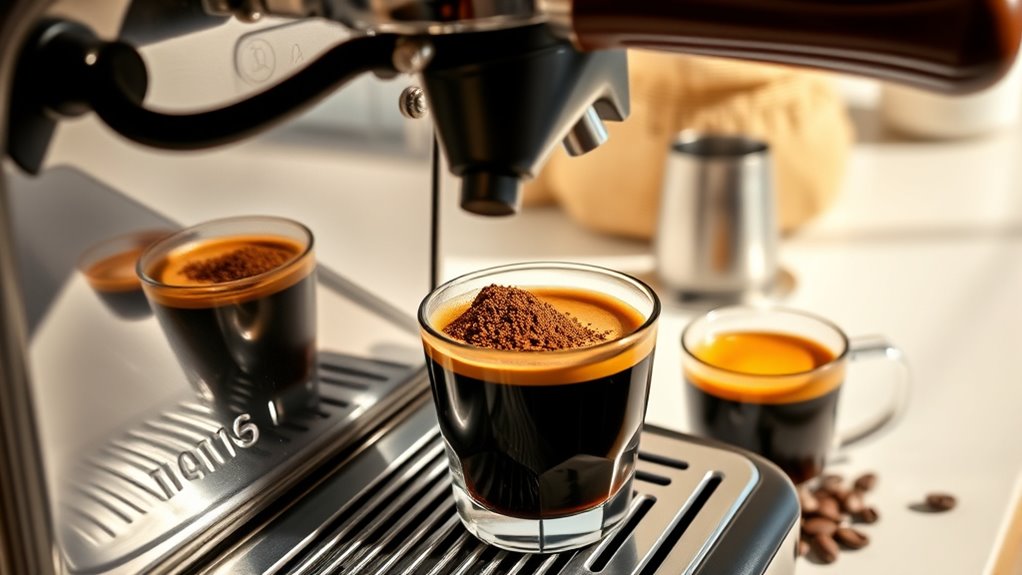
Although there are several methods to brew espresso at home, you’ll need specific equipment and ingredients to get authentic results. Start with an espresso machine for precise extraction, or try alternatives like moka pots, AeroPress, French presses, or portable devices.
A high-quality burr grinder is essential to get the fine, uniform grind that’s critical for espresso’s rich crema and balanced flavor. Use freshly roasted coffee beans, ideally within 2 to 4 weeks after roasting, to keep those aromatic oils and volatile compounds intact.
Accurate dosing means using a precision scale that measures in grams, and it’s a good idea to have a timer to carefully monitor the extraction time.
Finally, use hot, filtered water heated to about 200°F (93°C) to optimize solubility and extraction. This way, you’ll get a full-bodied, well-balanced espresso shot every time.
Adjusting the grind size precisely is key to balancing extraction time, flavor clarity, and crema quality for the best espresso experience.
Grinding and Measuring Coffee for Espresso
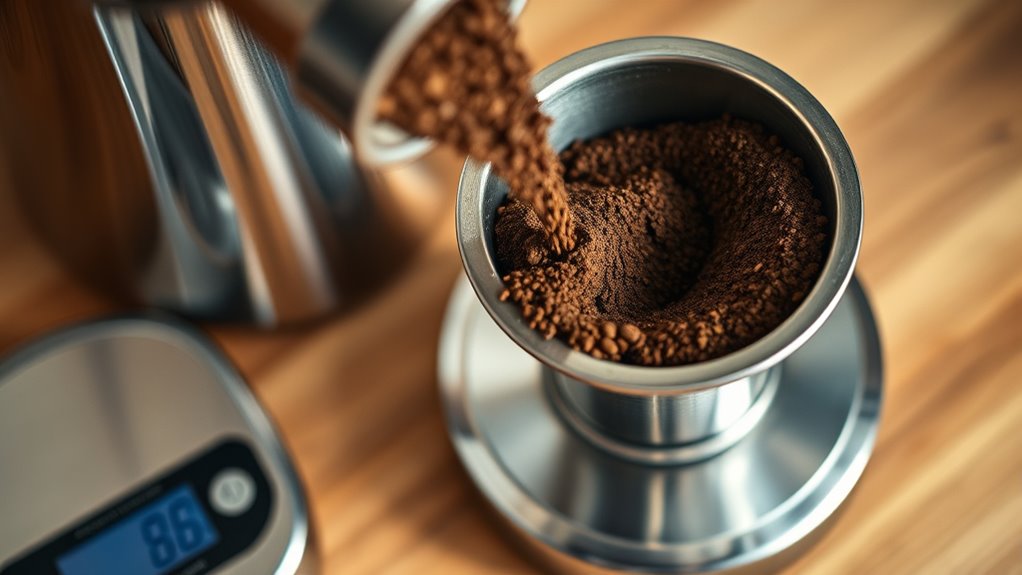
When preparing espresso, you’ll want to grind your coffee beans immediately before brewing. This helps preserve the volatile aromatic compounds and CO2 that are critical for flavor and crema development.
Using a conical burr grinder is best because it gives you a consistent, fine grind size. Think of it as similar to salt or powdered sugar, which is crucial for ideal extraction.
A conical burr grinder ensures a consistent fine grind, like salt or powdered sugar, essential for perfect extraction.
Measure your grounds precisely with a digital scale. Aim for about 18 grams for a double shot to make sure your dosing is accurate.
Once you’ve ground the coffee, evenly distribute it in the portafilter. You can use a Weiss Distribution Device or simply tap and level it gently.
Finally, tamp the grounds with steady pressure—around 30 pounds of force works well. This creates a flat, uniform bed that helps water flow evenly.
Consistent water flow means a better extraction and, ultimately, a tastier espresso.
Also, timing your shot to fall within the optimal extraction time of 25 to 30 seconds is essential for balanced flavor and crema development.
Brewing Espresso and Perfecting Extraction

Mastering espresso extraction demands precise control over water temperature, pressure, grind consistency, and shot timing to reveal the coffee’s full flavor profile and achieve a rich crema.
Start with a fine, evenly ground coffee and tamp it with consistent pressure to create a uniform puck.
Aim for a shot duration of 25-30 seconds at approximately 9 bars of pressure and water temperature around 92-96°C.
Watch the espresso as it flows. Steady, syrupy streams signal proper extraction, while pale or watery drips indicate under-extraction.
Over-extraction produces bitterness. Under-extraction yields sourness or weak flavors.
Adjust grind size and tamping pressure accordingly to dial in your shot.
Master these variables to consistently extract balanced, flavorful espresso with a thick, golden crema.
It might take some practice, but once you get it right, every shot will taste amazing.
Also, fine-tuning your espresso dose helps balance extraction time and flavor, ensuring consistent quality in every shot.
Brewing Espresso Without a Machine
How can you achieve a rich, espresso-like shot without investing in an espresso machine? Start with a moka pot. Fill its bottom chamber with water just below the safety valve, add finely ground coffee into the filter basket without tamping, then assemble and heat on medium. Steam pressure will force water through the grounds, producing a concentrated brew in the upper chamber.
Alternatively, use an AeroPress with fine grounds. Steep briefly, and apply firm, steady pressure with the plunger to extract a dense shot resembling espresso.
While a French press can yield strong coffee, its lack of pressure means no crema and a less intense flavor. Adjust grind size finely and monitor brewing time closely to optimize extraction and replicate espresso’s signature richness without specialized machinery.
Keep in mind that factors like grind size and extraction time are crucial to maximizing flavor and caffeine content in your homemade espresso alternatives.
Frothing Milk and Creating Latte Art
Although frothing milk may seem straightforward, achieving microfoam with the ideal velvety texture requires precise control of steam wand airflow and jug positioning. Start by filling your stainless steel milk jug halfway, then submerge the steam wand just below the surface to introduce controlled airflow.
Creating velvety microfoam demands careful steam wand control and perfect jug positioning for flawless frothing.
Create a vortex by swirling the milk gently, breaking down large bubbles into glossy, silky microfoam. Heat the milk to 140–150°F to preserve texture and flavor.
Focus on these key techniques:
- Maintain gentle jug tilting to sustain the vortex and foam consistency
- Use a thermometer to avoid overheating and scalding
- Employ smooth, controlled pouring for intricate latte art designs
- Select the right-sized pitcher for better steam distribution and precision
Mastering these steps ensures professional-quality froth and stunning latte art at home. It’s easier than you think once you get the hang of it! Regularly cleaning and purging the steam wand after each use is essential to prevent milk residue buildup and ensure consistent frothing performance.
Must-Have Home Espresso Tools and Resources
To craft consistent, high-quality espresso shots, you’ll want some precise tools. A burr grinder is key because it ensures uniform particle size, which really makes a difference. Along with that, a digital scale helps you measure doses accurately every single time.
When it comes to the espresso machine itself, look for one with stable temperature control. This, paired with a commercial-grade portafilter, makes a big impact on the shot quality.
Don’t forget a calibrated tamper and a distribution tool—they help guarantee ideal extraction.
It’s also a good idea to supplement your setup with reputable learning resources and community forums. They’re great for refining your technique and troubleshooting any issues that come up along the way.
Using a digital scale to measure espresso yield by weight ensures consistent brew ratios and flavor profiles.
Essential Espresso Equipment
When crafting espresso at home, you’ll need a set of precise tools that guarantee consistency and quality in every shot. Start with a high-quality burr grinder to achieve the fine, uniform particle size essential for ideal extraction.
Your espresso machine should maintain stable temperature and pressure, typically around 9 bars, to produce authentic crema and flavor.
Use digital scales with integrated timers to measure your coffee dose accurately and time your shot precisely.
A tamper with a flat, level base ensures even compression of grounds in the portafilter, preventing channeling.
- Burr grinder for consistent fine grind
- Espresso machine with stable 9-bar pressure
- Digital scale with shot timer
- Flat-base tamper for uniform tamping
Measuring both coffee grounds and espresso yield with a digital scale is crucial to maintain the ideal espresso extraction ratio and achieve consistent flavor.
Learning Resources & Support
Since mastering espresso involves more than just owning the right equipment, you’ll want to tap into specialized learning resources and communities to refine your skills. Start by following expert tutorials, such as James Hoffman’s YouTube channel, to grasp advanced brewing techniques and troubleshoot common issues.
Equip yourself with essential tools: a burr grinder for precise particle size, a digital scale with timer to control dose and extraction time, and a reliable espresso machine or alternatives like a moka pot or AeroPress. Source fresh, high-quality beans from reputable roasters to guarantee flavor consistency.
Engage with online forums like CoffeeGeek to exchange tips, equipment reviews, and troubleshooting advice. Utilize detailed guides to dial in grind size, tamp pressure, and extraction parameters, ensuring every shot achieves ideal balance and crema. It’s all about practice and knowing where to find help when you need it.
Additionally, proper maintenance such as regular descaling procedures is crucial to preserve machine performance and coffee quality over time.
Troubleshooting Common Espresso Issues
If your espresso shot tastes too watery or bitter, try adjusting the grind size and extraction time. This helps optimize the resistance and balance the flavors better.
Also, uneven tamping can lead to channeling and an inconsistent flow, so make sure you distribute the coffee evenly and apply consistent pressure.
When it comes to frothing milk, getting the hang of the steam wand technique and keeping an eye on the milk temperature is really important.
This way, you can achieve that perfect microfoam texture every time.
Keep in mind that the extraction ratio influences caffeine concentration and shot strength, so fine-tuning your method can affect both flavor and caffeine content.
Shot Extraction Problems
Although dialing in the perfect espresso shot can be challenging, understanding common extraction problems will help you identify and correct issues quickly. Pay close attention to these key factors:
Over-extraction causes bitter flavors and dense, dark crema. This often happens when shot times exceed 30 seconds or the grind is too fine.
Under-extraction results in sour, weak espresso with pale crema. It usually comes from shot times under 25 seconds or a coarse grind.
Channeling happens when uneven tamping or inconsistent coffee distribution creates water paths. This leads to uneven extraction and poor flavor.
Water temperature matters too. Too hot extracts bitterness, while too cool yields sourness. You want to keep it between 195 and 205°F for the best extraction.
Consistent tamping pressure of about 30 pounds is essential to prevent uneven extraction and ensure balanced flavor.
Milk Frothing Challenges
Mastering milk frothing requires more than just steaming milk. It demands precise control over steam pressure, jug positioning, and temperature to produce microfoam with a smooth, velvety texture.
Start with a clean, cold milk jug filled halfway to guarantee proper vortex formation.
Position the steam wand just below the surface to introduce the right amount of air. Too much causes large bubbles and breaks the foam’s integrity.
Avoid over-steaming because overheating above 140°F destabilizes proteins, resulting in coarse bubbles and loss of silkiness.
Maintain consistent airflow and angle the jug to stretch the milk evenly.
Practice controlling these variables to troubleshoot common issues like uneven texture or bubble size.
With experience, you’ll achieve stable microfoam ideal for latte art and enhancing espresso’s mouthfeel.
Frequently Asked Questions
Can I Use Pre-Ground Coffee for Espresso?
You can use pre-ground coffee for espresso, but it’s best to select a fine, espresso-specific grind. For ideal crema and flavor, freshly grind high-quality beans immediately before extraction to guarantee consistent particle size and freshness.
That said, if you’re in a pinch, pre-ground coffee can work. Just make sure it’s labeled for espresso to get the best results. Freshness and grind size really make a big difference!
How Does Water Quality Affect Espresso Taste?
Water quality shapes your espresso’s soul. Balanced minerals release rich, nuanced flavors, while impurities act like static, distorting aroma and taste.
Use filtered water with 50-150 mg/L hardness to guarantee ideal extraction and pure, vibrant crema. It really makes a difference in every cup you pull.
What’s the Best Way to Store Espresso Beans?
Store espresso beans in an airtight, opaque container away from heat, light, and moisture. Keep them in a cool, dark place.
Grind only what you need immediately before brewing. This helps preserve the beans’ peak freshness and flavor complexity.
Doing this makes sure every cup tastes just right. It’s all about keeping those rich flavors locked in until the last sip.
Can I Make Espresso With a French Press?
You can’t make true espresso with a French press since it lacks pressure.
But if you use a fine grind, steep for 4 minutes, and press firmly, you can create a strong, concentrated brew. It’s perfect for lattes or Americanos.
How Often Should I Clean My Espresso Machine?
Think of your espresso machine as a finely tuned instrument. You should wipe the group head and portafilter daily to keep things running smoothly. Backflushing with detergent once a week helps remove any buildup.
Descaling every 1 to 3 months is important to prevent mineral deposits from affecting the flavor and performance. And don’t forget to clean the steam wand immediately after use. That way, your machine stays in peak condition and your coffee tastes great every time.
Conclusion
Mastering espresso at home is like tuning a fine instrument. You’ll get it just right with practice and precision. Focus on grinding your beans to a fine, consistent size, measuring accurately, and perfecting your extraction time for balanced flavor.
Even without a machine, you can achieve rich espresso by controlling pressure and temperature. Equip yourself with quality tools, and don’t hesitate to troubleshoot common issues. Soon, you’ll pull shots like a seasoned barista.

Pingback: How To Make Espresso Without A Machine – 5 Easy Ways
Pingback: How To Make A Latte Without An Espresso Machine – Easy Way
Pingback: How To Use Gevi Espresso Machine – Easy Steps