You might think espresso beans are a special type of coffee bean, but they’re actually any coffee beans roasted darker and blended specifically for espresso brewing. The difference lies mainly in the roast level and blend, not the bean’s origin or species.
Darker roasts yield bold, oily beans suited for espresso’s intense flavor and crema. Your brewing method and equipment also influence the best bean choice.
Exploring these factors reveals how espresso beans truly stand apart.
What Are Espresso Beans?
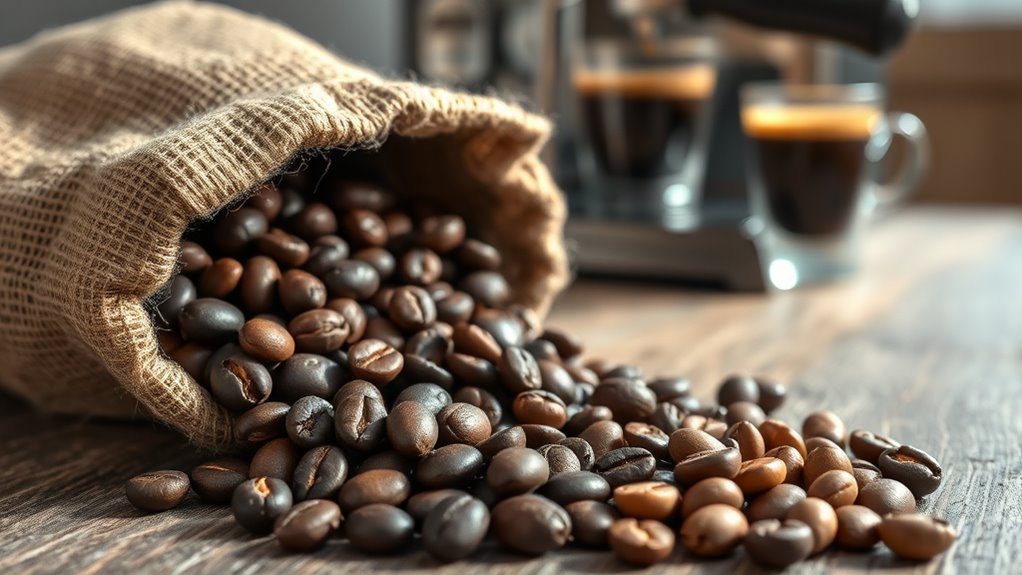
Although the term “espresso beans” might suggest a unique variety, it actually refers to coffee beans roasted darker and longer to bring out oils and flavors suited for espresso brewing.
Espresso beans are simply coffee beans roasted darker and longer to enhance flavors for espresso brewing.
You should understand that any coffee bean variety can become an “espresso bean” through this roasting process. The distinction lies in the roasting style, not in the bean itself.
Dark roasting enhances the bean’s oils, resulting in the rich, full-bodied flavor and characteristic crema of espresso shots.
When you prepare espresso, you’re focusing on the brewing technique and the roast profile rather than a specific bean type.
This approach allows you to use the same beans for different brewing methods simply by adjusting the roast and grind to suit espresso’s intense extraction.
For optimal results, adjusting the espresso yield by weight during brewing is essential to achieve the desired flavor balance and shot strength.
Why There’s No Such Thing As An “Espresso Bean
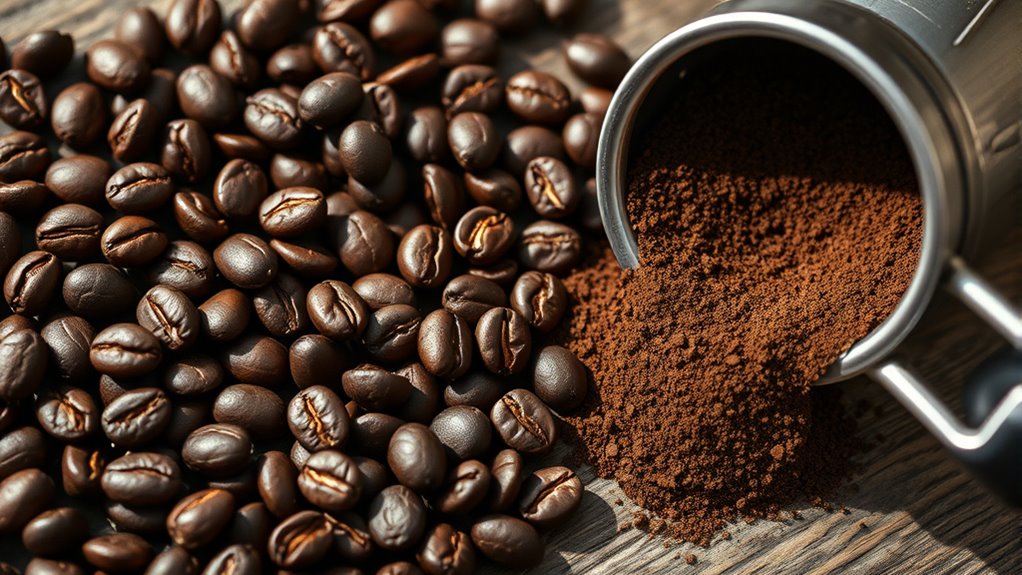
When you see the term “espresso beans,” it’s easy to assume you’re looking at a unique type of coffee bean, but that’s a misconception. No botanical or scientific classification defines “espresso beans” as distinct. Instead, the term reflects a style of roasting and blending.
Any coffee bean, regardless of variety or origin, can be used to brew espresso.
Consider these points:
- “Espresso bean” labels usually denote a darker roast tailored for espresso preparation.
- The term is driven largely by marketing efforts rather than botanical reality.
- The roasting style affects flavor profiles, not the bean’s inherent species.
- Espresso is a brewing method, not a bean type.
Understanding this clears up confusion and highlights that all coffee beans share the same botanical roots. However, achieving an optimal espresso shot depends heavily on factors like dose and grind size to balance extraction and flavor.
How Roast Levels Affect Espresso Beans Vs. Regular Coffee
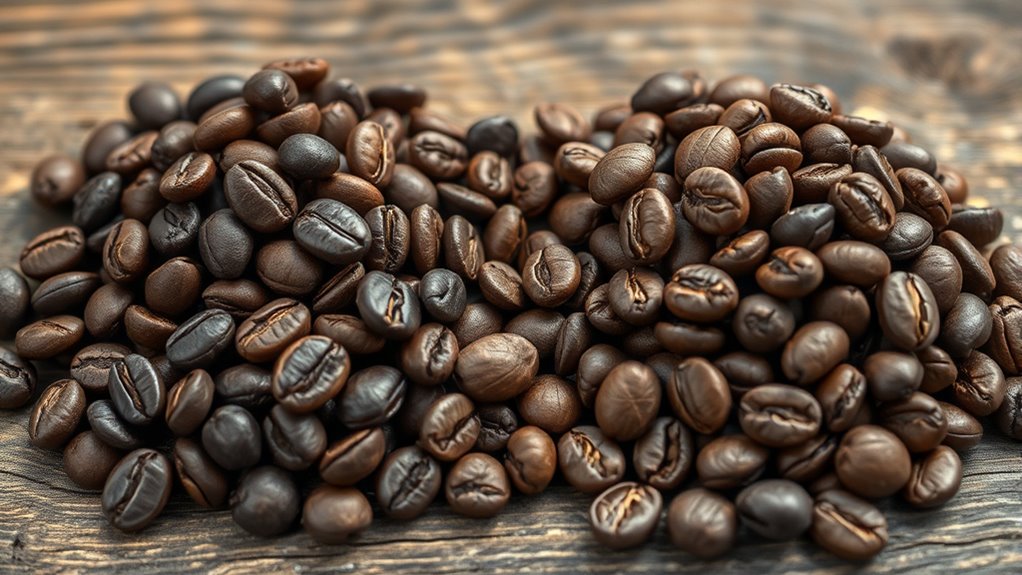
Since roast level directly influences flavor and texture, understanding its impact on espresso beans versus regular coffee is essential.
Espresso beans are typically roasted darker, like French or Italian roast, to enhance oil extraction and intensify flavor. This darker roast produces an oily, shiny surface that’s vital for creating the crema in espresso shots.
You’ll notice the flavor shifts to smoky, bold, and more bitter notes with these darker roasts. In contrast, regular coffee beans often undergo lighter roasting, which preserves the bean’s original fruity and acidic nuances without the oily sheen.
This lighter roast highlights origin-specific complexity rather than the intense, robust profile you get from espresso roasts.
Ultimately, roast level dictates whether you experience bold, roasted flavors or nuanced, vibrant characteristics in your cup. It’s kind of like choosing between a punchy, strong espresso and a bright, lively drip coffee.
Knowing this can really change how you pick your beans. Additionally, the caffeine content can vary with roast level, as lighter roasts typically retain more caffeine than darker ones.
Why Dark Roasts Are Often Called Espresso Beans
You’ll notice dark roasts are often labeled as espresso beans. That’s because their bold, intense flavors really suit the high-pressure extraction of espresso machines.
Plus, their oily surface helps create that rich crema that defines a good espresso shot.
This strong flavor profile, along with marketing trends, has really cemented dark roasts’ association with espresso in coffee culture.
Espresso beans are often chosen for their ability to produce a concentrated flavor, similar to how espresso powder enhances the depth and complexity in recipes.
Dark Roast Characteristics
Although the term “espresso beans” often confuses many, it primarily refers to the roasting level rather than the bean itself. Dark roast beans undergo longer, higher-temperature roasting, which creates a distinct oily, shiny surface from caramelized oils.
This roasting level shapes their flavor and brewing qualities, closely linking them to espresso.
When you examine dark roasts, you’ll notice bold, smoky flavors with diminished acidity, ideal for espresso’s intensity. They also have bitter, charred notes reminiscent of traditional espresso profiles.
Plus, there’s an oily sheen that helps produce the rich crema espresso is known for.
Really, the roasting level is the main reason dark roasts get labeled “espresso beans” even though they’re just standard coffee beans.
Understanding these traits clears up why dark roasts are so closely tied to espresso preparation.
Additionally, espresso’s unique preparation involves high pressure extraction, which enhances these flavor characteristics and crema development.
Marketing Espresso Beans
When marketers label dark roasts as “espresso beans,” they tap into consumers’ associations with boldness and intensity. This label doesn’t indicate a specific bean type or blend but highlights the roast level. It emphasizes the dark, smoky flavors typical of traditional espresso.
The shiny, oily surface of dark roasts visually reinforces this connection because oil extraction increases with roasting time. Brands use the term “espresso” strategically to evoke strength and robustness. This appeals to those seeking a powerful coffee experience.
It’s really a marketing tool that leverages the cultural perception of espresso’s intensity, no matter the brewing method. Understanding this helps you see that “espresso beans” often simply means dark roasted beans positioned to attract consumers drawn to strong, rich coffee profiles. Proper maintenance, such as descaling frequency, ensures your espresso machine consistently delivers the flavors these beans promise.
Flavor Impact of Roasting
The term “espresso beans” often reflects the flavor profile created by roasting rather than a unique bean type. Dark roasts, commonly labeled as espresso beans, undergo longer roasting at higher temperatures. This process produces oily, shiny beans with a smoky, bold flavor.
This intense roasting caramelizes sugars and brings oils to the surface, creating richness and a pronounced bitter, burnt taste typical of espresso. It also reduces acidity and emphasizes roasted, chocolatey, and smoky notes.
When you choose espresso beans, you’re selecting a roast level designed to deliver a distinct flavor experience rather than a specific coffee variety.
Extended roasting time darkens beans and enhances oiliness. Caramelization intensifies sweetness and richness. Bitterness and smokiness dominate flavor in dark roasts. Reduced acidity highlights chocolate and roasted notes. For optimal espresso flavor, it is important to use beans that maintain freshness within 2-4 weeks of roasting.
How Espresso Blends Differ From Regular Coffee
Because espresso requires a high-pressure extraction method, espresso blends are carefully crafted from beans sourced across multiple regions to achieve a balanced flavor profile with specific attributes like body, acidity, and sweetness.
Unlike regular coffee beans roasted for versatility, espresso blends emphasize a velvety mouthfeel and brightness that withstand intense pressure.
The blend formulation focuses on combining beans to highlight complementary characteristics, ensuring the final shot delivers a harmonious complexity.
You’ll notice that the difference isn’t in the bean type but in the blend’s composition and roast profile, optimized for espresso machines.
Regular coffee beans may lack the tailored balance and roasting nuances needed, resulting in a less refined espresso extraction.
Understanding these distinctions helps you appreciate why espresso blends stand apart in flavor and texture.
For the best results, using fresh, finely ground coffee with proper tamping is essential to achieve consistent espresso quality.
How Regional Beans Shape Espresso Blends
You’ll often find espresso blends that mix beans from Latin America, Africa, and Asia. This combination helps create a balanced flavor profile.
For example, Latin American beans usually add smooth chocolate notes. Then, African beans bring in those bright citrus tones. And Asian beans? They contribute a nice earthy depth.
Blends are typically roasted darker to enhance body, crema, and boldness for a richer espresso experience.
Regional Flavor Contributions
When you explore how regional beans shape espresso blends, you’ll notice each origin imparts distinct flavor characteristics that define the final cup. Understanding these contributions helps you appreciate the complexity behind every espresso shot.
Latin American beans add chocolate and nutty notes, lending smoothness and sweetness.
African beans bring bright citrus and berry tones, boosting acidity and complexity.
Asian beans introduce earthy and spicy flavors, enriching depth.
This regional diversity allows roasters to tailor espresso profiles precisely.
Latin American beans: smooth, chocolate, nutty, sweet
African beans: bright, citrus, berry, acidic
Asian beans: earthy, spicy, rich, deep
Regional origins influence overall flavor harmony and complexity.
Knowing these nuances sharpens your ability to discern and enjoy espresso blends. It’s pretty cool how each region plays its part in creating that perfect shot. Additionally, the roast level of these regional beans significantly impacts the espresso’s flavor, body, and crema, allowing further customization of the final taste.
Blending For Balance
Understanding the unique flavor contributions of beans from Latin America, Africa, and Asia sets the stage for appreciating how roasters craft espresso blends. When you blend, Latin American beans provide a smooth, nutty base with rich chocolate tones, giving body and warmth.
African beans add bright citrus and berry notes, sharpening acidity and enhancing complexity.
Asian beans bring spicy, earthy nuances that deepen the flavor profile and introduce subtle weight. By carefully selecting and balancing these regional beans, roasters create an espresso that’s sweet, syrupy, and well-rounded.
This precise combination guarantees no single flavor dominates but instead complements, resulting in a harmonious cup where acidity, sweetness, and depth coexist.
You’ll notice how each component shapes the espresso’s final character.
Can You Use Any Coffee Beans To Make Espresso?
How flexible are your coffee bean choices when making espresso? You can use any coffee beans, but the outcome hinges on roast level and bean type. Light roasts yield a brighter, more acidic espresso, while medium and dark roasts provide richer oils and a fuller body preferred for traditional espresso.
Any coffee bean works for espresso, but roast level and bean type shape its flavor and body.
Single-origin beans offer unique flavors, yet blends often balance complexity and smoothness better. Remember, grind size, freshness, and brewing technique are critical alongside bean selection.
Consider these factors when choosing beans for espresso:
- Roast level impacts acidity, body, and flavor depth.
- Single-origin beans highlight distinct regional notes.
- Blends create balanced, harmonious espresso profiles.
- Freshness and proper grind size ensure top-notch extraction.
Your bean choice sets the foundation, but execution ensures quality espresso.
How Brewing Methods Affect Espresso Bean Flavor
When you adjust brewing pressure, you’re basically controlling how intensely the flavors are pulled from the beans.
The grind size is super important too—finer grounds help release those oils and compounds just right during the quick extraction time that espresso needs.
All these factors work together to shape the balance, body, and crema of your shot.
Brewing Pressure Impact
Because brewing pressure dramatically influences extraction, it plays a crucial role in shaping the flavor profile of espresso beans. When you use high-pressure methods like espresso machines, water forces its way through finely ground beans, extracting oils and intensifying flavors. This process creates a rich, concentrated shot with a distinctive crema.
Lower pressure methods, however, yield a different taste and less crema, even with the same beans.
Consider these factors about brewing pressure impact:
- High pressure accentuates bold, concentrated flavors and oils in dark roasts.
- Light or medium roasts may lack sufficient oils for a full-bodied espresso under pressure.
- Non-pressure methods highlight different flavor notes and produce less crema.
- Pressure-driven extraction makes roast-level distinctions more pronounced than low-pressure brewing.
Grind Size Influence
Although espresso beans remain the same, the grind size you choose dramatically shapes their flavor during brewing. Finely ground espresso beans increase surface area, enabling efficient extraction under high pressure, producing rich, intense flavors and crema. Coarser grinds, typical for drip or French press, yield slower extraction and milder taste, which isn’t suitable for espresso.
Too fine a grind risks over-extraction and bitterness. Too coarse results in under-extraction and weak shots. You must maintain a consistent, precise grind size to optimize flavor balance.
| Grind Size | Extraction Rate | Flavor Outcome |
|---|---|---|
| Fine (Espresso) | Fast, high surface area | Intense, balanced |
| Medium (Drip) | Moderate | Milder, less intense |
| Coarse (French Press) | Slow | Weak, under-extracted |
Extraction Time Effects
Since extraction time directly influences flavor development, understanding its effects is essential for brewing espresso beans to your preference. Extraction duration shapes the balance between acidity, bitterness, and body, making timing critical.
Shorter extractions emphasize bright, acidic notes, especially with lighter roasts. Meanwhile, longer extractions bring out bitterness and a fuller body typical of darker roasts. Different brewing methods alter extraction time, so the flavor changes even if you use the same beans.
Consider these key points:
- Short extraction (under 25 seconds) risks sourness due to under-extraction.
- Ideal espresso extraction lasts 25-30 seconds, balancing clarity and intensity.
- Over 30 seconds leads to over-extraction, increasing bitterness.
- Methods like AeroPress and French press adjust extraction time, changing flavor profiles despite using the same beans.
Mastering extraction time lets you tailor espresso’s taste precisely. It’s all about finding the sweet spot that suits your palate.
How Home Brewing Tools Influence Espresso Bean Choice
When you select home brewing tools, you directly shape the type of espresso beans that work best for your setup. High-pressure espresso machines demand finely ground, darker roasted beans to maximize oil content and crema. They also benefit from precise temperature control.
On the other hand, manual devices like AeroPress or French press offer more flexibility. They can handle a broader range of roast levels and grind sizes. This lets you experiment with lighter or medium roasts.
Portable or budget-friendly tools often need coarser grounds and lighter roasts to avoid over-extraction and bitterness. Understanding how your brewing equipment influences extraction parameters like grind size, roast level, and temperature is key.
It helps you match your bean choice with what your method requires. This way, you get balanced flavor and ideal extraction every time. And honestly, that’s what makes the best espresso experience at home.
Tips For Selecting Coffee Beans For Espresso Shots
Understanding how your brewing method affects bean choice sets the stage for selecting the right coffee beans for espresso shots. You need beans that complement espresso’s intense extraction process, ensuring a balanced, flavorful cup.
To select beans effectively, consider these tips: Choose darker roasts like French or espresso roast for richer, bolder flavor. Use freshly roasted beans within 2-4 weeks to maintain ideal aroma and taste. Grind whole beans just before brewing to preserve freshness and enhance extraction.
Opt for espresso-specific blends or experiment with single-origin Latin American or African beans for unique profiles. These strategies help you tailor your bean selection to espresso’s demands, elevating your shots with precision and depth.
Frequently Asked Questions
How Should Espresso Beans Be Stored to Maintain Freshness?
You should store espresso beans in an airtight container, away from light, heat, and moisture. Keep them in a cool, dark place.
Grind just before brewing to get the best flavor. And try to use the beans within 2-4 weeks for maximum freshness and taste.
What Grind Size Is Best for Espresso Beans?
Fine grind size, like powdered sugar, is best for espresso beans. You’ll get proper extraction under pressure, avoiding weak or bitter shots.
Can Espresso Beans Be Used for Cold Brew Coffee?
Yes, you can use espresso beans for cold brew, but choose a coarse grind to avoid bitterness and filter clogging.
You’ll notice a richer, bolder flavor with chocolate notes. Just keep in mind there might be a bit more sediment because of the beans’ oil content.
Do Espresso Beans Contain More Caffeine Than Regular Coffee Beans?
You won’t find more caffeine in espresso beans than regular ones by weight. Both contain roughly the same amount.
The difference lies in brewing methods, not bean type. This affects caffeine concentration and extraction. So, it’s really all about how you make your coffee.
How Does Water Temperature Impact Espresso Extraction?
You’ll find water temperature essential. Too hot, and your espresso turns bitter from over-extraction. Too cool, and it tastes weak or sour.
Keeping it between 195°F and 205°F guarantees balanced flavor and rich crema. That sweet spot really makes all the difference in your cup.
Conclusion
Think of espresso beans not as a separate species but as coffee beans dressed in a darker, richer coat, ready to unleash a bold symphony of flavors. You can use any coffee bean for espresso, but roasting and brewing shape the final taste like a sculptor carves marble.
By understanding these nuances and choosing your beans carefully, you’ll craft espresso shots that sing with depth, intensity, and that perfect crema crown every time.