Espresso isn’t the same as drip coffee. It’s a concentrated shot made by forcing hot water through finely ground beans at high pressure. You get a bold, thick coffee with rich crema and intense flavor, unlike the lighter, milder brew of regular coffee.
Espresso’s grind size, pressure, and extraction time make all the difference in taste and texture. Curious about how bean types and caffeine levels compare? There’s plenty more to uncover about your favorite brew.
What Is Espresso and How Is It Made?
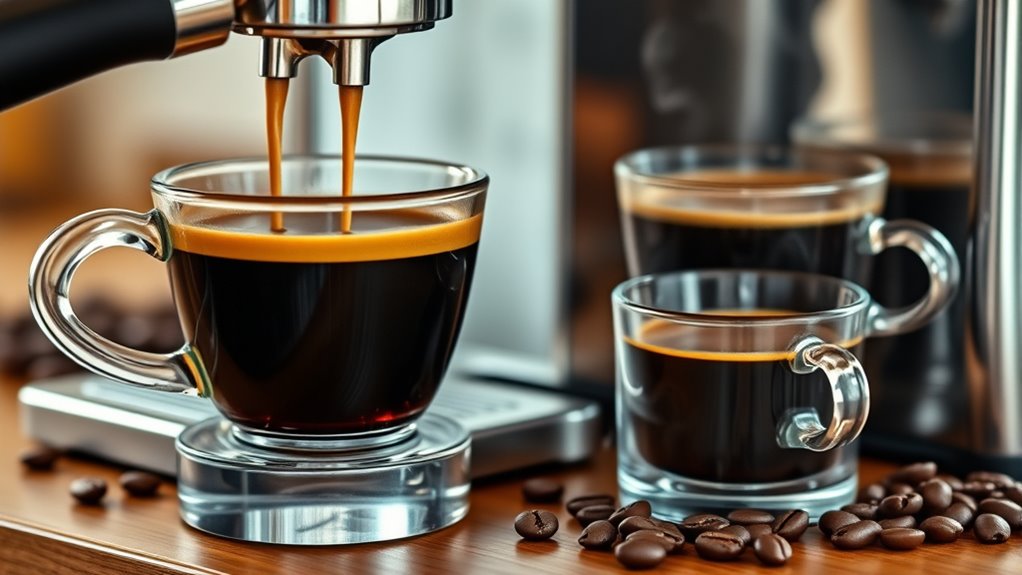
What makes espresso stand out from regular coffee? It’s all about the process and precision. You start with finely ground coffee, about 16 to 18 grams, tamped evenly into the portafilter.
Then, you force hot water at roughly 9 bars of pressure, heated between 195°F and 205°F, through the grounds. This intense pressure extracts rich flavors in just 25 to 30 seconds.
The result? A small, concentrated 1-2 ounce shot with a thick, velvety texture and a signature golden crema on top.
To nail this, you need the right tools: an espresso machine, portafilter, tamper, and a fine grinder. Every detail, from grind size to tamping pressure, plays a vital role in crafting that perfect, robust espresso shot.
Consistent timing and pre-infusion are essential to achieving balanced flavor and crema development in espresso extraction.
How Does Espresso Differ From Regular Coffee?
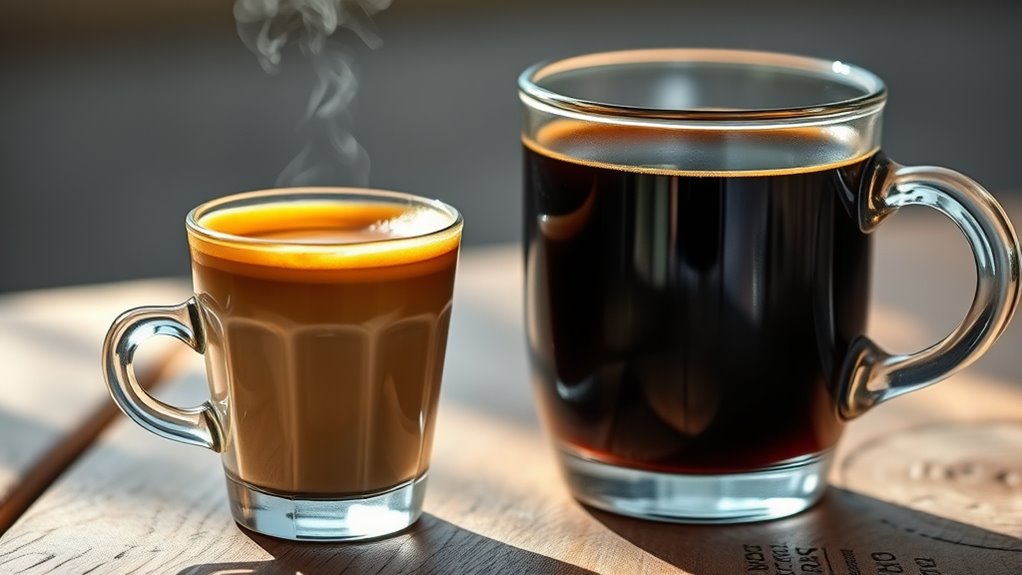
Espresso’s distinctiveness goes beyond just its preparation method. It shapes the entire coffee experience compared to regular coffee. You’ll notice espresso is brewed by forcing hot water under high pressure through finely ground coffee, creating a small, concentrated shot rich with crema.
This contrasts sharply with regular coffee, where gravity pulls hot water through coarser grounds over several minutes, producing a lighter, larger cup. The rapid, pressurized extraction in espresso results in a thicker, more viscous texture and a bold, intense flavor profile.
While espresso delivers roughly 63 mg of caffeine per ounce, regular coffee offers about 95 mg in an 8-ounce cup. Of course, serving sizes vary. Ultimately, the brewing method defines the flavor intensity and body you experience in each cup. The difference in brewing pressure and grind size plays a crucial role in shaping these unique characteristics.
Why Do Grind Size and Pressure Matter for Espresso?
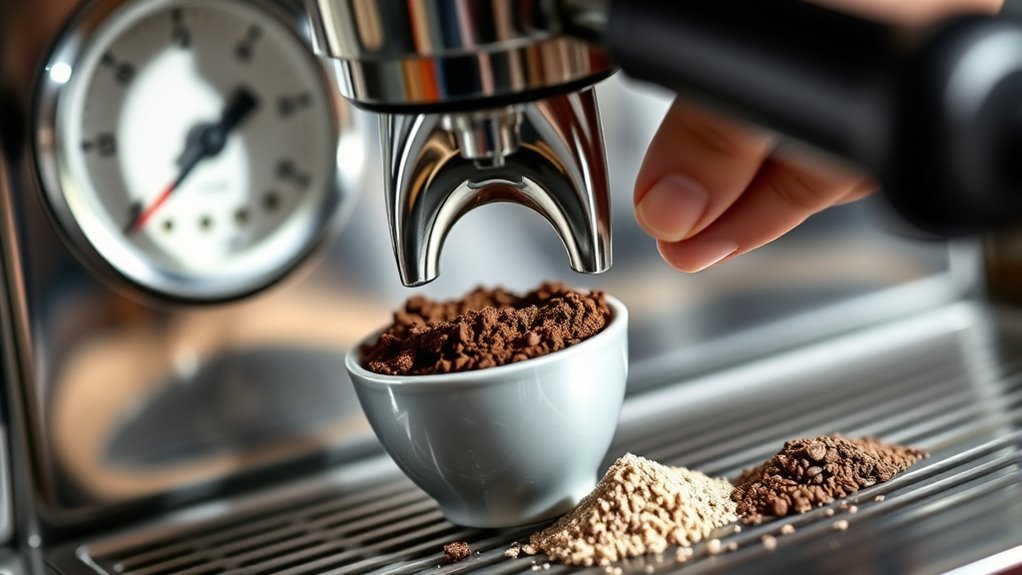
Because grind size and pressure work hand in hand, they play a vital role in shaping the flavor and texture of your espresso. A very fine grind increases surface area, allowing water under about 9 bars of pressure to extract maximum flavor and create that rich crema.
If your grind’s too coarse or pressure inconsistent, extraction suffers, leading to weak, sour, or bitter espresso. Precision here guarantees a balanced, intense shot within 25-30 seconds.
Adjusting grind size in microns can dramatically impact shot timing, taste, and crema quality, making grind size calibration essential for optimal results.
| Grind Size | Pressure |
|---|---|
| Very fine | ~9 bars |
| Coarser | Under-extraction |
| Overly fine | Over-extraction |
| Affects crema | Controls flow |
Mastering these elements reveals espresso’s complexity and signature texture every time.
Are Espresso Beans Different From Coffee Beans?
Although many assume espresso beans are a distinct variety, they’re actually the same coffee beans used for regular coffee, simply roasted and blended to suit espresso brewing. You can use any coffee bean, Arabica or Robusta, for espresso, regardless of labeling.
What sets “espresso” beans apart is their darker roast and specific blends designed to enhance flavor and produce rich crema under high-pressure extraction. Roasters carefully select beans and adjust roast profiles to highlight the bold, concentrated characteristics espresso demands. Proper machine maintenance, including regular descaling frequency, is essential to preserving the quality and taste of espresso.
How Much Caffeine Is in Espresso Compared to Coffee?
How much caffeine you get from espresso versus regular coffee depends largely on serving size and concentration.
A single 1-ounce shot of espresso packs about 63 milligrams of caffeine, making it more concentrated per ounce than drip coffee.
However, an 8-ounce cup of coffee typically contains around 95 milligrams in total, so you actually consume more caffeine with a standard cup.
If you opt for a double shot of espresso, that’s roughly 126 milligrams, comparable to or slightly exceeding a regular coffee.
Keep in mind, coffee-based drinks like Americanos can have even more caffeine, depending on how many espresso shots they include.
Understanding these differences helps you make informed choices about your caffeine intake.
The caffeine content can vary based on factors like bean type, grind size, and extraction time, affecting the final caffeine levels.
What Does Espresso Taste Like Compared to Coffee?
When comparing espresso and coffee, caffeine content is just one part of the experience. You’ll notice espresso delivers a bold, intense flavor with a rich, velvety texture. It often reveals notes of chocolate, caramel, or nuts.
This concentrated brewing process enhances its strong, full-bodied character, making every sip powerful and complex.
In contrast, coffee generally tastes milder and lighter, with a more pronounced acidity that varies depending on the bean and roast. Its flavor is more transparent and less concentrated than espresso’s.
Plus, espresso’s signature crema adds a smooth, slightly bitter layer, enriching its flavor profile further.
Ultimately, if you crave intensity and depth, espresso satisfies. Coffee, on the other hand, offers a subtler, more varied tasting experience.
Additionally, three shots of espresso typically contain between 180 and 225 mg of caffeine, which is well within the FDA’s recommended daily limit for most adults, highlighting its caffeine content.
Espresso and Coffee Myths: Busted
You might think espresso has more caffeine than regular coffee, right? But actually, larger servings like drip coffee or cold brew often give you more caffeine overall.
And about the roast level—darker roasts aren’t necessarily weaker when it comes to caffeine. The roast doesn’t drastically change the caffeine content.
So, it’s really about how much caffeine you’re consuming, not just how strong it tastes.
Knowing this can help clear up common myths about how much of a kick espresso really gives you.
Additionally, brewing methods like using a Moka pot can produce a strong, espresso-like coffee without the high pressure of traditional espresso machines.
Espresso Caffeine Misconceptions
Although espresso often gets a reputation for packing a stronger caffeine punch, it doesn’t actually contain more caffeine per serving than a regular cup of coffee. A single shot of espresso typically has less caffeine than an 8-ounce brewed coffee.
This means if you drink a large coffee, you’re likely consuming more caffeine overall.
The misconception that espresso delivers a quicker, more intense energy boost comes from its rapid absorption, not higher caffeine content.
Also, don’t be misled by roast level myths. Differences in caffeine between light and dark roasts are minimal.
So, when you choose between espresso and drip coffee, remember that total caffeine depends on serving size and not just brewing method or concentration.
Keep that in mind next time you’re deciding which coffee to grab!
Blonde espresso, for example, can have slightly more caffeine than regular espresso due to its shorter roast duration, but flavor intensity does not always correlate with caffeine content.
Roast Level Effects
While many believe that darker roasts pack more caffeine, this common myth doesn’t hold up under scrutiny. Dark roast beans, often chosen for espresso, develop bolder, more bitter flavors with smoky, chocolatey notes. But they don’t actually contain more caffeine than lighter roasts.
In fact, lighter roasts retain slightly more caffeine by weight and preserve more of their original bean characteristics, including higher acidity. The roast level mainly shapes flavor and acidity, not caffeine content.
So, when you pick a roast for espresso or drip coffee, focus on your taste preferences and brewing method rather than caffeine myths. Proper grind size and extraction time are critical to maximizing flavor regardless of roast level.
Energy Boost Realities
Understanding caffeine content in espresso and coffee goes beyond roast levels and flavor profiles. You might think espresso packs more caffeine than drip coffee, but that’s a myth. A single espresso shot contains less caffeine than a typical large cup of drip coffee.
The key isn’t concentration but total caffeine intake. Lighter roasts don’t considerably boost caffeine levels either. The difference is negligible.
Espresso’s rapid caffeine absorption delivers a quick energy spike within 15 minutes, but the overall effect hinges on how much you consume. The caffeine concentration in espresso is about 2.1 mg/mL, significantly higher than drip coffee’s 0.4 mg/mL.
When Should You Choose Espresso Over Coffee?
When you need a quick, powerful energy boost, espresso is the way to go. It delivers concentrated caffeine in just a small shot.
Plus, if you’re craving bold, intense flavors that really pack a punch, espresso’s rich profile hits the spot perfectly.
Choosing espresso means you get to enjoy robust coffee without having to wait around or drink a lot.
Energy Boost Needs
If you need a fast, concentrated caffeine boost to sharpen your focus quickly, espresso delivers exactly that. Its caffeine hits your system within 15 minutes, peaking at 30–60 minutes for immediate alertness.
When time’s tight and you crave a powerful energy surge before a meeting or workout, espresso is your go-to.
| Situation | Beverage Choice | Caffeine Amount |
|---|---|---|
| Quick energy boost | Espresso | ~63 mg per shot |
| Sustained alertness | Drip Coffee | Higher total mg |
| Limited time, high impact | Espresso | Rapid absorption |
Use espresso when you need a potent, fast lift. For prolonged energy, regular coffee suits better.
Flavor Intensity Preference
Few coffee experiences match the bold, concentrated flavor of a well-pulled espresso shot. When you want a rich, velvety texture crowned by crema, espresso is your go-to.
It’s perfect if you crave a complex, full-bodied taste with deep flavor notes, thanks to high-pressure extraction that intensifies aroma and richness.
Choose espresso when you need a smaller, more potent coffee with a thicker consistency than drip coffee offers. It’s also ideal if you want a quick caffeine jolt.
An ounce delivers about 63 mg of caffeine.
Plus, if you enjoy specialty drinks like lattes or cappuccinos, espresso provides that strong, flavorful foundation these beverages require.
In short, pick espresso whenever flavor intensity and richness top your coffee priorities.
Frequently Asked Questions
Can Espresso Be Made Without an Espresso Machine?
You can’t make true espresso without a proper machine, but you can mimic it using a Moka pot or AeroPress.
Just know these methods won’t deliver authentic crema or the exact pressure-driven extraction espresso demands.
How Long Does a Shot of Espresso Take to Pull?
A shot of espresso typically takes you 25 to 30 seconds to pull, ensuring balanced extraction. Pull too fast, and it tastes sour; too slow, and bitterness creeps in.
Precision here truly defines your espresso’s quality. It’s all about finding that sweet spot.
Once you get the timing right, your espresso will have that perfect flavor every time.
What Is the Ideal Water Temperature for Brewing Espresso?
You want to brew espresso with water between 195°F and 205°F (90°C to 96°C). Staying in this range extracts rich flavors without bitterness or sourness.
This ensures every shot is perfectly balanced and delicious every time. Just keep your temperature steady, and you’re good to go!
Can Espresso Be Stored or Reheated?
You can store espresso in an airtight container for up to 24 hours. But keep in mind, reheating it often ruins its flavor and crema.
If you must reheat, do it gently at low heat. This way, you can preserve some of the taste. Just don’t expect it to be as good as fresh.
Is Espresso Healthier Than Regular Coffee?
You won’t find a magic elixir here. Espresso isn’t inherently healthier than regular coffee. Both offer antioxidants, but espresso’s concentrated shot packs oils and polyphenols.
Conclusion
You’ve journeyed through the rich world of espresso and coffee, two close cousins with distinct personalities. Like choosing between a sharp violin solo and a full orchestra, each offers unique rhythms and flavors.
So, when you crave intensity and speed, reach for espresso. When you want a mellow, lingering experience, coffee’s your friend.
Knowing these differences lets you savor every sip with purpose and passion. Your perfect cup awaits.
Pingback: What Is The Difference Between Espresso And Americano Guide
Pingback: Can You Use Regular Coffee Beans For Espresso – Explained
Pingback: What Does Espresso Taste Like – Flavor Guide
Pingback: Is There A Difference Between Espresso Beans And Coffee Beans – Facts
Pingback: How Is Espresso Made – Step By Step
Pingback: How Much Espresso In A Latte – Exact Amount
Pingback: How To Brew Espresso – Step By Step
Pingback: What Does An Espresso Martini Taste Like – Flavor Guide
Pingback: Where To Buy Espresso Powder – Best Places
Pingback: What Alcohol Is In Espresso Martini – Explained
Pingback: How To Grind Espresso Beans – Perfect Grind
Pingback: How Long Does Espresso Last – Freshness Guide
Pingback: Is A Latte Espresso – Answered
Pingback: Are There Espresso K Cups – Best Options
Pingback: Can You Drink Espresso While Pregnant – What To Know
Pingback: What Is Espresso Con Panna – Explained
Pingback: Is Espresso Black Coffee – Answered
Pingback: Does Espresso Give You Energy – The Truth
Pingback: Espresso M&M's Where To Buy – Store Guide
Pingback: How Do You Order Espresso At Starbucks? – Easy Guide
Pingback: How Many Calories In Cutwater Espresso Martini – Answered
Pingback: What Is The Song Espresso About – Meaning Explained
Pingback: Do You Need Espresso Beans For Espresso – Answered
Pingback: How Many Espresso Beans In A Shot – Answered
Pingback: Does Espresso Have Sugar – The Truth
Pingback: Does Espresso Liqueur Have Caffeine – Answered