You might wonder if nitro cold brew is stronger than espresso, but strength depends on caffeine content and extraction, not nitrogen infusion. Nitro cold brew offers a smooth, creamy texture with 100-200 mg caffeine per 8 oz, while espresso packs 64-75 mg caffeine per 1 oz shot.
Though nitro feels richer and fuller-bodied, it’s not inherently stronger. To understand the differences in energy, flavor, and when to pick each, keep exploring the details.
What Is Nitro Cold Brew and How Is It Made?
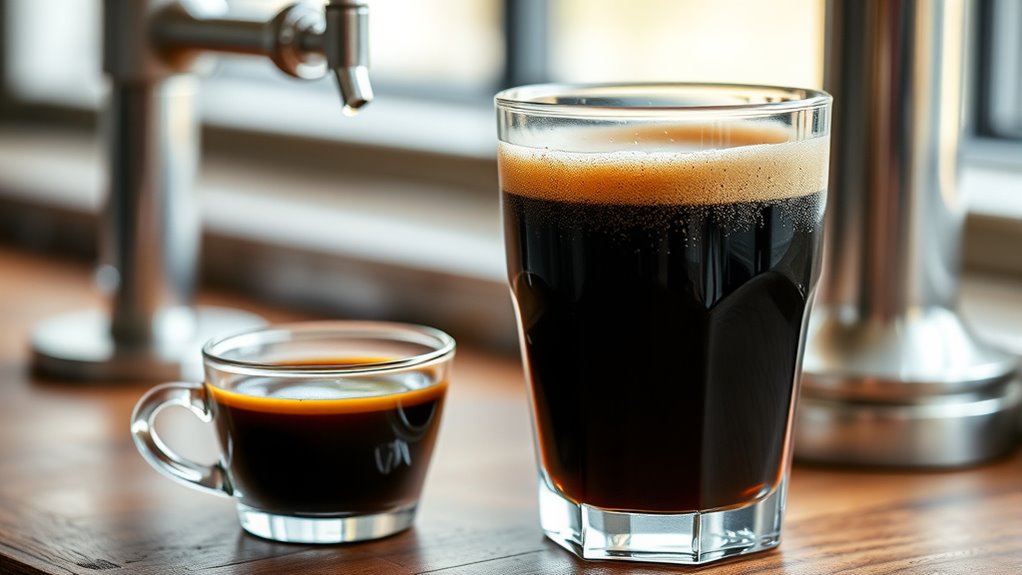
Although you might be familiar with traditional cold brew, nitro cold brew takes it a step further by infusing the coffee with nitrogen gas. This creates a creamy texture and a smooth, velvety mouthfeel.
To make it, you start by pouring cold brew into a keg and then infuse it with nitrogen under pressure. This ensures the gas dissolves fully into the coffee.
The infusion results in tiny nitrogen bubbles that form a thick, foamy head, kind of like draft beer.
You’ll usually find nitro cold brew served from a tap or in cans without ice. That helps maintain its creamy texture and distinct flavor.
The nitrogen also reduces acidity and enhances the natural sweetness, giving you a mellow yet rich coffee experience. Unlike espresso, which is brewed under high pressure to extract a concentrated shot, nitro cold brew relies on nitrogen infusion for its texture rather than pressure-based extraction.
What Is Espresso and How Is It Brewed?
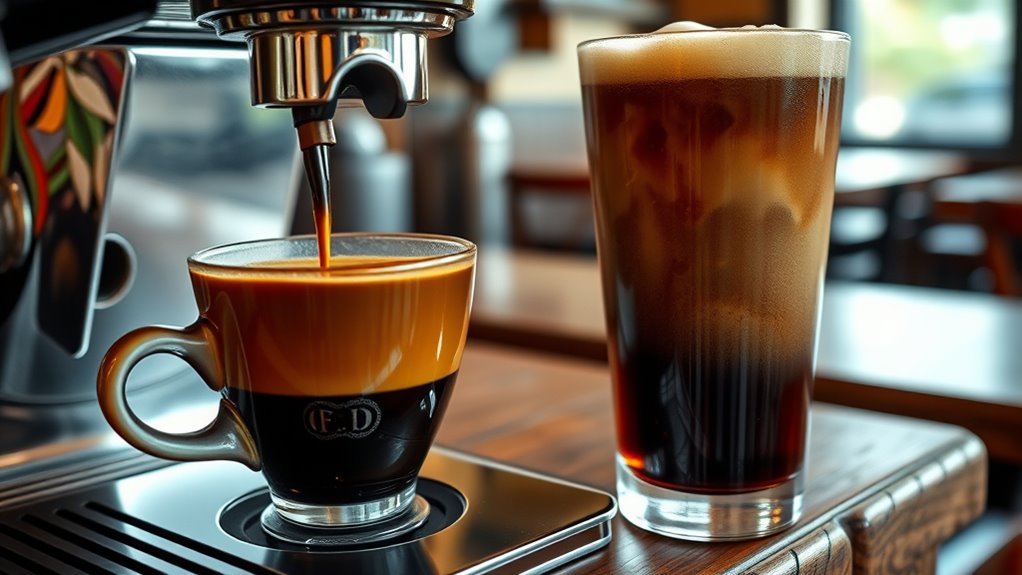
When you want a quick, intense coffee experience, espresso delivers by forcing hot water through finely ground beans at high pressure. This process uses an espresso machine applying around 9 bars of pressure to extract a concentrated shot in 25-30 seconds.
Espresso offers a quick, intense coffee by forcing hot water through finely ground beans under high pressure.
The result is a rich, bold beverage topped with a thick crema, a foam of emulsified oils and coffee solids.
A standard shot contains about 64-75 mg of caffeine, varying by extraction and size. Because of its intensity and concentration, espresso serves as the foundation for many popular drinks like lattes, cappuccinos, and Americanos.
Understanding this precise brewing method helps you appreciate how espresso achieves its distinctive strength, flavor, and texture compared to other coffee preparations. It really shows why espresso stands out in the world of coffee.
Consistent extraction timing, typically between 25-30 seconds, is crucial for achieving the ideal flavor balance and crema in espresso shots, highlighting the importance of timing and pre-infusion in the brewing process.
Does Nitrogen Infusion Change Nitro Cold Brew’s Caffeine or Flavor?
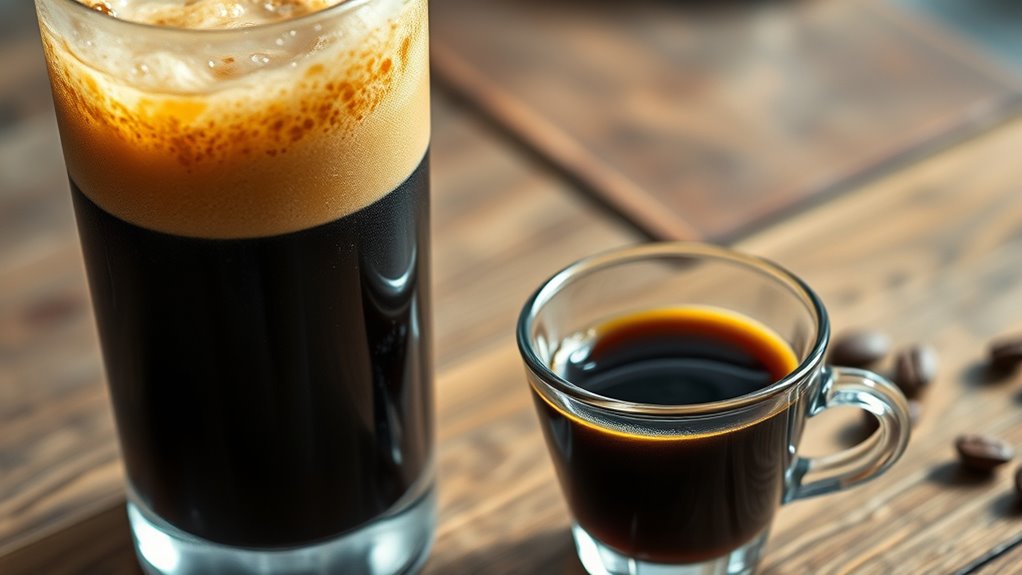
Because nitrogen infusion primarily affects texture rather than composition, it doesn’t change the caffeine content of nitro cold brew, which stays around 100-200 mg per 8-ounce serving. Instead, nitrogen alters the sensory experience by introducing tiny nitrogen bubbles that create a velvety mouthfeel.
This infusion adds a smooth, creamy texture and a subtle sweetness, enhancing the drink’s overall richness without modifying its natural flavor profile. You’ll notice a luxurious, almost silky sensation that makes the cold brew feel more indulgent, but the underlying flavor compounds and caffeine strength remain unchanged.
Fundamentally, nitrogen infusion improves mouthfeel and presentation without making nitro cold brew inherently stronger or weaker in either caffeine or taste. For those seeking a different coffee experience, understanding the difference between espresso and cold brew can help guide their beverage choices.
Caffeine in Nitro Cold Brew vs. Espresso
While nitro cold brew and espresso both deliver a significant caffeine boost, their caffeine concentration and serving sizes differ remarkably. Nitro cold brew offers a smoother taste with caffeine levels comparable to regular cold brew. Espresso packs a sharper flavor with less caffeine per ounce.
Here’s a direct comparison:
| Beverage | Caffeine per Serving | Serving Size |
|---|---|---|
| Nitro Cold Brew | 100-200 mg | 8 oz |
| Cold Brew | 100-200 mg | 8 oz |
| Espresso | 64-75 mg | 1 oz (per shot) |
Nitrogen infusion doesn’t affect caffeine content, so nitro cold brew’s caffeine strength aligns with cold brew. Espresso contains less caffeine per ounce, but the total caffeine depends on how many shots you consume. So, if you’re counting caffeine, keep that in mind!
How Serving Size Affects Caffeine Intake
When you compare espresso and nitro cold brew, serving size really makes a difference in how much caffeine you end up getting.
A small espresso shot packs a concentrated caffeine punch.
But on the other hand, a larger nitro cold brew can deliver way more caffeine simply because of its size.
The quality of your espresso shot also depends on precise extraction techniques that affect its flavor and strength.
Serving Size Impact
How much caffeine you consume depends heavily on the serving size of your coffee. Whether you choose nitro cold brew or espresso, larger servings increase your total caffeine intake proportionally.
For example, an 8 oz drip coffee has about 95 mg of caffeine, while a 16 oz double shot of espresso can deliver around 150 mg.
Even if nitro cold brew packs more caffeine per ounce, a smaller serving might yield less total caffeine than a larger cup of regular cold brew or hot coffee.
So, when you up your serving size, you considerably raise your caffeine consumption, potentially nearing or exceeding daily recommended limits.
Understanding this relationship helps you manage your intake more effectively, regardless of your preferred coffee strength or style.
Because cold brew is typically served in larger volumes, it often delivers a higher total caffeine content despite having a lower caffeine concentration per ounce than espresso.
Caffeine Intake Variation
Because caffeine concentration varies between coffee types, your total caffeine intake depends heavily on the serving size you choose. Whether it’s nitro cold brew or espresso, larger servings increase caffeine consumption considerably.
For example, an 8 oz cold brew has roughly 100-200 mg of caffeine, but doubling the size can double or triple that.
Espresso’s caffeine per ounce is high, 64-75 mg, so multiple shots add up quickly. Even if two drinks share similar caffeine concentrations, drinking more means consuming more caffeine overall.
- 8 oz cold brew: 100-200 mg caffeine
- 16 oz cold brew: 200-600 mg caffeine
- 1 oz espresso shot: 64-75 mg caffeine
- Multiple espresso shots multiply caffeine intake
- Larger sizes like venti or trenta raise caffeine substantially
Serving size directly influences your caffeine levels. So, keep an eye on how much you order if you want to manage your caffeine intake.
How Does Texture Affect Perceived Strength?
You’ll notice that texture plays a big role in how strong coffee feels, often affecting your perception even more than the actual caffeine content. For example, the creamy, velvety mouthfeel of nitro cold brew softens those bold flavors, giving you a smooth finish that can actually mask how intense it really is.
On the other hand, think about espresso. Its sharp, concentrated profile is quite different. That creaminess versus boldness really shapes how you experience the strength of your coffee. Despite nitro cold brew often having a high caffeine content, espresso typically has a much higher caffeine concentration, which contributes to its intense profile.
Texture’s Role In Strength
Although caffeine content plays a key role in a coffee’s strength, texture considerably shapes how strong you perceive it to be. When you sip nitro cold brew, its velvety, creamy texture gives a sense of richness that amplifies perceived potency. The tiny nitrogen bubbles create a smooth, luxurious mouthfeel, subtly masking boldness yet making the drink feel more substantial.
Contrast this with iced coffee’s sharper, thinner texture, which highlights brightness and acidity. This often makes it feel lighter despite similar caffeine levels. Texture, therefore, acts as a sensory filter, influencing your strength perception independently of actual caffeine content.
- Velvety texture enhances richness and perceived strength
- Nitrogen bubbles create smooth, luxurious mouthfeel
- Creamier beverages feel more substantial and potent
- Dense foam leads to stronger perceived intensity
- Thinner textures emphasize brightness, reducing perceived strength
Additionally, controlling pressure and temperature during brewing can also affect the texture and overall mouthfeel of coffee, influencing how strong it tastes.
Mouthfeel And Flavor Impact
When you take a sip of nitro cold brew, its velvety mouthfeel immediately shapes how strong the coffee tastes. The nitrogen bubbles create a creamy texture that enhances the perception of richness and potency, even if the caffeine content matches other brews.
This smooth, dense sensation softens sharpness and acidity, making the coffee feel fuller-bodied and more robust.
Your brain associates the frothy, luxurious finish with greater strength, intensifying the flavor experience. Texture plays a vital role here: a thicker mouthfeel leads you to perceive the drink as stronger, not just richer.
Ultimately, the sensory impression of nitro cold brew’s silky texture psychologically boosts your sense of power and intensity, distinguishing it from regular cold brew or espresso in perceived strength.
Creaminess Versus Boldness
While nitro cold brew’s creamy texture often suggests richness, it can also soften the coffee’s boldness. This changes how strong you might perceive it to be.
The nitrogen infusion creates a velvety mouthfeel that masks sharp flavors, making the coffee feel smoother and less aggressive.
This texture can trick your senses, making the drink seem fuller and more substantial without actually increasing the caffeine content.
You might find nitro cold brew feels more luxurious, but the real boldness is toned down by its creaminess.
Consider these texture effects on perceived strength:
- Velvety texture softens bold flavor intensity
- Smooth mouthfeel enhances fullness perception
- Frothy head suggests richness and strength
- Creaminess masks acidity, reducing sharpness
- Similar caffeine but illusion of greater body and strength
Which Gives You More Energy: Nitro Cold Brew or Espresso?
How do nitro cold brew and espresso compare when it comes to giving you a boost of energy? Both typically contain similar caffeine levels, around 100-200 mg per serving, so their energy potential is pretty comparable. Espresso delivers a quick, intense hit because it’s so concentrated. On the other hand, nitro cold brew offers a smooth, sustained energy boost since you’re drinking a larger volume. At the end of the day, it’s the caffeine amount that really dictates how energized you feel, not necessarily the type of coffee. Factors like extraction consistency can also influence the flavor and strength perception of espresso.
| Beverage | Caffeine (mg) | Energy Effect |
|---|---|---|
| Espresso (1 shot) | 100-150 | Quick, intense boost |
| Nitro Cold Brew (8 oz) | 150-200 | Smooth, sustained boost |
| Regular Cold Brew (8 oz) | 150-200 | Similar to nitro cold brew |
When Should You Choose Nitro Cold Brew Over Espresso?
You should go for nitro cold brew when you’re craving something smoother and creamier, with a nice balanced flavor and a good caffeine kick per serving. It’s got this cool, frothy texture and some subtle chocolate or fruity hints that you just don’t get with espresso.
But if you’re after a quick, intense jolt of caffeine in a small, concentrated shot, espresso is the way to go. It’s perfect for when you need that fast boost.
Additionally, iced espresso drinks often contain extra shots of espresso to maintain strong flavor and caffeine despite dilution from ice.
Flavor Preferences
Whenever you want a coffee that delivers a smooth, creamy texture paired with a balanced, less acidic flavor, nitro cold brew stands out as the better choice over espresso. You’ll appreciate nitro cold brew if you prefer a rich mouthfeel and subtle sweetness instead of espresso’s intense, bold profile.
Its velvety, frothy finish complements the high caffeine content without the sharp bitterness espresso often carries.
Choose nitro cold brew when you want a milder, more rounded flavor or a less concentrated, more beverage-like experience with luxurious texture.
- Smooth, creamy texture
- Balanced, less acidic flavor
- Rich mouthfeel with subtle sweetness
- Velvety, frothy finish
- Milder, rounded flavor with less bitterness
Additionally, nitro cold brew generally avoids the complexities of espresso extraction variables, resulting in a more consistent and approachable flavor.
Caffeine Needs
Beyond flavor, caffeine content plays a significant role in choosing between nitro cold brew and espresso. You should opt for nitro cold brew when you want a higher caffeine boost with a smoother, less bitter profile.
A 7 oz can of nitro cold brew contains about 180 mg of caffeine, comparable to or slightly less than espresso. This makes it ideal for sustained energy without the sharp spike.
Nitro cold brew also offers a larger serving size and a creamier texture. It’s perfect if you prefer a balanced caffeine experience with subtle sweetness.
However, if you need an immediate, concentrated caffeine hit, espresso remains the better choice. Ultimately, your caffeine needs and preference for texture will guide your decision.
Serving Experience
Although espresso delivers a quick, intense caffeine hit in small, concentrated shots, nitro cold brew offers a distinctly different serving experience with its smooth, creamy texture and rich mouthfeel.
You should choose nitro cold brew over espresso when you want a less acidic, more balanced flavor with a luxurious, frothy finish.
Nitro cold brew suits those who prefer a velvety texture and a slightly sweeter profile, making it ideal for acidity-sensitive drinkers. It also provides a longer-lasting, more filling experience compared to espresso’s rapid intensity.
Consider nitro cold brew when you want to savor your coffee over time rather than a quick boost.
- Smooth, creamy texture enhances perceived strength
- Larger serving sizes than espresso shots
- Less acidic, balanced flavor profile
- Velvety, frothy finish with subtle sweetness
- Longer-lasting, more filling drinking experience
Equipment for Making Nitro Cold Brew at Home
If you want to make nitro cold brew at home, you’ll need specific equipment to achieve the smooth, creamy texture that defines this beverage. Essential items include a nitrogen gas source, either a nitrogen tank or a specialized nitrogen cartridge system, and a nitrogen regulator to control infusion pressure.
A cold brew coffee concentrate serves as your base. To properly infuse and serve, a kegerator or mini keg dispenser is highly recommended to maintain the right temperature and pressure. These factors are critical for producing the characteristic bubbly mouthfeel.
Many home nitro kits bundle a nitrogen charger, tap system, and detailed instructions, which really simplifies the process. Without this precise equipment, you won’t be able to replicate the signature texture and presentation that makes nitro cold brew unique.
How to Enjoy Nitro Cold Brew and Espresso Safely?
Once you’ve mastered the equipment and technique to make nitro cold brew at home, it’s important to focus on how to enjoy these beverages safely. Both nitro cold brew and espresso can contain up to 200 mg of caffeine per serving, so moderation is key.
Be aware of your caffeine sensitivity and watch for symptoms like jitters or sleep disturbances.
Always check caffeine content on labels or ask baristas to stay informed. To minimize adverse effects, pair these drinks with water.
Also, avoid large quantities if you have health concerns.
Limit intake to avoid excessive caffeine consumption.
Monitor personal sensitivity and adjust accordingly.
Verify caffeine levels on packaging or with baristas.
Avoid high volumes if sensitive or health-restricted.
And most importantly, stay hydrated by drinking water alongside your coffee.
Frequently Asked Questions
Can Nitro Cold Brew Cause More Jitters Than Espresso?
Yes, nitro cold brew can cause more jitters if you drink larger volumes, since its caffeine content per serving is similar to espresso.
Your sensitivity and consumption amount mainly determine jitter effects, not the beverage itself. So, it really depends on how much you’re having and how your body reacts. Just keep an eye on your intake, and you should be fine.
How Long Does Nitro Cold Brew Stay Fresh After Opening?
Once you break the seal, the nitro cold brew’s freshness begins to fade like a sunset. You’ve got about 24 to 48 hours to savor its peak flavor.
Is Nitro Cold Brew Better for Cold Brew Beginners?
Yes, nitro cold brew is better for cold brew beginners because it requires no brewing skills and offers a smooth, creamy texture. It also has lower acidity, which makes it easier on the stomach. Plus, it provides a consistent, approachable flavor that’s easier to enjoy than traditional cold brew.
Does Espresso Have More Antioxidants Than Nitro Cold Brew?
You’ll find espresso has about 20-30% more antioxidants per ounce than nitro cold brew, thanks to its concentrated extraction. However, factors like roast level and bean origin ultimately influence antioxidant content more than the brewing method itself.
Can Nitro Cold Brew Replace Espresso in Coffee Recipes?
You can replace espresso with nitro cold brew, but expect a milder, less concentrated flavor and texture. Nitro’s smoother profile changes the intensity and richness a bit. So, it works best in recipes where you don’t need that bold espresso punch.
If you’re after something strong and sharp, nitro might not hit the spot. But if you want something smooth and easygoing, it could be a great swap. Just keep in mind the overall flavor will be lighter.
Conclusion
Picture the smooth cascade of nitrogen bubbles in your glass of nitro cold brew versus the intense, concentrated shot of espresso. While nitro cold brew offers a mellow, creamy experience with steady caffeine, espresso delivers a sharp, quick jolt.
Your choice depends on whether you want a slow, rich lift or a fast, bold hit. Understanding their differences helps you pick the perfect brew to fuel your day smartly and savor every sip.