An espresso machine forces hot water through tightly packed, finely ground coffee at about 9 bars of pressure. This process extracts rich flavors and a creamy crema you’ll love. You lock the coffee-filled portafilter into the grouphead, where precise temperature and pressure guarantee the perfect shot.
Different machine types, from manual to super-automatic, offer varying control and convenience. With so many components and features influencing quality, understanding these essentials will help you make an informed choice for your perfect brew.
What Is an Espresso Machine and How Does It Work
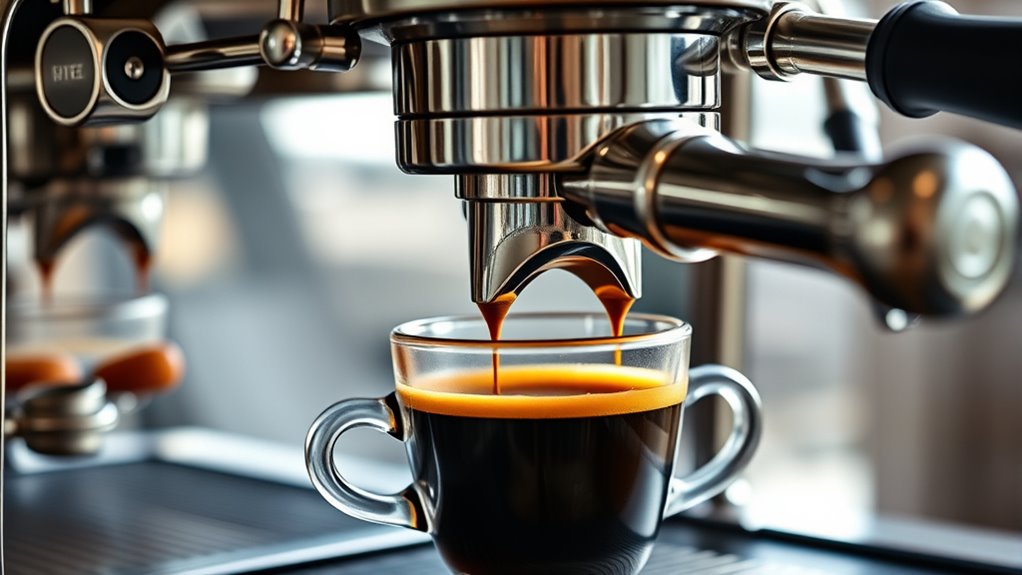
Although espresso machines come in various designs, they all work by forcing hot water through finely ground coffee at high pressure, usually around 9 bars, to brew a concentrated, flavorful shot.
When you use an espresso machine, you start by tamping the coffee grounds firmly into a portafilter, then lock it into the grouphead.
The machine’s pump, often electric vibratory or rotary, pushes hot water from the boiler through the grounds with precise pressure and temperature control.
Advanced boilers regulate heat with digital or PID systems, ensuring ideal extraction.
This process extracts rich flavors and creates the signature crema atop your espresso.
Maintaining consistent timing during extraction is crucial for producing balanced flavor and crema in every shot.
Key Components of an Espresso Machine
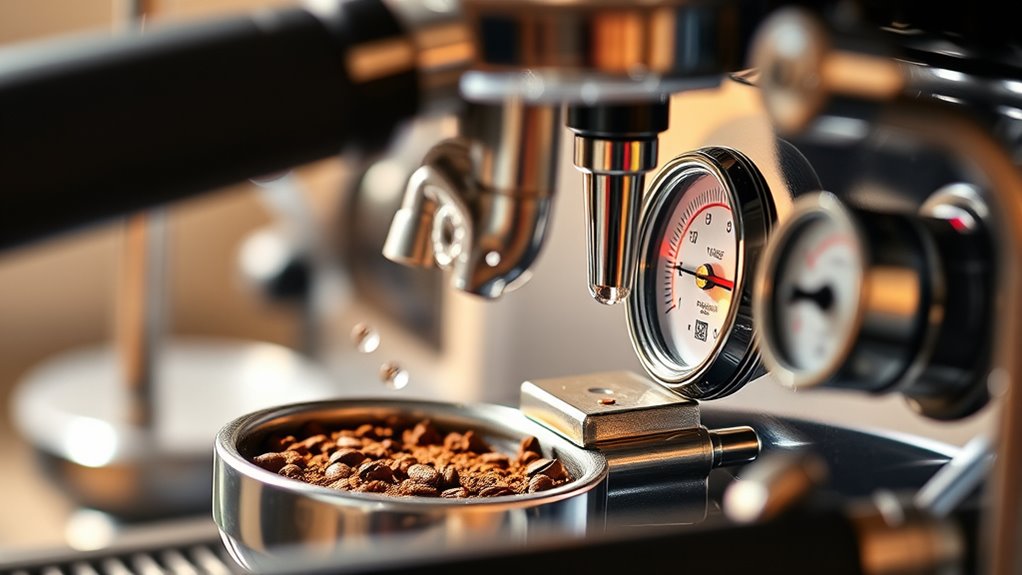
When you plunge into the world of espresso machines, understanding their key components is essential to mastering your brew. The grouphead is where the portafilter locks in, distributing hot water evenly over your tamped coffee grounds. The portafilter itself holds those grounds securely during extraction.
Between them, the gasket guarantees a tight seal, forcing high-pressure water through the coffee for peak flavor. The boiler heats the water, with designs ranging from single to dual boiler systems. Each design affects temperature control and steam production.
Speaking of steam, the steam wand releases high-pressure steam to froth milk, a must-have for creamy lattes and cappuccinos. Knowing how these parts work together empowers you to extract espresso that’s rich, balanced, and deeply satisfying every time. It’s pretty cool once you get the hang of it! Precise control of the espresso extraction ratio is also crucial in achieving the desired flavor and strength in your shot.
Types of Espresso Machines and How They Work
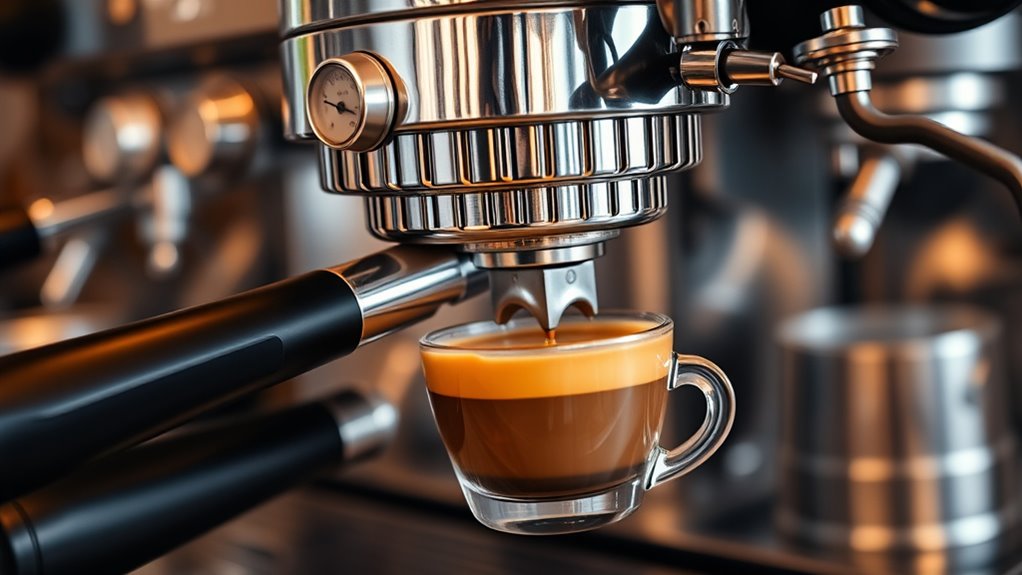
If you want full control over your espresso experience or prefer a hands-off approach, understanding the different types of espresso machines is key.
You’ll find manual lever machines offer full control but demand skill, while semi-automatic and automatic machines use electric pumps to maintain consistent 9-bar pressure, making extraction easier.
Super-automatic machines take it further, automating grinding, tamping, and brewing for convenience.
Inside, heat exchanger (HX) machines use a single boiler with a water channel, requiring routine flushing to keep temperatures stable.
Heat exchanger machines use a single boiler with a water channel, needing regular flushing for stable temperatures.
Dual boiler (DB) machines separate brewing and steaming boilers, delivering precise temperatures and quicker operation.
These are ideal if you value consistency.
Knowing these distinctions helps you choose a machine that perfectly matches your brewing style and passion for espresso craftsmanship.
Additionally, customizing the number of espresso shots in your drink can significantly affect the flavor intensity and caffeine content, especially in larger sizes like the Venti.
Key Factors Influencing Espresso Machine Price and Quality
You’ll notice that the boiler setup really affects both the price and how well an espresso machine performs. Machines with multiple boilers tend to offer better temperature stability and recover heat faster.
Plus, having precise control over pressure and temperature—usually thanks to PID technology—makes a big difference in the quality of your espresso extraction. Regular maintenance, including descaling, is essential to preserve machine performance and espresso taste over time.
Boiler Configuration Impact
Because the boiler configuration directly influences temperature stability and operational efficiency, it plays a crucial role in determining both the price and quality of an espresso machine.
Dual boiler machines have separate boilers for water and steam, which means they offer superior temperature stability and quicker changeover between brewing and steaming. This setup is ideal if you want precision and efficiency.
However, dual boiler machines come at a higher cost, especially when equipped with advanced digital controls and PID regulation that fine-tune extraction.
Heat exchanger machines provide a more affordable alternative but require routine flushing to maintain consistent temperatures.
Single boiler machines are the most budget-friendly, but you’ll need to manually switch between brewing and steaming modes. This can disrupt consistency.
Understanding these trade-offs helps you choose the best machine for your espresso goals and budget.
Additionally, precise temperature control is essential for extracting the best flavor from espresso, as seen in the preparation of cocktails like the Espresso Martini.
Pressure And Temperature Control
How exactly do pressure and temperature regulation shape the quality of your espresso? Precise pressure, around 9 bars, is vital for extracting rich flavors and crema. Meanwhile, digital PID temperature control guarantees the water stays at a perfect, stable temperature. This prevents bitter or weak shots.
High-end machines use advanced sensors and algorithms to maintain these parameters consistently. They often feature multiple boilers for flexibility. This precision directly impacts espresso quality and machine price.
| Factor | Impact on Espresso |
|---|---|
| Pressure (≈9 bars) | Ideal flavor and crema extraction |
| Temperature Stability | Prevents over/under-extraction |
| PID Control | Accurate, consistent water temp |
| Multiple Boilers | Flexibility, consistency |
| Advanced Sensors | Maintains ideal brewing conditions |
Mastering these controls really elevates your espresso experience. Maintaining water temperature between 195°F and 205°F is crucial for optimal extraction, as it works together with pressure to produce balanced flavor profiles.
How to Choose the Right Espresso Machine for You
When selecting the perfect espresso machine, consider your skill level and whether you want hands-on control or prefer automated convenience. If you enjoy crafting each shot, a semi-automatic or manual machine suits you.
For quick, hassle-free brewing, super-automatic models offer built-in grinders and programmable settings.
Next, factor in your budget. Basic machines start around $99, while premium options exceed $1,500.
Think about the drinks you love: espresso, lattes, or cappuccinos? Make sure your choice includes frothing capabilities.
Also, assess your kitchen space since larger dual boiler or commercial-style machines need room.
Finally, check for easy maintenance and features that match your lifestyle.
Many machines include helpful cleaning and maintenance tools to ensure consistent espresso quality and longevity.
Pump-Driven Espresso Machines and Consistency
If you want consistent, high-quality espresso, pump-driven machines are your best bet. They use electric pumps, usually vibrating or rotary, to deliver water at a steady 9 bars of pressure. This pressure is vital for ideal extraction.
Rotary pumps offer more precise pressure control. Vibrating pumps may fluctuate between 4 and 16 bars, which can affect shot consistency. Advanced models with multiple boilers or electronic controls maintain stable pressure throughout extraction.
This stability ensures uniform flavor, rich crema, and superior espresso quality. Maintaining the correct pressure range and grind size is essential to prevent over-extraction or under-extraction in espresso brewing.
| Pump Type | Pressure Range | Consistency Impact |
|---|---|---|
| Rotary Pump | ~9 bars | Stable, precise pressure |
| Vibrating Pump | 4 to 16 bars | Variable, can affect consistency |
| Multi-Boiler | Stable 9 bars | Maintains pressure throughout |
Choosing the right pump-driven machine maximizes your espresso’s taste and texture every time.
Frequently Asked Questions
How Do I Clean and Maintain My Espresso Machine?
You clean your espresso machine by backflushing regularly. Wipe and purge the steam wand after each use to keep it in good shape.
Descale your machine periodically to prevent buildup. Soak removable parts in warm soapy water to keep them clean.
Always follow the manufacturer’s guidelines with specialized cleaning agents. This helps ensure your machine lasts and performs well over time.
What Is the Ideal Grind Size for Espresso Coffee?
Think of it like finely sifting sand through an hourglass. Your ideal grind for espresso is very fine, almost powdery.
This guarantees balanced extraction and rich crema. It also helps avoid bitter or watery shots.
Just adjust as needed!
Can I Use an Espresso Machine to Make Other Coffee Drinks?
Yes, you can use your espresso machine to craft lattes, cappuccinos, Americanos, and more. With steam wands or frothers, you’ll create creamy, delicious milk-based drinks alongside concentrated espresso shots effortlessly.
It’s pretty simple once you get the hang of it. Just experiment a bit, and you’ll be making your favorite café-style drinks right at home in no time.
How Long Does It Take to Brew a Single Shot of Espresso?
It takes about 25 seconds to brew a single shot of espresso once your machine reaches the right temperature. You’ll want to control grind size and tamping pressure carefully to hit that perfect extraction time every time.
Getting it just right can make all the difference in flavor. So, take your time dialing in those settings. It’s worth the effort!
What Is the Difference Between Single and Double Espresso Shots?
You’ll notice a single espresso uses 7-9 grams of coffee, yielding about 1 ounce. A double doubles that, using 14-18 grams and giving you 2 ounces.
This means you get a richer, more intense, and fuller-bodied shot every time. It’s a simple way to boost your coffee experience without any extra fuss.
Conclusion
Choosing the right espresso machine isn’t just about brewing coffee. It’s about crafting your perfect cup every single time. With so many types and features, you hold the power to access barista-level flavors right at home.
Remember, an espresso machine is your gateway to consistency, quality, and passion in a cup. So, why settle for ordinary when you can savor extraordinary? Your ideal espresso experience is just a machine away.

Pingback: How To Work An Espresso Machine – Beginner Guide