You brew espresso by forcing hot water at high pressure through finely-ground coffee. This produces a concentrated, bold shot with a thick crema and syrupy texture.
Coffee, typically drip brewed, uses gravity to extract flavors from coarser grounds over several minutes. This yields a lighter, larger cup with cleaner acidity and a thinner body.
Roast level, grind size, and extraction time shape their distinct flavor and mouthfeel. Keep exploring to uncover how these factors influence your perfect brew.
What Is Espresso And How Is It Made?
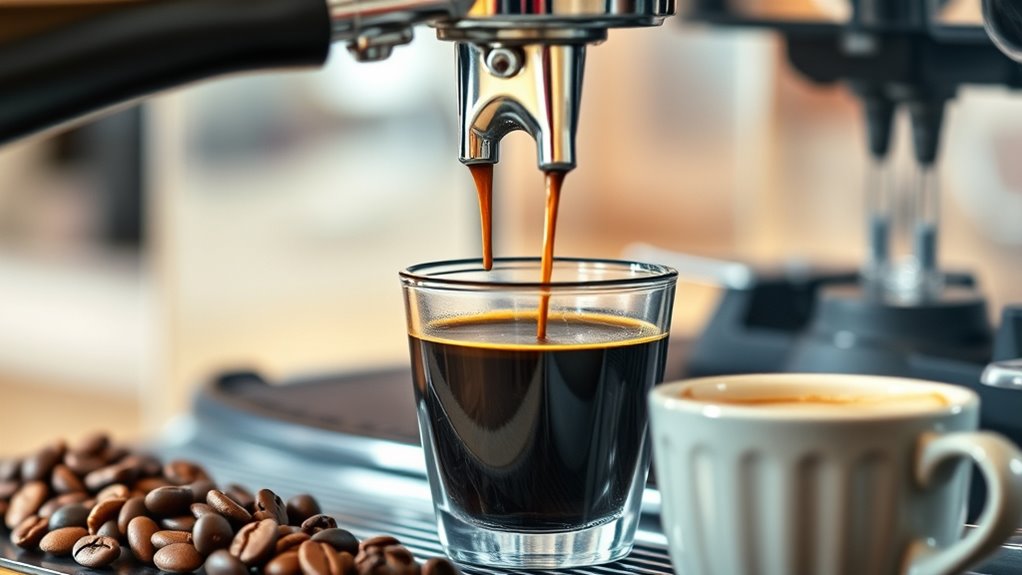
Although espresso might seem simple, it’s crafted through a precise process that forces hot water at 195-205°F through finely-ground coffee at 9-12 bars of pressure. This extracts a concentrated shot in just 20-30 seconds.
You have to use high-quality, dark roasted beans, ground to a fine, consistent size. This guarantees ideal extraction.
The pressurized water rapidly passes through the coffee puck, pulling out intense flavors and producing a distinctive crema layer on top. That crema is a hallmark of quality espresso.
Precise control of temperature and pressure is critical. Even minor variations can affect taste and texture.
The result is a small, 1-2 ounce shot, rich with bold, chocolatey, and nutty notes.
Mastering these variables ensures the espresso’s distinctive intensity and complexity. It might take some practice, but it’s totally worth it for that perfect cup.
An average single shot contains about 63 mg of caffeine, giving it a strong caffeine concentration despite its small size.
Espresso Vs. Drip Coffee: Brewing Methods Compared
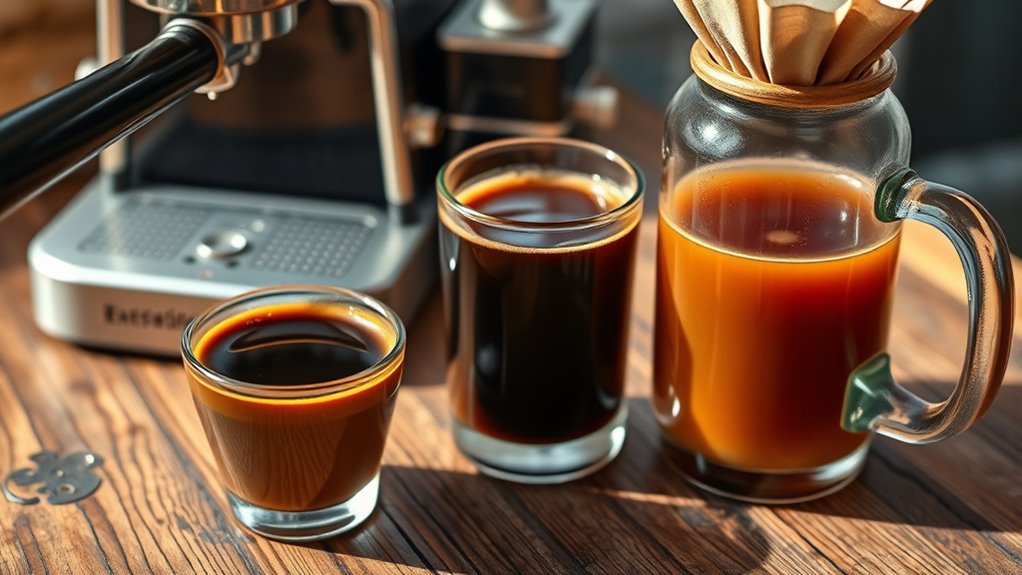
Now that you understand how espresso is crafted through high-pressure extraction, it’s important to compare this method with how drip coffee is brewed. Espresso uses about 9 bars of pressure to force hot water through finely-ground coffee in 25-30 seconds. Precise control of extraction time and pressure plays a crucial role in achieving espresso’s unique flavor profile.
Drip coffee relies on gravity, letting hot water flow through coarser grounds over 6-12 minutes. The equipment also differs: espresso machines control pressure and temperature precisely, while drip coffee uses simpler devices. These differences affect the final drink’s concentration and texture.
| Aspect | Espresso | Drip Coffee |
|---|---|---|
| Brewing Time | ~25-30 seconds | 6-12 minutes |
| Coffee Grind | Fine | Coarse |
| Result | Concentrated shot with crema | Larger, lighter-bodied cup |
How Roast Types Affect Espresso And Coffee Flavor
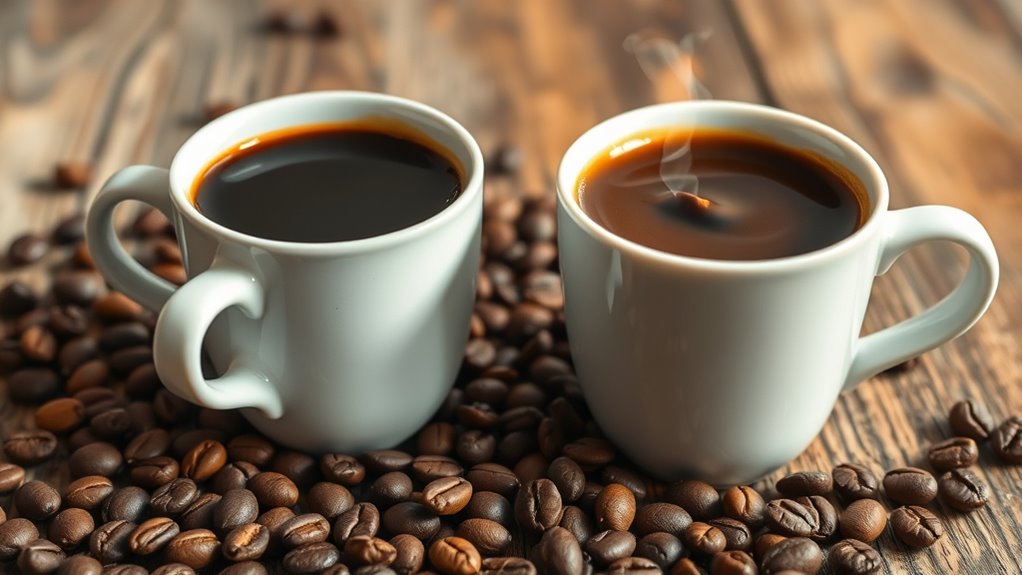
You’ll notice that roast levels play a big role in shaping the flavors of both espresso and coffee. Dark roasts, for example, bring out richer, chocolatey notes that many people love.
On the other hand, lighter roasts tend to keep the bright acidity and fruity flavors intact, giving your cup a more vibrant taste.
When it comes to espresso, darker roasts are usually the go-to because they help build a fuller body and create that thick, stable crema on top.
Medium roasts strike a nice balance—they preserve some of the bean’s natural flavors while adding a bit of depth from the roasting process.
Knowing these differences makes it easier to choose the right roast for the flavor you want to highlight in your brew. It’s all about finding what suits your taste best!
Adjusting your grind size and brewing parameters according to roast level is also crucial for achieving the best flavor clarity and balance.
Roast Levels And Profiles
When exploring how roast levels impact espresso and coffee flavor, it’s essential to understand the distinct characteristics that roasting gives the beans. Dark espresso roasts reach internal temperatures of 465–485°F (240–252°C). These produce oily, shiny beans with bold, chocolatey, and nutty notes.
Lighter roasts, on the other hand, stay matte and less oily. This helps preserve the origin flavors with brighter, fruitier acidity. The roasting process has minimal effect on caffeine. Darker roasts lose some caffeine but make up for it through solubility.
Blonde espresso, for example, uses lightly roasted beans that are roasted before the first crack, resulting in a milder, brighter flavor profile with citrus and floral notes.
| Roast Level | Bean Surface | Flavor Profile |
|---|---|---|
| Light | Matte, dry | Bright, fruity, acidic |
| Medium-Light | Slightly shiny | Balanced, complex |
| Medium | Shiny | Nutty, mild bitterness |
| Medium-Dark | Oily, shiny | Rich, fuller body |
| Dark (Espresso) | Very oily, shiny | Bold, chocolatey, intense |
Flavor Impact Of Roasts
Understanding how roast levels affect bean characteristics naturally leads to examining their direct impact on flavor profiles in espresso and coffee. When you use darker roasts, common in espresso, you’ll notice bolder, chocolatey, and nutty flavors with reduced acidity. These roasts enhance body and crema, producing a sweeter, caramelized bitterness.
On the other hand, lighter roasts preserve the bean’s original fruity and floral notes, giving brewed coffee a brighter, more complex flavor spectrum.
While caffeine content remains mostly stable across roasts, darker roasts’ intensified, less acidic taste affects perceived strength.
So, roast type shapes bitterness, sweetness, and acidity distinctly. It really guides your choice depending on whether you want espresso’s intensity or coffee’s nuanced brightness.
This interplay defines how roast impacts your beverage’s final flavor profile. Additionally, adjusting the grind size according to roast level is essential for achieving optimal extraction and flavor balance.
Espresso Roast Characteristics
Although espresso roasts typically fall within the medium-dark to dark range, they undergo specific development to accentuate bold, chocolatey, and nutty flavor compounds essential for espresso’s concentrated profile.
This roast level reduces acidity and enhances roasted, smoky notes, creating a richer, more intense taste.
You’ll notice the roast directly impacts bean solubility, which governs extraction speed and crema quality during high-pressure brewing.
Importantly, espresso roast doesn’t imply higher caffeine content compared to lighter roasts but prioritizes flavor concentration suitable for espresso’s brewing method.
- Medium-dark to dark roast highlights bold, chocolatey, nutty flavors
- Darker roast reduces acidity, increases smoky notes
- Roast level alters bean solubility, affecting extraction rate
- Proper roast enhances crema formation in espresso shots
- Espresso roast delivers a richer, more intense flavor profile
Additionally, the caffeine content in espresso varies depending on factors like bean type and extraction, with a typical double shot of espresso containing around 126 mg of caffeine.
How Grind Size Affects Espresso And Coffee Extraction
Since grind size directly controls water flow and extraction rate, you need to adjust it carefully to get the espresso or coffee taste you want.
Grind size controls water flow and extraction, so fine-tune it to perfect your espresso or coffee flavor.
For espresso, aim for an almost powdery grind, kind of like powdered sugar. This creates enough resistance to slow the water and pull out those concentrated flavors.
If the grind is too fine, you risk over-extraction, which makes the espresso bitter. But if it’s too coarse, the shot will be weak and sour because of under-extraction.
For brewed coffee, a coarser grind lets the water flow faster. Just be careful—if it’s too coarse, your coffee will taste thin and under-extracted.
Consistency matters a lot here. Uneven grind particles lead to uneven extraction, which messes with the flavor and can ruin the crema on your espresso.
Being precise with your grind size helps you nail the ideal brew time and get a balanced extraction. That’s what really shapes the quality and strength of your espresso or coffee.
Adjusting grind size along with tamping pressure and water temperature is essential to optimize extraction time and flavor.
Espresso Vs. Coffee: Flavor Profiles Explained
You’ll notice that espresso delivers a bold, concentrated flavor with a thick, velvety mouthfeel.
On the other hand, regular coffee offers a lighter, cleaner taste and a thinner texture.
Because espresso is made using high-pressure extraction, it intensifies bitterness and richness, creating a complex flavor profile.
Meanwhile, drip coffee has a longer brew time, which produces a more delicate balance.
Knowing these differences in texture and flavor intensity really helps you appreciate how brewing methods shape each cup.
Regular maintenance, including descaling your espresso machine, ensures consistent flavor and optimal brewing performance.
Flavor Intensity Differences
When you compare espresso and regular coffee, the difference in flavor intensity stands out immediately because of their distinct extraction methods. Espresso’s high-pressure extraction concentrates bold, complex flavors in a small volume. This process really brings out roasted, nutty, and chocolatey notes.
On the other hand, drip-brewed coffee offers a lighter, more balanced profile with clearer acidity and fruitier highlights. The rapid espresso process gives you a richer, more robust taste. Meanwhile, longer brewing extracts subtler, more diluted flavors.
Espresso extraction uses about 9 bars of pressure, which really intensifies the flavor compounds. Plus, the small serving size concentrates the taste, making espresso more potent.
Longer brew times in drip coffee tend to enhance acidity and fruity notes.
Roast level and bean origin play a big role in influencing intensity for both types. Espresso’s rapid extraction focuses more on body and richness rather than clarity.
Mastering the espresso extraction ratio allows baristas to precisely control the strength and character of these intense flavors.
Texture And Mouthfeel
Although both espresso and regular coffee come from the same beans, their textures and mouthfeels differ considerably because of brewing techniques and extraction variables.
Espresso has a thick, velvety mouthfeel thanks to its high concentration of dissolved oils and that signature crema. The crema is a frothy, silky layer that really boosts the sensory richness.
This intense extraction gives espresso a full-bodied, syrupy texture that feels rich and smooth on your palate.
On the other hand, drip coffee comes with a lighter, more transparent body and a cleaner, less viscous mouthfeel. Its longer brewing time and coarser grind reduce emulsified oils, making for a milder, delicate texture.
Without the crema, brewed coffee feels thinner and offers a crisp, less creamy sensation compared to espresso’s dense, luscious mouthfeel.
Water temperature during espresso extraction plays a crucial role in balancing sweetness and bitterness, directly influencing the final texture and flavor profile.
Serving Sizes And Presentation Differences
Because espresso is highly concentrated, it’s served in small 1-2 ounce shots that showcase its intense flavor and rich aroma. In contrast, coffee is typically poured into larger 6-8 ounce mugs, offering a milder taste due to its dilution. The serving size directly affects how you experience each beverage’s profile and consumption pace.
Espresso is served in pre-heated demitasse cups to maintain temperature. Coffee is presented in standard mugs or tumblers.
Espresso features a distinctive crema layer atop the shot, while coffee lacks crema, with a more uniform surface.
You tend to consume espresso quickly. Coffee, on the other hand, encourages slower sipping.
This precise presentation highlights espresso’s intensity, while coffee emphasizes volume and a gentler sensory experience.
How Much Caffeine Is In Espresso Vs. Coffee?
While espresso delivers a concentrated burst of flavor in a small volume, its caffeine content per serving is generally lower than that of a standard cup of coffee due to size differences.
A single 1-ounce shot of espresso contains about 63 milligrams of caffeine, whereas an 8-ounce cup of drip coffee typically contains roughly 95 milligrams.
This difference arises because coffee averages around 12 milligrams of caffeine per ounce.
If you double the espresso shot to 2 ounces, you get approximately 126 milligrams of caffeine, which is comparable to larger coffee servings.
Keep in mind that caffeine content varies based on bean type, roast level, and brewing method.
But volume is really the key factor when you’re comparing total caffeine intake between espresso and coffee.
Busting Common Espresso And Coffee Myths
When you compare espresso and coffee, you might assume espresso packs more caffeine simply because of its intense flavor. But that’s a misconception rooted in serving size and brewing methods rather than caffeine content.
Espresso’s concentrated taste comes from forcing hot water through finely-ground beans quickly, not from a higher caffeine dose per shot.
Consider these common myths:
- An 8 oz. drip coffee typically contains more caffeine than a 1 oz. espresso shot due to volume differences.
- Dark roast beans used for espresso aren’t considerably higher in caffeine than lighter roasts.
- The rapid caffeine absorption from espresso causes a quicker stimulant effect, not necessarily more caffeine.
- Espresso’s intensity is flavor-based, not caffeine-based.
- Roast level minimally impacts caffeine content; bean type influences it more.
Understanding these points helps you accurately assess espresso and coffee’s caffeine effects. It’s all about knowing what’s really going on behind the scenes.
Choosing Espresso Or Coffee: Which Suits You?
How do you decide between espresso and coffee for your daily caffeine fix? If you want a quick, concentrated caffeine hit with about 63 mg per 1 oz shot and a bold, intense flavor, espresso suits you. It demands an espresso machine and precise control over grind size, temperature, and pressure to extract that velvety texture.
On the other hand, if you prefer a milder, larger-volume drink with around 95 mg caffeine per 8 oz cup, regular coffee brewed by drip or French press is ideal. It offers a steadier caffeine intake and simpler preparation.
Your choice really depends on whether you favor a potent, small serving or a lighter, extended-sipping experience. It’s all about balancing equipment complexity and flavor intensity to match your routine and taste preferences.
Frequently Asked Questions
Can Espresso Be Used as a Base for Other Coffee Drinks?
Yes, you can use espresso as a base for other coffee drinks. Its concentrated flavor and crema provide a rich, consistent foundation. This makes it perfect for crafting lattes, cappuccinos, Americanos, and various specialty beverages.
Plus, using espresso gives you precise control over the strength and flavor of your drink. It’s a great way to mix things up and enjoy different coffee experiences. So, go ahead and experiment with espresso as your starting point!
What Equipment Is Essential for Making Espresso at Home?
You’ll need a pump or lever espresso machine delivering 9 bars pressure, a burr grinder for fine, consistent grounds, a tamper for even compression, a temperature-controlled heater (195-205°F), and an espresso-specific filter basket.
These tools might sound like a lot, but each one plays a key role in making great espresso at home. Once you have them, you’ll be all set to start experimenting and dialing in your perfect shot.
How Does Water Temperature Impact Espresso Extraction?
Imagine water flowing like molten lava between 195°F and 205°F. You’ll extract rich oils and balanced flavors.
If the water’s too cold, your espresso tastes sour and weak. But if it’s too hot, it turns bitter and harsh. It’s all about finding that sweet spot.
Are There Health Benefits Unique to Espresso?
Yes, espresso’s rapid extraction preserves higher antioxidant levels like chlorogenic acids. These antioxidants help reduce inflammation and oxidative stress.
That means drinking espresso in moderate, controlled servings could potentially boost your cognitive function and cardiovascular health.
What Is the History and Origin of Espresso?
You’ll find espresso originated in early 20th-century Italy, created for quick extraction using steam pressure. Innovations by Bezzera and Gaggia enhanced efficiency and introduced crema, defining espresso’s unique, concentrated flavor and texture.
It’s pretty cool how these changes made espresso what it is today. The crema, that creamy layer on top, really sets espresso apart from other coffee. And thanks to these pioneers, we get a quick, rich coffee experience every time.
Conclusion
Now that you’ve unraveled the nuanced dance between espresso and coffee, from grind size to roast depth, you’re equipped like a seasoned barista crafting a perfect shot.
Whether you crave espresso’s intense, concentrated essence or drip coffee’s nuanced layers, each brew tells its own story. Like choosing between a sonnet and an epic, your pick reflects both technique and taste.
So, trust your palate and brewing wisdom to savor your ideal cup every time.

Pingback: How Much Is A Shot Of Espresso – Price Guide