An Espresso Martini typically contains about 1.5 oz of vodka and 0.75 oz of coffee liqueur, giving it an alcohol content of 20-25% ABV. The vodka usually has 40% ABV, while coffee liqueurs range from 20-26%. Together, they create a strong yet smooth cocktail.
You can adjust the strength by tweaking the vodka or liqueur amounts or brands. If you want to understand how ingredient choices impact both flavor and potency, there’s more to explore. It’s pretty interesting once you dive into it!
How Much Vodka Goes Into a Standard Espresso Martini
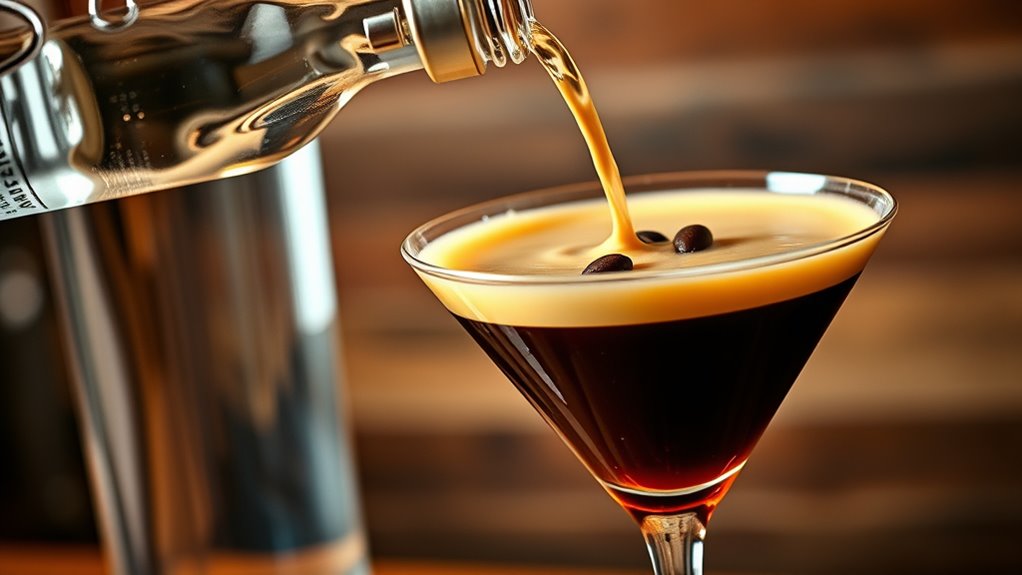
When you’re making a standard Espresso Martini, you’ll typically use about 1.5 ounces (45 ml) of vodka. This amount strikes a perfect balance, letting the coffee and liqueur flavors shine without vodka overpowering the drink.
Some recipes and bartenders might go up to 2 ounces (60 ml), depending on personal taste, but 1.5 ounces remains the most common measurement.
While some prefer 2 ounces, 1.5 ounces of vodka is the classic Espresso Martini measure.
Using premium vodka brands, like Grey Goose, is popular because they add smoothness and quality to the cocktail.
This vodka quantity is consistent across most traditional recipes, ensuring you get a reliable alcohol content each time.
How Coffee Liqueur Adds to the Alcohol Content
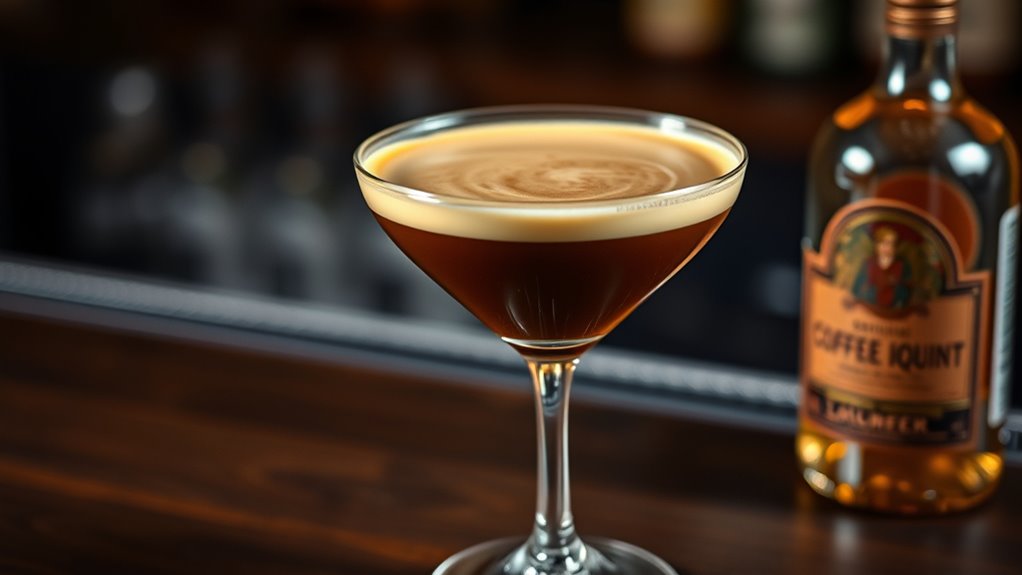
When you add coffee liqueur to your espresso martini, it not only boosts the alcohol content but also brings a sweet, rich flavor.
Plus, the amount you use can really change the drink’s strength and balance. So, you can tweak it to suit your taste perfectly.
This flexibility lets you control both the punch and the overall flavor of your cocktail.
The quality and flavor of the espresso shot also play a crucial role in complementing the coffee liqueur’s taste, especially when using freshly ground beans for a richer profile.
Alcohol Content Variation
Although vodka usually brings the strongest punch with its 40% alcohol by volume, coffee liqueurs like Kahlúa add a significant boost to your Espresso Martini’s overall strength. The alcohol content varies depending on the coffee liqueur’s ABV and how much you use. More coffee liqueur means a stronger drink, while less makes it milder.
Different brands also affect the total alcohol percentage, typically ranging between 15% and 25%.
| Ingredient | Typical ABV (%) |
|---|---|
| Vodka | 40 |
| Kahlúa (Coffee Liqueur) | 20-26 |
| Total Cocktail | 15-25 |
| Ratio Dependent | Varies |
Adjust your measurements to control the Espresso Martini’s kick precisely, just as espresso flavor and strength can be finely tuned by adjusting brew ratios and ingredient proportions.
Flavor and Strength Balance
Since coffee liqueur typically contains between 20% and 26% alcohol by volume, it plays a key role in shaping both the flavor and strength of your Espresso Martini.
When you add about 0.75 to 1 ounce of coffee liqueur, you’re boosting the cocktail’s alcohol content, often pushing it to around 15-20% overall.
This addition doesn’t just up the potency; it also brings a sweet, rich depth that balances the vodka’s sharper edge.
The liqueur’s sweetness masks some alcohol harshness, making the drink smoother without sacrificing strength.
So, while vodka provides the backbone, coffee liqueur rounds out the flavor and keeps the cocktail’s kick intact.
It creates a perfectly balanced Espresso Martini you’ll want to sip again and again.
For the best flavor experience, use freshly brewed espresso from finely ground coffee beans, as grind size and dose critically affect extraction quality and taste.
How Ingredient Ratios Influence Espresso Martini Alcohol Content
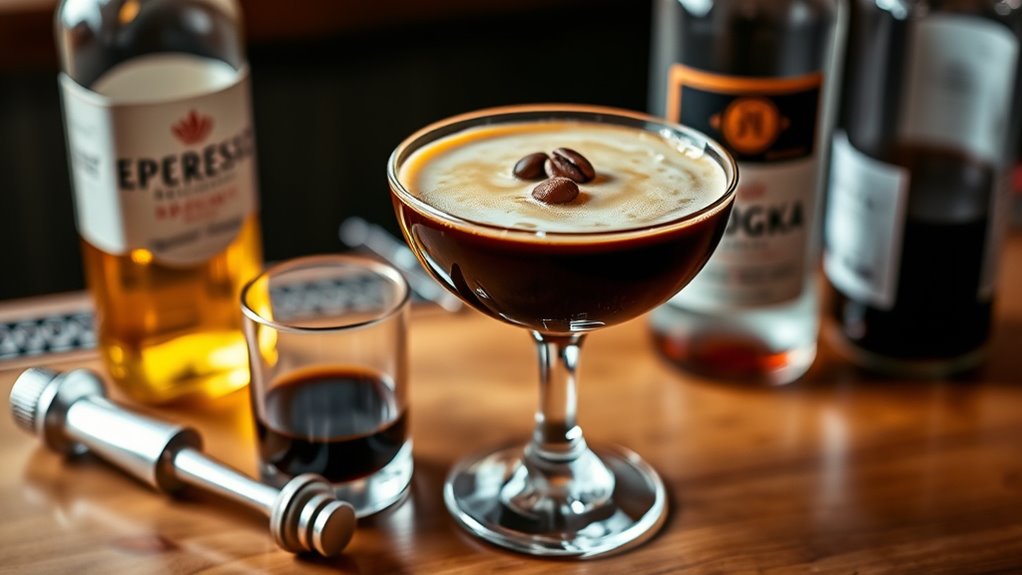
You’ll notice that adjusting the vodka proportion directly changes the espresso martini’s alcohol kick. It’s pretty straightforward—more vodka means a stronger buzz.
At the same time, balancing the coffee liqueur with the espresso also plays a role. Stronger or sweeter liqueurs can shift the overall strength of the drink.
Using freshly brewed espresso with the right extraction time ensures the best flavor balance in your martini.
Vodka Proportion Effects
How much vodka you use in your espresso martini makes a big difference in its kick. Typically, 1.5 oz of vodka gives you a balanced drink with around 20-25% alcohol by volume.
If you decide to increase the vodka to 2 oz or more, your cocktail becomes noticeably stronger and more intoxicating.
On the flip side, cutting back on vodka lowers the alcohol percentage, resulting in a lighter, less potent drink.
The vodka ratio you choose directly affects both the strength and the overall flavor profile of your espresso martini.
For an added depth of flavor, some bartenders incorporate espresso powder to subtly enhance the coffee notes without overpowering the drink.
Liqueur And Espresso Balance
Adjusting the vodka amount definitely changes your espresso martini’s strength, but the coffee liqueur plays a big role too. Typically, your cocktail combines about 1.5 oz vodka, 0.75 oz coffee liqueur, and 1 oz espresso.
The liqueur, often around 20% ABV like Kahlúa, adds both flavor and alcohol content.
If you increase the coffee liqueur, your drink gets stronger; reducing it makes for a lighter sip. Balancing vodka and liqueur is key.
More liqueur boosts richness and potency, but too much can overpower the coffee notes.
Using a precise amount of espresso, typically around 1 ounce, helps maintain the cocktail’s flavor balance while contributing to its overall strength.
How Vodka and Coffee Liqueur Brands Affect Alcohol Strength
Since the alcohol strength of an espresso martini hinges on the brands you choose, picking your vodka and coffee liqueur carefully is key. For example, GREY GOOSE® vodka, with its consistent 40% ABV, adds a solid alcohol base to your cocktail.
On the other hand, coffee liqueurs like Kahlúa typically come in around 20% ABV, which also plays a major role in the drink’s overall potency.
If you opt for higher-ABV vodka or coffee liqueur brands, your espresso martini will naturally be stronger. So, by checking and comparing the ABV ratings of your chosen vodka and coffee liqueur, you control how boozy your cocktail turns out.
It’s a simple but important step to get the balance and strength you want.
What Is the Typical Alcohol Content (ABV) of a Standard Espresso Martini?
Although the exact alcohol content can vary depending on the brands and amounts you use, a standard espresso martini usually clocks in at around 20-25% ABV. This range comes from blending about 1.5 oz of 40% ABV vodka with 0.75 oz of coffee liqueur, which typically has 20-25% ABV.
The final drink contains roughly 0.6 to 0.8 ounces of pure alcohol, making it a moderately strong cocktail you can enjoy responsibly.
Proper extraction time in espresso preparation ensures the coffee component of your martini delivers optimal flavor without bitterness.
| Ingredient | Typical ABV (%) |
|---|---|
| Vodka | 40 |
| Coffee Liqueur | 20-25 |
| Espresso | 0 |
| Total Volume | ~2.25 oz |
| Final Drink ABV | 20-25 |
Knowing this helps you gauge how strong your espresso martini really is.
Variations That Change the Alcohol Content in Espresso Martinis
When you tweak the ingredients in an espresso martini, you can considerably change its alcohol content. For example, increasing vodka from 1.5 oz to 2 oz makes the drink noticeably stronger.
Swapping out coffee liqueur for a higher-proof spirit, like over-proof rum, also boosts alcohol levels markedly.
If you reduce the espresso or coffee liqueur and add more vodka, you’ll get a lighter coffee flavor but a more potent cocktail overall.
Adding a splash of flavored spirits such as Cointreau or Grand Marnier not only raises the alcohol content but also changes the flavor profile.
Basically, the more vodka or high-proof spirits you use in your recipe, the higher the alcohol percentage per serving will be.
Keep in mind that the espresso itself adds negligible calories to the cocktail, so changes in alcohol content don’t significantly affect the drink’s calorie count.
Tips to Adjust the Strength of Your Espresso Martini
If you want to tweak the strength of your espresso martini, adjusting the vodka amount is the most straightforward move. Increasing the vodka will boost the alcohol content, while cutting back makes the drink lighter.
The standard recipe calls for 1.5 oz vodka, giving you about 20-25% ABV depending on the spirits used.
You can also raise the strength by adding more coffee liqueur, which usually has 20-30% ABV.
Shaking with extra ice dilutes the drink slightly, softening the alcohol’s bite without changing its actual content.
To make a weaker cocktail, try swapping some vodka for non-alcoholic ingredients or reduce the vodka while keeping the flavors balanced.
These simple adjustments help you craft an espresso martini that fits your taste perfectly.
For an even richer coffee flavor, consider using espresso powder in your cocktail preparation to enhance the depth without adding extra alcohol.
Comparing Espresso Martini ABV to Other Popular Cocktails
Since you’re curious about how the Espresso Martini stacks up, it typically clocks in at around 20-25% ABV. This makes it stronger than many popular cocktails like Mojitos or Margaritas, which usually hover around 10-15%.
It’s interesting to note that the Espresso Martini shares a similar alcohol content with the Cosmopolitan, another trendy cocktail.
However, compared to a standard Martini, which often ranges between 30-40% ABV, the Espresso Martini is a bit lighter.
Keep in mind that the exact strength can vary depending on the brand of spirits and the recipe you use. If you prefer a stronger kick, you could experiment with higher-proof liquors.
But generally, the Espresso Martini offers a nice balance of potency and flavor among popular cocktails.
Cutwater’s canned Espresso Martini, for example, has a milder 13% ABV, providing a smoother, less intense experience with a dessert-like sweetness and creaminess, making it distinct from traditional versions with higher alcohol content and bold coffee flavors. Cutwater Espresso Martini
Why Alcohol Content Matters for Responsible Drinking
Knowing the alcohol content in your Espresso Martini helps you keep track of how much you’re drinking and avoid overdoing it. Since the ABV can range from 20% to 30%, depending on vodka and liqueur amounts, it’s easy to underestimate how strong your drink is.
Understanding your Espresso Martini’s ABV helps you drink responsibly and avoid underestimating its strength.
When you understand the exact percentage, you can pace yourself better and reduce the risk of impairment, especially during social events.
Accurate measurement of ingredients guarantees consistent alcohol levels, which supports responsible drinking habits.
By choosing cocktails with known alcohol content, you make informed decisions that protect your safety and well-being.
Frequently Asked Questions
Can Decaf Espresso Be Used Without Affecting Alcohol Content?
Yes, you can use decaf espresso without affecting the alcohol content. The alcohol mainly comes from vodka and coffee liqueur, so swapping regular espresso for decaf won’t change the cocktail’s strength. It just changes the caffeine kick.
Does Shaking or Stirring Change the Cocktail’s Alcohol Level?
Shaking or stirring won’t change your espresso martini’s actual alcohol content. Shaking dilutes it a bit with melted ice, making it smoother.
But the total alcohol amount stays the same regardless of your mixing method. So, whether you shake or stir, you’re getting the same kick.
How Long Does Alcohol in an Espresso Martini Stay in Your System?
Alcohol from your espresso martini typically stays in your system for 12 to 24 hours. How long exactly depends on things like your metabolism, body weight, and liver health.
You can usually expect peak blood alcohol levels within 30 minutes to 2 hours after drinking. So, it hits you pretty quickly. Just keep in mind everyone processes alcohol a bit differently!
Are Espresso Martinis Safe to Drink While Pregnant?
You might crave that espresso martini, but it’s best to skip it while pregnant. The alcohol can harm your baby’s development, so choosing non-alcoholic drinks keeps you both safe and healthy.
There are plenty of tasty alternatives that give you the same vibe without the risk. Plus, staying alcohol-free during pregnancy helps you feel better overall. So, go ahead and treat yourself to something delicious and worry-free!
Can Espresso Martinis Be Made Alcohol-Free but Still Taste Authentic?
Yes, you can make alcohol-free espresso martinis that still taste authentic by using decaf espresso, coffee-flavored syrups, and non-alcoholic liqueur substitutes. You’ll balance sweetness and creaminess to keep that classic flavor.
It’s all about getting the right mix so it feels just like the real deal. Plus, you can tweak the ingredients to suit your taste. So, no need to miss out on this delicious cocktail!
Conclusion
When you sip an espresso martini, you’re tasting a delicate dance between vodka’s kick and coffee liqueur’s charm. Knowing how each splash shapes its strength helps you savor responsibly, like a conductor fine-tuning a symphony.
Whether you want a bold crescendo or a mellow whisper, adjusting the ratios lets you pour the perfect note. So, raise your glass wisely. After all, balance is the secret ingredient in every great cocktail.