You can generally enjoy four shots of espresso safely, as they contain about 240-400 mg of caffeine. This amount stays within FDA daily limits for most adults. However, your tolerance, health conditions, and medications may require you to limit intake.
If you have heart issues, anxiety, or are pregnant, it’s best to be cautious. Spacing shots and monitoring symptoms can help prevent side effects. To fully understand how to drink espresso safely and comfortably, keep exploring key guidelines.
Is Drinking 4 Shots of Espresso Safe?
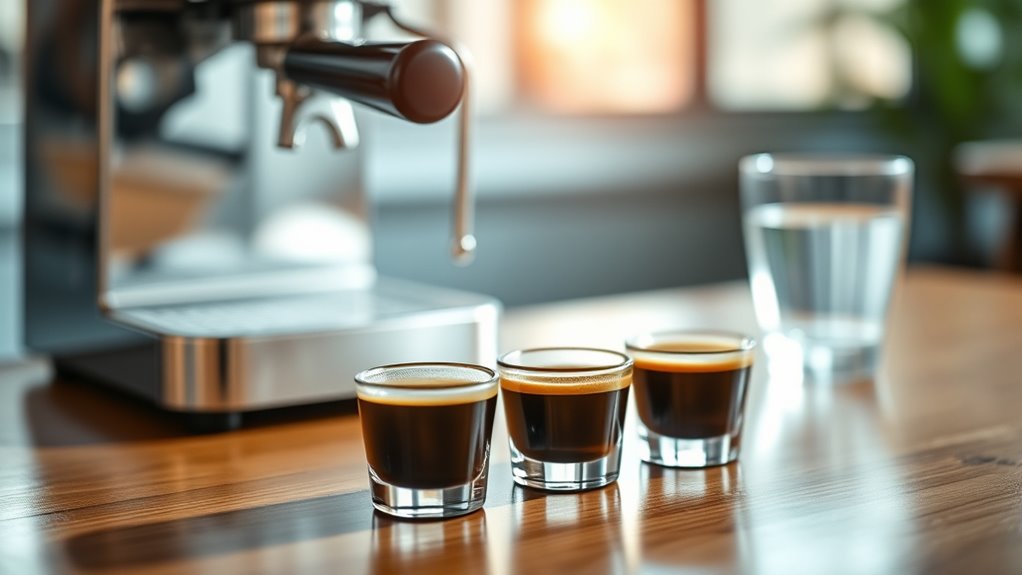
While four shots of espresso contain a significant amount of caffeine, typically between 240 and 400 mg, this level can be safe for most healthy adults when consumed throughout the day and not combined with other caffeine sources.
Four espresso shots provide 240-400 mg caffeine, generally safe if spaced and not combined with other sources.
You should consider personal factors like body weight, caffeine sensitivity, and any medical conditions or medications you take, as these influence how your body handles caffeine.
Drinking four shots back to back may trigger side effects such as jitteriness, increased heart rate, or insomnia, especially if you’re sensitive.
To stay safe, space out your espresso shots and monitor how you feel.
Moderation and listening to your body are key.
Generally, four shots fit within recommended daily limits, but always adjust based on your individual tolerance.
Espresso from machines like the Starbucks Mastrena ensures consistent caffeine content due to its precise extraction technology.
How Much Caffeine Is in 4 Shots of Espresso?
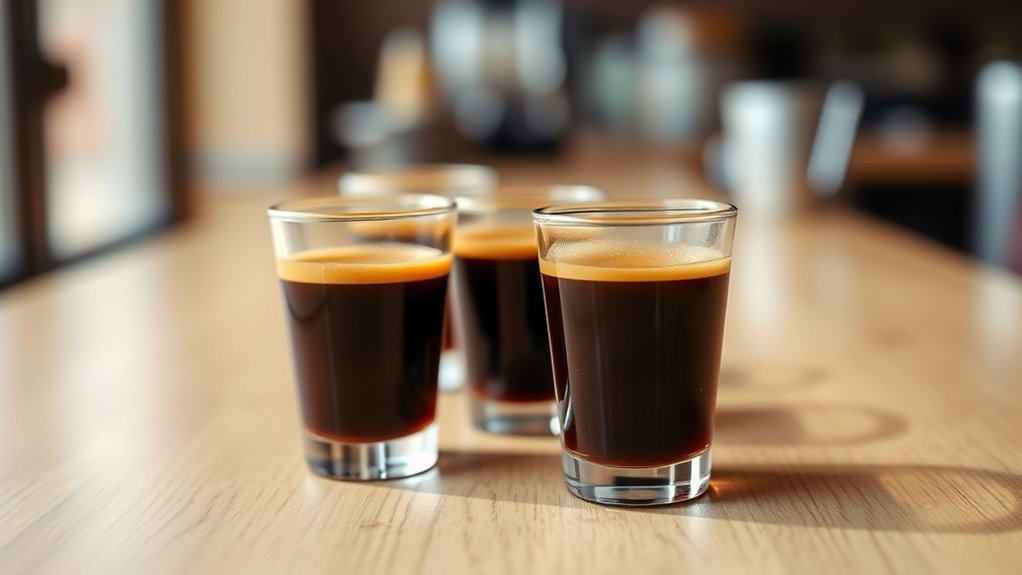
How much caffeine do you actually get from four shots of espresso? Typically, four shots contain between 240 mg and 400 mg of caffeine. This range depends on factors like shot size and the type of coffee bean used.
A standard single shot usually delivers about 60-75 mg, so four shots provide roughly 240-300 mg.
If your espresso uses Robusta beans, expect a higher caffeine content compared to Arabica. Also, brewing variables such as extraction time and grind size can influence caffeine levels.
For most healthy adults, consuming four shots remains within the FDA’s recommended daily caffeine limit. However, if you’re caffeine-sensitive, this amount might feel excessive.
Understanding these specifics helps you gauge your caffeine intake accurately and safely. The caffeine concentration in espresso is significantly higher than in drip coffee, which means you consume more caffeine in less volume with espresso shots.
Comparing 4 Shots of Espresso to Other Coffee Drinks
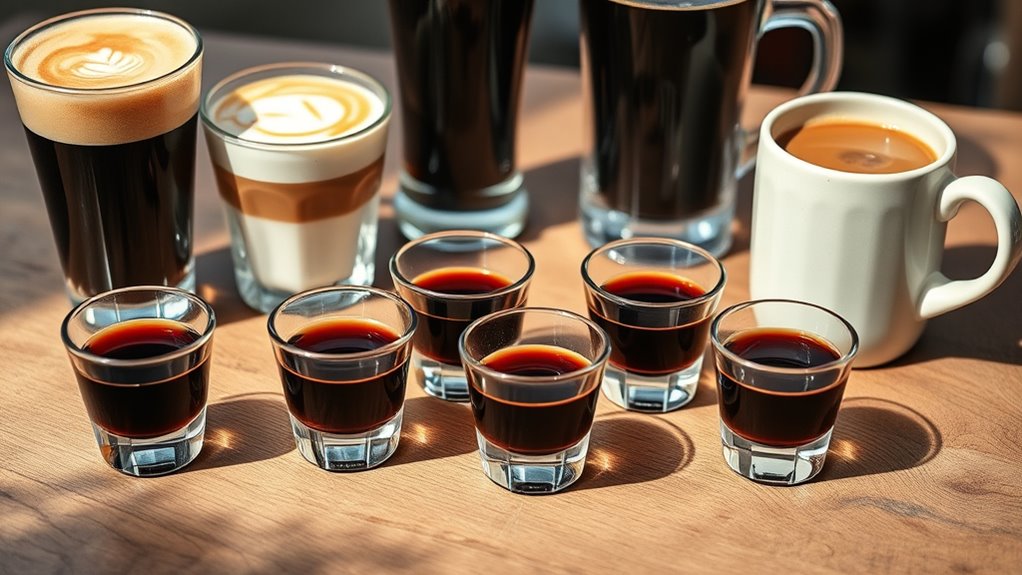
If you want to understand how four shots of espresso stack up against other coffee drinks, consider their caffeine content carefully. Four shots typically contain 240-400 mg of caffeine, which is markedly higher per ounce than an 8 oz cup of drip coffee that has 80-140 mg.
However, a 12 oz cold brew often contains 150-250 mg, sometimes matching or even exceeding espresso’s caffeine.
Energy drinks, usually 8 oz, range from 70-200 mg, which is generally less than four espresso shots.
In practical terms, your four-shot espresso roughly equals or slightly surpasses the caffeine in a standard 12 oz soda or a small café coffee.
Knowing these comparisons helps you gauge your caffeine intake more accurately relative to your preferred beverages. For consistent flavor and caffeine extraction, it’s important to maintain proper espresso extraction timing when preparing multiple shots.
Who Should Limit Their Espresso Intake?
If you have heart conditions, high blood pressure, or anxiety, it’s a good idea to limit how much espresso you drink because caffeine can affect you more strongly.
Also, if you’re pregnant or breastfeeding, or taking certain medications, you’ll want to keep an eye on your intake to stay safe.
And if you’re someone who’s sensitive to caffeine or has trouble sleeping, cutting back on espresso might help you avoid feeling jittery or restless.
Espresso contains about 63 mg of caffeine per shot, so understanding caffeine content can help you manage your daily intake effectively.
Health Conditions Impacting Intake
Because your health status can considerably influence how your body handles caffeine, certain conditions require you to limit your espresso intake. If you have heart issues or hypertension, reducing caffeine helps lower risks of arrhythmias and high blood pressure.
Pregnant women should keep their caffeine under 200 mg daily, about two espresso shots, to protect fetal health.
If you suffer from anxiety or sleep disorders, caffeine can worsen restlessness and insomnia, so limiting espresso is a good idea.
Additionally, those with gastrointestinal problems like acid reflux or ulcers may find espresso’s acidity aggravates symptoms.
By understanding how these health conditions impact caffeine processing, you can better manage your espresso consumption and maintain your well-being.
Always consult your healthcare provider for personalized advice.
Medication And Sensitivity Effects
When you take certain medications like antidepressants, antibiotics, or stimulants, your body may process caffeine more slowly. This can increase your sensitivity to espresso’s effects. So, it’s a good idea to limit how much you drink to avoid side effects like jitteriness or a rapid heartbeat.
Also, if you have anxiety, heart disease, or sleep disorders, cutting back on espresso can help manage your symptoms. Pregnant or breastfeeding women should keep an eye on their intake too, to protect the health of their baby.
Using freshly brewed espresso with a rich crema layer can enhance the flavor but may also intensify caffeine’s impact, so moderation is key when considering espresso preparation methods.
| Who Should Limit Intake | Reason |
|---|---|
| Medication users | Slowed caffeine metabolism |
| Anxiety or heart disease | Symptom exacerbation |
| Pregnant or breastfeeding | Potential fetal/infant effects |
| Sleep disorder sufferers | Worsened insomnia |
| Sensitive individuals | Jitteriness, nausea, rapid heartbeat |
How Personal Factors Affect Your Espresso Limit
Although general guidelines suggest up to 400 mg of caffeine daily is safe, your personal factors play a crucial role in determining how much espresso you can handle without adverse effects.
Your body weight and metabolic rate greatly influence caffeine processing. Lighter individuals or those with slower metabolism may experience stronger effects.
Body weight and metabolism significantly affect how your body processes caffeine, impacting its strength and effects.
Health conditions like anxiety, heart problems, or pregnancy mean you need to limit intake well below general recommendations.
If you regularly consume caffeine, you might develop tolerance, which changes how much espresso you can safely enjoy.
Certain medications, such as antibiotics or antidepressants, can slow caffeine metabolism and increase side effect risks even at moderate doses.
Pay close attention to symptoms like jitters, nausea, or rapid heartbeat. They’re clear signals to adjust your espresso consumption based on your unique tolerance.
The intensity and depth of espresso, much like its multidimensional richness, can vary depending on personal sensitivity and factors affecting caffeine absorption.
What Happens If You Drink More Than 4 Shots?
Exceeding four shots of espresso pushes your caffeine intake beyond the generally recommended daily limit of 400 mg. This increases the likelihood of unpleasant side effects. You may experience jitteriness, increased heart rate, anxiety, or stomach discomfort.
Drinking more quickly tends to intensify these effects. It can cause insomnia, dizziness, or elevated blood pressure. Your individual tolerance plays a big role in how severe these symptoms get.
But going over four shots definitely poses health risks, especially for those who are sensitive or smaller in size. So, it’s a good idea to stay mindful of how much espresso you’re drinking.
Spreading out your espresso consumption throughout the day can help your body metabolize caffeine better and reduce the risk of caffeine toxicity.
| Side Effect | Description | Severity with >4 Shots |
|---|---|---|
| Jitteriness | Nervous energy, restlessness | Moderate to High |
| Increased Heart Rate | Palpitations, rapid pulse | Moderate to High |
| Anxiety | Nervousness, unease | Moderate to Severe |
| Stomach Discomfort | Nausea, cramps | Mild to Moderate |
Stay mindful of these risks when consuming espresso.
How to Space Out 4 Espresso Shots to Avoid Side Effects
To minimize side effects from four espresso shots, you should space them out by at least 30 to 60 minutes. This approach helps prevent rapid caffeine spikes, reducing jitteriness and a racing heart. Drinking each shot gradually allows your body to metabolize caffeine more effectively. This lowers the risk of anxiety or insomnia.
Here are three key tips:
- Wait 30-60 minutes between shots to avoid overstimulation.
- Drink water between shots to support hydration and digestion.
- Monitor how you feel and adjust timing, since personal tolerance varies.
Spacing shots thoughtfully helps maintain safe caffeine levels and ensures a more comfortable experience. Avoid taking shots back-to-back. You might also consider extending intervals to 1-2 hours if you notice any discomfort. Understanding the caffeine concentration in espresso can help you gauge how much caffeine you are consuming overall.
Signs You’re Drinking Too Much Espresso and What to Do
If you start feeling restless, experiencing shaky hands, or notice your heart racing after drinking espresso, these are signs you might be consuming too much caffeine. Other symptoms include stomach discomfort, headaches, and difficulty sleeping.
Since personal tolerance varies, some people feel these effects after just two or three shots, while others handle four with minimal issues.
Individual caffeine tolerance differs; some react to two or three shots, others manage four comfortably.
If you notice rapid heartbeat or increased anxiety, it’s essential to reduce your intake immediately to avoid potential health problems.
Pay close attention to how your body reacts after each shot. Monitoring these responses helps you determine if four shots exceed your individual caffeine limit.
Adjusting your consumption based on these signs ensures you enjoy espresso safely without compromising your well-being.
Keep in mind that a typical shot contains about 63 mg of caffeine, so consuming four shots means ingesting approximately 252 mg of caffeine, which may be excessive for some individuals.
Practical Tips to Enjoy Espresso Without Overdoing It
If you want to enjoy espresso without overdoing it, try spacing your shots throughout the day. This helps you avoid those sudden caffeine spikes and keeps you within safe limits.
Also, listen to your body. If you start feeling jittery or notice your heart racing, that’s a sign you might need to slow down a bit.
Using a Keurig machine can provide a quick espresso-style drink, but keep in mind it does not produce authentic espresso due to lower pressure levels.
Moderation And Timing
Although four shots of espresso can deliver a substantial caffeine boost, spacing them out throughout the day helps you avoid sudden spikes and potential side effects. Consuming approximately 300 mg of caffeine spread over hours is generally safe, but timing and moderation are key.
To enjoy espresso responsibly, consider these tips:
- Consume espresso earlier in the day to minimize sleep disturbances and allow your body to metabolize caffeine effectively.
- Space your shots evenly to prevent jitteriness and maintain steady energy levels.
- Combine espresso with lower-caffeine drinks like tea or decaf to manage your total caffeine intake without exceeding safe limits.
Recognizing Overconsumption Signs
Spacing your espresso shots thoughtfully helps manage your caffeine intake, but paying close attention to how your body responds is just as important. Signs like shakiness, rapid heartbeat, or anxiety often appear after 2-3 shots, indicating you might be pushing your limit.
Early symptoms such as restlessness or jitteriness are your body’s way of signaling to pause. Headaches, stomach discomfort, and trouble sleeping also suggest overconsumption. Monitoring these reactions helps you enjoy espresso without risking adverse effects.
| Symptom | What to Do |
|---|---|
| Shakiness or Jitteriness | Pause and hydrate |
| Rapid Heartbeat | Stop drinking espresso temporarily |
| Headache or Stomach Discomfort | Reduce intake next time |
Listen to your body and space shots to savor espresso safely.
Frequently Asked Questions
Can 4 Shots of Espresso Improve Athletic Performance?
Yes, four shots of espresso can improve your athletic performance by boosting alertness, endurance, and muscle efficiency. Just make sure you stay within safe caffeine limits to avoid side effects like increased heart rate or dehydration.
It’s pretty effective, but remember, everyone reacts differently to caffeine. So, listen to your body and don’t overdo it. A little boost can go a long way!
Does Espresso Affect Hydration Levels?
Espresso won’t substantially affect your hydration levels because its mild caffeine content doesn’t cause strong diuretic effects.
Just remember to drink water alongside your espresso to maintain proper hydration throughout the day.
How Does Espresso Caffeine Compare to Energy Drinks?
Espresso packs more caffeine per ounce than most energy drinks, but energy drinks often contain equal or higher total caffeine amounts. You should monitor intake carefully, as energy drinks’ slower consumption affects how caffeine impacts you.
It’s kind of interesting because even though espresso hits you with a quick caffeine boost, energy drinks deliver their caffeine more gradually. So, how you drink them really changes the effect on your body.
Just keep an eye on how much you’re having, especially if you’re mixing both or trying to cut back. It’s all about finding the right balance for you!
Can Pregnant Women Safely Consume 4 Shots of Espresso?
You shouldn’t consume four shots of espresso while pregnant. It’s important not to risk exceeding safe caffeine limits, and you definitely shouldn’t ignore professional advice.
Talk to your healthcare provider to figure out a caffeine amount that’s safe for both you and your baby. They can help you make the best choice based on your individual situation.
Does Espresso Have Any Nutritional Benefits Beyond Caffeine?
Yes, espresso offers antioxidants like chlorogenic acids, essential nutrients such as magnesium and B-vitamins, and supports heart health, digestion, and cognitive functions.
You benefit beyond caffeine through reduced oxidative stress and improved memory and concentration. It’s pretty great how a small cup can pack such a nutritional punch!
Conclusion
Imagine savoring four rich espresso shots like a bold symphony, energizing but balanced. While this amount is generally safe for most adults, your body’s response matters. Too much caffeine can lead to jitters or sleepless nights.
Listen to your limits, space out your shots, and stay mindful of personal factors like sensitivity or health conditions. By doing so, you can enjoy espresso’s robust kick without crossing the line into discomfort or risk.