You shouldn’t have more than 3 to 4 espresso shots a day to stay within safe caffeine limits, around 180-225 mg. This helps avoid side effects like anxiety and insomnia.
Each double shot has 125-150 mg caffeine, so spacing shots 3-4 hours apart lets your body process it safely. Individual factors like tolerance and health also matter.
Drinking beyond four shots raises risks of jitters and sleep issues. Keep going to understand how to enjoy espresso safely and recognize when to cut back.
How Many Espresso Shots Are Safe Per Day?
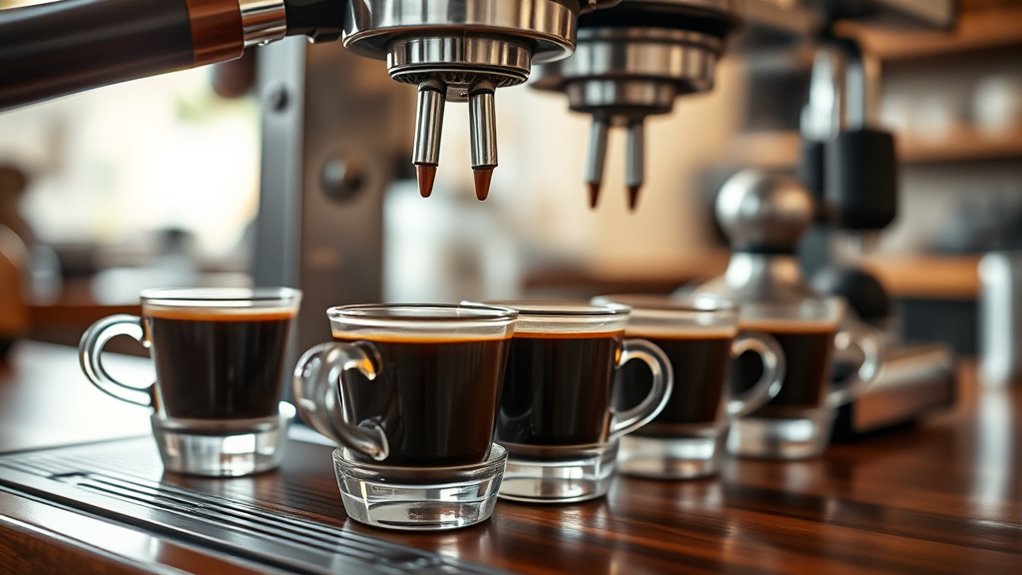
Most healthy adults should limit their espresso intake to 3 or 4 shots per day to stay within the FDA’s recommended caffeine limit of 400 mg.
Each double shot contains about 125-150 mg of caffeine, so consuming up to 3 shots keeps you well within a safe range of roughly 180-225 mg.
Drinking more than 4 shots daily can push you past this threshold and increase your risk of adverse effects like anxiety, insomnia, and elevated heart rate.
While individual tolerance varies, consistently exceeding 4 shots is generally too much and may lead to negative side effects.
To maintain your health and avoid these risks, it’s best to monitor your espresso consumption and stay within these evidence-based guidelines.
Additionally, understanding the importance of extraction time can help you optimize the flavor and strength of each shot, potentially allowing you to enjoy fewer shots without sacrificing taste.
How Much Caffeine Is in an Espresso Shot?
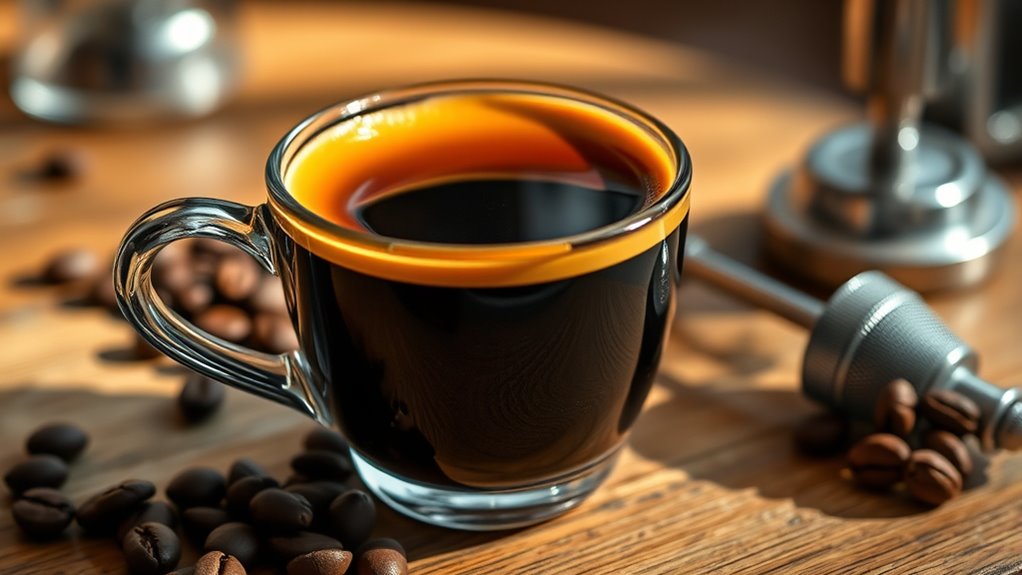
A single shot of espresso usually has around 63 to 75 mg of caffeine. But keep in mind, the exact amount can change depending on things like the type of bean, how it’s roasted, and how long it’s extracted.
For instance, Robusta beans pack almost twice the caffeine of Arabica beans, which can make your shot stronger or weaker.
Knowing these details makes it easier to compare espresso’s caffeine to other kinds of coffee and helps you keep track of how much caffeine you’re getting.
A double shot typically contains about 126 mg of caffeine, roughly double that of a single shot, providing a more concentrated caffeine boost with higher coffee-to-water ratio.
Espresso Caffeine Content
Although espresso shots vary in size and preparation, you can expect each standard 30 ml shot to contain between 60 and 75 mg of caffeine.
Laboratory tests show a 15 ml ristretto shot contains about 63 mg, while a 25 ml full espresso shot has roughly 68 mg.
Typically, a double shot delivers 125 to 150 mg, and a triple shot can reach 200 to 225 mg of caffeine.
While these values offer a general guideline, the caffeine content can shift depending on bean type, roast level, grind size, and extraction time.
Understanding these typical caffeine levels helps you gauge your intake accurately and avoid exceeding safe consumption limits.
Four shots of espresso typically contain about 258 mg of caffeine, which is below the daily safety limit for most healthy adults, making this caffeine dosage generally safe when consumed in moderation.
Factors Affecting Caffeine
Understanding the caffeine content in an espresso shot requires looking beyond standard measurements to the factors that influence it. The caffeine amount varies widely depending on bean type, roast, grind size, and extraction time. Robusta beans, for example, contain nearly twice the caffeine of Arabica beans, which can really affect your shot’s potency.
Also, the shot volume changes caffeine concentration. Ristretto (15 ml) and regular shots (25–30 ml) differ quite a bit in caffeine content.
| Factor | Example | Caffeine Impact |
|---|---|---|
| Bean Type | Robusta vs. Arabica | Robusta ≈ 2× caffeine |
| Shot Volume | 15 ml vs. 30 ml | Ristretto ≈ 63 mg, Regular ≈ 68 mg |
| Extraction Time | Short vs. Long | Longer = more caffeine |
For an espresso martini, using freshly brewed espresso ensures the cocktail has a rich flavor and the right caffeine kick.
Comparing Coffee Caffeine
When you order a standard espresso shot, you’re typically getting between 60 and 75 mg of caffeine. This amount can vary based on preparation and bean type.
Double shots usually contain 125 to 150 mg.
Stronger preparations like ristretto or those using Robusta beans can exceed 100 mg per shot.
Even though espresso has a higher caffeine concentration per ounce compared to drip coffee, its smaller serving size often results in less total caffeine.
Factors such as bean variety, roast level, extraction time, and brewing method influence caffeine content markedly.
Understanding these differences helps you gauge how much caffeine you’re consuming and manage your intake effectively.
This is especially useful when considering how many espresso shots you drink in a day.
For example, the caffeine content in espresso can range from approximately 114 mg to 130 mg for two shots due to variations in bean and technique.
What Affects How Much Espresso You Can Drink Safely?
When figuring out how much espresso you can safely drink, there are a few things you should consider. For starters, the caffeine content isn’t the same across the board—it changes depending on the type of bean, how it’s roasted, and how you prepare your espresso.
On top of that, your own body weight, how used to caffeine you are, and any health issues you might’ve all play important roles. The standard single shot of espresso contains about 63 mg of caffeine, but this can vary based on multiple factors.
Caffeine Content Variability
Because caffeine content can vary widely in espresso shots, gauging how many you can safely consume requires attention to several factors. The type of bean plays a major role. Robusta beans contain nearly twice the caffeine of Arabica, which can markedly increase your intake per shot.
Roast level and extraction time also matter. Longer extraction and finer grind size generally boost caffeine concentration. Plus, the size of your shot affects caffeine content. For example, a ristretto has less caffeine than a standard shot.
Preparation differences across coffee shops and brands further complicate precise measurement. The same espresso type can vary in caffeine by 40 mg or more. Understanding these variables helps you make informed decisions and manage your caffeine intake more accurately.
This can improve both safety and enjoyment. Additionally, choosing espresso preparations like shaken espresso can influence caffeine concentration and overall drink experience due to its unique aeration and dilution characteristics.
Individual Tolerance Factors
Although espresso contains a quantifiable amount of caffeine, how much you can safely consume depends heavily on individual tolerance factors. Your body weight plays a key role. Lighter individuals often feel stronger effects from fewer shots.
If you regularly consume caffeine, your tolerance may allow you to handle more without adverse effects. Age and pregnancy status also influence sensitivity. Certain groups need to limit intake.
Medications like antibiotics or antidepressants can alter caffeine metabolism, affecting safe limits. While health conditions such as anxiety or heart issues impact tolerance, they’re covered in the next section.
Understanding these personal factors helps you gauge how many espresso shots your body can handle safely. This way, you can avoid negative side effects associated with excessive caffeine. It’s also important to note that a single teaspoon of espresso powder contains approximately 30-80 mg caffeine, which contributes to your overall caffeine intake.
Health Conditions Impact
Understanding your individual tolerance is just one part of determining safe espresso consumption. Health conditions greatly affect how much caffeine you can safely consume. For example, if you have heart issues or high blood pressure, keeping your intake below 200 mg daily is essential.
Pregnant women also need to limit caffeine to protect fetal development. Medications and anxiety or sleep disorders can increase caffeine sensitivity, requiring even lower amounts. Body weight also plays a role, with lighter individuals tolerating less caffeine.
Regular maintenance, such as descaling espresso machines, helps ensure your coffee’s flavor and quality remain consistent, which can indirectly affect your caffeine intake experience.
| Health Condition | Recommended Caffeine Limit |
|---|---|
| Heart conditions | < 200 mg/day |
| Pregnancy | < 200 mg/day |
| Medication use | Lower intake advised |
| Anxiety/sleep disorders | Minimize caffeine |
| Low body weight | Personalized lower limits |
What Happens When You Drink Too Many Espresso Shots?
If you consume more than four or five espresso shots in a short time, you’ll likely experience symptoms like an increased heart rate, jitters, and anxiety. These immediate reactions are your body’s way of dealing with too much caffeine. It’s pretty common to feel this way when you overdo it.
Drinking too many shots can also mess with your sleep, cause dehydration, and give you digestive discomfort. None of that feels great, right? So it’s a good idea to keep an eye on how much you’re drinking.
Too much caffeine can disrupt sleep, dehydrate you, and upset your digestion—so watch your intake.
If you push beyond ten shots, the risk of caffeine toxicity goes way up. This can lead to serious symptoms like hallucinations and an irregular heartbeat. That’s when things get really concerning.
While reaching lethal caffeine doses, which are estimated at around 75 to 155 shots, is super unlikely because your body has natural safeguards, chugging large amounts quickly raises the chance of an acute overdose. When you notice these signs, it’s best to cut back right away to protect your health.
Individual tolerance varies based on factors like body weight and metabolism, so it’s important to understand your own limits.
How to Spread Out Espresso Shots to Avoid Overconsumption
When you spread out your espresso shots throughout the day, your body can metabolize caffeine more effectively, reducing the risk of overstimulation. To stay within the safe daily caffeine limit of 400 mg, limit yourself to 2-3 shots spaced at least 3-4 hours apart.
Waiting 2-3 hours between shots prevents caffeine buildup that causes jitteriness or increased heart rate. This spacing also helps maintain steady energy levels and avoids the energy peak-and-crash linked to rapid consumption.
Pay attention to how your body reacts and time your shots accordingly to enjoy caffeine’s benefits without exceeding safe limits.
Signs You’ve Had Too Much Espresso and When to Cut Back
Although espresso can boost your alertness and focus, consuming more than 4-5 shots in a day often triggers noticeable symptoms like jitteriness, increased heart rate, and anxiety.
Espresso sharpens focus, but over 4-5 shots daily can cause jitteriness, a racing heart, and anxiety.
If you start feeling restless, shaky, or notice muscle tremors, these are clear signs you’ve had too much caffeine.
You might also experience difficulty sleeping, stomach discomfort, headaches, or trouble concentrating.
Early symptoms such as insomnia or stomach upset signal it’s time to cut back to avoid more severe effects.
Paying attention to these signs helps you regulate your intake effectively.
When you feel irritable or your heart races, it’s best to reduce or pause your espresso consumption to maintain your well-being and prevent long-term health risks associated with excessive caffeine.
It’s all about listening to your body and knowing when to take a break.
Frequently Asked Questions
Can Espresso Consumption Affect Sleep Quality?
Yes, espresso can affect your sleep quality. Caffeine stays in your system for hours, so drinking espresso late can delay sleep onset and reduce restorative sleep. This is especially true if you’re sensitive to caffeine or consume multiple shots near bedtime.
Is Espresso Safe During Pregnancy?
Espresso can be risky during pregnancy because caffeine crosses the placenta and affects your baby. It’s best you limit your intake to two shots daily or switch to decaf to minimize potential complications and guarantee safety.
Keeping your caffeine consumption low helps protect your little one. If you’re unsure, chatting with your healthcare provider can give you peace of mind. Taking these simple steps makes a big difference!
How Does Espresso Interact With Medications?
Espresso can affect how your body processes medications, either increasing or decreasing their effects. You might experience heightened side effects or reduced efficacy.
Are There Long-Term Health Benefits of Espresso?
Yes, you can enjoy long-term health benefits from espresso, such as improved insulin sensitivity, reduced cancer risk, better cardiovascular health, and enhanced mood and cognition. These benefits come from its antioxidants and dopamine-boosting effects.
Can Espresso Cause Anxiety or Panic Attacks?
When your heart races like a wild drum, espresso can spark anxiety or panic attacks. Its caffeine jolts your nervous system, especially if you’re sensitive. So, you should monitor intake carefully to avoid overwhelming your mind and body.
It’s all about knowing your limits and how your body reacts. Some people can handle espresso just fine, while others might feel on edge after a single shot. Just pay attention to how you feel and adjust accordingly.
Conclusion
Think of your daily espresso shots like fuel for a high-performance car. Too little, and you’re stuck idling; too much, and the engine overheats. Experts suggest keeping your intake within safe caffeine limits to avoid jitters, heart palpitations, or worse.
Listen to your body’s signals, pace your shots, and don’t let the thrill of the ride push you past the safe zone. Your well-being depends on how wisely you manage this powerful energy boost.