You’ll find about 63 milligrams of caffeine in a standard single shot of espresso. This can vary from 47 to 65 mg depending on the bean type, coffee dose, and brewing method. Robusta beans have nearly twice the caffeine of Arabica.
Using more grounds and a longer extraction time also increases the caffeine content. Espresso’s high caffeine concentration delivers a quick, intense effect.
If you want to understand what influences these amounts and how espresso compares to other coffees, there’s more to explore.
How Much Caffeine Is in a Single Shot of Espresso?
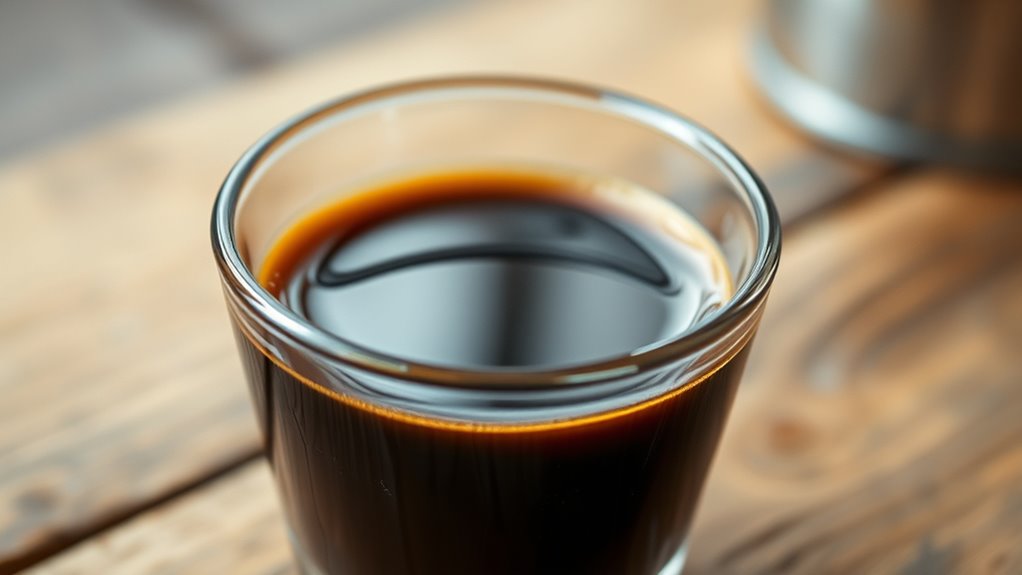
A single shot of espresso typically contains about 63 mg of caffeine, but this amount can vary between 47 and 65 mg depending on factors like the coffee dose and bean type.
When you pull a shot, baristas typically use 7–9 grams of coffee grounds.
The caffeine content correlates closely with how much coffee you use and the type of beans.
For example, Robusta beans contain roughly double the caffeine of Arabica beans, with about 140 mg per shot compared to Arabica’s 63 mg.
While brewing methods affect extraction, the primary caffeine difference stems from the bean variety and dose.
Maintaining consistent shot timing within the recommended 25-30 seconds ensures balanced extraction and flavor, which can also impact caffeine yield.
What Factors Affect Espresso’s Caffeine Content?
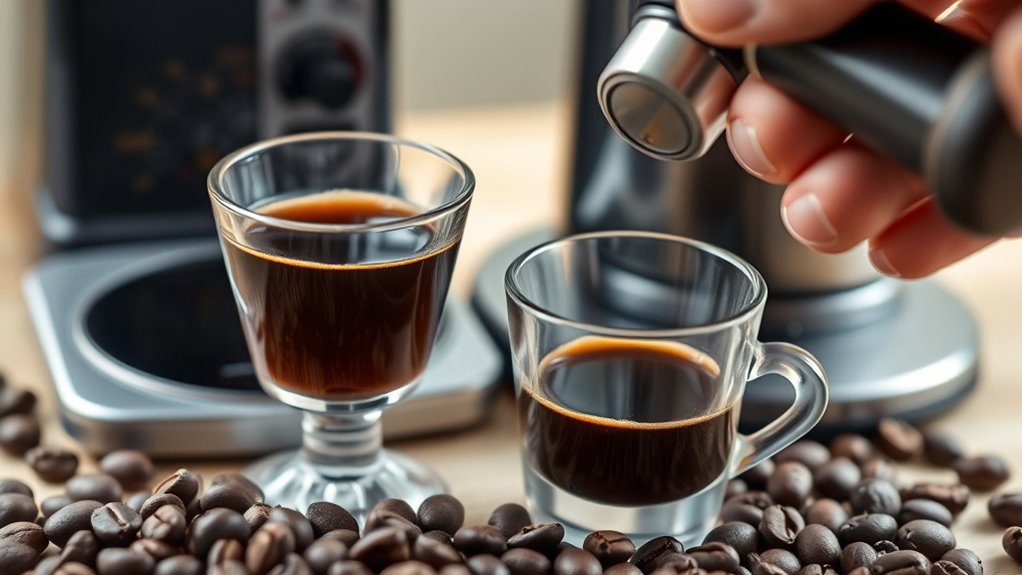
Although many factors influence espresso’s caffeine content, the type and amount of coffee grounds you use have the greatest impact. Typically, a single shot contains about 7-9 grams of coffee, but the caffeine level depends heavily on the bean variety and preparation.
The type and amount of coffee grounds most influence espresso’s caffeine content, with a single shot using 7-9 grams.
Here are key factors affecting caffeine content:
- Coffee bean type: Robusta beans have about twice the caffeine of Arabica.
- Coffee dose: More grounds mean more caffeine potential.
- Brewing pressure and temperature: These affect extraction efficiency.
- Extraction time: Longer pulls can increase caffeine extraction.
- Shot size and technique: Variations in cafés lead to differing caffeine amounts.
Knowing these factors helps you predict and control the caffeine strength of your espresso shot. It’s pretty handy if you want just the right kick from your coffee! Proper extraction time and pressure are essential to balance flavor and caffeine content in your espresso.
How Does Espresso’s Caffeine Content Compare to Drip Coffee?
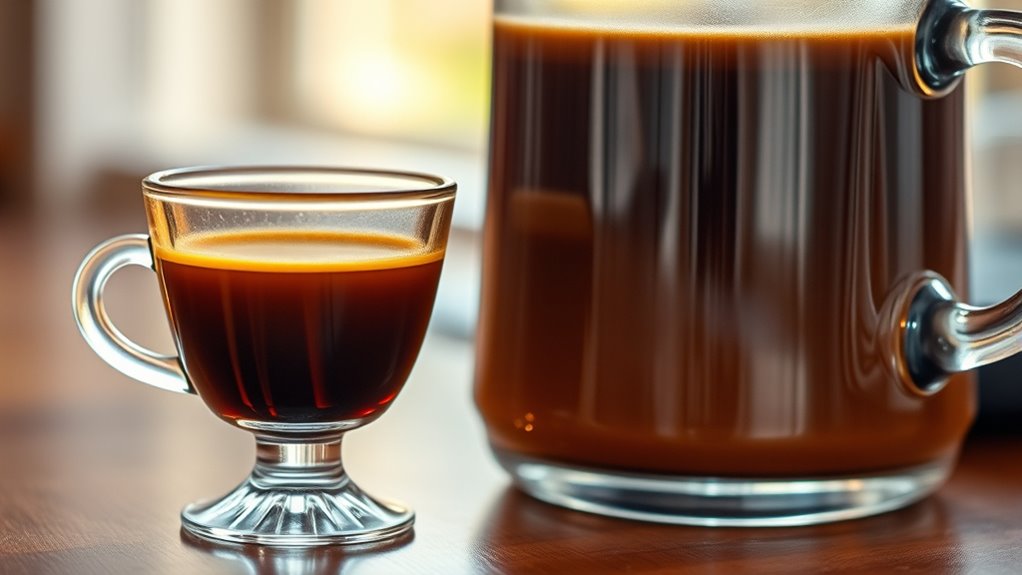
When you compare espresso to drip coffee, you’ll notice that espresso packs more caffeine per ounce, with about 63 mg in a standard shot. However, an 8 oz cup of drip coffee contains around 95 mg of caffeine, which is higher in total caffeine because of its larger volume.
Since you consume espresso in smaller amounts, it delivers a quick, intense caffeine boost. A double shot of espresso (~2 oz) provides roughly 126 mg of caffeine, which is similar to a standard cup of drip coffee.
| Beverage | Volume | Caffeine (mg) | Caffeine per oz (mg) |
|---|---|---|---|
| Espresso (single) | 1 oz | 63 | 63 |
| Espresso (double) | 2 oz | 126 | 63 |
| Drip Coffee | 8 oz | 95 | 11.9 |
Total caffeine depends more on volume and coffee grounds used than solely on concentration.
How Many Grams of Coffee Grounds Are Used Per Espresso Shot?
Between 7 and 9 grams of coffee grounds typically go into a single shot of espresso, while double shots use about 14 to 18 grams. The exact amount varies based on your espresso machine, basket size, and personal preference.
Using more coffee grounds usually means a stronger shot with more caffeine potential.
Measuring precisely helps you maintain consistent flavor and caffeine levels across shots.
Keep these key points in mind:
- Single shots: 7–9 grams of coffee grounds
- Double shots: 14–18 grams
- Machine and basket size affect coffee amount
- More grounds generally increase caffeine content
- Accurate measurement guarantees consistent extraction
Adjusting your dose according to basket size helps prevent channeling and ensures a balanced extraction.
Why Does Espresso’s Caffeine Feel More Intense?
You notice espresso’s caffeine hits harder because you’re drinking it quickly in a small amount. This lets it absorb into your bloodstream faster.
Plus, espresso packs a lot of caffeine into just a little volume, so it delivers a stronger kick compared to bigger, more diluted coffee drinks.
All that speed and concentration together make the caffeine feel more intense right away.
Espresso typically contains about 64.5 mg of caffeine per shot, contributing to its potent effect.
Rapid Caffeine Absorption
Although espresso comes in a small volume, its caffeine concentration per ounce is considerably higher than in regular coffee. This means your body absorbs it faster and you feel its effects more intensely. When you drink espresso, the rapid caffeine absorption triggers a quicker stimulant response. It makes the experience more potent.
Here’s why:
- Espresso’s fine grind and high-pressure brewing speed up caffeine extraction.
- The small volume leads to faster consumption and quicker bloodstream entry.
- Caffeine effects start within 15 minutes and peak between 30 to 60 minutes.
- Higher caffeine concentration per ounce results in a faster peak effect.
- A concentrated dose delivers immediate, powerful stimulation.
Understanding this rapid absorption helps explain why espresso’s caffeine feels so much stronger compared to larger coffee drinks you sip slowly. It’s all about how quickly and intensely your body gets the caffeine. Additionally, factors like brew pressure and temperature significantly influence how much caffeine is extracted during the brewing process.
Concentration Versus Volume
Because espresso packs about 2.1 mg of caffeine per milliliter, its concentration far exceeds that of larger coffee drinks. This makes each sip deliver a more intense caffeine hit. Even if the total caffeine is similar, the small volume means you consume it rapidly, causing faster absorption and a stronger perceived effect.
The crema adds flavor but doesn’t influence caffeine levels.
| Drink Type | Volume (ml) | Caffeine (mg/ml) |
|---|---|---|
| Espresso Shot | 30 | 2.1 |
| Drip Coffee | 240 | 0.4 |
| Latte | 240 | 0.3 |
This table shows why espresso’s caffeine feels more potent despite the smaller size. It’s all about concentration and quick intake. Additionally, the option to add extra espresso shots allows for a customizable caffeine boost tailored to individual preferences.
How Do Caffeine Levels Vary in Different Espresso Drinks?
When choosing an espresso drink, the caffeine level largely depends on how many shots it contains. A single shot has about 63 mg of caffeine, but multiple shots increase that amount considerably. Different espresso drinks vary mainly by shot count, which directly influences caffeine content.
Consider these factors: double espresso doubles caffeine to roughly 126 mg. Lattes and Americanos often contain two or more shots. Ristretto shots are shorter but have similar caffeine as standard shots. Lungo shots are longer but maintain nearly the same caffeine concentration per shot.
Bean type and brewing method affect caffeine slightly, but shot number remains key. Knowing this helps you pick an espresso drink that fits your caffeine needs accurately. Additionally, the shot count also influences the flavor intensity and overall strength of your espresso-based beverage.
How to Estimate Your Total Caffeine Intake From Espresso?
If you want to estimate your total caffeine intake from espresso accurately, start by multiplying the number of shots you consume by about 63 mg per shot. Keep in mind, caffeine content can range from 47 to 65 mg depending on how your espresso is prepared.
For larger drinks with multiple shots, simply scale up the total caffeine by the number of shots. Two shots roughly double the caffeine amount.
However, variations in bean type, roast level, and brewing technique can cause slight differences in actual caffeine.
To get a complete picture, also consider other caffeine sources like tea, soda, or supplements.
This approach helps you monitor your daily caffeine intake effectively and avoid exceeding recommended limits.
Remember that the type of coffee bean used, such as Arabica or Robusta, significantly influences the caffeine content in your espresso.
Frequently Asked Questions
Can Espresso Caffeine Content Affect Sleep Quality?
Yes, espresso caffeine can affect your sleep quality by stimulating your nervous system. If you drink it too close to bedtime, you’ll likely have trouble falling asleep and experience poorer overall rest.
It’s pretty common to feel more alert after an espresso, but that alertness can mess with your ability to wind down. So, it’s a good idea to avoid espresso in the hours leading up to when you want to sleep.
Does Decaf Espresso Contain Any Caffeine?
Definitely, decaf espresso doesn’t ditch caffeine completely. You’ll find a tiny trace, typically about 1 milligram per shot.
How Does Espresso Caffeine Impact Athletic Performance?
Espresso caffeine boosts your athletic performance by increasing alertness and reducing perceived exertion. It enhances muscle endurance and power quickly. But don’t overdo it.
Too much caffeine can cause jitters or dehydration, which might harm your workout. So, it’s all about finding the right balance to get the benefits without the downsides.
Are There Health Risks From Drinking Too Much Espresso?
Yes, drinking more than six shots daily risks heart palpitations and anxiety. You might also face insomnia, stomach upset, or caffeine dependence.
If you have heart issues, it’s smart to limit your espresso intake. Taking it easy can help you avoid those unwanted side effects. Just listen to your body and adjust how much you drink accordingly.
Can Caffeine Tolerance Reduce Espresso’s Effects?
Yes, caffeine tolerance can reduce espresso’s effects because your brain adapts by increasing adenosine receptors. This makes caffeine less effective at blocking them.
Conclusion
Now that you know how much caffeine is in a shot of espresso, you can confidently control your caffeine consumption. Factors like grind, roast, and extraction affect espresso’s stimulant strength, so stay savvy and selective.
Remember, espresso packs a potent punch compared to drip coffee, even though it uses fewer grounds. By understanding these details, you’ll better balance your buzz and avoid caffeine overload.
This way, you can make mindful, measured choices for your daily dose.
Pingback: How Much Caffeine Is In A Quad Shot Of Espresso – Answer
Pingback: How Many Mg Of Caffeine In Espresso – Exact Amount
Pingback: How Many Mg Of Caffeine In Espresso
Pingback: How Much Caffeine Is In 10 Shots Of Espresso – Answered