Yes, chocolate covered espresso beans do contain caffeine. Each bean typically has about 2 milligrams of caffeine from the coffee bean itself, plus extra from the chocolate coating, especially if it’s dark chocolate. Eating several beans can give you a noticeable energy boost similar to coffee.
However, consuming too many may cause jitters or sleep issues. If you want to understand their benefits, risks, and best ways to enjoy them, there’s plenty more useful info ahead.
What Are Chocolate Covered Espresso Beans?
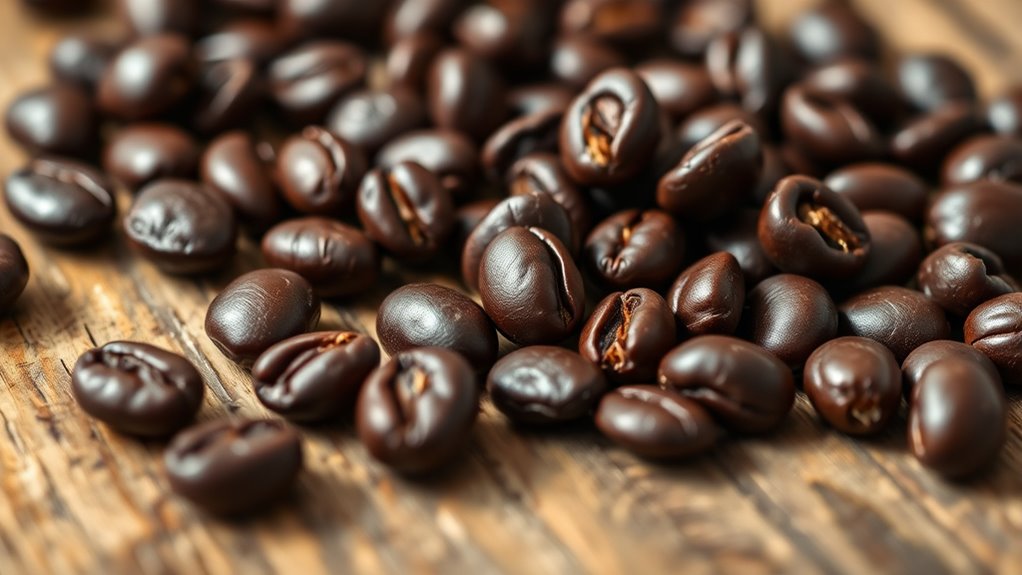
Although you might simply see them as a sweet snack, chocolate-covered espresso beans are whole roasted coffee beans coated in dark, milk, or white chocolate. This combines the rich bitterness of coffee with the sweetness of chocolate. It’s a unique taste experience that balances bold coffee flavors with smooth, sugary notes.
The chocolate coating enhances the flavor while masking the natural bitterness of the coffee beans. That makes them enjoyable even if you’re not a coffee fan. You’ll often find these treats enjoyed as a convenient, bite-sized snack, gift, or ingredient in desserts.
Their appeal also comes from the energizing effects tied to the caffeine naturally present in the coffee beans inside. So, they give you a quick boost along with a satisfying flavor. It’s a win-win when you want something tasty and a little pick-me-up. Additionally, like espresso, the calorie content of chocolate-covered espresso beans remains relatively low, mainly due to the natural oils and proteins in the beans, making them a low-calorie beverage option despite their chocolate coating.
How Much Caffeine Is in One Espresso Bean?
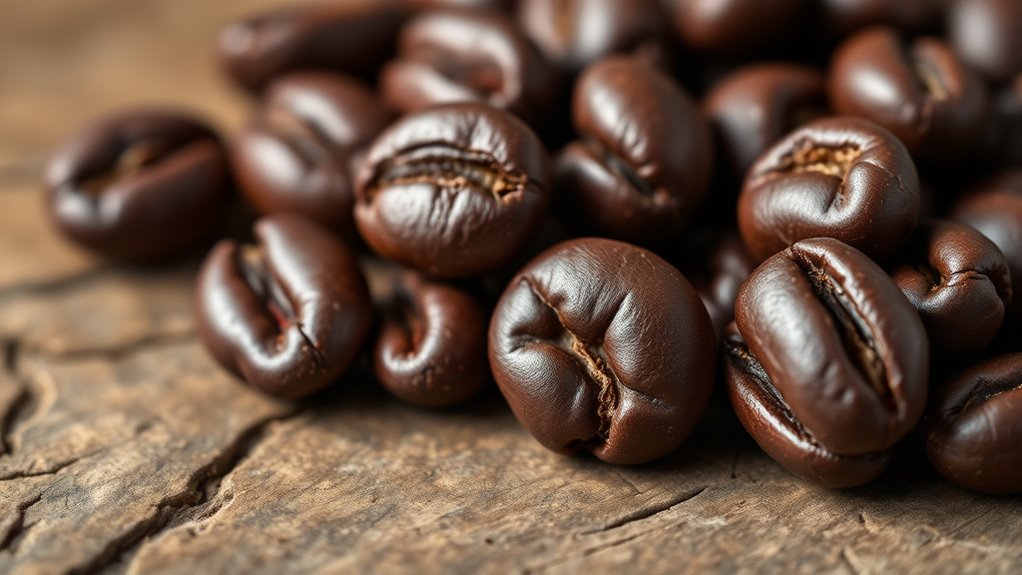
You might be surprised to learn that one espresso bean has between 5 to 12 milligrams of caffeine. That’s quite a bit more than the roughly 2 milligrams you’d find in a single arabica bean.
This difference mostly comes down to things like the type of bean and how it’s roasted.
To put it in perspective, if you eat about eleven espresso beans, you’re getting the same caffeine kick as you’d from two cups of coffee. Pretty interesting, right?
The caffeine content can vary significantly due to factors such as bean type, roast, and extraction methods, which are crucial in determining the caffeine levels in espresso.
Caffeine Content Per Bean
Since the caffeine content varies by bean type and roast, understanding how much caffeine is in one espresso bean helps you gauge your intake. Typically, one espresso bean contains about 2 milligrams of caffeine, but this can range from 5 to 12 milligrams depending on factors like roast level.
Darker roasts generally have slightly less caffeine than lighter ones because roasting reduces caffeine content. The chocolate coating adds negligible caffeine, so the bean remains the main source. Knowing this helps you control your caffeine consumption, especially if you enjoy chocolate-covered espresso beans as a snack or energy boost.
- Caffeine per bean ranges between 5-12 mg.
- Dark roast beans have less caffeine than light roasts.
- Chocolate coatings contribute minimal caffeine.
- Eleven beans equal caffeine in two coffee cups.
- Variability depends on bean origin and processing.
Extraction time and roast level influence caffeine release, with light roasts requiring longer extraction to develop their flavor and caffeine profile fully.
Arabica Bean Caffeine Levels
How much caffeine does one arabica espresso bean contain? Typically, an arabica coffee bean has about 2 milligrams of caffeine. But when it’s roasted and prepared as an espresso bean, the caffeine content can range from 5 to 12 milligrams per bean. This variation depends on factors like the roast level and bean size.
Arabica beans have a caffeine concentration between 1.2% and 1.5% by weight, which is lower than robusta beans.
Eating around eleven arabica espresso beans can give you a caffeine boost equivalent to two standard cups of coffee.
Keep in mind that specific growing and roasting conditions can cause the caffeine in a single arabica bean to vary. Sometimes it can reach roughly 10 milligrams per bean. So, there’s a bit of natural variation to consider.
The deep, rich color of espresso beans corresponds to their roast level and intensity, which also influences caffeine concentration.
Espresso Beans Versus Coffee
Although espresso beans and brewed coffee both deliver caffeine, the amount in a single espresso bean can differ markedly from that in a cup of coffee. You’ll find that one espresso bean contains roughly 10 to 20 milligrams of caffeine, depending on its origin and roast.
Eating whole espresso beans gives you the full caffeine content directly, unlike brewed coffee, where extraction varies.
To match the caffeine from two cups of coffee, you’d need about eleven espresso beans.
- One espresso bean typically has about 2 milligrams of caffeine on average.
- Eleven beans equal the caffeine in two cups of coffee.
- Caffeine content varies by bean origin and roast level.
- Eating beans delivers full caffeine potency.
- Brewed coffee caffeine depends on brewing method and volume.
Because espresso uses finely ground coffee and high pressure, it results in a higher caffeine concentration per ounce than brewed coffee.
How Do Coffee and Chocolate Add to Caffeine Content?
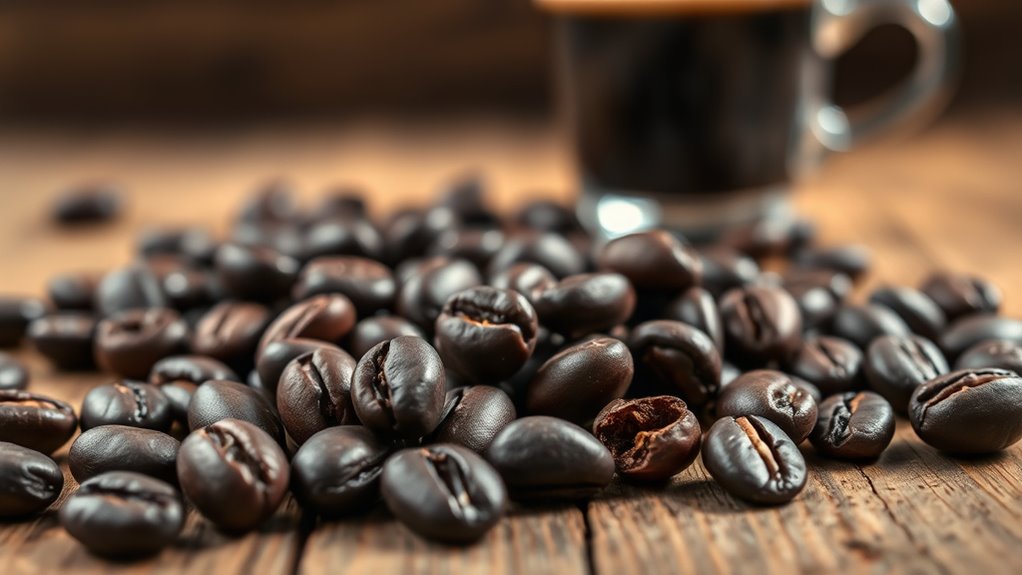
When you eat chocolate-covered espresso beans, you get a significant caffeine boost because both the coffee bean and the dark chocolate contribute their own natural stimulants. Coffee beans contain about 2 mg of caffeine each, while dark chocolate adds caffeine and theobromine, enhancing the overall stimulant effect.
Unlike brewed coffee, eating whole espresso beans delivers the full caffeine content directly. Dark chocolate adds roughly 12 mg of caffeine per ounce, increasing the total caffeine you consume. This combination results in a stronger energizing effect than either component alone. It is important to note that even small amounts of caffeine can accumulate and affect individuals who are highly sensitive to caffeine.
| Component | Caffeine per Unit | Effect on Total Caffeine |
|---|---|---|
| Espresso Bean | ~2 mg per bean | Direct caffeine source |
| Dark Chocolate | ~12 mg per ounce | Adds caffeine + theobromine |
| Combined Effect | Variable | Enhanced stimulant impact |
How Does Caffeine in Espresso Beans Compare to Coffee?
Both espresso beans and brewed coffee deliver caffeine, but the amounts and effects can vary considerably. You’ll find that individual espresso beans pack about 2 milligrams of caffeine, similar to a small coffee sip. However, eating multiple beans quickly adds up and can exceed coffee’s caffeine punch.
Eleven espresso beans equal roughly two cups of coffee in caffeine content. A standard 8-ounce coffee contains about 95 milligrams of caffeine. Chocolate-covered espresso beans (10-15 beans) can deliver 120-180 milligrams.
Caffeine in espresso beans is more concentrated and potent per serving. Absorption from beans is faster and leads to a stronger stimulant effect than brewed coffee. For those mindful of calorie intake, it’s useful to note that espresso adds minimal calories compared to coffee liqueurs commonly used in drinks like espresso martinis.
What Are the Health Benefits of Caffeine in Espresso Beans?
Since caffeine acts as a natural stimulant, consuming espresso beans can effectively enhance your alertness and cognitive function. The caffeine in these beans improves mental focus and mood, helping you stay sharp throughout the day.
Plus, dark chocolate-covered espresso beans contain antioxidants that combat free radicals. This supports your overall health and may even strengthen your immune system. Enjoying them in moderation offers benefits without increasing risks linked to oxidative stress.
Caffeine also stimulates the central nervous system by blocking adenosine receptors, which reduces drowsiness and promotes mental alertness.
| Benefit | Effect |
|---|---|
| Enhanced Alertness | Improved cognitive performance |
| Antioxidant Support | Reduced oxidative damage |
| Mood and Focus Boost | Elevated mental clarity and energy |
What Happens If You Eat Too Many Espresso Beans?
If you eat too many espresso beans, you risk consuming an excessive amount of caffeine that can trigger jitteriness, anxiety, and a rapid heartbeat. Consuming over 10-15 beans at once can easily surpass the recommended daily caffeine limit, leading to several adverse effects.
Eating more than 10-15 espresso beans risks excessive caffeine intake, causing jitteriness, anxiety, and rapid heartbeat.
You might also experience stomach upset due to the combined impact of caffeine, sugar, and fat found in chocolate-covered espresso beans.
Also, eating these beans later in the day can disrupt your sleep patterns. Sensitive individuals or those with caffeine intolerance may notice dehydration, sweating, and shaking as well.
Here are some effects to watch for:
- Increased heart rate and palpitations
- Heightened anxiety and restlessness
- Digestive discomfort and nausea
- Difficulty falling or staying asleep
- Physical symptoms like sweating and tremors
The caffeine content can vary significantly depending on factors like the coffee bean type and roast level, which affects how much caffeine you actually consume per bean, making it important to understand caffeine variability.
Are Dark Chocolate Espresso Beans Better for You?
While enjoying chocolate-covered espresso beans, you might wonder if choosing dark chocolate makes a difference for your health. Dark chocolate has a higher cacao content, providing more antioxidants and flavonoids than milk chocolate. This boosts immune support, reduces inflammation, and benefits cardiovascular health.
Plus, it contains less sugar and dairy, making it a healthier choice overall.
| Aspect | Dark Chocolate Espresso Beans |
|---|---|
| Cacao Content | Higher (rich in flavonoids) |
| Sugar Content | Lower |
| Antioxidant Levels | Elevated (combats free radicals) |
| Health Benefits | Supports immune & cardiovascular health |
Choosing dark chocolate-covered espresso beans offers more nutritional value and fewer added sugars, making them a better option for your well-being. Additionally, the caffeine content in dark chocolate can contribute to a more sustained energy boost compared to milk chocolate. So next time you reach for a snack, dark chocolate espresso beans might just be the smarter pick!
How to Enjoy Espresso Beans Without Overdoing It
If you want to enjoy chocolate-covered espresso beans without going overboard, it’s a good idea to stick to about 5 to 10 beans at a time. That way, you can keep your caffeine intake in check.
Also, try having them earlier in the day. This helps you avoid any trouble falling asleep later on.
And here’s a little tip: eating them along with some food or drinking water can actually slow down how quickly the caffeine hits you, which might help prevent those jittery feelings.
Portion Control Guidelines
Because chocolate-covered espresso beans contain concentrated caffeine, you should restrict yourself to 5-10 beans per serving to avoid excessive intake. Since each bean packs more caffeine than a similar volume of coffee, controlling portions is essential.
Sticking to one serving, especially earlier in the day, helps prevent sleep disturbances.
Monitoring your total caffeine from all sources daily ensures you stay within safe limits. Using measured portions allows you to enjoy the energizing benefits without risking overstimulation.
- Limit servings to 5-10 beans to control caffeine intake
- Consume primarily in the morning or early afternoon
- Track total daily caffeine from all beverages and snacks
- Use small containers or measurements to avoid overeating
- Recognize that beans deliver higher caffeine concentration than brewed coffee
Optimal Consumption Timing
Managing your portion size is just one part of enjoying chocolate-covered espresso beans responsibly. To maximize their benefits, consume them in the morning or early afternoon. This timing helps maximize alertness and minimizes sleep disruption caused by caffeine’s stimulating effects.
Limit yourself to 5-10 beans per serving and space out consumption to avoid excessive caffeine intake. Avoid eating them late in the evening, as the high caffeine content can interfere with your sleep patterns.
It’s best to enjoy these treats before activities that demand mental or physical focus, ensuring sustained energy without overdoing it.
Finally, monitor how your body responds to caffeine, since individual tolerance varies and influences the ideal timing for consumption. Pay attention to how you feel and adjust when you eat them accordingly.
That way, you get the most out of your chocolate-covered espresso beans without any unwanted side effects.
What Flavors of Chocolate Covered Espresso Beans Are Available?
Although chocolate-covered espresso beans are traditionally enjoyed in classic dark or milk chocolate, you’ll find an impressive range of flavors to suit different tastes. This variety lets you explore beyond the standard offerings, enhancing the mocha-like experience with added complexity.
Dark chocolate versions deliver a richer, more intense taste, while milk and white chocolates offer smoother, sweeter profiles. Some brands also create marbled chocolate beans, blending chocolate types for unique flavor and visual appeal.
Dark chocolate offers intensity, milk and white chocolates bring sweetness, while marbled blends create unique flavors and visuals.
Specialty flavors often include sea salt for a subtle savory contrast, cinnamon to add warm spice notes, chili for a spicy kick, and caramel coating providing sweet, buttery richness. Marbled chocolate combining dark and white chocolate layers is another popular choice.
These options cater to diverse palates and really enrich your chocolate-covered espresso bean experience. So, there’s something for everyone to enjoy!
How Can You Pair Espresso Beans With Coffee and Treats?
You can really boost your coffee experience by pairing chocolate-covered espresso beans with your brewed coffee or espresso. Not only does it amp up the flavor, but it also gives you an extra caffeine kick.
Why not try these beans alongside pastries like croissants or biscotti? They make for a rich and complementary snack that’s hard to beat.
And if you’re feeling adventurous, mix different types of chocolate or use espresso beans in coffee desserts. It creates exciting flavor contrasts and takes your treats to the next level.
Flavor Pairing Ideas
When you pair chocolate-covered espresso beans with brewed coffee, you enhance the mocha-like flavor profile while enjoying an energizing snack. You can elevate this experience by mixing them with flavored coffees or desserts, creating complex taste layers that highlight both bitterness and sweetness.
Consider these pairing ideas to deepen your flavor enjoyment:
Combine with vanilla, caramel, or hazelnut-flavored coffee for rich, layered notes. Serve alongside dark chocolate desserts or tiramisu to amplify chocolate and coffee flavors. Incorporate chopped espresso beans into coffee-flavored ice creams or mousses for texture and a caffeine boost.
Pair with spicy treats like chili chocolates or cinnamon pastries to balance bitter and sweet. Enjoy with nutty baked goods to complement the espresso’s roasted profile.
These pairings maximize flavor complexity and caffeine enjoyment. Give them a try and see how they transform your coffee moments!
Complementary Beverage Choices
Since chocolate-covered espresso beans boast intense coffee and cacao flavors, pairing them with complementary beverages can really elevate your tasting experience. Enjoy them with a hot black coffee to bring out those mocha-like notes while keeping your caffeine intake balanced.
If you prefer creamier drinks, try a latte or cappuccino. These amplify both the coffee and chocolate richness, making for a decadent treat.
For a quick energy boost, pair the beans with a brewed espresso shot to intensify that coffee impact.
You can also add flavored syrups or spices like cinnamon and vanilla to your coffee. This adds a deeper complexity when combined with the beans.
Serving chocolate-covered espresso beans alongside desserts like tiramisu or chocolate mousse highlights their deep cacao and coffee characteristics, giving you a well-rounded tasting experience.
Creative Snack Combinations
Although chocolate-covered espresso beans are delicious on their own, pairing them creatively with coffee and treats can really take your snack experience up a notch. You can boost their bold, caffeinated flavor by combining them with foods and drinks that bring out their mocha notes and texture.
Here are some tasty ideas to try:
Enjoy them with brewed coffee to amplify that mocha-like taste and energizing effect. Pair them with creamy desserts like tiramisu or coffee-flavored ice cream for a rich, caffeinated indulgence.
You can also mix crushed beans into yogurt or smoothies to add a coffee kick plus antioxidants. Serving them alongside biscotti or croissants makes for a classic, energizing coffee break.
Or try chopping espresso beans into muffins or brownies to deepen the coffee flavor and add a nice crunch. These combos offer a variety of textures and flavors that really boost your overall snack game.
Frequently Asked Questions
Can Children Safely Consume Chocolate-Covered Espresso Beans?
You shouldn’t let children consume chocolate-covered espresso beans because they contain significant caffeine. This can cause insomnia, jitteriness, and other health issues.
It’s safer to avoid giving them these beans altogether to protect their well-being. Better to keep them away from anything with a lot of caffeine, just to be on the safe side.
Do Chocolate-Covered Espresso Beans Contain Allergens?
Yes, chocolate-covered espresso beans can contain allergens like milk, soy, or nuts. You should always check ingredient labels and manufacturer information carefully, especially if you have food allergies or sensitivities.
It’s super important to do this to avoid any potential reactions. Better safe than sorry, right? Just take a moment to read the packaging before enjoying them.
How Should Chocolate-Covered Espresso Beans Be Stored?
Picture a sealed treasure chest. Store chocolate-covered espresso beans airtight in a cool, dry spot away from sunlight.
If you live in a humid climate, it’s best to refrigerate them. This helps prevent melting or cracks.
Doing this preserves their rich flavor and crisp texture for months. Easy, right?
Are Chocolate-Covered Espresso Beans Suitable for Diabetics?
Chocolate-covered espresso beans can be tricky for diabetics because of the sugar content. It’s important to watch your portion sizes and try to pick dark chocolate varieties when you can. Dark chocolate usually has less sugar, which is a better choice.
Also, always check with your healthcare provider before adding them to your diet. They can help make sure these treats fit safely into your blood sugar management plan. It’s all about finding the right balance that works for you.
Can Chocolate-Covered Espresso Beans Cause Insomnia?
Yes, chocolate-covered espresso beans can cause insomnia. You’ll feel alert, restless, and unable to sleep because their caffeine and theobromine content stimulate your nervous system. This effect is especially noticeable if you consume them close to bedtime.
Conclusion
When you snack on chocolate covered espresso beans, you’re fueling your day with a potent caffeine punch wrapped in rich flavor. Like a double shot of energy, they deliver a balanced buzz from both coffee and chocolate. Just remember to savor them in moderation to avoid jitters.
Whether you choose dark or milk chocolate, these little powerhouses can boost your focus and mood. They make your coffee breaks a delicious, energizing ritual. So go ahead, enjoy them—but don’t overdo it!

Pingback: Crunchy Espresso M&M's Where To Buy – Store Guide