An espresso martini typically contains 200 to 250 calories, mainly from vodka and coffee liqueurs. Vodka adds about 64 calories per 1.5 oz, while sugary coffee liqueurs can increase calories considerably. Espresso itself contributes minimal calories.
You can cut calories by using lower-proof spirits, sugar-free syrups, and keto-friendly sweeteners. Adjusting these ingredients helps manage calorie intake without sacrificing flavor. Keep exploring to discover smart ways to customize and track your cocktail’s nutrition.
How Many Calories Are in a Classic Espresso Martini?
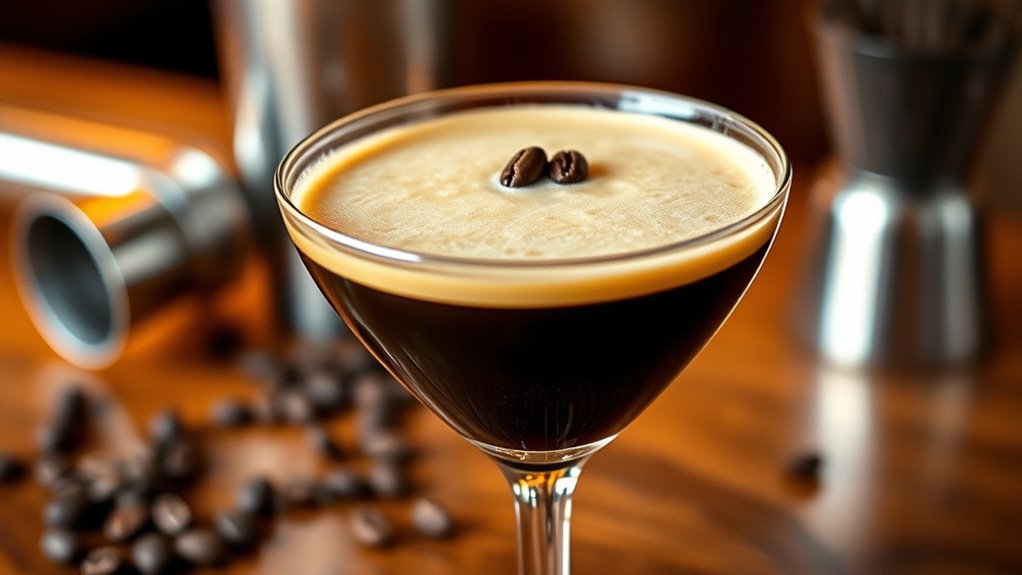
Although the calorie content of a classic espresso martini varies depending on the ingredients, you can generally expect it to contain between 200 and 250 calories per serving. The main sources of these calories are vodka and coffee liqueurs, which contribute roughly 150 to 200 calories.
A typical recipe includes 2 ounces of vodka, 1 ounce of coffee liqueur, and a shot of espresso, totaling about 200 calories.
While the espresso itself has minimal calories, the alcoholic components markedly impact the overall count.
You can manage the calorie intake by adjusting the alcohol quantity or choosing lower-calorie alternatives, but the classic version typically stays within this calorie range.
Understanding this helps you make informed choices when enjoying this popular cocktail.
The espresso shot used in this cocktail is brewed under high pressure extraction which contributes to its rich flavor without adding calories.
Ingredients That Affect Espresso Martini Calories
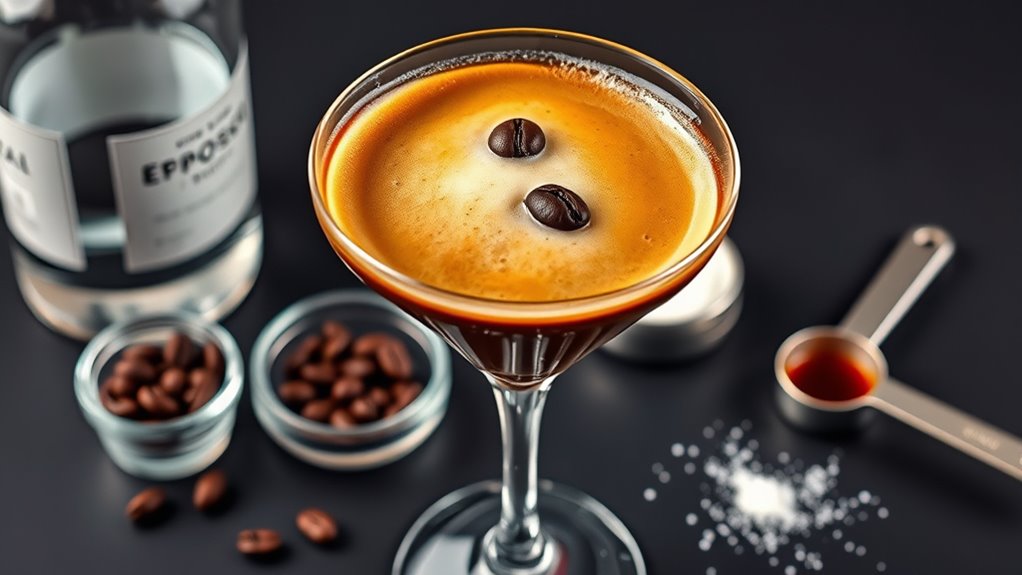
When you make an espresso martini, most of the calories come from the alcohol you choose. For example, vodka adds about 64 calories per 1.5-ounce shot.
Then, you have mixers like coffee syrup or liqueurs, which can add different amounts of calories, especially if they’ve sugar in them.
Using high-quality coffee liqueurs made with real coffee extracts can influence both the flavor and calorie content of your drink, so choosing the right coffee liqueur is important.
Calorie Contribution Sources
What ingredients really drive the calorie count in an espresso martini? Primarily, vodka and any added sweeteners or syrups contribute most.
Vodka contains about 64 calories per ounce, making it a significant calorie source. Coffee itself adds virtually no calories, so it won’t impact your drink’s total much.
However, if you include cream or flavored liqueurs, expect the calorie content to rise particularly. Sugar-free syrups like Torani or allulose-based options add minimal calories, often less than five per serving, so they’re a lighter choice.
Don’t forget toppings. Whipped cream or chocolate garnishes can increase calories further, altering the nutritional profile.
Understanding these sources helps you make informed decisions when customizing your espresso martini. It’s all about knowing what goes in and how it affects the final count.
That way, you can enjoy your drink without any surprises. Proper extraction time and technique also influence the flavor profile, ensuring your espresso base is balanced and complements the other ingredients well, especially by maintaining extraction consistency for optimal taste.
Alcohol Versus Mixers
Since the alcohol in an espresso martini, especially vodka, delivers most of its calories, understanding its impact is key to managing your drink’s calorie count. Vodka alone contributes about 64 calories per 1.5-ounce shot, making it the main calorie source.
Mixers, on the other hand, vary widely in their calorie content. Sugar-free coffee syrups add negligible calories, often less than 5, which makes them a smart choice if you want to keep calories low.
However, commercial coffee liqueurs like Kahlua can add roughly 100 calories per ounce because of added sugars, which really bumps up your drink’s total calories.
Using unsweetened espresso or cold brew instead of sweetened coffee also helps reduce calorie intake.
Regular maintenance, such as descaling your espresso machine, ensures consistent coffee quality, which can subtly affect the flavor and caloric absorption of your drink.
Comparing Sugar-Free Syrups and Sweeteners for Espresso Martinis
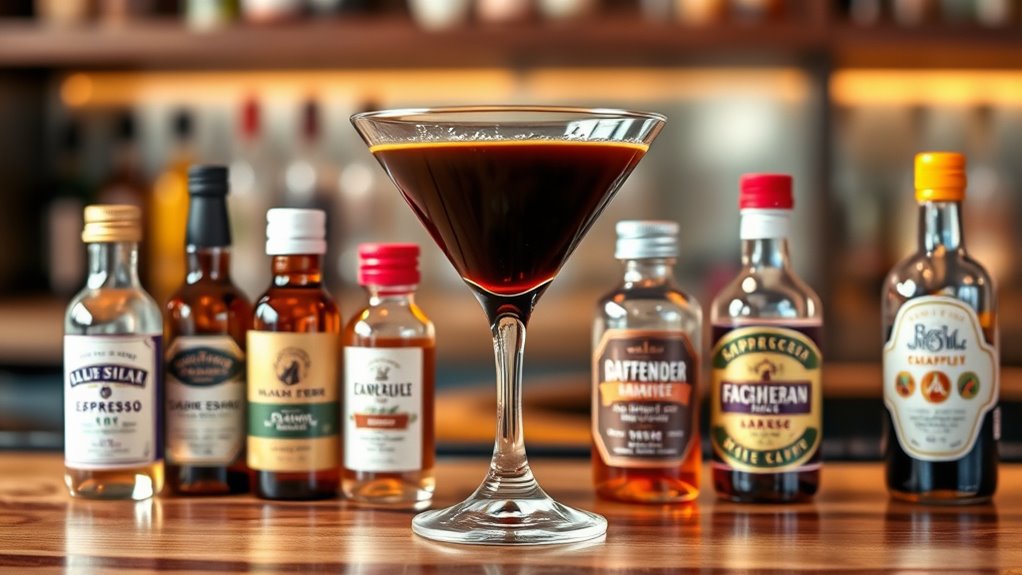
Although traditional sweeteners can add significant calories to an espresso martini, choosing sugar-free syrups or alternative sweeteners lets you control both calorie content and sweetness.
Sugar-free syrups like Torani or Miss Mary’s contain about 10-20 calories per ounce, which is much less than the 50 calories per tablespoon found in traditional sweeteners.
Sweeteners such as allulose and erythritol are nearly calorie-free, making them ideal for low-calorie cocktails.
Liquid syrups dissolve easily in cold drinks, ensuring a smooth texture and even sweetness without affecting blood sugar.
When using potent sweeteners like stevia or monk fruit, remember they’re much sweeter than sugar, so you’ll need less to achieve the desired flavor.
Xylitol adds minimal calories but is higher than erythritol.
For those seeking an espresso flavor without excess calories, using K-Cups with dark or espresso roast coffee can enhance the taste of your cocktail naturally.
How Alcohol Type Affects Espresso Martini Calories and Carbs
When you’re picking the alcohol for your espresso martini, vodka usually comes out as the lowest calorie choice compared to rum or whiskey. It’s a good go-to if you’re watching your calorie intake.
But here’s the thing: flavored liqueurs often sneak in extra carbs because of the added sugars. That can bump up the calorie count more than you might expect.
Since espresso contains about 63 mg of caffeine per shot, the caffeine content in espresso can also influence your drink’s overall stimulant effect.
Vodka Versus Other Spirits
Choosing the type of spirit considerably impacts the calorie and carbohydrate content of your espresso martini. Vodka is often the go-to choice because it contains zero carbs and about 64 calories per 1.5-ounce shot, keeping your cocktail low-calorie.
If you swap vodka for whiskey or rum, expect a rise in both calories and carbs since these spirits typically have higher sugar content.
Flavored spirits can further increase calories due to added sugars.
On the other hand, gin and tequila have calorie profiles similar to vodka, so they won’t substantially change your drink’s caloric content but will alter the flavor.
Opting for clear, lower-proof spirits like vodka helps you maintain a leaner espresso martini without sacrificing quality.
Additionally, using freshly brewed espresso with full crema can enhance the flavor and texture of your cocktail, making it more enjoyable and authentic to barista-quality drinks with stable foam.
Carb Impact Of Liqueurs
How do liqueurs affect the carbohydrate content of your espresso martini? Liqueurs like Kahlua and Mr. Black contain added sugars, which substantially increase the carbs in your cocktail.
Using pure spirits such as vodka or gin, which have zero carbs, helps keep your drink low in carbohydrates, especially when paired with sugar-free syrups.
Flavored liqueurs with sweeteners can double or even triple the carb count compared to plain spirits. If you want to reduce carbs, consider swapping traditional coffee liqueurs for sugar-free alternatives.
While higher-proof spirits generally have more calories, they typically don’t add carbs unless sweetened or flavored.
For an added depth of flavor without extra carbs, consider incorporating espresso powder into your cocktail recipes as a subtle coffee enhancer.
Alcohol Calories And Ketosis
Although vodka and other pure spirits contain zero carbohydrates, they still contribute calories that affect your espresso martini’s total energy content. A standard 1.5-ounce shot of vodka adds about 64 calories, with alcohol providing 7 calories per gram.
Even without carbs, alcohol influences ketosis because your body prioritizes metabolizing alcohol over burning fat.
If you use flavored or sweetened alcohols like liqueurs, you’ll see a significant increase in both carbs and calories. That can disrupt ketosis further.
To enjoy an espresso martini while maintaining ketosis, opt for low-calorie spirits or dilute your drink with calorie-free mixers.
Being mindful of the type and amount of alcohol you use lets you control your cocktail’s calorie and carb impact effectively.
Using freshly brewed espresso made with precise temperature and pressure control can enhance the flavor balance of your cocktail without adding extra calories or carbs, making it ideal for keto-friendly drinks like an espresso martini with optimal extraction.
How to Make a Low-Calorie or Keto-Friendly Espresso Martini
Wondering how to enjoy an espresso martini without the extra calories or carbs? You can make a low-calorie or keto-friendly version by swapping traditional sugar liqueurs for sugar-free coffee syrups and keto-approved sweeteners like allulose or erythritol.
Using black coffee or cold brew instead of flavored liqueurs cuts sugar and calories a lot, keeping the drink under 100 calories per serving.
Swap flavored liqueurs for black coffee or cold brew to slash sugar and calories under 100 per drink.
Consider replacing standard vodka with flavored or infused vodka to boost flavor without adding carbs.
For creaminess, go for heavy cream or coconut cream instead of whipped cream to keep it keto-friendly.
Shake the cocktail vigorously with ice to get a frothy texture naturally. This way, you don’t need any high-calorie additives.
These tweaks let you enjoy an espresso martini that fits your low-calorie or ketogenic lifestyle easily.
Remember, using freshly brewed espresso rather than cold brew is key to achieving the signature frothy foam and rich flavor.
Low-Calorie Ways to Customize Your Espresso Martini
Where can you make the most impact when customizing your espresso martini to keep it low-calorie? Focus on sweeteners, alcohol choice, and cream additions. Using sugar-free syrups and low-calorie sweeteners like allulose or erythritol can cut calories considerably.
Opt for lower-proof or flavored vodka to tweak the calorie content without sacrificing taste. Adding moderate amounts of heavy or coconut cream enhances texture with minimal calorie increase. Switching espresso for cold brew also reduces caffeine and calories while preserving bold flavor.
| Customization | Impact on Calories | Notes |
|---|---|---|
| Sugar-Free Syrups | Reduces to ~93 | Use erythritol or allulose |
| Lower-Proof Spirits | Slight reduction | Maintains flavor variety |
| Cream (Heavy/Coconut) | Moderate increase | Use sparingly for richness |
| Cold Brew Coffee | Lowers calories | Alternative to espresso |
How to Track Calories in Your Espresso Martini
Customizing your espresso martini with low-calorie ingredients is a great start, but tracking the exact calories requires careful measurement of each component. To get an accurate calorie count, you need to take into account every ingredient and preparation detail.
Here’s how to track calories effectively:
- Measure all ingredients precisely, including alcohol, coffee, syrup, and any garnishes like coffee beans or whipped cream.
- Use a nutritional calculator or app to input specific brands and quantities; this accounts for variations between products.
- Remember that shaking the cocktail with ice can dilute it slightly, affecting the calorie density per serving.
Frequently Asked Questions
Can I Substitute Espresso With Cold Brew in My Martini?
You can substitute espresso with cold brew in your martini by using an equal amount. Expect a smoother, less acidic flavor with similar calories.
Feel free to adjust the quantity if needed to match the coffee strength and taste you prefer. It’s all about what works best for your palate!
How Does the Serving Size Impact Total Calorie Count?
Think of serving size as a volume dial for calories; when you double your espresso martini, you double the calories. Controlling portions and choosing lighter ingredients helps keep your intake balanced and evidence-based.
It’s all about being mindful. Smaller servings mean fewer calories, so you can enjoy your favorite drinks without overdoing it. Plus, making smarter ingredient choices can make a big difference.
Are There Any Caffeine-Free Alternatives for Espresso Martinis?
You can enjoy caffeine-free espresso martinis by using decaf coffee, cold brew concentrate without caffeine, or herbal infusions. Chicory or roasted herbal teas also work well, letting you savor the flavor without the caffeine kick.
These options give you all the taste without the buzz, so you can relax and enjoy your drink anytime. It’s pretty easy to switch things up and still get that rich, bold flavor you love. Give them a try and see which one suits your taste best!
What Glassware Is Best for Serving an Espresso Martini?
You should serve an espresso martini in a classic martini or coupe glass. Their stemmed design keeps the drink cold and highlights the frothy top, enhancing both presentation and your overall drinking experience.
It’s all about elegance and sophistication when you choose the right glass. Plus, the shape really shows off that beautiful foam on top. Makes the whole thing feel a bit more special, doesn’t it?
How Long Can I Store a Pre-Mixed Espresso Martini?
You probably hoped your pre-mixed espresso martini could last forever, but it can only stay fresh about 24 to 48 hours refrigerated.
Make sure to shake it well before serving. Avoid storing it at room temperature because that can lead to spoilage and bacterial growth.
Conclusion
Now that you know the calorie secrets behind your favorite espresso martini, you can sip smarter without sacrificing flavor. Like balancing a perfect shot of espresso, making mindful choices in ingredients lets you enjoy this classic cocktail guilt-free.
Whether you swap syrups or choose lower-calorie spirits, tracking your drink’s calories is your key to staying on course. So go ahead, raise your glass with confidence, knowing you’ve mastered the art of a lighter espresso martini.

Pingback: How Many Calories in a Mocha Coffee?