You get exactly one fluid ounce (30 milliliters) of espresso in a standard single shot, made from 7 to 9 grams of finely ground coffee. Using a scale for dosing guarantees consistent flavor and strength. Plus, adjusting grind size and water volume lets you create ristretto or lungo variations.
Crema quality and freshness also affect how full your shot looks and tastes. Knowing these details helps you master espresso preparation and perfect your drinks. It’s all about dialing in those little things to get the best cup every time.
What Is the Exact Volume of a Single Espresso Shot?
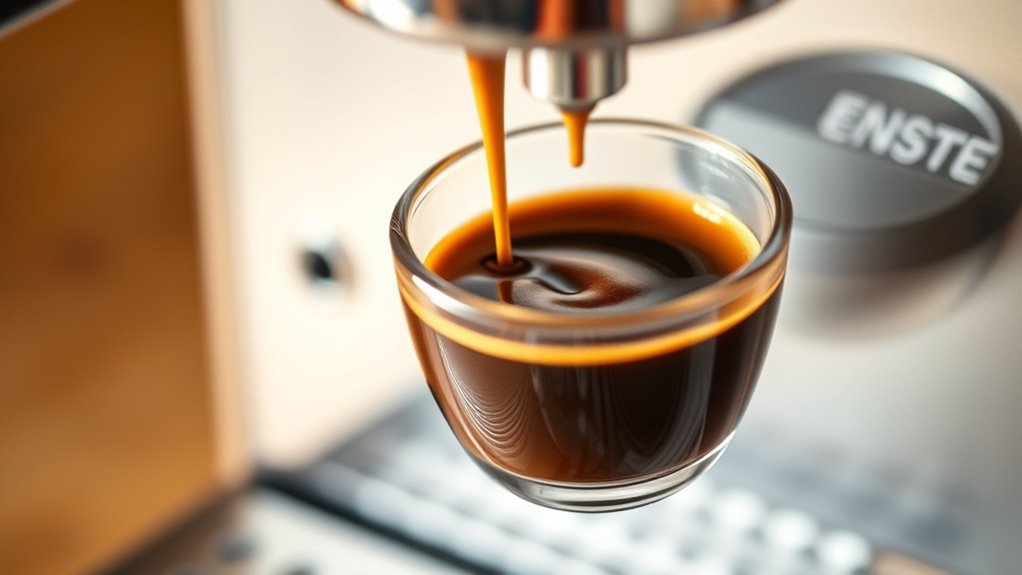
Although the exact volume of a single espresso shot can vary slightly by barista or machine, it’s widely accepted to be 1 fluid ounce (30 milliliters). This standard provides a reliable baseline for consistency in espresso preparation.
You might encounter ristretto shots, which are shorter, about 0.5 to 0.75 ounces. These offer a more concentrated flavor by extracting less water through the grounds.
On the other hand, lungo shots extend beyond the standard, ranging from 1.5 to 3 ounces, yielding a milder taste by passing more water through the coffee.
Keep in mind that volume alone doesn’t reflect the shot’s strength or weight. Those factors depend on extraction time and coffee dose, which you’ll explore separately.
Understanding the 1-ounce standard helps you appreciate variations without confusion.
Measuring espresso by weight in grams ensures greater precision and consistency across different brews.
How Much Coffee Grounds Are Used for Single and Double Shots
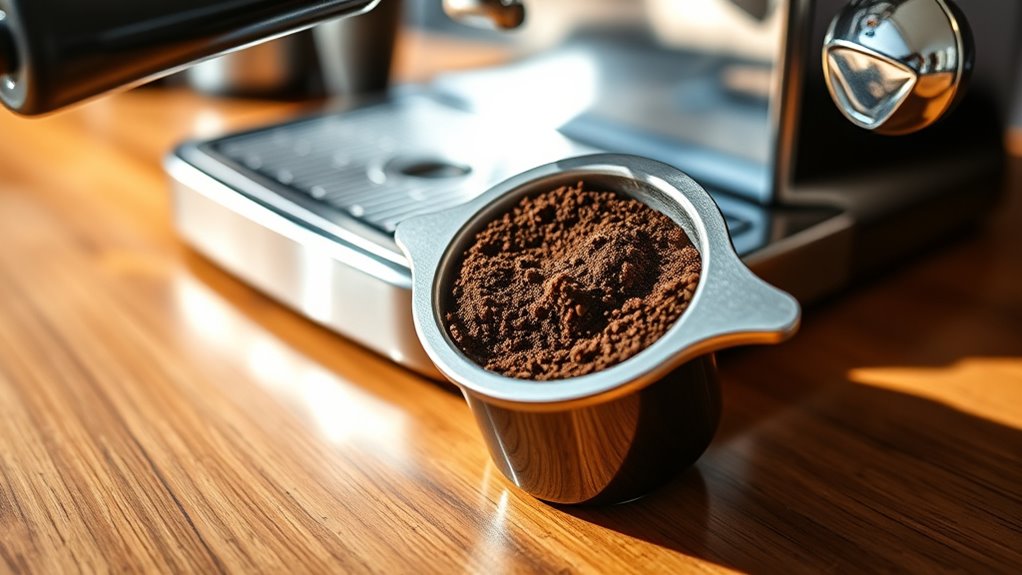
When you prepare espresso, the amount of coffee grounds you use is vital for achieving the right flavor and strength. A single shot typically calls for 7 to 9 grams of coffee grounds, while a double shot requires about 14 to 18 grams.
Many baristas prefer using 18 grams for a double shot to guarantee consistency.
Using 18 grams for a double shot ensures consistent flavor and quality every time.
The exact dosing directly affects extraction, influencing the espresso’s strength and overall quality. Using a scale to weigh your coffee grounds helps maintain precision, which is essential for maximum flavor.
By controlling the coffee dose, you can consistently produce balanced espresso shots that highlight the beans’ unique characteristics without under- or over-extracting.
It really makes a difference in taste, so paying attention to these details is worth it.
For optimal results, it’s also important to grind beans to a fine, consistent texture just before brewing to preserve aroma and flavor.
Why Measure Espresso by Weight Instead of Volume
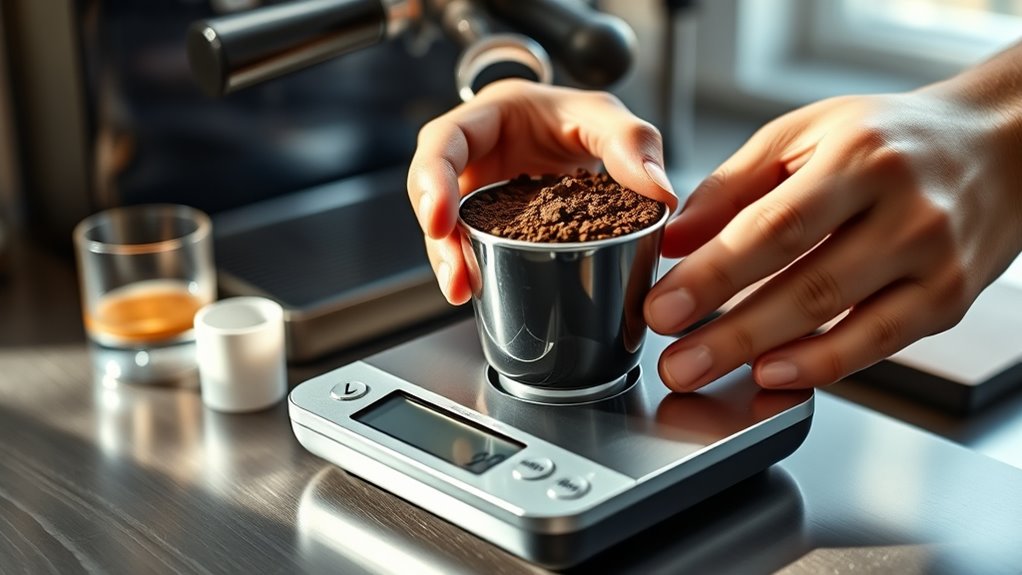
Because crema and foam can distort the visual volume of your espresso shot, measuring by weight gives you a more accurate and consistent result. Crema inflates the perceived volume without adding liquid, making volume measurements unreliable.
When you rely on weight, you eliminate variables like bean freshness, grind size, and crema thickness that affect volume but not mass.
Weighing both coffee grounds and extracted espresso allows you to precisely control extraction, ensuring consistent flavor and strength. This method helps you replicate perfect shots every time, regardless of visual differences caused by foam or crema.
Additionally, monitoring extraction time alongside weight measurements helps maintain flavor balance and shot consistency.
Using a Scale for Consistent Espresso Shots
To achieve consistent espresso shots, you need to use a scale for both dosing your coffee grounds and measuring the brewed espresso. Precise dosing, typically 7-9 grams for a single shot and 14-18 grams for a double, ensures uniform extraction.
Measuring the liquid yield, about 30 ml for a single and 60 ml for a double, confirms the shot’s accuracy. A digital scale with 0.1-gram precision helps you replicate your ideal shot every time.
Weighing grounds before extraction eliminates errors from visual volume differences caused by crema. Regular use of a scale improves shot consistency, flavor control, and overall espresso quality.
Using weight instead of volume measurement removes variability caused by the crema layer, ensuring more precise espresso yield control.
| Parameter | Typical Amount |
|---|---|
| Coffee Grounds | 7-9 g (single), 14-18 g (double) |
| Brewed Espresso | 30 ml (single), 60 ml (double) |
| Scale Accuracy | At least 0.1 gram |
How Brew Ratio Impacts Espresso Shot Volume and Strength
Using a scale to measure your coffee grounds and espresso yield sets the stage for controlling the brew ratio, which directly impacts your shot’s volume and strength. The typical brew ratio is 1:2, meaning 7 grams of coffee yields about 30 ml of espresso, and 14 grams yields 60 ml, maintaining balance.
If you reduce the water amount, you’ll get a more concentrated, thicker ristretto shot. Increasing the water produces a milder lungo shot with greater volume but less intensity.
Adjusting this ratio changes not only volume but flavor profile. Lower ratios intensify richness, while higher ratios soften it.
Keeping your brew ratio consistent guarantees reproducible shots, balancing flavor, caffeine content, and texture precisely every time you pull a shot. It’s all about finding that sweet spot that works best for your taste.
Additionally, the espresso dose plays a crucial role in achieving the desired brew ratio and extraction quality, as it influences the coffee bed thickness and extraction time.
How Grind Size Affects Espresso Shot Extraction and Volume
When you adjust your grind size, you directly control how water interacts with coffee grounds. This determines both the extraction quality and the espresso volume. A finer grind slows the water flow, increasing resistance and extraction. This produces a richer, smaller shot.
Coarser grinds speed up the flow, which reduces extraction and volume. This often yields a weaker, sour taste. Finding the right grind size is essential. Too fine leads to over-extraction and bitterness, while too coarse results in under-extraction and a thin shot.
Consistent adjustments help you hit the perfect balance for your desired espresso strength and volume. Slight changes in grind particle size can dramatically affect shot timing, taste, and crema quality, making grind size precision critical.
| Grind Size | Effect on Extraction |
|---|---|
| Fine | Slow flow, high resistance |
| Medium-Fine | Balanced flow, ideal extraction |
| Medium-Coarse | Faster flow, lighter extraction |
| Coarse | Fast flow, under-extracted shot |
Key Factors That Affect Espresso Shot Volume
Although many factors influence your espresso shot’s volume, understanding how grind size, tamping pressure, and machine pressure work together helps you control the final output.
Grind size affects water flow rate. Finer grinds slow extraction, reducing shot volume, while coarser grinds speed it up.
Adjusting grind size controls water flow—finer slows extraction and lowers volume, coarser speeds it up.
Tamping pressure compacts the grounds, influencing resistance and flow. Too light or too heavy tamping can lead to under or over-extraction.
Machine pressure forces water through the puck, and inconsistent pressure causes variable volumes.
The brew ratio, typically 1:2 coffee to water, directly determines your shot’s liquid volume. Stick to this for consistency.
Using a scale to measure grounds is essential since crema inflates visual volume without adding liquid.
Master these factors to achieve precise espresso shots every time. It might take some practice, but getting these right makes all the difference.
Additionally, proper preheating time ensures temperature consistency, which is critical for controlling shot volume and extraction quality.
Differences Between Ristretto, Standard, and Lungo Espresso Shots
Because the amount of water used during extraction directly impacts flavor and strength, understanding the differences between ristretto, standard, and lungo shots is essential for tailoring your espresso experience. Each shot varies in volume and taste, influenced by the water quantity.
| Shot Type | Volume (oz/ml) | Flavor Profile | Strength |
|---|---|---|---|
| Ristretto | 0.5–0.75 oz (15–22 ml) | Concentrated, sweet | Strongest |
| Standard | 1 oz (30 ml) | Balanced, rich | Moderate |
| Lungo | 1.5–3 oz (45–90 ml) | Milder, bitter | Weakest |
You’ll notice ristretto highlights early rich flavors, while lungo pulls more bitterness. Standard shots strike a balance, making it ideal for most palates. Venti espresso drinks typically contain two shots of espresso, which balance flavor and caffeine intensity for a satisfying experience.
How Freshness and Crema Influence Perceived Espresso Volume
If you want your espresso to look as satisfying as it tastes, pay attention to freshness and crema quality. Freshly brewed espresso yields a thick, vibrant crema that visually inflates the shot without adding liquid. As crema fades, the volume seems to shrink, even though the liquid stays the same.
Here’s how freshness and crema influence perceived espresso volume:
- Fresh beans create a dense, stable crema that enhances visual volume and richness.
- Crema dissipates quickly, reducing perceived volume despite unchanged liquid content.
- Stale or poorly stored beans produce thin, fragile crema, making shots look smaller.
- Variations in crema thickness markedly affect how substantial your espresso feels.
Understanding these points helps you appreciate why freshness and crema quality matter for your espresso’s appearance and sensory impact. It’s pretty cool how much crema can change what you see and even how you enjoy your shot! The natural glossy finish of espresso, similar to its hair color counterpart, also reflects the quality and freshness of the brew.
Why Knowing Espresso Shot Sizes Matters for Coffee Drinks and Recipes
You need to know the exact espresso shot sizes to keep your drinks consistent every time. When you measure precisely, your recipes balance flavor and caffeine just right.
Plus, this kind of accuracy really comes in handy when you want to scale up or customize drinks without losing that great quality. Measuring by weight rather than volume ensures precision and consistency in brewing.
Consistency In Drink Preparation
When you know the standard espresso shot sizes, typically 1 ounce for a single and 2 ounces for a double, you guarantee your coffee drinks maintain consistent flavor and strength. This consistency is vital whether you’re a barista or home brewer.
It helps you deliver uniform caffeine levels in every cup.
You also assure precise ingredient ratios for drinks like lattes and Americanos. Plus, standardizing variations such as ristretto or lungo makes for predictable taste profiles.
Keeping this consistency helps maintain overall beverage quality across multiple preparations.
Recipe Accuracy And Balance
Because espresso shot sizes directly impact the balance and strength of coffee drinks, knowing their exact measurements is crucial for recipe accuracy. This precision helps you maintain the intended flavor profile and caffeine content, especially when scaling recipes or preparing milk-based drinks like lattes.
Using exact shot volumes ensures you can replicate drinks consistently, enhancing both customer satisfaction and personal brewing success.
| Shot Type | Volume (ml) |
|---|---|
| Single Shot | 30 |
| Double Shot | 60 |
| Latte Ratio | 1:3 espresso to milk |
| Cappuccino Ratio | 1:1 espresso to milk and foam |
| Caffeine Estimate | ~63 mg per shot |
Understanding these standards lets you craft balanced, flavorful espresso drinks every time.
Frequently Asked Questions
What Is the Ideal Water Temperature for Brewing Espresso?
You want your water temperature between 195°F and 205°F (90°C to 96°C) for brewing espresso. This range guarantees balanced extraction, avoiding bitterness from overheating or sourness from underheating.
It helps deliver the best flavor in every shot. So, keeping your water in that sweet spot really makes a difference.
How Long Should the Extraction Time Be for a Perfect Shot?
You want extraction to dance between 25 and 30 seconds, no faster, no slower. That sweet spot pulls balanced flavors, avoiding sour sharpness or bitter bite.
Adjust grind and dose to keep this perfect rhythm steady. It’s all about finding that groove where everything just clicks.
Keep an eye on your timing, and you’ll be pulling shots that taste just right every time.
Can Espresso Shot Volume Vary With Different Coffee Bean Varieties?
Espresso shot volume doesn’t really change with different coffee bean varieties. You’ll notice flavor and crema differences, but the liquid amount stays consistent.
If you want to affect the volume, try adjusting the grind size, extraction time, or machine settings instead. Those are the things that really make a difference.
What Maintenance Tips Improve Espresso Machine Consistency?
Did you know regular descaling boosts shot consistency by up to 30%? You should descale every 1-3 months, clean group heads daily, and replace water filters monthly.
Also, check gaskets regularly and maintain a consistent grind size for perfect espresso shots. These simple steps really make a difference in your machine’s performance.
Keeping up with maintenance not only improves taste but also extends the life of your espresso machine. It’s worth the effort for those great, reliable shots every time!
How Do Different Espresso Machines Affect Shot Taste and Quality?
Different machines affect your shot by controlling pressure, temperature, and water flow. High-end models deliver consistent extraction and richer flavor.
On the other hand, lower-quality or poorly maintained machines can cause weak, bitter, or uneven shots you’ll notice immediately. It’s kind of like the difference between a chef’s knife and a butter knife when you’re cooking.
Conclusion
Now that you know the exact volume and weight behind a perfect espresso shot, you hold the key to unleashing consistent, flavorful coffee every time. Measuring by weight, understanding brew ratios, and recognizing shot variations lets you dial in your ideal espresso like a pro.
Remember, a well-measured shot is the heartbeat of any great coffee drink. So don’t just guess. Measure and make every cup sing with precision.