Yes, decaf espresso does have caffeine, but much less than regular espresso. It contains about 3 to 15 mg per shot compared to 63 mg in a regular one. You won’t get the same jolt, but small caffeine amounts remain because decaffeination removes most, not all, caffeine.
Factors like bean type and brewing also affect the final caffeine level. If you want to understand exactly why some caffeine stays and how it might affect you, there’s more detailed info to explore.
How Much Caffeine Is in Decaf Espresso Compared to Regular?
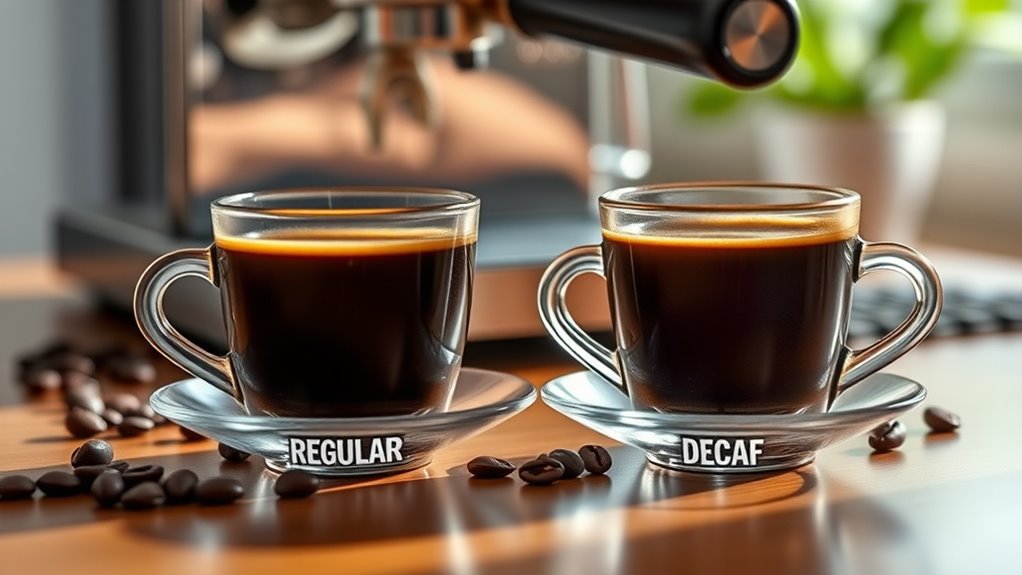
Although decaf espresso isn’t entirely caffeine-free, it contains considerably less caffeine than regular espresso. A typical 1 oz shot of decaf espresso has about 3 to 15 mg of caffeine, whereas a regular shot contains roughly 63 mg. This means decaf espresso generally has 80-90% less caffeine.
The exact amount depends on the decaffeination method and the type of coffee bean used. Also, the brewing process and shot size influence caffeine levels. Standard shots usually have more caffeine than smaller servings.
If you’re aiming to reduce your caffeine intake but still want a rich espresso flavor, decaf espresso offers a practical option with considerably reduced caffeine. This way, you can enjoy your coffee without the stronger stimulant effects of regular espresso.
The Swiss Water process is one of the most effective decaffeination methods, often resulting in the lowest caffeine residuals in decaf espresso.
Why Does Decaf Espresso Still Contain Some Caffeine?
Because the decaffeination process rarely eliminates every trace of caffeine, decaf espresso still contains some caffeine. You should know that the residual caffeine usually ranges from 3 to 15 mg per 1 oz shot, depending on the method used.
Since caffeine naturally exists in coffee beans, small amounts remain even after decaffeination. Techniques like the Swiss Water Process or solvent methods are effective but don’t extract 100% of the caffeine.
Additionally, factors such as the type of bean, the specific decaffeination method, and the brewing process impact how much caffeine stays in your decaf espresso.
Proper maintenance, including regular descaling, is essential to ensure your espresso machine functions optimally and preserves the quality of your espresso, whether decaf or regular.
How the Decaffeination Process Reduces Caffeine in Espresso Beans
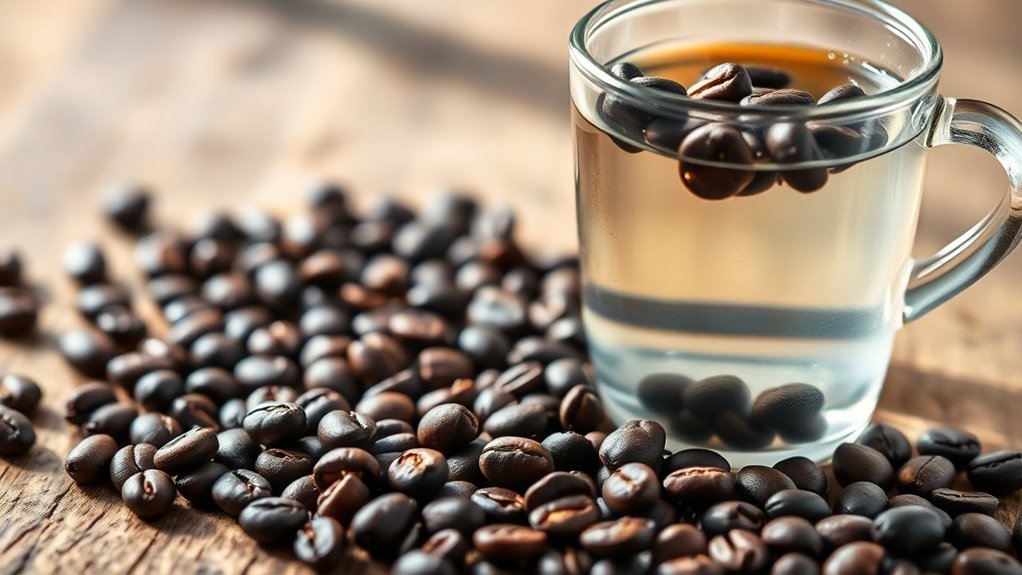
You’ll find that decaffeination happens before roasting, when the beans are still green. They use methods like the Swiss Water Process or CO2 extraction to remove caffeine without harming the flavor.
These techniques swell the beans with water or solvents, which helps dissolve and separate the caffeine molecules efficiently.
While these processes remove at least 97% of the caffeine, a small amount still remains. This means it can slightly impact the final espresso, but not enough to change the overall experience much.
Proper extraction timing during brewing also plays a role in preserving the flavor balance of decaf espresso.
Timing Of Decaffeination
When you want to enjoy an espresso with considerably less caffeine, the key lies in the timing of the decaffeination process, which takes place while the coffee beans are still green.
Decaffeination happens before roasting, ensuring caffeine is removed early, without affecting the flavor compounds that develop during roasting. The green beans are soaked or treated with solvents to swell and release caffeine selectively, preserving the beans’ original taste profile.
Since roasting changes the beans chemically, decaffeination can’t be done afterward. This early timing is essential because it lets you enjoy espresso with reduced caffeine but intact flavor. Using high-quality decaf beans ensures that the flavor complexity and crema are preserved despite the caffeine reduction.
Methods Used For Decaffeination
Although decaffeination occurs before roasting, the methods used to reduce caffeine in espresso beans vary widely in technique and effectiveness. You’ll find several common processes: the Swiss Water Process uses water and carbon filtration to eliminate caffeine without chemicals, while the CO2 method employs pressurized carbon dioxide to target caffeine molecules selectively.
Solvent-based methods use food-grade chemicals like methylene chloride or ethyl acetate to dissolve and extract caffeine efficiently. These methods typically remove 97% or more of the caffeine, aiming to preserve the beans’ flavor compounds.
High-quality techniques, particularly the Swiss Water Method, guarantee minimal or no residual chemicals remain in the beans. Understanding these approaches helps you appreciate how decaf espresso retains much of its original character despite caffeine reduction.
On average, a shot of espresso contains about 63 mg of caffeine, so decaffeination methods significantly reduce this amount to create a lower-caffeine alternative caffeine content in espresso.
Impact On Espresso Beans
Because caffeine is deeply embedded within the cellular structure of green espresso beans, the decaffeination process must target these molecules carefully before roasting begins. You’ll find that methods like the Swiss Water Process or carbon dioxide extraction selectively remove caffeine while preserving most of the bean’s original composition.
Although decaf espresso beans retain some caffeine, their content drops significantly, from 60-75 mg to about 3-15 mg per 1 oz shot. This reduction can slightly alter flavor, but quality processes minimize these changes, maintaining a taste close to regular espresso.
Proper storage and handling are essential to maintain the flavor and shelf life of decaf espresso, similar to how espresso powder is stored to preserve its aroma and quality.
| Aspect | Regular Espresso Beans | Decaffeinated Espresso Beans |
|---|---|---|
| Caffeine Content | 60-75 mg per 1 oz | 3-15 mg per 1 oz |
| Decaffeination Stage | None | Pre-roasting (green beans) |
| Flavor Impact | Original flavor | Slightly altered |
| Process Methods | N/A | Swiss Water, CO₂ extraction |
| Bean Structure | Intact | Mostly preserved |
Key Factors Affecting Caffeine Levels in Decaf Espresso
Since decaf espresso still contains some caffeine, understanding the factors that influence its levels is essential if you want to manage your intake precisely. The caffeine content typically ranges from 3 to 15 mg per 1 oz shot, depending largely on the decaffeination method and the type of beans used.
For example, Swiss Water and CO2 processes usually leave less residual caffeine than solvent-based methods.
Also, the bean type matters. Arabica beans generally have less caffeine than Robusta.
Your brewing technique can impact caffeine levels too: extraction time and pressure can increase or decrease the amount extracted from decaf beans.
Even within the same brand or café, variations occur due to differences in decaffeination and brewing.
Knowing these factors helps you make informed choices about your decaf espresso consumption.
Additionally, espresso’s unique extraction techniques affect not only caffeine but also the natural oils and proteins that influence its overall composition.
What Caffeine Levels Mean for Your Decaf Espresso Experience
When you go for a decaf espresso, you’re still getting a little caffeine—usually between 3 to 15 mg per shot. It’s way less than a regular espresso, but if you’re sensitive, it might still give you a bit of a buzz.
Knowing these caffeine levels can help you keep your energy in check without the jitters you’d get from a full-strength espresso. The caffeine content in decaf espresso varies depending on factors like bean type and roast, which influence the final amount of caffeine per shot.
Decaf Espresso Caffeine Content
Although decaf espresso contains far less caffeine than its regular counterpart, it still has measurable amounts that can affect your daily intake. Typically, a 1-ounce shot of decaf espresso contains between 3 to 15 milligrams of caffeine, which is considerably lower than the 60 to 75 milligrams found in a regular shot.
The exact caffeine content varies depending on the decaffeination process and the beans used. So, some shots may have slightly more caffeine than others.
Even though it’s labeled decaf, you should keep in mind that these small amounts can add up if you drink multiple shots throughout the day. Understanding this variability helps you make informed choices about how decaf espresso fits into your caffeine consumption.
It’s all about knowing what you’re getting and planning accordingly. For comparison, a standard Venti hot drink usually contains 2 shots of espresso, which amounts to about 150 mg caffeine, highlighting the significant difference in caffeine levels between regular and decaf options.
Impact On Alertness
Understanding the caffeine content in decaf espresso helps clarify its actual impact on your alertness. Since decaf espresso contains just 3 to 15 mg of caffeine per 1 oz shot, its effect on your stimulation levels is minimal compared to regular espresso.
For most people, this low caffeine amount won’t noticeably boost alertness. But if you’re particularly sensitive to caffeine, even these small amounts can produce slight stimulation.
Drinking several shots can increase caffeine intake, but it usually stays below the level that triggers significant stimulant effects. Additionally, the extraction time of espresso plays a role in how much caffeine is present in each shot.
Is Decaf Espresso Safe for People Sensitive to Caffeine?
Since decaf espresso still contains a small amount of caffeine, typically between 3 and 15 mg per ounce, it mightn’t be completely free of stimulant effects for people sensitive to caffeine.
If you’re highly sensitive or have a caffeine allergy, even these low levels could trigger mild reactions.
Usually, decaf espresso meets safety standards and is safe for most people. But if you have extreme sensitivities or specific medical conditions, it’s a good idea to be cautious.
Before drinking decaf espresso, check with your healthcare provider to make sure it won’t affect you negatively.
Knowing about its leftover caffeine helps you make informed choices and avoid surprises. This way, your drink fits your health needs perfectly.
Does Decaf Espresso Affect Sleep and Anxiety?
If you’re concerned about how decaf espresso might impact your sleep or anxiety, it’s important to take into account its caffeine content. Decaf espresso contains roughly 3-15 mg of caffeine per shot, which is much less than regular espresso.
For most people, this small amount is unlikely to disrupt sleep or cause anxiety.
However, caffeine blocks adenosine receptors in your central nervous system, and that can influence both sleep quality and anxiety levels. If you’re highly sensitive to caffeine, even the residual caffeine in decaf espresso might trigger anxiety symptoms or sleep disturbances.
In general, decaf espresso poses minimal risk for most individuals. But if you notice increased restlessness or insomnia after drinking it, consider limiting your intake or switching to a caffeine-free alternative.
Debunking Myths About Caffeine in Decaf Espresso
You might think decaf espresso is completely caffeine-free, but it actually contains small amounts—usually between 3 to 15 mg per shot. That’s because the decaffeination process removes most, but not all, of the caffeine before roasting.
Caffeine Presence Explained
Although decaf espresso undergoes a process to remove most caffeine, it still contains between 3 to 15 mg of caffeine per 1 oz shot, depending on the beans and decaffeination method used. Here’s what you should know:
Decaffeination can’t remove 100% of caffeine; some always remains in the beans.
The caffeine content in decaf espresso is much lower than regular espresso’s 63 mg per shot.
Variations in caffeine levels happen because different methods and bean qualities affect how much caffeine stays behind.
Common Decaf Misconceptions
While many assume decaf espresso contains no caffeine at all, it actually holds between 3 to 15 mg per shot, depending on the beans and decaffeination process. This common misconception overlooks that decaffeination removes about 97% or more of caffeine, but small amounts still remain.
You should know that caffeine levels vary based on the decaffeination method and the specific coffee beans used.
Another myth is that all decaf is chemically processed, but high-quality decaf often uses the Swiss Water Process, which avoids chemical residues.
If you’re sensitive to caffeine, it’s important not to assume decaf espresso is entirely caffeine-free. That can lead to consuming more caffeine than you might expect.
Understanding these facts helps you make informed choices about your coffee. So, next time you order decaf, keep in mind there’s a little caffeine left in the cup. It’s all about knowing what to expect.
Choosing High-Quality Low-Caffeine Decaf Espresso
Since decaf espresso still contains some caffeine, choosing high-quality beans processed through chemical-free methods like the Swiss Water or CO2 technique is essential to minimize caffeine content while preserving flavor.
To make the best choice, focus on these factors:
- Decaffeination Method: Opt for beans labeled with Swiss Water or CO2 methods to avoid chemical residues and guarantee purity.
- Bean Type: Select 100% Arabica beans, which offer richer flavor and naturally lower caffeine levels.
- Freshness: Choose freshly roasted decaf beans to retain maximum flavor and maintain low caffeine content.
Brewing Tips to Maximize Flavor Without Extra Caffeine
To get the most flavor from your decaf espresso without increasing caffeine, you’ll want to adjust your brewing technique carefully.
Start by using a coarser grind to reduce extraction time, which limits caffeine release while enhancing flavor. Shorten your brewing time to prevent excessive caffeine from dissolving into the shot, keeping the taste rich but caffeine low.
Lower your water temperature slightly to slow caffeine extraction, allowing a flavorful shot with minimal caffeine. Always choose high-quality decaf beans and store them properly to preserve natural oils and flavor profiles.
Finally, use precise measurement tools to control dose and extraction parameters.
This evidence-based approach guarantees you maximize flavor without extra caffeine in every cup. Give these tips a try and enjoy a delicious decaf espresso that doesn’t compromise on taste.
Frequently Asked Questions
Can Decaf Espresso Cause Caffeine Withdrawal Symptoms?
Yes, decaf espresso can cause caffeine withdrawal symptoms if you consume it regularly and suddenly stop. It contains a small amount of caffeine, which might still affect you.
This can trigger headaches or irritability, especially if you’re sensitive or used to higher caffeine levels. So, even though it’s “decaf,” it’s not completely caffeine-free. Just something to keep in mind if you’re trying to cut back.
How Does Decaf Espresso Taste Compared to Regular Espresso?
Decaf espresso tastes milder and less intense than regular espresso. But if you use quality beans and proper roasting, you’ll still enjoy a rich, bold flavor with complex notes. Some subtle differences remain, though.
It’s not quite the same punch as regular espresso, but it’s close enough to satisfy your cravings without the caffeine buzz. So, if you’re avoiding caffeine but love espresso, decaf can definitely do the trick.
Are There Health Benefits Unique to Decaf Espresso?
You get antioxidants, reduced caffeine intake, and a lower risk of heart palpitations.
You enjoy anti-inflammatory effects, support for oxidative stress reduction, and the comforting ritual of espresso without the jitters or sleep disruption of regular coffee.
Can Decaf Espresso Be Used in Coffee-Based Cocktails?
You can definitely use decaf espresso in coffee-based cocktails. It delivers rich flavor similar to regular espresso but with minimal caffeine, making it ideal for evening drinks or when you want to reduce caffeine without sacrificing taste.
It’s a great choice if you love the taste of coffee but need to avoid the jitters or late-night buzz. Plus, it blends well with spirits and other cocktail ingredients, keeping that bold coffee kick alive. Give it a try next time you’re mixing up a coffee cocktail!
Does Decaf Espresso Contain Other Stimulants Besides Caffeine?
No, decaf espresso doesn’t contain other notable stimulants besides caffeine. You’ll find only minimal amounts of compounds like theobromine and theophylline, but they’re too low to cause significant stimulant effects.
Conclusion
So, yes, decaf espresso does sneak in a bit of caffeine, surprise, surprise! But don’t panic; it’s barely enough to keep you bouncing off the walls. Thanks to clever decaffeination methods, caffeine takes a long vacation, leaving you mostly chill.
If you’re chasing the espresso buzz without the jitters, decaf’s got your back. Just don’t expect it to replace your morning rocket fuel. Science says it’s low-caffeine, not caffeine-free. Deal with it!

Pingback: Does Starbucks Have Decaf Espresso – Answered
Pingback: Is Moka Pot Espresso – Answered