A standard mocha coffee usually contains between 200 and 220 calories, but this can vary based on portion size, milk type, and toppings. Using whole milk and whipped cream can push the calories above 400.
On the other hand, opting for skimmed or plant-based milks and skipping heavy toppings lowers calories substantially. Choosing unsweetened cocoa instead of syrup also helps keep things lighter.
If you want to enjoy mocha flavor without extra calories, understanding these factors makes all the difference. There’s more to think about when aiming for the perfect cup.
How Many Calories Are in a Standard Mocha Coffee?
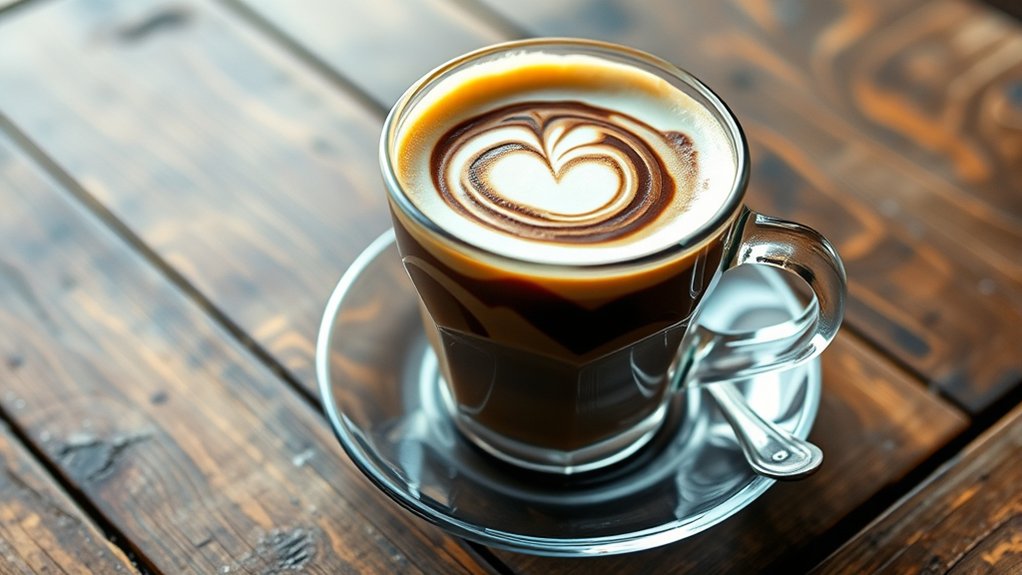
Although the exact calorie count varies by ingredients and serving size, a standard mocha coffee usually contains between 200 and 220 calories. The primary factor influencing this calorie range is the type and amount of chocolate syrup or cocoa powder used.
If your mocha is made with whole milk, expect it to be on the higher end of that range. Choosing skim milk or plant-based alternatives reduces calories noticeably.
Keep in mind, additional toppings like whipped cream or chocolate shavings can markedly increase the calorie content beyond the typical range.
If you prefer fewer calories, many coffee shops offer smaller or “skinny” versions, usually containing around 150 to 180 calories.
Understanding these variables helps you make informed choices about your mocha’s calorie intake. The impact of ingredient selection plays a crucial role in managing overall calorie consumption.
How Portion Size Affects Mocha Calories

The size of your mocha coffee directly impacts its calorie content, with larger portions containing markedly more calories than smaller ones. For instance, a small mocha with whole milk averages about 290 calories, while a large one can surpass 400 calories, depending on ingredients.
To manage calorie intake, consider these points:
- Calorie count rises proportionally with the drink’s volume, mainly due to milk and chocolate syrup.
- Choosing smaller sizes considerably reduces calorie consumption without sacrificing flavor.
- Opting for “skinny” versions or smaller portions helps you maintain better control over your daily calorie budget.
Additionally, just as precise espresso dose influences the flavor and strength of your coffee, portion control plays an essential role in balancing taste and calorie intake.
What Adds the Most Calories to Your Mocha?
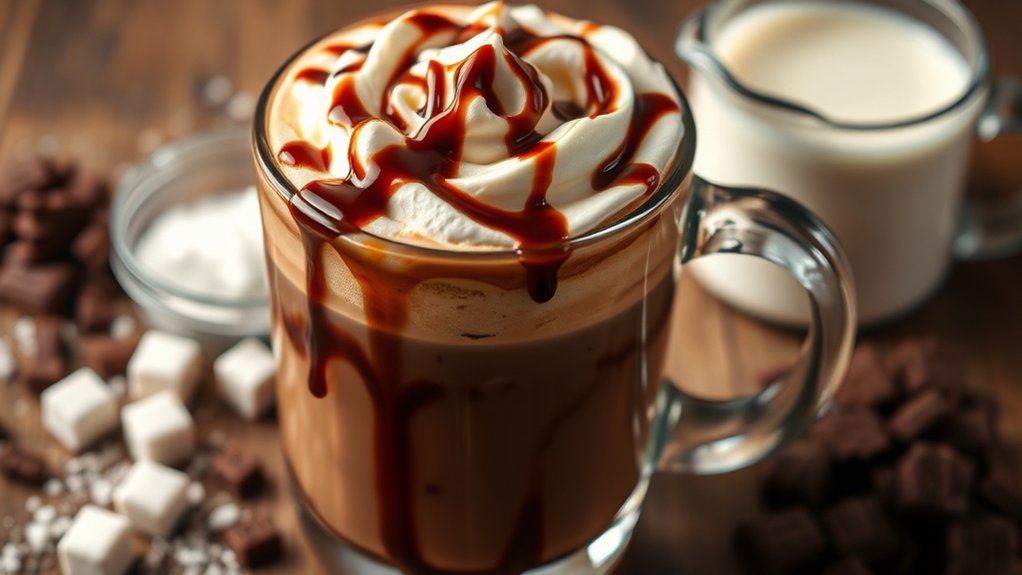
You’ll find that chocolate syrup adds the most calories—about 50 to 60 per tablespoon.
When it comes to milk, whole milk adds roughly 150 calories per cup, which is more than the lower-fat options.
Then, there are toppings like whipped cream and chocolate shavings; each of those can add 50 or more calories.
Knowing this can really help you keep an eye on the calorie content in your mocha.
Additionally, the water temperature used in espresso extraction can subtly influence the flavor balance of your mocha, which may affect how enjoyable the drink feels despite its calorie content.
Chocolate Syrup Calories
One tablespoon of chocolate syrup can add between 50 to 60 calories to your mocha, making it one of the primary contributors to the drink’s calorie content. This calorie load mainly comes from the sugar in the syrup, which is much higher compared to unsweetened cocoa powder.
Also, some chocolate syrups contain fats or oils, which can increase the calories even more.
To understand how chocolate syrup impacts your mocha’s calories, consider these points:
- The amount of syrup you use directly affects the total calories. More syrup means more calories.
- Syrups with added fats or oils have higher calorie counts than plain sugar-based syrups.
- Substituting syrup with unsweetened cocoa powder can substantially reduce calorie intake without sacrificing chocolate flavor.
Additionally, choosing a mocha made with decaf espresso can reduce caffeine intake while still providing a rich coffee flavor.
Milk Type Impact
Choosing your milk type considerably influences the calorie content of your mocha. Whole milk adds about 150 calories per cup, making it the highest-calorie option.
If you want to cut calories, skimmed or nonfat milk contains roughly 80-90 calories per cup, notably lowering your mocha’s calorie count.
Semi-skimmed milk offers a moderate choice with 90-100 calories per serving.
Plant-based milks like coconut or cashew vary widely, ranging from 30 to 120 calories depending on added sugars and fat. This variability means your mocha’s calorie content can shift by up to 70 calories just based on your milk choice.
Being mindful of this can help you tailor your mocha to meet your calorie goals without sacrificing flavor.
Additionally, understanding how espresso yield affects the strength and flavor balance of your coffee can further help control the overall calorie impact of your mocha.
Toppings And Additions
Although the base mocha contains a set amount of calories, the toppings and additions you choose can quickly increase its calorie count. To manage your intake, consider these common add-ons:
Whipped cream adds 50-100 calories per serving, varying with amount. Caramel drizzle contributes about 60 calories per tablespoon, while chocolate syrup and similar sauces add 50+ calories each tablespoon.
Smaller toppings like chocolate shavings, marshmallows, or sprinkles add between 10 and 30 calories, depending on quantity. These extras can markedly alter your mocha’s calorie content.
Keep in mind that the standard shot size of espresso used in your mocha also influences the overall calorie content and flavor intensity.
How Does Milk Choice Affect Mocha Calories?
When you select the type of milk for your mocha, you directly influence its calorie content. Whole milk adds about 150 calories per cup, while skimmed milk lowers this to around 80-100 calories. Plant-based options like almond or soy milk vary widely, typically ranging from 30 to 120 calories per cup.
Choosing low-fat or non-dairy milk alternatives can markedly reduce calories without compromising flavor. The calorie difference between milk types can exceed 100 calories per serving, which impacts your mocha’s total calorie count.
| Milk Type | Calories per Cup | Impact on Mocha Calories |
|---|---|---|
| Whole Milk | 150 | High calorie increase |
| Skimmed Milk | 80-100 | Moderate calorie reduction |
| Almond Milk | 30-60 | Low calorie option |
| Soy Milk | 80-120 | Moderate calorie option |
| Low-fat Milk | ~100 | Balanced calorie choice |
The balance of flavors and texture in your mocha can also depend on the extraction process used to prepare the espresso base, which interacts with milk choice to influence the overall taste experience.
What Role Do Toppings Play in Mocha’s Calorie Count?
Milk selection plays a substantial role in shaping your mocha’s calorie content, but toppings can have an even more pronounced impact. Toppings may increase the calorie count by up to 50% or more, depending on the ingredients and portion size.
Here’s what to keep in mind: Whipped cream adds about 50-100 calories per serving, markedly boosting your mocha’s overall calories. Chocolate shavings or dusting contribute roughly 10-20 calories, a smaller but noticeable addition.
Extras like marshmallows or caramel drizzle add 30-60 calories or more, introducing extra sugars.
Choosing lighter toppings like cocoa powder or cinnamon can help keep calories minimal. Understanding these details helps you make informed choices about your mocha’s calorie load. Additionally, mastering espresso extraction ratios can influence the intensity and richness of your mocha, which may affect how much topping you choose to add.
How to Make a Low-Calorie Mocha That Tastes Great
To enjoy a delicious mocha without the extra calories, you can make several smart choices in your ingredients and preparation. Swap chocolate syrup for unsweetened cocoa powder to cut about 50-60 calories per tablespoon. Choose low-fat or plant-based milks like almond or skimmed milk, and skip whipped cream to save 50-100 calories.
You can also use natural sweeteners like honey or calorie-free options to avoid added sugars.
| Ingredient | Standard Option | Low-Calorie Alternative |
|---|---|---|
| Chocolate | Syrup (50-60 cal/tbsp) | Unsweetened cocoa powder |
| Milk | Whole milk | Almond or skimmed milk |
| Toppings | Whipped cream (50-100 cal) | None or light sprinkle |
These choices let you enjoy mocha’s rich flavor with fewer calories. It’s all about making simple swaps that don’t sacrifice taste. Additionally, controlling variables like grind size and brew time during espresso extraction can enhance flavor without adding calories.
Where to Buy Quality Chocolate for Mocha
Although finding quality chocolate can be challenging, Whitakers Chocolates stands out as a reliable source for crafting authentic mochas. Their chocolates are ethically sourced and rich in cocoa, perfect for deepening your mocha’s flavor.
When choosing your chocolate, consider these points:
- Opt for Whitakers’ Dark Chocolate Fondant Creams, made with natural ingredients and fairtrade cocoa, enhancing taste and ethical quality.
- Explore their range of vegan and gluten-free options, allowing you to customize your mocha to dietary needs without sacrificing flavor.
- Purchase directly from Whitakers’ official online shop to guarantee you receive premium, fresh ingredients ideal for home mocha preparation.
To achieve the best flavor balance in your mocha, it’s important to consider the water temperature used during brewing, as it significantly affects extraction and taste.
Frequently Asked Questions
Can Mocha Coffee Affect Blood Sugar Levels?
Just like a Victorian-era sugar rush, mocha coffee can spike your blood sugar due to its chocolate syrup and sweeteners.
You should opt for sugar-free syrups and monitor portions to keep glucose levels steady and safe.
It’s all about balance—enjoy the flavor without the sugar overload. Keep an eye on what you add, and your blood sugar will thank you!
Is Mocha Coffee Safe During Pregnancy?
You should limit mocha coffee during pregnancy because of its caffeine and sugar content. These can affect fetal development and your blood sugar levels.
It’s a good idea to opt for decaf versions instead. And always check with your healthcare provider to make sure you’re keeping your pregnancy safe and healthy.
How Does Mocha Coffee Impact Workout Performance?
Think of mocha coffee as a fuel mix: its caffeine sharpens your focus and reduces effort, while carbs provide quick energy.
However, watch the sugar and calories. They can slow your fitness progress if consumed excessively.
Are There Caffeine-Free Mocha Options Available?
Yes, you can find caffeine-free mocha options made with decaffeinated espresso or coffee substitutes. Always check labels or ask baristas to guarantee your mocha is truly caffeine-free. This is especially important if you’re sensitive to or avoiding caffeine.
It’s pretty easy to enjoy a mocha without the jitters. Just make sure to double-check what’s in your cup!
Can Mocha Coffee Contribute to Acid Reflux?
Yes, mocha coffee can contribute to acid reflux. Its caffeine, chocolate, sugar, and dairy may relax your esophageal sphincter and increase stomach acid. This can potentially trigger or worsen reflux symptoms.
This is especially true if you’re prone to acid reflux. So, if you notice discomfort after having mocha coffee, it might be worth cutting back or trying alternatives. Your body will thank you!
Conclusion
When you’re savoring a mocha, remember that its charm lies not just in flavor but in thoughtful choices. Portion size, milk type, and toppings gently nudge its calorie count. So, opting for lighter options can keep your treat from tipping the scales.
By selecting quality chocolate and mindful ingredients, you can enjoy a delightful mocha without overindulging. This way, your coffee break stays both satisfying and balanced. It supports your wellness journey with every sip.