You’ll find that a single shot of decaf espresso contains roughly 3 to 15 milligrams of caffeine, about 3-24% of what you get in a regular espresso shot. This amount varies based on bean type, decaffeination method, and brewing factors.
Advanced processes like Swiss Water reduce caffeine to near zero, while others leave slightly more. Though the caffeine is minimal, knowing the nuances helps you choose and enjoy decaf smarter.
More details reveal how these factors work together.
What Is Decaf Espresso?
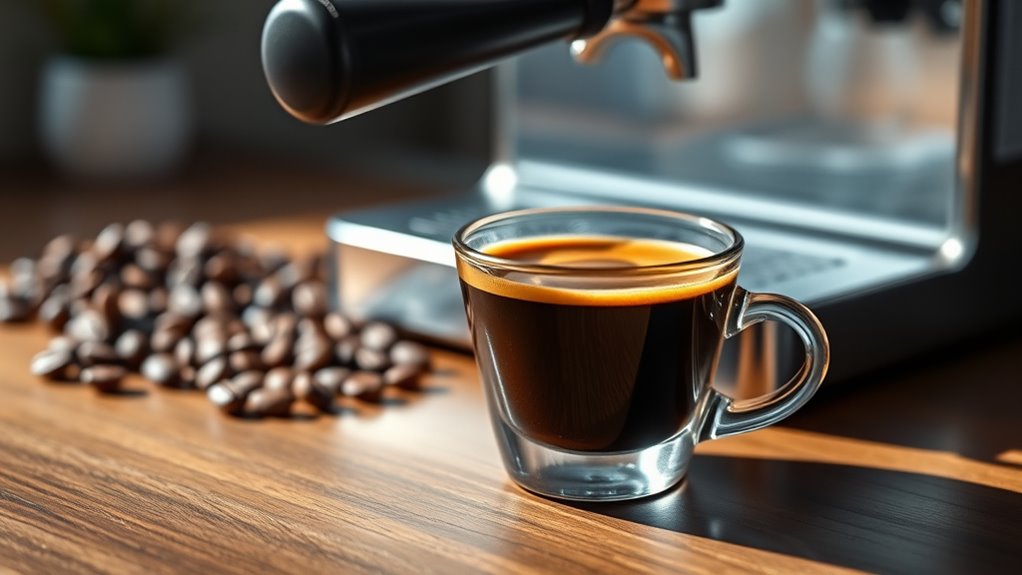
Although decaf espresso undergoes a rigorous decaffeination process, it still contains small amounts of caffeine, typically between 3 to 15 mg per 1-ounce shot.
Decaf espresso contains small caffeine amounts, usually 3 to 15 mg per 1-ounce shot.
You should understand that decaf espresso starts with coffee beans from which most caffeine has been removed using methods like Swiss Water, CO₂, or solvent-based extraction. These techniques reduce caffeine considerably while preserving the beans’ flavor profile.
After decaffeination, the beans are brewed identically to regular espresso, using hot water under high pressure to extract concentrated coffee.
Despite being labeled “decaf,” the term doesn’t imply zero caffeine but rather a minimal amount compared to standard espresso.
For optimal flavor extraction, it is important to use freshly ground beans and maintain proper dosing and grind size even when preparing decaf espresso.
How Much Caffeine Is in a Single Shot of Decaf Espresso?
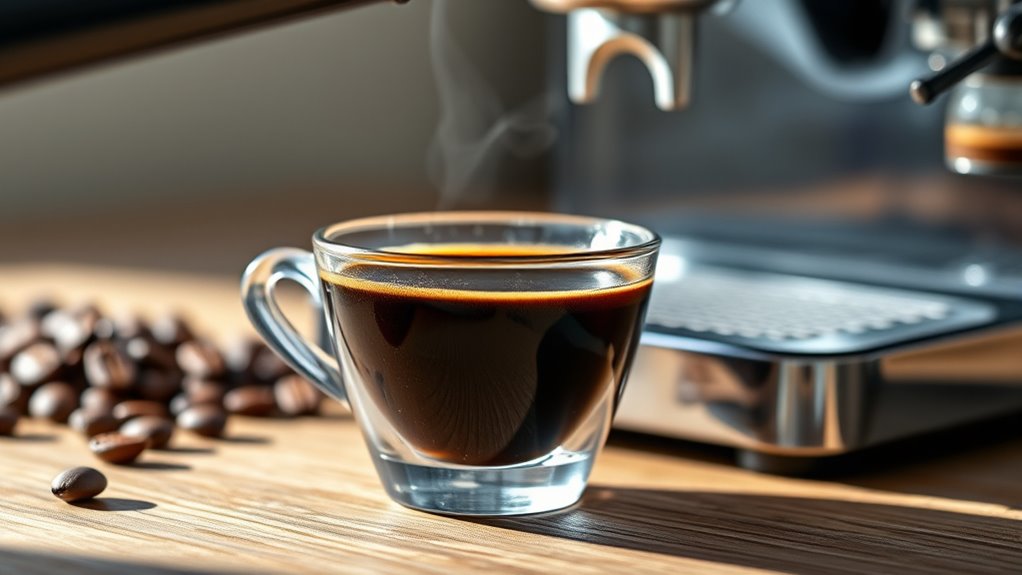
You’ll find that a single shot of decaf espresso contains between 3 to 15 mg of caffeine. It really depends on the beans and the decaffeination method used.
This range makes sense because decaf usually removes about 97% or more of the caffeine compared to regular espresso.
Plus, things like the roast level, where the beans come from, and how the shot is brewed can all affect the exact caffeine content in your cup.
Factors such as extraction time and grind size also influence the final caffeine amount in decaf espresso.
Caffeine Range Per Shot
When you order a single shot of decaf espresso, you can expect it to contain between 3 to 15 mg of caffeine. The average usually falls around 5 to 10 mg per ounce. This range reflects variations in bean quality and decaffeination methods, such as Swiss Water or CO₂ processes, which tend to reduce caffeine to the lower end.
Despite being labeled “decaf,” the caffeine content isn’t zero but is considerably less than the roughly 63 mg found in regular espresso.
Consider this when choosing decaf espresso:
- You’ll get a mild caffeine boost without the jitters.
- The caffeine level varies but remains minimal.
- High-quality decaf offers a more consistent low-caffeine experience.
- It allows you to enjoy espresso flavor without sacrificing alertness control.
Additionally, maintaining proper extraction timing is essential to ensure the flavor balance and quality of decaf espresso shots.
Factors Influencing Content
Since caffeine content in decaf espresso varies, several factors influence how much caffeine ends up in your single shot. First, the coffee bean type matters: Arabica beans typically have less caffeine than Robusta, which affects the baseline caffeine level. The roast level also plays a role, as darker roasts can slightly reduce caffeine concentration.
The decaffeination method markedly impacts residual caffeine; Swiss Water and CO₂ processes remove over 97% of caffeine but differ in efficiency. Additionally, grind size, extraction time, and brewing pressure alter how much caffeine is extracted into your shot.
Keep in mind, decaf espresso often contains more caffeine per ounce than decaf drip coffee because of its concentrated brewing. These variables combine to create a caffeine range from roughly 3 to 15 mg per single decaf espresso shot. So, the amount you get can really depend on a few key details. Regular maintenance and cleaning practices of your espresso machine can also influence extraction consistency and caffeine levels in your shot.
Decaf Espresso vs Regular Espresso: Caffeine Comparison
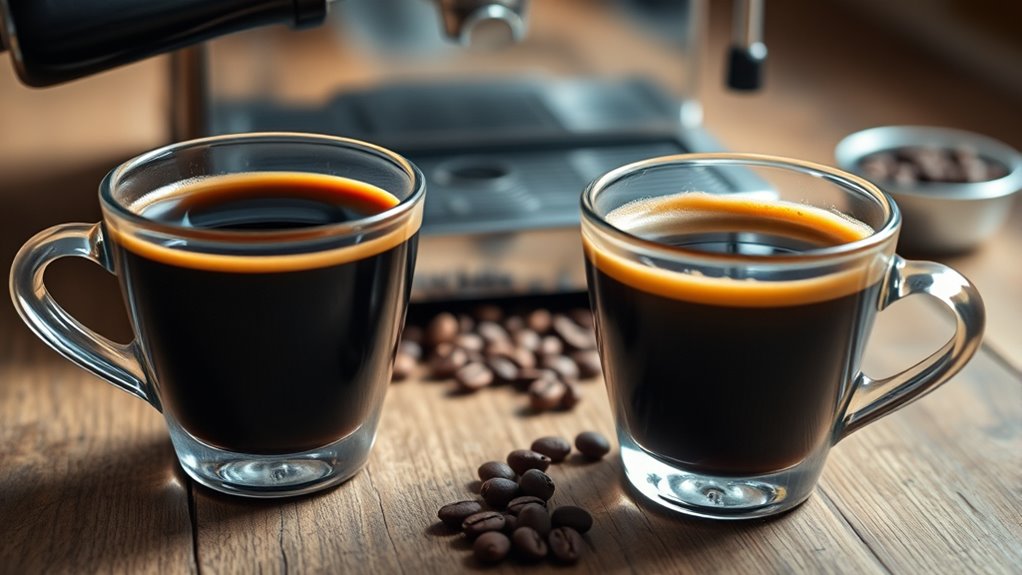
You’ll notice that decaf espresso contains roughly 3 to 15 mg of caffeine per shot, while regular espresso averages around 63 mg. That’s quite a difference in caffeine content!
Of course, the serving size and brewing method also play a role in determining the final caffeine levels you get.
Knowing these factors can help you make better choices based on your caffeine tolerance and what you prefer.
Additionally, factors like bean type and extraction ratio influence the exact caffeine amount in each shot.
Caffeine Content Differences
Although decaf espresso undergoes extensive caffeine removal, it still contains a small amount ranging from 3 to 15 mg per 1-ounce shot, compared to about 63 mg in regular espresso. This means decaf espresso retains roughly 3-24% of the caffeine content found in its regular counterpart.
The caffeine removal process typically eliminates over 97% of caffeine, but a minor residual amount remains due to bean origin and decaffeination methods.
When you choose decaf espresso, consider these points:
- It’s not completely caffeine-free. You might still feel a mild stimulant effect.
- Caffeine content varies, so your experience can differ slightly.
- A third of a decaf shot contains only 1-5 mg caffeine, which is much less than a full regular shot.
- You get a markedly reduced caffeine dose, which is ideal for sensitive individuals.
To maintain the best flavor and machine performance when brewing either type, regular descaling maintenance is essential.
Serving Size Impact
How much does serving size influence the caffeine content in decaf espresso compared to regular espresso? Serving size directly impacts caffeine content in both, but the scale differs greatly.
A standard 1 oz decaf espresso shot contains about 3 to 15 mg of caffeine, while a regular espresso shot of the same size has roughly 63 mg.
When you increase the serving size, say with a double shot, caffeine roughly doubles in both cases. However, even with larger servings, decaf espresso’s caffeine remains substantially lower than regular espresso’s equivalent volume.
This proportional increase means your caffeine intake from decaf espresso stays minimal, even if you consume more.
The variability in decaf caffeine content comes from factors like bean origin and the decaffeination method. But serving size consistently scales caffeine linearly.
Shaking espresso with ice, as done in a shaken espresso, can also affect the perceived intensity and enjoyment of caffeine in the drink.
Brew Method Effects
What role does the brew method play in determining caffeine levels in decaf versus regular espresso? While both use high pressure and fine grinding to extract caffeine efficiently, decaf espresso yields only 3 to 15 mg per shot compared to about 63 mg in regular espresso.
The decaffeination process overwhelmingly governs caffeine content, making the brewing method a secondary factor.
That said, brew time and temperature can slightly alter caffeine extraction in decaf. Darker roasts may have marginally less caffeine due to bean density, but this difference is minimal.
So, when you prepare your espresso, keep these points in mind:
Longer extraction can increase caffeine slightly in decaf. Higher temperatures may boost caffeine extraction. Decaf’s caffeine remains far lower than regular espresso. Brewing nuances influence caffeine, but decaffeination dominates.
Additionally, maintaining proper water temperature between 195°F and 205°F is crucial for optimal flavor and extraction, even when brewing decaf espresso.
Is Decaf Espresso Completely Caffeine-Free?
Can you expect decaf espresso to contain zero caffeine? The answer is no. Decaf espresso typically contains about 3 to 15 mg of caffeine per 1-ounce shot.
Legally, decaffeination requires removing at least 97% of caffeine, so small residual amounts remain. Advanced methods like Swiss Water or CO₂ can remove up to 99.9%, yet trace caffeine still sticks around.
For most people, these tiny amounts are negligible and unlikely to cause noticeable effects.
However, if you want to avoid caffeine entirely, you should know that decaf espresso still adds a minimal amount to your intake. So, while decaf espresso greatly reduces caffeine, it isn’t completely caffeine-free if you look at it closely.
The caffeine content in decaf espresso is significantly lower compared to a standard shot, which contains around 75-80 mg of caffeine.
Key Factors That Influence Caffeine Levels in Decaf Espresso
Although decaf espresso contains considerably less caffeine than regular espresso, several factors directly influence its residual caffeine levels. You’ll notice the caffeine content varies typically between 3 to 15 mg per 1-ounce shot. This variation stems from multiple elements you should consider.
The type and origin of coffee beans, such as Arabica or Robusta, affect the initial caffeine before decaffeination. Brew parameters like grind size, extraction time, and pressure influence how much caffeine is extracted. Roast level has minimal impact on caffeine but shapes flavor, often leading to darker roasts.
The decaffeination process itself determines caffeine removal efficiency, leaving varying residual amounts. Understanding these factors helps you predict and control how much caffeine ends up in your decaf espresso shot. It’s pretty handy to know this if you’re trying to keep your caffeine intake low.
While decaf espresso contains significantly less caffeine, it still falls well below the 400 mg daily safety limit for most healthy adults.
How Different Decaffeination Methods Affect Decaf Espresso Caffeine
The decaffeination method you choose plays a major role in determining how much caffeine remains in your decaf espresso. Each process varies in efficiency, and this directly influences the residual caffeine levels. The Swiss Water Process removes up to 99.9% of caffeine, resulting in the lowest content.
CO₂ extraction offers a slightly wider range of caffeine left behind. Ethyl Acetate and Methylene Chloride methods remove less caffeine and may leave higher residual amounts.
| Decaffeination Method | Approximate Caffeine per Shot (mg) |
|---|---|
| Swiss Water Process | 3 – 5 |
| CO₂ Method | 3 – 15 |
| Ethyl Acetate (EA) | 3 – 10 |
| Methylene Chloride | Similar to EA |
| Impact on Caffeine | Varies by extraction efficiency |
Safe Daily Caffeine Limits for Decaf Espresso
When you consider the caffeine content in decaf espresso, which ranges from 3 to 15 mg per 1-ounce shot, it’s clear that you can safely consume considerably more decaf shots than regular espresso within recommended daily limits.
Most adults can handle up to 400 mg of caffeine daily, translating to about 26 to 133 decaf shots.
Most adults can enjoy up to 400 mg of caffeine daily, equating to 26 to 133 decaf espresso shots.
Pregnant or breastfeeding individuals should limit intake to 300 mg, or roughly 20 to 100 shots.
Despite the low caffeine, individual sensitivity varies, so monitor your body’s response.
Feel confident enjoying multiple decaf shots without anxiety.
You can avoid caffeine-related jitters or sleep issues by sticking to what works for you.
Just remember to respect your personal caffeine tolerance.
Safeguard your health with informed limits.
Decaf espresso’s low caffeine content makes it a safe, flexible choice within these guidelines.
How to Choose the Best Low-Caffeine Decaf Espresso Beans
If you want to enjoy decaf espresso without sacrificing flavor or quality, selecting the right beans is essential. Start by choosing beans processed with Swiss Water® or CO₂ methods. These chemical-free techniques remove up to 99.9% of caffeine, ensuring low-caffeine content.
Decide between Arabica and Robusta beans based on your taste preference. Arabica offers a smoother, sweeter profile, while Robusta delivers bold, bitter notes.
Opt for medium to dark roast beans since they provide richer, more intense flavors ideal for espresso.
Always check the roast date and buy from reputable sources to guarantee freshness. Try to consume the beans within 1-2 weeks of roasting for the best taste.
Finally, review customer feedback and product descriptions to assess the decaffeination process and overall bean quality before making your purchase.
Frequently Asked Questions
Can Decaf Espresso Affect People Sensitive to Caffeine?
Yes, decaf espresso can affect you if you’re sensitive to caffeine. Even small amounts may cause jitters or anxiety. So, you should keep an eye on how much you’re drinking.
If you notice any symptoms or have health concerns, it’s a good idea to chat with a healthcare provider. They can help you figure out what’s best for your situation.
Does Decaf Espresso Taste Different From Regular Espresso?
You’d swear decaf espresso whispers compared to regular’s roar. It tastes milder, less acidic, and less vibrant due to caffeine removal and decaffeination methods. This process subtly dulls the brightness while preserving a rich, bold essence.
How Long Does Caffeine Stay in the Body After Drinking Decaf Espresso?
Caffeine from decaf espresso stays in your body roughly 3 to 7 hours before half is metabolized. Most of it is eliminated within 24 hours.
Keep in mind, individual factors can change this a lot. So, how sensitive you are and your metabolism rates really matter.
Are There Health Benefits to Drinking Decaf Espresso?
Yes, you’ll benefit from antioxidants in decaf espresso, which reduce inflammation and oxidative stress. Drinking it regularly may lower your type 2 diabetes risk and support bladder health.
All that happens while minimizing caffeine’s adverse effects, so it’s a win-win.
Can Decaf Espresso Be Used in Coffee-Based Cocktails?
You can absolutely use decaf espresso in coffee-based cocktails. It’s like adding a flavor bomb without the caffeine crash.
Its rich, concentrated taste enhances cocktails while keeping your caffeine intake low. Perfect for evening or sensitive drinkers.
Conclusion
So, you’re sipping decaf espresso expecting zero caffeine. Surprise, it’s not quite that simple. While decaf dramatically cuts caffeine, a single shot still packs about 2-5 mg, depending on beans and methods.
It’s kind of ironic that “decaf” isn’t caffeine-free. But honestly, it’s your safest bet for a mild buzz without the jitters. Understanding these nuances helps you choose wisely and stay within safe limits.
Bottom line? Decaf’s caffeine content is small but never negligible.
Pingback: Does Decaf Espresso Have Caffeine – The Truth