For the best espresso, choose freshly roasted dark or medium-dark beans. They bring bold flavors, rich crema, and full body. Single-origin beans add unique nuances, while blends offer balanced complexity.
Use a burr grinder and proper tamping to optimize extraction. Brands like La Colombe provide premium options. Trader Joe’s gives great value too.
Adjust your brew and milk to match your taste. This way, every shot shines. Keep exploring to master flavor, freshness, and cost balance.
What to Look for in Coffee for Espresso Machines
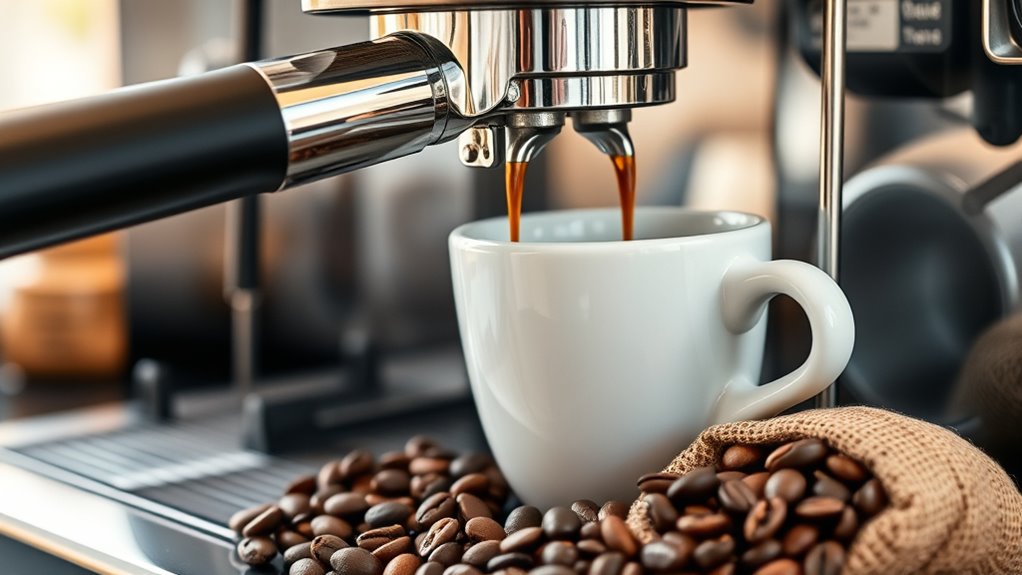
When choosing coffee for your espresso machine, you’ll want to focus on beans roasted dark enough to bring out bold flavors and create that rich crema espresso lovers crave. Grinding your beans fresh, ideally within a month of roasting, is key to reveal vibrant aroma and taste.
Select dark-roasted beans and grind fresh within a month for bold flavor and rich espresso crema.
You’ll need a fine grind to assure the right resistance during the quick espresso extraction, which lets you pull a shot bursting with complexity.
Whether you select a single-origin or a carefully crafted blend, aim for coffee with balanced acidity and body to enrich your espresso’s depth.
To achieve uniform extraction, maintain consistent grind size and apply steady tamping pressure. These details really matter—they transform your daily shot into a perfectly balanced, robust experience you’ll savor.
Measuring espresso yield by weight rather than volume ensures consistent flavor and strength in every shot.
How Roast Level and Bean Origin Shape Espresso Flavor
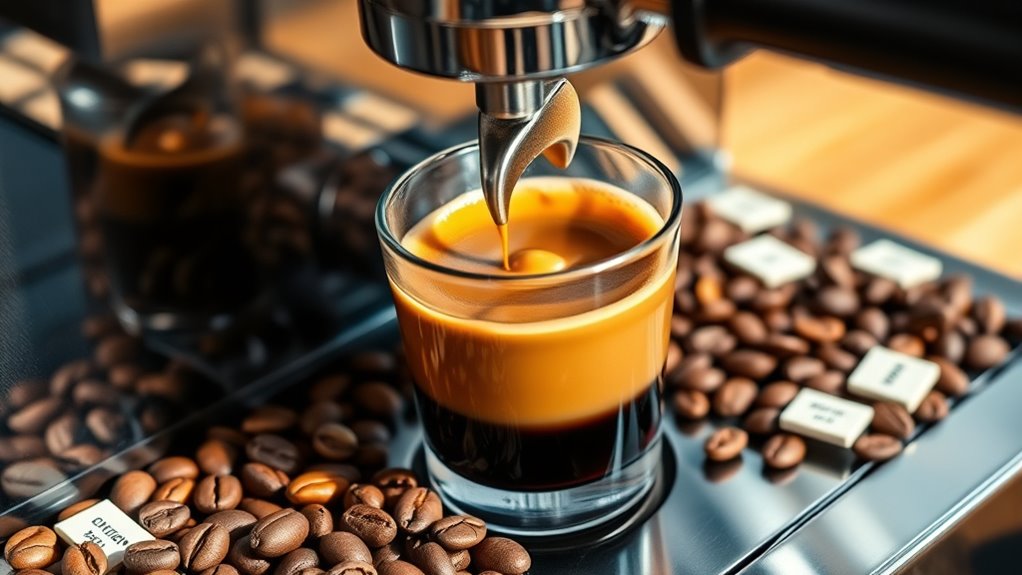
Although many factors influence your espresso’s final character, the roast level and bean origin play pivotal roles in shaping its flavor profile. Dark roast beans, favored for espresso, develop bold oils and rich flavors during longer roasting. This enhances crema and creates a full-bodied taste.
The origin of your beans adds unique nuances. Ethiopian naturals bring brightness and fruity notes, while Colombian washed beans contribute earthiness and balance. These characteristics also affect solubility, which is vital for proper extraction and flavor intensity in your espresso.
Blending beans from varied regions lets you customize brightness, body, and complexity. Understanding how roast and origin interact empowers you to select coffees that deliver the precise espresso experience you crave.
This way, you maximize richness and depth with every shot. Grinding beans just before brewing preserves essential oils and aromas, ensuring maximum freshness and flavor in your espresso freshly ground beans.
Top Coffee Brands for Espresso: Flavor, Value, and Purpose
Understanding how roast level and bean origin influence espresso flavor sets the stage for choosing the right coffee brand that matches your taste and brewing needs.
When selecting espresso coffee, consider these top brands based on flavor, value, and purpose:
- La Colombe, Peets, Illy – Known for full-bodied, rich espresso with balanced complexity and excellent crema.
- Café Bustelo, Trader Joe’s French Roast – Budget-friendly choices delivering strong, bold flavors ideal for daily use.
- Intelligentsia Black Cat, Blue Bottle – Specialty options emphasizing freshness and nuanced flavor notes, perfect for espresso connoisseurs.
- Dark Roast Beans – Essential across brands for boldness and most flavorful extraction under pressure.
Choose according to whether you prioritize richness, affordability, or a refined tasting experience to get the best shot from your espresso machine. For optimal results, remember that extraction time should generally fall within 25-30 seconds to balance flavor and crema quality.
How Milk and Brewing Method Change Espresso Taste
Since your choice of milk and brewing method directly shapes the espresso’s flavor, it’s essential to master both for the perfect cup. Steamed milk softens harsh notes, creating a creamier, smoother profile. Meanwhile, your brewing technique controls crema and extraction, which affects balance and clarity.
Dark roasts yield bold espresso that milk can mellow. And acidity often dims when milk is added, rounding the taste. You can also adjust grind size, tamp pressure, or extraction time to tailor the cup just the way you like it.
| Factor | Effect on Espresso | Milk Interaction |
|---|---|---|
| Roast Level | Dark = robust, light = bright | Milk softens bold, rounds acid |
| Grind Size | Fine grind enhances crema | Enhances smoothness with milk |
| Extraction Time | Longer = stronger, more bitter | Milk balances bitterness |
| Temperature | Higher temp extracts more flavor | Milk cools, softening intensity |
| Tamping Pressure | Affects pressure, flavor clarity | Milk integrates creaminess |
Additionally, understanding the caffeine content in espresso can help you balance flavor and alertness when adjusting your brewing approach.
Essential Grinding and Brewing Tips for Espresso Machines
You want a consistent, fine grind—think the texture of powdered sugar—to really get the most out of your espresso machine. Using a burr grinder helps with that.
Tamping evenly with just the right amount of pressure makes all the difference. When you get these details right, your espresso goes from ordinary to exceptional every single time.
Adjusting your grind size within the ideal range of 200-400 microns ensures balanced extraction and optimal flavor.
Grind Size Importance
Although dialing in your espresso grind might seem intimidating at first, mastering the right grind size is essential to revealing rich, balanced flavors and a creamy crema.
You want a grind that’s very fine, like powdered sugar, to create the proper resistance during extraction. If your grind’s too coarse, you’ll get weak, sour espresso.
On the other hand, too fine a grind risks bitter, harsh shots and slow flow. Consistency is key because uneven particles cause uneven extraction and ruin flavor.
Adjust your grind based on your machine’s pressure and shot timing for the best results.
- Use a fine grind resembling powdered sugar.
- Avoid coarse grinds to prevent under-extraction.
- Don’t overdo fineness to avoid bitterness and slow flow.
- Keep grind size consistent for even extraction.
It is also important to measure 18-21 grams of grounds accurately to ensure balanced extraction and consistent flavor.
Optimal Extraction Techniques
Mastering the grind size sets the foundation, but pulling a perfect espresso shot depends heavily on how you extract it. Use a burr grinder set to a fine powder, tamp evenly with about 30 pounds of pressure, and keep water temperature between 195°F and 205°F.
Aim for a 25-30 second extraction to develop rich crema and balanced flavor. Grind fresh and brew within 30 minutes to capture peak aroma. It really makes a difference in the taste you get. Keep in mind that the extraction ratio also influences caffeine concentration and shot strength, affecting the overall experience.
| Step | Key Action | Emotional Impact |
|---|---|---|
| Grinding | Fine, consistent powder | Precision fuels passion |
| Tamping | Even, firm pressure | Confidence in every shot |
| Brewing | Controlled time & temp | Anticipation of perfection |
| Freshness | Grind & brew quickly | Satisfaction in aroma |
Choosing the Best Coffee for Straight Shots vs. Milk Drinks
When selecting coffee for espresso machines, understanding the differences between straight shots and milk-based drinks is essential. Your choice affects flavor balance and overall enjoyment.
For straight shots, you’ll want a dark roast with a full-bodied, balanced profile that enhances crema and richness.
Milk drinks like lattes benefit from coffees with lighter or nuanced profiles that soften acidity. Consider these points:
- Dark roasts boost crema and richness in straight shots.
- Lighter or medium roasts work best with milk to avoid overpowering flavors.
- Medium to dark roast blends or single-origin beans offer versatility for both.
- Avoid high-acidity or overly complex beans with milk, as they can become dull.
Always use freshly ground, high-quality beans to maximize flavor and crema quality. It really makes a difference in your cup! Additionally, adjusting the espresso dose helps balance extraction to suit the flavor profile of each coffee type.
Finding Quality Espresso Coffee Within Your Budget
Finding quality espresso coffee within your budget means balancing flavor, freshness, and cost without compromise. Start by choosing dark roast beans, freshly ground to preserve rich flavor and crema.
Balancing flavor, freshness, and cost starts with choosing freshly ground dark roast beans for rich espresso.
If you’re on a tight budget, brands like Trader Joe’s offer solid options under $7 for 13 ounces, delivering good value but less complexity.
For a step up, premium brands such as La Colombe and Peet’s provide well-rounded, flavorful beans around $12. These are ideal for espresso enthusiasts who want more depth without overspending.
Don’t overlook single-origin coffees. Ethiopian or Colombian beans can enhance complexity affordably.
If you prefer decaf, consider San Francisco Bay. Though it’s pricier per pound, it maintains quality.
To ensure the best results, it’s important to brew espresso using the ideal coffee to water ratio, which helps balance strength and flavor.
This approach guarantees you enjoy exceptional espresso without breaking the bank.
Frequently Asked Questions
How Does Water Quality Affect Espresso Extraction?
Water quality directly impacts your espresso extraction by balancing minerals that enhance flavor and crema. Too hard or soft water alters taste and causes machine issues, so you’ll want filtered, consistent water for the best espresso experience.
It’s all about getting that perfect balance. When your water has the right minerals, your espresso tastes better and your machine runs smoothly. Using filtered water makes a big difference in every shot you pull.
Can I Use Espresso Coffee Grounds for Other Brewing Methods?
You can use espresso grounds for other methods, but expect bitterness and clogging because they’re ground so fine. It might not be the smoothest experience when you switch brewing styles.
For the best results, try grinding beans specifically for your brewing style. This helps you get the most flavor and avoids any extraction issues. It’s a small step that makes a big difference!
What Is the Ideal Espresso Machine Temperature Setting?
Like a maestro tuning his orchestra, you’ll want your espresso machine between 195°F and 205°F. This sweet spot reveals rich flavors and silky crema, avoiding sourness or bitterness.
That way, you get a perfect, balanced shot every time. It’s all about hitting that temperature just right!
How Often Should I Clean My Espresso Machine?
You should clean your espresso machine daily to avoid oil buildup and residue. Descale it every 1-3 months to keep things running smoothly. Deep clean with tablets every 2-4 weeks for a thorough refresh.
Always follow your manufacturer’s guidelines for the best performance and to make your machine last longer. Regular care really makes a difference!
Are Single-Origin Espresso Beans Better Than Blends?
Choosing single-origin over blends is like picking a solo artist instead of a band. You’ll get unique, vibrant flavors but less harmony.
You’ll love single-origin for complexity. Blends suit you if you want balanced, consistent espresso.
Conclusion
Choosing the best coffee for your espresso machine is like crafting a symphony. Each bean, roast, and grind plays its part. You’re the conductor, balancing boldness and smoothness, straight shots and creamy milk drinks.
With the right blend and technique, your cup becomes a masterpiece, harmonizing flavor and value. Trust your palate, experiment, and let your espresso journey be a dance of precision and passion. This will awaken every note in your brew.

Pingback: What Are The Best Coffee Beans For Espresso – Top Picks
Pingback: Does Blonde Espresso Have Less Caffeine – Answered