Chocolate-covered espresso beans deliver about 10 to 20 mg of caffeine each, combining the coffee bean’s natural caffeine with additional amounts from the chocolate coating. Dark chocolate adds more caffeine than milk or white chocolate, and thicker coatings increase the total. Arabica beans provide less caffeine than Robusta.
To control your intake, limit yourself to around 5–10 beans daily. Keep going to explore how chocolate types, bean variations, and consumption tips affect your caffeine experience.
What Are Chocolate Covered Espresso Beans?
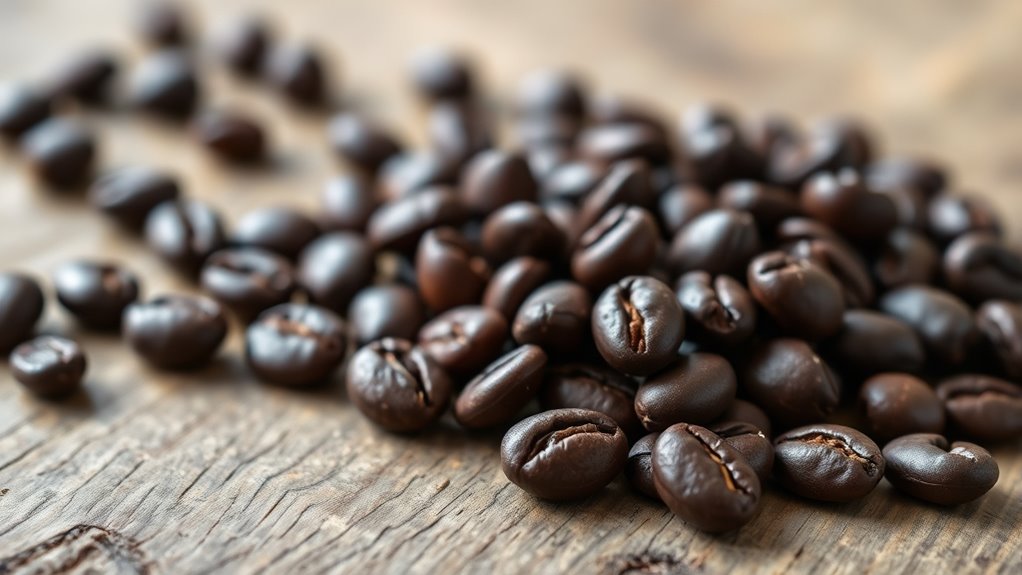
Although you might think they’re just a simple snack, chocolate-covered espresso beans offer a unique combination of whole roasted coffee beans enveloped in dark, milk, or white chocolate. This pairing merges the intense, bold flavor of espresso with the sweet, creamy texture of chocolate, creating a complex taste profile.
Each bean retains the robust characteristics of coffee while the chocolate coating contributes additional flavor nuances and antioxidants, enhancing its appeal as a gourmet treat.
You’ll find these beans convenient and bite-sized, making them a popular choice for a quick, energizing snack.
Their dual composition balances bitterness and sweetness, appealing to both coffee and chocolate enthusiasts. Understanding this combination helps you appreciate why these treats stand out beyond just their caffeine content.
The caffeine content in these beans varies based on the espresso bean type and roasting level, similar to how espresso extraction time affects the strength of a brewed shot.
How Much Caffeine Is in One Espresso Bean?
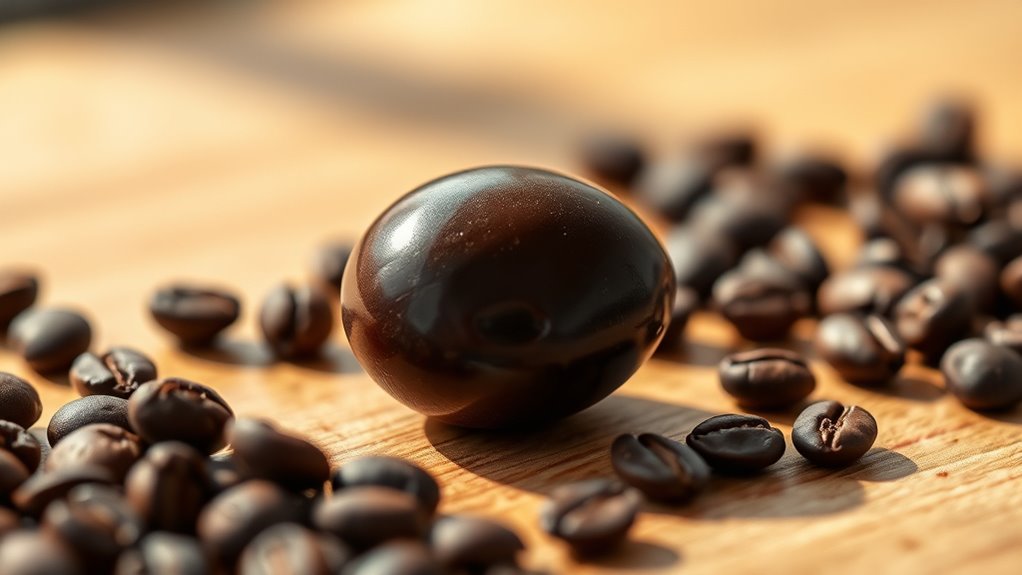
When you bite into a chocolate-covered espresso bean, you’re consuming more than just a flavorful snack. You’re also getting a notable amount of caffeine. One Arabica espresso bean contains about two milligrams of caffeine on average.
But when it’s coated in chocolate, each bean usually delivers between 10 to 20 milligrams of caffeine. This depends on things like the bean’s size, its roast level (lighter roasts usually have a bit more caffeine), and the thickness of the chocolate layer.
To put it into perspective, eating eleven chocolate-covered espresso beans gives you a caffeine boost roughly equal to two cups of coffee. Knowing this helps you keep track of your caffeine intake when enjoying these tasty little beans.
Because espresso uses finely ground coffee and high pressure, it results in a higher caffeine concentration per ounce than other brewing methods.
How Different Chocolates Affect Caffeine Levels
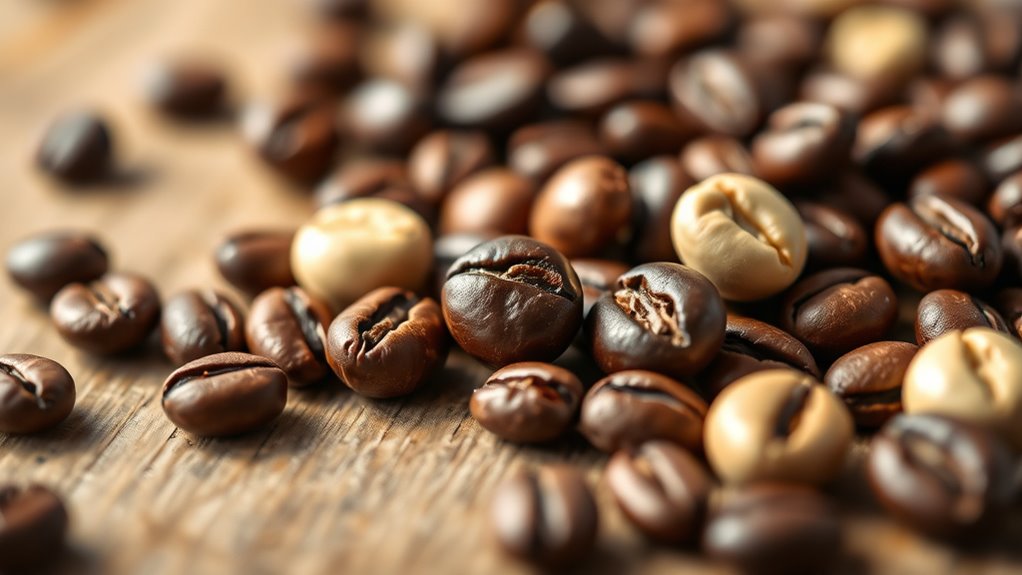
You’ll notice that the type of chocolate coating really affects the caffeine content in espresso beans. For example, dark chocolate adds roughly 12 mg of caffeine per ounce.
On the other hand, milk chocolate has about half that amount.
And when it comes to white chocolate, it contains almost no caffeine at all.
Knowing these differences can help you better estimate your total caffeine intake depending on the chocolate’s cacao concentration. Additionally, the decaffeination method used on the espresso beans influences the residual caffeine content, affecting the overall caffeine level in chocolate covered espresso beans.
Chocolate Type Comparison
The type of chocolate coating on espresso beans considerably influences their overall caffeine content, mainly because of differences in cacao percentage and natural caffeine levels. Dark chocolate has about 0.8-2.1 mg of caffeine per gram, so it adds the most caffeine to the beans. This means it directly boosts their total caffeine content.
Milk chocolate contains roughly 0.3-0.9 mg per gram, which is quite a bit less, so it gives a milder caffeine kick.
White chocolate doesn’t have caffeine at all, so it barely affects the caffeine levels. In this case, the caffeine mostly comes from the espresso itself.
Since caffeine content goes up with higher cacao percentages, picking dark chocolate with more cacao means a stronger caffeine punch. On the other hand, milk and white chocolates add less or no extra caffeine.
Knowing these differences helps you choose chocolate-covered espresso beans that match how much caffeine you want.
Additionally, using espresso powder made from brewed espresso grounds can enhance the coffee flavor without adding significant extra caffeine, making it a popular ingredient in chocolate confections for flavor complexity and depth with a subtle caffeine boost in recipes that require it, thanks to its high concentration.
Caffeine Variation Factors
Although the caffeine content in chocolate-covered espresso beans primarily comes from the espresso itself, the type and amount of chocolate coating play a crucial role in varying the total caffeine levels.
Dark chocolate, with its higher cacao content, adds roughly 12 mg of caffeine per ounce, considerably boosting overall caffeine. Milk chocolate contributes less, around 6 mg per ounce, due to its lower cacao percentage.
White chocolate contains negligible caffeine and barely affects the total caffeine content.
Additionally, the thickness and weight of the chocolate coating directly influence caffeine levels. Thicker coatings mean more caffeine from the chocolate itself.
Understanding these factors helps you predict caffeine variation. This way, you can select chocolate-covered espresso beans that match your desired caffeine intake precisely.
The total caffeine content can also be influenced by bean type, as Robusta beans contain about twice the caffeine of Arabica beans commonly used in espresso.
Caffeine Benefits of Chocolate Covered Espresso Beans
Because chocolate-covered espresso beans contain about 10-20 mg of caffeine each, you can use them for a quick and controlled energy boost. This moderate caffeine dose enhances alertness and mood without triggering the jitters often linked to higher intakes.
Given that 11 beans deliver caffeine comparable to two cups of coffee, you can precisely manage your intake.
Beyond caffeine, these beans combine dark chocolate and espresso antioxidants, which evidence suggests may reduce oxidative stress and support immune function.
By choosing chocolate-covered espresso beans, you’re tapping into a dual benefit: a reliable stimulant effect from caffeine and the potential health advantages from antioxidant compounds.
This makes them a practical option for improving mental performance and overall well-being when consumed thoughtfully.
Optimal caffeine effects are also influenced by factors such as extraction time, which affects the flavor and strength of the espresso used in these beans.
Risks of Eating Too Many Espresso Beans
You mightn’t realize it, but eating more than 10-15 chocolate-covered espresso beans can push you past safe caffeine levels. That can lead to feeling jittery, anxious, and even mess with your sleep.
Each bean packs about 10-20 mg of caffeine, so it doesn’t take much to add up quickly. Especially if you’re also having other caffeinated drinks or snacks throughout the day.
Keeping an eye on how many you eat is really important to avoid those unpleasant symptoms like a racing heart or even developing a long-term dependence.
Just a little mindfulness goes a long way! Understanding the caffeine content in espresso shots can help you better manage your total intake throughout the day.
Caffeine Overconsumption Effects
When you consume too many chocolate-covered espresso beans, you risk ingesting excessive caffeine that can trigger jitteriness, anxiety, and heart palpitations. Consuming more than 10-15 beans rapidly can push your caffeine intake beyond safe limits, increasing the likelihood of nausea, rapid heartbeat, and elevated blood pressure.
Additionally, caffeine’s stimulant effects may disrupt your sleep patterns, causing insomnia if eaten later in the day. Repeated high intake can foster caffeine dependency, leading to withdrawal symptoms like headaches and fatigue when consumption stops.
These physiological responses highlight the significance of understanding how quickly caffeine accumulates from multiple servings of espresso beans. It is generally recommended to limit daily caffeine intake to 400 mg to avoid caffeine toxicity and related health risks.
Managing Intake Risks
Exceeding recommended servings of chocolate-covered espresso beans considerably raises the risk of caffeine-related side effects, including jitteriness, anxiety, and sleep disruptions. Since each bean contains roughly 10-20 mg of caffeine, eating more than 10-15 beans can quickly push your intake beyond safe limits, especially if you’re sensitive.
Excessive caffeine may cause heart palpitations, elevated blood pressure, and nervousness, particularly if you have underlying health conditions. To manage these risks, you should limit consumption to 5-10 beans per serving, aligning with the general adult caffeine guideline of up to 400 mg daily.
Pregnant women, children, and those with certain medical issues must be even more cautious to avoid adverse effects. Monitoring your intake precisely helps maintain safety and wellbeing. Using accurate measurement of caffeine sources supports better control over your total daily consumption.
How to Enjoy Espresso Beans Without Too Much Caffeine
Although espresso beans offer a convenient caffeine boost, managing your intake by limiting yourself to 5-10 beans per serving helps maintain moderate caffeine levels. Since 11-12 beans roughly equal one cup of coffee’s caffeine, sticking below this range prevents excessive stimulation.
Try to consume them earlier in the day to avoid sleep disruption, as caffeine late afternoon or evening can impair rest. Pairing beans with water or a small snack can help moderate caffeine absorption and its effects, reducing potential jitters or anxiety.
Pay close attention to your body’s response. If you notice increased heart rate, nervousness, or sleep issues, cut back accordingly. Keep in mind that each extra shot of espresso adds roughly 75 mg of caffeine, which can quickly increase your overall caffeine intake.
Best Flavors and Pairings for Espresso Beans
Since flavor preferences vary widely, choosing the right chocolate coating and complementary pairings can considerably enhance your enjoyment of espresso beans.
Opting for dark chocolate with 70% or higher cacao content delivers a richer, more intense flavor and more antioxidants. It’s ideal if you appreciate complexity.
Milk chocolate coatings, sweeter and creamier, balance espresso’s bitterness. They appeal to those who prefer milder tastes.
To deepen flavor, try beans infused with sea salt, cinnamon, or chili powder. These introduce stimulating contrasts.
Pairing these beans with freshly brewed espresso or black coffee amplifies the mocha-like profile, elevating your tasting experience.
For variety, marbled chocolates combine white and dark layers, offering visual appeal and contrasting flavors. Tailoring these elements sharpens both flavor and sensory engagement.
Frequently Asked Questions
Can Chocolate Covered Espresso Beans Affect Sleep Patterns?
Yes, chocolate-covered espresso beans can disrupt your sleep patterns because their caffeine content stays active for hours. This can increase alertness and potentially cause insomnia.
It’s especially true if you eat them within 4-6 hours of bedtime or if you’re sensitive to caffeine. So, it’s a good idea to be mindful of when and how many you consume. Just a little can make a big difference to your sleep!
Are Chocolate Covered Espresso Beans Safe for Children?
You shouldn’t give children chocolate-covered espresso beans, as their high caffeine content can exceed safe limits. This can cause jitters, increased heart rate, and sleep issues.
The American Academy of Pediatrics actually advises avoiding caffeine entirely for kids. So, it’s best to keep these treats out of their reach. Better safe than sorry, right?
How Should Chocolate Covered Espresso Beans Be Stored?
Keep chocolate-covered espresso beans sealed tight in a cool, dry spot, away from sunlight’s warm kiss. Maintain 60-70°F, and avoid humidity’s damp touch.
Freeze only if airtight, preserving flavor and crunch precisely. It really helps keep them fresh longer. Just make sure the container is sealed well before popping them in the freezer.
Do Chocolate Covered Espresso Beans Contain Allergens?
Yes, chocolate-covered espresso beans can contain allergens like milk, soy, and tree nuts. You should always check ingredient labels and allergen warnings carefully. Cross-contamination risks exist during manufacturing and processing.
Can Pregnant Women Consume Chocolate Covered Espresso Beans?
You’d have to eat a mountain of chocolate-covered espresso beans to avoid caffeine risks, but pregnant women shouldn’t. Their caffeine limits are tight, so consult your doctor before indulging to keep you and baby safe.
It’s always better to be cautious, especially when it comes to caffeine during pregnancy. Checking in with your healthcare provider can give you peace of mind. That way, you can enjoy treats without worry.
Conclusion
When enjoying chocolate covered espresso beans, remember that moderation is key. After all, you don’t want to “bite off more than you can chew.” Each bean packs a caffeine punch that varies with chocolate type, so be mindful of your intake.
By balancing flavors and portion sizes, you can savor their energizing benefits without the jitters. Stick to evidence-based limits, and you’ll enjoy these treats safely and deliciously every time.