You don’t need special beans labeled “espresso” to make espresso. Any coffee bean works if roasted and brewed properly. The main difference lies in roasting.
Espresso beans are typically roasted darker to develop oils and bold flavors. These flavors are ideal for espresso’s intensity. Grind size, pressure, and brewing method also play key roles in extraction and flavor.
Understanding these factors helps you craft better espresso. Exploring deeper will reveal how roasting and technique shape your perfect shot.
What Are Espresso Beans And Coffee Beans?
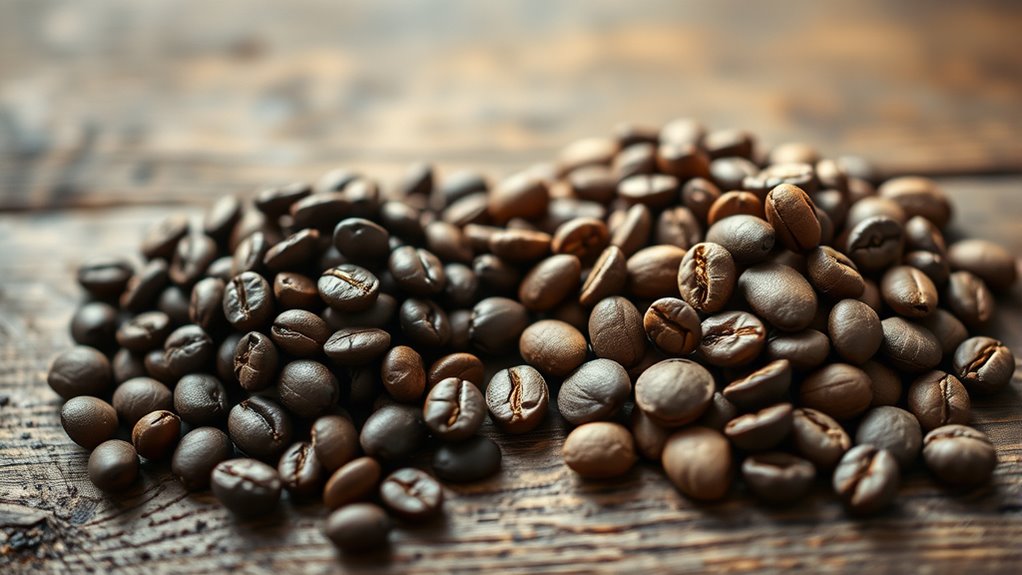
Although many people assume espresso beans are a distinct variety, they’re actually just coffee beans roasted and prepared specifically for espresso brewing. You’ll find that espresso beans come from the same Arabica or Robusta plants as regular coffee beans.
Espresso beans aren’t a separate variety but regular coffee beans roasted specifically for espresso.
The key difference lies in their roasting level, typically darker for espresso, which influences flavor profile and oil content.
Both espresso and regular coffee beans start as green beans harvested from coffee cherries, then undergo roasting.
What defines an espresso bean isn’t its species but the roasting process and grind size tailored for the espresso method.
Understanding this helps you recognize that “espresso bean” is a term related to preparation rather than bean type.
So, when you hear “espresso bean,” think more about how it’s roasted and ground instead of where it comes from.
It’s all about how you prepare the beans to get that rich, intense espresso flavor.
Additionally, espresso beans are often blended and roasted to optimize flavor and enhance the crema development that is characteristic of a quality espresso shot.
Can Any Coffee Bean Make A Good Espresso Shot?
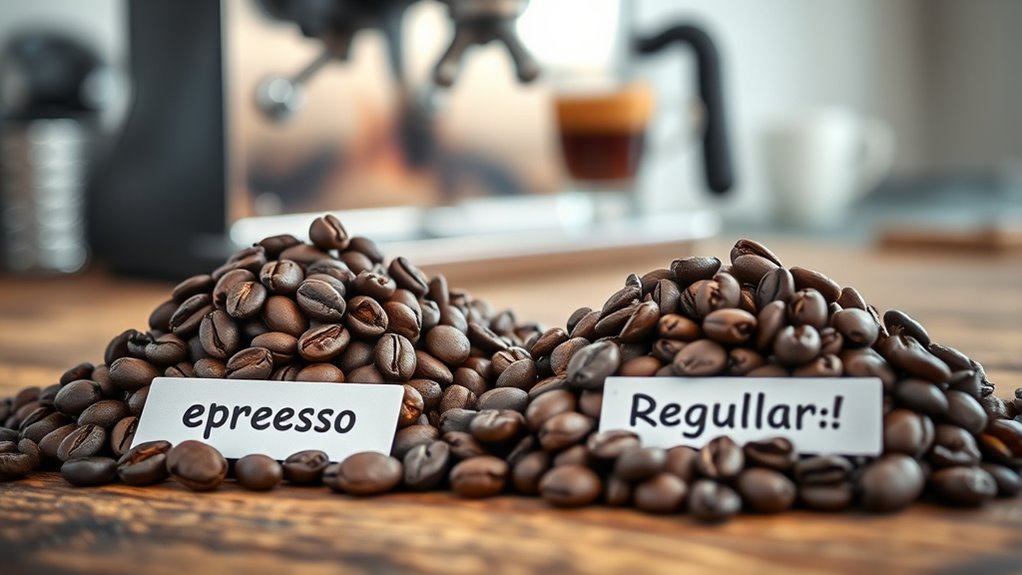
You can use any coffee bean to pull an espresso shot, but the roast level plays a vital role in shaping the flavor and crema quality. Darker roasts usually give you a bolder, richer espresso.
On the other hand, lighter roasts need a bit more attention and careful brewing to bring out their unique flavors.
At the end of the day, though, nailing the grind size and extraction under pressure is what really makes a great shot—not just the bean itself.
Additionally, using a burr grinder helps ensure the consistent grind size necessary for optimal espresso extraction.
Roast Level Importance
While any coffee bean can be used to make espresso, the roast level plays a crucial role in shaping the shot’s flavor and texture. Dark roasts, commonly preferred for espresso, develop oils and bold flavors that enhance crema and create a robust, slightly bitter profile ideal for high-pressure extraction.
However, light and medium roasts aren’t off-limits. They highlight nuanced, origin-specific flavors and brighter acidity but tend to produce less crema and a different mouthfeel. The roast level directly influences the espresso’s balance, intensity, and aromatic complexity.
Ultimately, your choice of roast impacts the sensory experience more than the bean origin itself. To craft a great espresso, focus on selecting the right roast alongside proper grind size and brewing parameters for ideal extraction.
It’s really about finding what works best for your taste.
Brewing Method Impact
Even though any coffee bean can technically produce an espresso shot, the brewing method profoundly influences the outcome. Your choice of roast level, grind size, and extraction technique directly shapes the flavor, crema, and body of the shot.
Light roasts offer brighter acidity and complexity, but you’ll need to fine-tune grind size and tamping to prevent under-extraction.
Dark roasts deliver bolder, more bitter profiles that generally require less adjustment. Regardless of origin, a fine grind and consistent high pressure are essential to reveal maximum flavors.
Using beans not specifically roasted or blended for espresso often results in a thinner crema and less balanced taste, so dialing in your parameters is essential.
In short, while any bean can work, mastering brewing variables is key to a quality espresso shot. It’s all about finding that sweet spot where everything comes together just right.
Once you get there, the difference in your espresso will be clear every time.
Remember to maintain a total extraction time of 25-30 seconds from pump start to ensure optimal flavor and consistency through proper espresso extraction timing.
How Does Roasting Change Coffee Beans For Espresso?
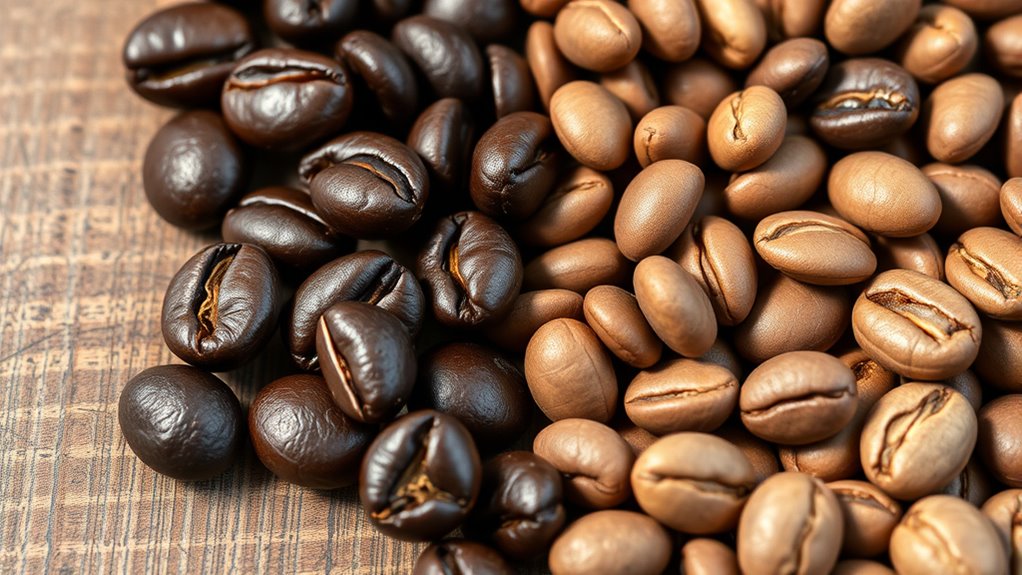
Because roasting transforms the chemical composition of coffee beans, it plays a crucial role in shaping the distinctive characteristics of espresso. When you roast beans for espresso, you typically use longer times and higher temperatures to develop deeper flavors and oils. This process directly impacts the crema, aroma, and flavor profile you get.
Here’s how roasting changes espresso beans:
- Extended roasting brings oils to the surface, creating a shiny, oily bean that enhances crema and adds boldness.
- Darker roasts often hit the second crack, intensifying body and reducing acidity.
- Roasting profiles like temperature, duration, and airflow fine-tune the balance between acidity, aroma, and richness.
Additionally, the choice of roast influences the caloric content indirectly by affecting the flavor concentration and the need for added sweeteners or cream in espresso-based drinks.
Why Does Grind Size Matter For Espresso?
Since espresso brewing relies on extracting maximum flavor within a short time under high pressure, grind size plays a critical role in determining your shot’s quality. A fine grind increases the surface area of coffee particles, enabling efficient extraction of oils, acids, and sugars that define espresso’s complex flavor.
Grind size is crucial in espresso, maximizing flavor extraction through increased surface area and precise pressure.
If your grind is too coarse, water flows through too quickly, causing under-extraction and resulting in a weak, watery shot. On the other hand, an overly fine grind slows the flow excessively, leading to over-extraction and a bitter, harsh taste. So, getting the grind size just right is key.
Adjusting grind size precisely guarantees ideal pressure and brew time, balancing crema, flavor, and shot consistency. When you understand and control grind size, you can really unlock the full potential of espresso beans.
That’s how you achieve that perfect, rich espresso you’re aiming for. Consistent, uniform particle size is essential to prevent channeling and ensure even extraction for richer flavor.
How Different Brewing Methods Affect Espresso Flavor
Mastering grind size sets the foundation, but how you brew your espresso shapes its final character. Different brewing methods extract flavor uniquely, even from the same beans. Consider these key effects:
- Espresso machines apply high pressure and use fine grounds, yielding a concentrated, bold shot with rich crema and roasted, oily notes.
- French press employs immersion with coarse grounds and longer brewing time, producing a fuller body with cleaner, origin-highlighted acidity.
- Pour-over and AeroPress emphasize clarity and brightness, extracting nuanced origin flavors through controlled flow and moderate pressure.
Adjusting brewing time, temperature, and pressure influences bitterness, sweetness, and acidity balance. Your choice of method directly impacts how the espresso’s flavor profile unfolds.
This lets you tailor the cup to your preferred intensity and complexity. Understanding the role of extraction variables such as pressure, temperature, and grind size is key to optimizing each brewing method’s unique flavor potential.
How To Make Espresso At Home Without A Machine
Even without an espresso machine, you can still craft a rich, concentrated coffee that closely resembles espresso by using alternative brewing tools like a Moka pot or AeroPress.
The Moka pot brews under pressure, extracting a strong, espresso-style shot, while the AeroPress uses rapid pressing and a fine grind to mimic espresso’s intensity.
To get the best results, grind freshly roasted dark beans very finely, and tamp the grounds firmly to guarantee optimal pressure during extraction.
Using a burr grinder and measuring coffee and water precisely further refines the quality of your brew.
By controlling grind size, tamping, and pressure, you can reliably produce espresso-like coffee at home without investing in specialized machinery.
It’s a great way to enjoy that bold espresso flavor without breaking the bank or needing fancy equipment.
Maintaining water temperature between 195°F and 205°F during brewing is also key to achieving the best extraction and flavor.
Picking The Best Beans For Your Espresso Taste
Once you’ve nailed the brewing technique for espresso-style coffee without a machine, the next step is selecting the right beans to match your taste preferences. The choice hinges on roast level, bean origin, and freshness. Consider these points:
Opt for dark roast beans labeled for espresso to guarantee boldness, rich body, and quality crema. But if you prefer something with more nuance, high-quality medium roasts can also deliver complex flavors.
Decide between single-origin beans, which showcase distinct regional notes, or blends that provide balanced, harmonious shots tailored for espresso. It really depends on what kind of flavor experience you’re after.
And don’t forget about freshness. Use beans roasted within the last month to maximize flavor intensity and crema stability. Fresh beans just make a noticeable difference in your cup.
Proper maintenance, including regular cleaning and descaling with EcoDecalk, ensures your espresso machine extracts the best flavors from your chosen beans.
Frequently Asked Questions
Can Espresso Beans Be Used for Cold Brew Coffee?
Yes, you can use espresso beans for cold brew. Just keep in mind that the flavor will be bolder and more bitter because of their dark roast and oil content.
You might want to adjust the grind size to get a smoother extraction. That way, you can balance the intensity to suit your taste. It’s all about finding what works best for you!
Do Espresso Beans Have More Caffeine Than Regular Coffee Beans?
No, espresso beans don’t have more caffeine than regular coffee beans. You’ll find caffeine varies more by roast and bean type, not the label.
Espresso’s strength comes from brewing concentration, not higher caffeine content. So, it’s really about how the coffee is made, not the beans themselves.
How Should Espresso Beans Be Stored to Maintain Freshness?
Imagine your favorite café storing beans improperly, losing flavor quickly. You should store espresso beans airtight in a cool, dark place. Grind just before brewing, and use within weeks to keep their vibrant taste and aroma intact.
Keeping your beans fresh is all about how you store them. Avoid heat, light, and air as much as possible. These elements are the enemies of flavor and freshness.
Are Flavored Espresso Beans Different From Regular Flavored Coffee Beans?
Yes, flavored espresso beans differ from regular flavored coffee beans mainly in roast level and flavor intensity. You’ll notice espresso beans are darker roasted to enhance boldness, while regular beans tend to be lighter to preserve delicate flavors.
It’s pretty interesting how the roasting process changes the taste, right? Espresso’s dark roast really brings out a strong, rich flavor, whereas lighter roasts keep things bright and subtle. So, depending on what you like, you might prefer one over the other.
Can Espresso Beans Be Used in Drip Coffee Makers?
You can absolutely use espresso beans in your drip coffee maker, but you’ll want to grind them coarser to avoid bitterness and clogging.
This adjustment lets you savor a richer, well-balanced cup without over-extraction.
Give it a try and see how the flavors come through!
Conclusion
Now that you know espresso beans aren’t a different species but just a roast and grind choice, you can make smarter decisions. Remember, any coffee bean can shine in an espresso shot if roasted and ground right. Like a pocket watch ticking in the digital age, mastering grind size and brewing methods keeps your espresso timeless.
Focus on these details, and you’ll consistently brew rich, balanced espresso that suits your taste perfectly. It’s all about the little things that make a big difference in your cup. Keep experimenting and enjoy the process!