You should limit your espresso intake to 4–6 shots daily to stay within safe caffeine limits. Each shot contains about 63-75 mg of caffeine. Consuming more than this can lead to jitteriness, increased heart rate, anxiety, and sleep disruption.
Keep in mind that factors like your body weight, health, and tolerance affect how much you can handle. It’s a good idea to space out your shots throughout the day and avoid drinking espresso late in the afternoon or evening. Doing this helps you maintain a good balance.
Understanding these guidelines means you can enjoy your espresso safely and comfortably. Plus, knowing when to drink it and how your body reacts makes all the difference.
How Much Caffeine Is in a Shot of Espresso?
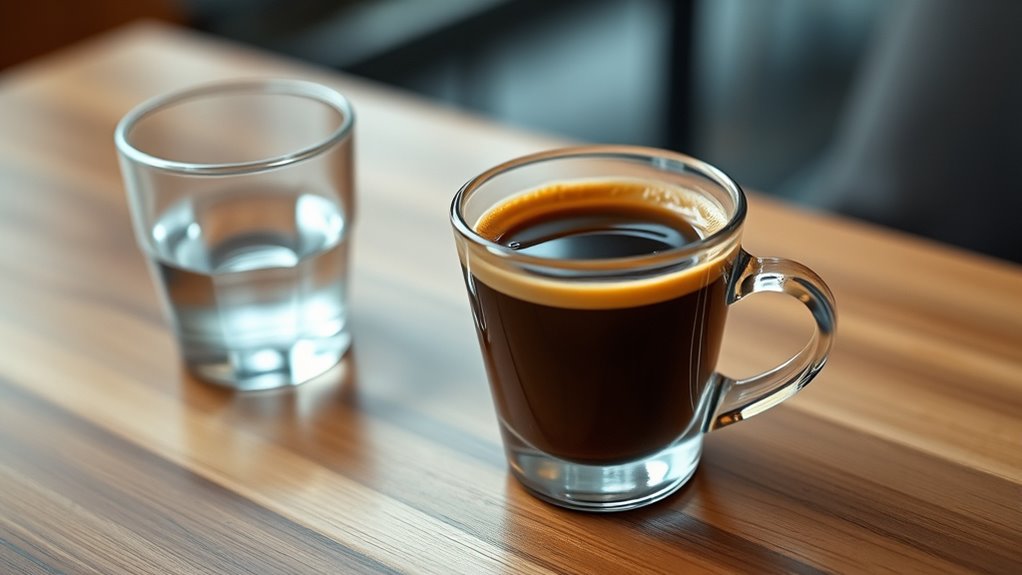
A single shot of espresso, typically 1 ounce (30 ml), contains about 63 to 75 milligrams of caffeine. This amount can vary depending on factors like bean type, roast level, grind size, and extraction time.
You’ll find that a ristretto shot, which is about 15 ml, delivers roughly 63 mg of caffeine. It’s a bit less volume but packs a similar caffeine punch.
When you double the shot to 2 ounces, caffeine content rises to approximately 125-150 mg. A quad shot can reach around 300 mg.
Keep in mind that brewing methods and bean origin also influence caffeine levels, so exact amounts fluctuate.
Understanding these variables helps you gauge your caffeine intake accurately when enjoying espresso.
The caffeine content in espresso can also be tailored by adjusting shot size and bean selection to fit individual preferences.
How Espresso’s Caffeine Compares to Other Coffee Drinks
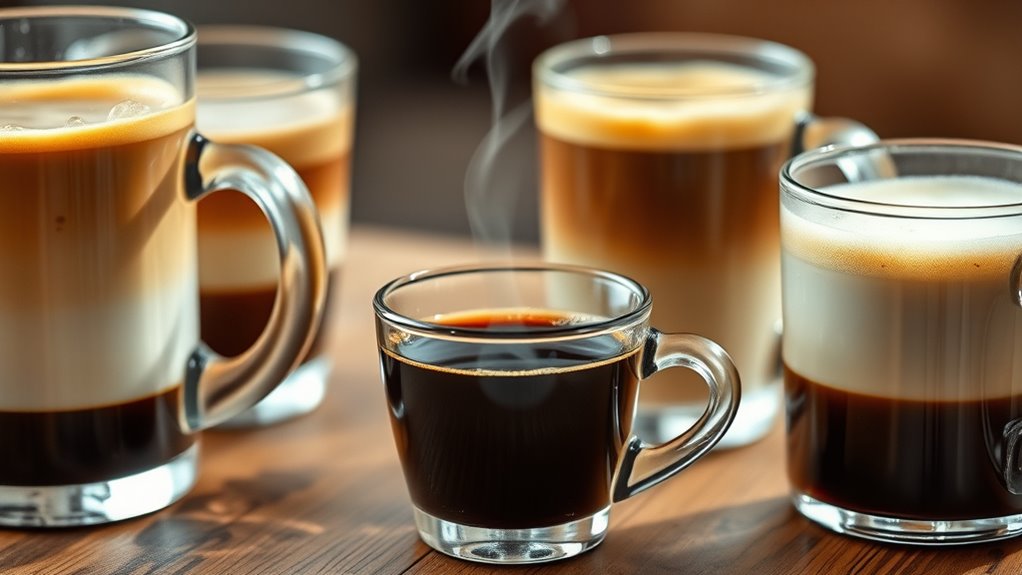
You might think espresso has more caffeine than drip coffee, but that’s not always the case. Espresso is more concentrated per ounce, so it packs a punch in a small amount.
However, drip coffee usually has more caffeine overall because people tend to drink larger servings.
Also, the caffeine you get depends on more than just the type of coffee. How much you drink and the kind of coffee beans used play a big role too.
Knowing these details can help you keep track of your total caffeine intake more accurately.
The amount of caffeine in espresso can vary based on factors like bean type, roast level, and brewing method.
Espresso Versus Drip Coffee
Though espresso packs more caffeine per ounce than drip coffee, the smaller serving size means you generally consume less caffeine in a single shot. A standard 1 oz espresso shot contains about 63-75 mg of caffeine.
While an 8 oz cup of drip coffee typically ranges from 95-165 mg, this means that despite espresso’s higher concentration, the total caffeine intake from drip coffee is often greater due to its larger volume.
If you choose multiple espresso shots, however, your caffeine consumption can quickly match or exceed that of a standard mug of drip coffee.
Keep in mind that other brewing methods like French press or cold brew can deliver even higher caffeine amounts, sometimes reaching 280 mg in a 12 oz serving.
The caffeine content in espresso also depends on factors like bean type and roast level, which influence the final amount extracted during brewing.
Serving Size Impact
Because espresso is served in much smaller quantities than other coffee drinks, understanding serving size is essential when comparing caffeine intake. A single 1 oz shot of espresso contains about 63-75 mg of caffeine, making it highly concentrated.
However, an 8 oz drip coffee typically has 95-165 mg of caffeine, often matching or exceeding a single espresso shot’s total caffeine despite the larger volume.
If you order a double or triple espresso, the caffeine content can quickly surpass that of a standard cup of drip coffee.
Additionally, cold brew coffee served in 12 oz portions can deliver 150-280 mg of caffeine, exceeding several espresso shots combined.
Recognizing these serving size differences helps you gauge your total caffeine intake accurately.
To maintain consistent flavor and caffeine extraction, it is important to control espresso extraction time within the ideal 25-30 second window.
Bean Type Influence
Understanding how caffeine content varies by bean type helps clarify why espresso strength can differ so much from other coffee drinks. Espresso shots usually contain 60-100 mg of caffeine per ounce, influenced heavily by whether the beans are Arabica or Robusta.
Robusta beans nearly double Arabica’s caffeine, making espresso brewed with Robusta notably stronger.
However, despite espresso’s high caffeine concentration, drip coffee or cold brew often contain more caffeine overall due to larger serving sizes.
Factors like bean origin, roast level, grind size, and extraction time also affect espresso’s caffeine content.
When you order specialty drinks with multiple shots, especially using high-caffeine beans, your caffeine intake can increase markedly.
Knowing these variables helps you manage your consumption safely and understand why espresso’s caffeine impact varies.
Consistent shot timing of about 25–30 seconds is crucial for optimal caffeine extraction efficiency, affecting the final caffeine content in your espresso.
Why Are More Than Six Espresso Shots Risky?
When you consume more than six espresso shots, you risk exceeding the recommended daily caffeine limit of 400 mg. This can trigger symptoms like jitteriness, rapid heartbeat, and anxiety.
Six shots contain roughly 375-600 mg of caffeine, so going beyond this increases your chances of caffeine toxicity.
That can lead to severe effects such as hallucinations or irregular heart rhythms. Plus, the cumulative caffeine intake raises the risk of sleep disturbances and elevated blood pressure.
Everyone’s tolerance is different, but going over six shots is generally unsafe.
This is especially true if you’re sensitive to caffeine or have underlying health issues. Staying within the safe limit helps prevent these risks and supports better overall health.
Additionally, temperature stability during espresso extraction influences caffeine concentration, making temperature control an important factor in managing caffeine intake.
What Affects Your Espresso Caffeine Tolerance?
Although the caffeine content in espresso shots stays pretty consistent, how your body reacts to it can be very different. Your tolerance depends on things like body weight. For example, lighter people often feel stronger effects from fewer shots.
Espresso’s caffeine stays steady, but your body’s reaction varies—lighter people often feel effects from fewer shots.
If you drink caffeine regularly, you build up a tolerance. That means you might need more espresso to feel equally alert.
Certain health conditions, like anxiety, heart problems, or sleep disorders, can lower your caffeine threshold. This makes you more sensitive to it.
Some medications, including antibiotics and antidepressants, can change how your body processes caffeine. That also affects your tolerance.
Genetics play a big role too, influencing how fast you metabolize caffeine and how sensitive you’re to it.
Knowing these factors helps you figure out how much espresso is safe for you. It’s really about personal awareness, not just sticking to standard caffeine limits.
Using a machine with a built-in conical burr grinder can also impact the caffeine content by allowing you to control the grind size and dose precisely.
Recognizing When You’ve Had Too Much Espresso
If you start feeling jittery, anxious, or notice your heart racing soon after drinking espresso, these are clear signs you’ve had too much for your body to handle.
Other symptoms like restlessness, difficulty sleeping, headaches, stomach discomfort, or dizziness also indicate excessive caffeine intake.
Pay close attention to how your body reacts within an hour of consumption. Increased heart rate and nervousness suggest overconsumption.
Personal reactions such as shakiness or nausea are key indicators that it’s time to cut back on espresso.
Recognizing these symptoms early helps prevent potential health issues linked to high caffeine levels.
Consistently consuming more than 4 shots increases the risk of experiencing adverse effects and should be avoided.
When’s the Best Time to Drink Espresso?
You’ll get the most benefit from espresso if you drink it in the morning or early afternoon. This way, it lines up nicely with your body’s natural alertness cycles.
Since caffeine’s half-life is about five hours, it’s a good idea to have your espresso at least six hours before bedtime. That helps keep your sleep quality intact.
Also, spacing out your shots throughout the day can prevent you from feeling overstimulated and reduce the chances of sleep disturbances.
For best results, pay attention to your espresso’s extraction time to ensure optimal caffeine and flavor balance.
Optimal Espresso Timing
Since caffeine’s half-life is about five hours, the best time to drink espresso is in the morning or early afternoon. This helps boost your alertness without messing up your sleep.
Try to have your espresso at least six hours before bedtime. That way, you avoid any sleep disturbances.
Spacing your espresso intake every 3-4 hours can keep your energy steady without overloading on caffeine. It’s a smart way to stay alert without the jitters.
Also, avoid drinking espresso after 3 p.m. to prevent interference with your sleep cycle.
Proper extraction timing helps ensure a balanced flavor that can enhance your overall espresso experience.
| Time of Day | Recommended Action | Reason |
|---|---|---|
| Morning | Drink espresso | Maximizes alertness |
| Mid-morning | Optional second espresso | Sustains energy |
| Early afternoon | Last espresso | Allows caffeine clearance before sleep |
| After 3 p.m. | Avoid espresso | Prevents sleep disruption |
Espresso and Sleep
Managing when you drink espresso plays a significant role in maintaining healthy sleep patterns. Since caffeine’s half-life averages around five hours and can remain in your system for up to eight, consuming espresso less than six hours before bedtime risks disrupting your sleep.
Drinking espresso in the late afternoon or evening can delay sleep onset and reduce sleep quality due to its stimulant effects.
To optimize sleep, limit your espresso intake to the morning, ideally before 11 a.m., especially if you’re sensitive to caffeine. This timing allows you to enjoy espresso’s alertness benefits while minimizing insomnia risk.
How to Calculate Your Safe Daily Espresso Limit
Although caffeine tolerance varies, calculating your safe daily espresso limit starts with understanding that the FDA recommends no more than 400 mg of caffeine per day for most adults.
Typically, this equates to about 4-6 espresso shots, given that each shot contains roughly 75 mg of caffeine.
To determine your personal limit, multiply the average caffeine content per shot by your intended number of shots, making sure the total stays below 400 mg.
Keep in mind caffeine levels can vary due to bean type, roast, and preparation method, so adjust accordingly.
Also, consider your own tolerance, health conditions, and medications.
To stay safe, spread your espresso intake throughout the day and watch for signs of overconsumption.
If needed, adjust your limit as you go.
How to Enjoy Espresso Without Overdoing It
When you want to enjoy espresso without overdoing it, keeping your daily intake to 3-4 shots is a practical starting point to stay within the recommended 400 mg caffeine limit. Space your shots throughout the day to avoid sudden caffeine spikes and side effects like jitteriness or sleep issues.
Consider smaller shots like ristretto to savor flavor with less caffeine. Always monitor how your body reacts and adjust intake accordingly.
| Benefit | How to Achieve It |
|---|---|
| Balanced energy | Space shots evenly |
| Flavor enjoyment | Opt for ristretto shots |
| Avoid jitters | Limit to 3-4 shots daily |
| Better sleep | Avoid late-day espresso |
| Body awareness | Watch for adverse symptoms |
Frequently Asked Questions
Can Espresso Consumption Affect Sleep Patterns Long-Term?
Yes, espresso consumption can affect your sleep patterns long-term. If you regularly drink it, especially late, you’ll likely experience disrupted sleep, delayed circadian rhythms, and even chronic insomnia.
This can really harm your overall health and daily functioning. So, it’s something to be mindful of if you want to keep your sleep on track.
Are There Health Benefits to Drinking Espresso Daily?
Yes, drinking espresso daily can boost your mood, improve focus, and enhance insulin sensitivity. It also provides antioxidants that may reduce cancer risk and lower LDL cholesterol. This supports overall heart health when consumed in moderation.
How Does Espresso Interact With Certain Medications?
Espresso can change how your body handles medications. It might boost side effects or make the meds less effective.
Can Espresso Cause Withdrawal Symptoms?
Yes, espresso can cause withdrawal symptoms like headaches, fatigue, and irritability if you stop suddenly. These symptoms usually start within 12-24 hours and can feel pretty rough at first.
But don’t worry, they usually ease up if you gradually reduce your caffeine intake over time. So, it’s better to cut back slowly rather than quitting cold turkey.
Is Espresso Safe During Pregnancy?
You might want to take it easy with espresso during pregnancy. It’s best to keep caffeine under 200 mg daily to protect your baby’s development. High intake can raise risks like miscarriage and low birth weight.
Conclusion
You can enjoy espresso safely by knowing your limits, understanding caffeine content, and listening to your body. Keep your intake moderate and avoid drinking too late. It’s all about adjusting based on your tolerance and health.
Remember, more than six shots can increase risks, so pace yourself and stay informed. Choose quality over quantity whenever you can. By balancing enjoyment with caution, you’ll savor espresso’s benefits without overdoing it or compromising your well-being.